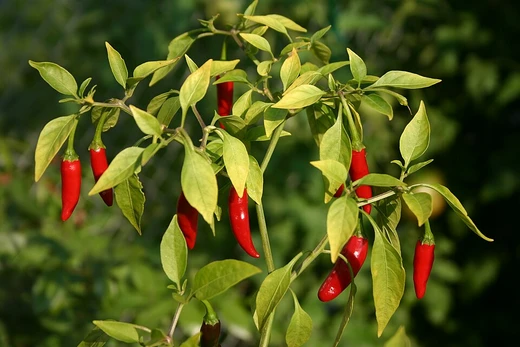
Serrano pepper
The serrano pepper, a chili pepper variety scientifically named Capsicum annuum, has its origins in the highlands of Puebla and Hidalgo, two Mexican states.[1] Hot sauces frequently include serrano peppers as an ingredient.[1]
Quick Facts
- Species
- Capsicum annuum
- Origin
- Puebla and Hidalgo Mexico
Facts from the source article.
Key facts and history
They have a low tolerance for frost.[2] When fully grown, serrano pepper plants stand between 0.5 and 1.5 meters tall.[3] A single serrano plant yields as many as 50 pepper berries.[3] Harvesting of the fruit can occur when it is either green or fully mature.[3]
For optimal growth, serrano peppers require soil with a pH of 7.0 to 8.5 and warm conditions exceeding 24 °C.[2] Consumed raw in most cases, serrano peppers possess a flavor that is distinctly more pungent than that of the jalapeño.[4] Pico de gallo and salsa are two dishes that commonly incorporate serrano peppers.[4] In Mexican cooking, this chili ranks as the second most frequently used, following the jalapeño.[5]
An annual production of roughly 180,000 tonnes of serrano peppers comes from the Mexican states of Veracruz, Sinaloa, Nayarit, and Tamaulipas.[5]
What the cited sources add
A 2017 hot sauce recipe uses serrano peppers that have been fermented, then processed with vinegar, garlic, tequila and lime juice.[6] The recipe calls for one pound of serrano peppers.[6] The recipe instructs to process the peppers in a food processor.[6] Fermented hot sauces are described as mellower and having a deeper flavor.[6]
The recipe notes that sauces made with fermented chili peppers will last even longer.[6] It is important to keep the peppers covered with brine to avoid spoilage.[6] The recipe suggests that if the brine makes the sauce too salty, one can strain the peppers and use fresh water instead.[6]
References
- Wikipedia, "Serrano pepper" (CC BY-SA 4.0), which cites: DeWitt, "The Complete Chile Pepper Book: A Gardener's Guide to Choosing, Growing, Preserving, and Cooking", Timber Press, 2009, p. 64; "Types of hot peppers"; DeWitt, "The Complete Chile Pepper Book: A Gardener's Guide to Choosing, Growing, Preserving, and Cooking", Timber Press, 2009, p. 64; Hultquist, "icy Serrano Hot Sauce Recipe", Chili Pepper Madness, 2017-10-18; Rachiele, "Serrano Hot Sauce", Allrecipes, 2018-04-12 (we also read that source) en.wikipedia.org
- Wikipedia, "Serrano pepper" (CC BY-SA 4.0), which cites: "Growing Serrano Peppers", PlantDex (original not read by us) en.wikipedia.org
- Wikipedia, "Serrano pepper" (CC BY-SA 4.0), which cites: DeWitt, "The Complete Chile Pepper Book: A Gardener's Guide to Choosing, Growing, Preserving, and Cooking", Timber Press, 2009, p. 64; DeWitt, "The Complete Chile Pepper Book: A Gardener's Guide to Choosing, Growing, Preserving, and Cooking", Timber Press, 2009, p. 64 (we also read that source) en.wikipedia.org
- Wikipedia, "Serrano pepper" (CC BY-SA 4.0), which cites: DeWitt, "The Complete Chile Pepper Book: A Gardener's Guide to Choosing, Growing, Preserving, and Cooking", Timber Press, 2009, p. 64 (we also read that source) en.wikipedia.org
- Wikipedia, "Serrano pepper" (CC BY-SA 4.0), which cites: "Serrano Pepper WorldCrops", worldcrops.org; Nolte, "Serrano Peppers", cals.arizona.edu (original not read by us) en.wikipedia.org
- Hultquist, "icy Serrano Hot Sauce Recipe", Chili Pepper Madness, 2017-10-18. chilipeppermadness.com
Each numbered sentence above was checked against the source it cites before publication. Sentences citing Wikipedia adapt text from the English Wikipedia article Serrano pepper (contributors), used under CC BY-SA 4.0; this entry is available under the same licence. Other sources were used for facts only.
More in Chili Pepper Varieties
Spotted an error? Know more?
Reader corrections go straight into our review queue. Suggest an edit · How this site is sourced