CENBOL
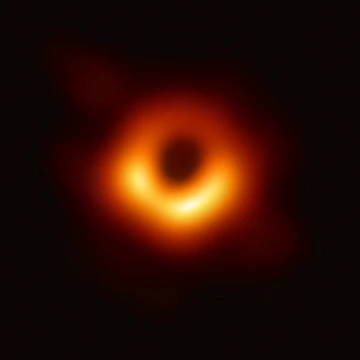
Model of hot boundary layer in black hole accretion flows.

CENBOL, an acronym for "CENtrifugal pressure supported BOundary Layer," is an astronomical model proposed by Sandip Chakrabarti and his colleagues to describe a specific region within the accretion flow surrounding a black hole. In this model, as matter spirals inward, the centrifugal force—which intensifies more sharply than gravity with decreasing distance—causes the flow to decelerate, often through a shock. The material then re-accelerates into a supersonic state. The CENBOL region itself lies between this shock and the innermost sonic point of the accretion flow. It becomes extremely hot because its radial kinetic energy is abruptly reduced, causing the gas to puff up as it resists gravitational pull. In many ways, it resembles a thick accretion disk—either an ion-pressure-supported torus at low accretion rates or a radiation-pressure-supported torus at high rates—but unlike earlier thick-disk models, it retains a radial velocity. The heat in CENBOL allows electrons to transfer thermal energy to photons, a process known as inverse Comptonization: low-energy X-rays (seed photons) are scattered into high-energy X-rays (hard photons). Additionally, like a boundary layer, it generates jets and outflows. The observed spectrum of a black hole accretion disk combines emission from a standard Keplerian disk—producing a multi-color blackbody spectrum—with a power-law component originating from CENBOL. When the Keplerian component has a high accretion rate, it can cool CENBOL, leading to a spectrum dominated by low-energy X-rays, a state called the "soft state." Conversely, if the Keplerian rate is low relative to the low-angular-momentum component, CENBOL persists, and high-energy X-rays dominate, resulting in the "hard state." Under radiative or thermal cooling, CENBOL may oscillate, particularly when the infall and cooling timescales are similar. This modulates the number of intercepted low-energy photons and, consequently, the high-energy photons, producing quasi-periodic oscillations (QPOs) in black hole candidates.
- Field
- Astronomy
- Known for
- Model of accretion flow around black holes
- Type
- Theoretical model
Lore & Background
The CENBOL model arises from the behavior of matter approaching a black hole: as distance decreases, centrifugal force increases more rapidly than gravity, causing matter to slow down through a shock transition before accelerating to supersonic flow. This region becomes hot due to the sudden reduction of radial kinetic energy, puffing up as hot gas resists gravity. It behaves like a thick accretion disk but retains radial velocity, unlike earlier thick disk models.
Reader's Guide
CENBOL is significant because it explains key observational features of black hole accretion disks. The model accounts for the power-law component of the observed spectrum, produced when hot electrons in CENBOL inverse Comptonize low-energy X-rays into high-energy X-rays. It also describes spectral state transitions: when the Keplerian accretion rate is high, CENBOL cools and the spectrum becomes soft (low-energy X-rays dominate); when the Keplerian rate is low, CENBOL survives and the spectrum is hard (high-energy X-rays dominate). Additionally, under radiative or thermal cooling effects, CENBOL can oscillate, modulating intercepted low-energy photons and producing quasi-periodic oscillations (QPOs) in black hole candidates. The model thus provides a unified framework for understanding black hole accretion, jet and outflow production, and variability phenomena.
Did You Know?
- CENBOL stands for 'CENtrifugal pressure supported BOundary Layer'.
- CENBOL is located between the shock and the innermost sonic point of an accretion flow.
- CENBOL produces high-energy X-rays by inverse Comptonizing low-energy seed photons.
- Oscillations in CENBOL can produce quasi-periodic oscillations (QPOs) in black hole candidates.
More in Black holes 1-24
Spotted an error? Know more?
Reader corrections go straight into our review queue. Suggest an edit · How this site is sourced