Leonid Hurwicz
Pioneer of mechanism design and incentive compatibility.
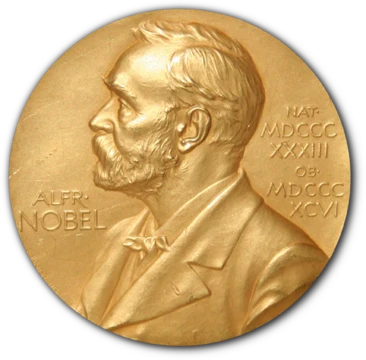
Leonid Hurwicz was a Polish–American economist and mathematician who originated the concept of incentive compatibility and pioneered mechanism design. He shared the 2007 Nobel Memorial Prize in Economic Sciences with Eric Maskin and Roger Myerson for this work. At age 90, he was one of the oldest Nobel laureates.
Quick Facts
- Born
- 21 August 1917
- Birthplace
- Moscow, Russia
- Died
- 24 June 2008
- Place of death
- Minneapolis, Minnesota, U.S.
- Citizenship
- Poland, United States
- Institution
- University of Minnesota
- Iowa State College
- Cowles Commission
- University of Chicago
- Education
- University of Warsaw
- Graduate Institute of International Studies
- London School of Economics
- Doctoral students
- Clifford Hildreth
- Stanley Reiter
- Daniel McFadden
- Richard B. McHugh
- Leigh Tesfatsion
- Myrna Wooders
Facts from the source article.
Personal life
Hurwicz was born in Moscow to a family of Polish Jews shortly before the October Revolution, and soon after his family returned to Warsaw. He and his family faced persecution from both Bolsheviks and Nazis; when Germany invaded Poland in 1939, he became a refugee. His parents and brother were arrested and sent to Soviet labor camps, but Hurwicz, who had graduated from Warsaw University in 1938, was in London at the time of the invasion. He moved to Switzerland, then Portugal, and emigrated to the United States in 1940; his family later joined him. In the 1940s, he hired Evelyn Jensen, an undergraduate in economics at the University of Chicago, as his teaching assistant; they married on July 19, 1944 and later lived in Minneapolis. They had four children: Sarah, Michael, Ruth, and Maxim. His interests included linguistics, archaeology, biochemistry, and music, and he conducted research in meteorology. He served as a McCarthy delegate from Minnesota to the 1968 Democratic Party Convention and helped design the 'walking subcaucus' method of delegate allocation. He remained an active Democrat and attended his precinct caucus in February 2008 at age 90. He was hospitalized in mid-June 2008 with renal failure and died a week later in Minneapolis.
Education and early academic career
Encouraged by his father to study law, Hurwicz earned an LL.M. from the University of Warsaw in 1938, where he discovered economics. He then studied at the London School of Economics with Nicholas Kaldor and Friedrich Hayek, and in 1939 moved to Geneva to study at the Graduate Institute of International Studies. After moving to the United States, he continued studies at Harvard and the University of Chicago, though he had no degree in economics. In 1941 he worked as a research assistant to Paul Samuelson at MIT and to Oskar Lange at the University of Chicago. During the war, he taught electronics to the U.S. Army Signal Corps at the Illinois Institute of Technology. From 1942 to 1944, he taught statistics in the Department of Economics and was on the faculty of the Institute of Meteorology at the University of Chicago. His advisors around 1942 were Jacob Marschak and Tjalling Koopmans at the Cowles Commission.
Teaching and research
Hurwicz held a Guggenheim Fellowship during the 1945–1946 academic year. The following year, he took a position as an associate professor of economics at Iowa State College. His work with the Cowles Commission began in January 1942 as a research associate, a role he kept until June 1946. He later returned as a visiting professor from October 1950 to January 1951, covering Koopmans' courses and steering the commission's work on resource allocation theory. Beyond the Cowles Commission, he served as a research professor of economics and mathematical statistics at the University of Illinois, advised the RAND Corporation through the University of Chicago, and consulted for the U.S. Bureau of the Budget. He remained a consultant to the Cowles Commission until roughly 1961. In 1951, Walter Heller brought him to the University of Minnesota, where he became a professor of economics and mathematics in the School of Business Administration. Minnesota became his academic home base, though he frequently taught elsewhere. He was a visiting professor at Stanford in 1955 and again in 1958, where he published his key paper on mechanism design in 1959. He taught at Bangalore University in 1965, and during the 1980s at Tokyo University, People's University, and the University of Indonesia. In the U.S., his visiting appointments included Harvard in 1969, UC Berkeley in 1976–1977, Northwestern in 1988 and 1989, UC Santa Barbara in 1998, Caltech in 1999, and the University of Michigan in 2002. He was a visiting distinguished professor at the University of Illinois in 2001. Back at Minnesota, he chaired the Statistics Department starting in 1961, became a Regents Professor of Economics in 1969, and was named the Curtis L. Carlson Regents Professor of Economics in 1989. Though he retired from full-time teaching in 1988, he continued to teach graduate courses as professor emeritus, most recently in fall 2006. By 2007, his research focused on comparing economic organization systems, welfare economics, game-theoretic social choice implementation, and modeling institutions.
Awards and honors
Leonid Hurwicz was elected a fellow of the Econometric Society in 1947 and became its president in 1969. In 1965 he was made a Fellow of the American Academy of Arts and Sciences, and in 1974 he joined the National Academy of Sciences. The American Economic Association named him a Distinguished Fellow in 1977. He served on the United Nations Economic Commission in 1948 and the U.S. National Research Council in 1954, and in 1964 he was on the National Science Foundation’s Commission on Weather Modification. He was a member of the American Academy of Independent Scholars in 1979 and a Distinguished Scholar at the California Institute of Technology in 1984. Hurwicz received six honorary doctorates: from Northwestern University (1980), the University of Chicago (1993), Universitat Autònoma de Barcelona (1989), Keio University (1993), Warsaw School of Economics (1994), and Universität Bielefeld (2004). In 1984 he was an honorary visiting professor at Huazhong University of Science and Technology’s School of Economics. The Hurwicz criterion, introduced in 1950, remains a key concept in decision making under uncertainty.
Frequently Asked Questions
When and where was Leonid Hurwicz born?
Leonid Hurwicz was born on 21 August 1917 in Moscow, Russia.
When did Leonid Hurwicz die?
Leonid Hurwicz died on 24 June 2008 in Minneapolis, Minnesota, U.S.
More in American Nobel Laureates
Spotted an error? Know more?
Reader corrections go straight into our review queue. Suggest an edit · How this site is sourced