Wassily Leontief
Russian-American economist who pioneered input–output analysis.
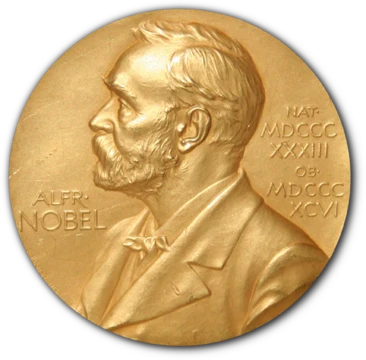
Wassily Wassilyevich Leontief was a Russian-American economist who developed input–output analysis, a method for examining how changes in one economic sector affect others. He received the Nobel Memorial Prize in Economic Sciences in 1973, and four of his doctoral students also won the prize.
Quick Facts
- Birth name
- Wassily Wassilyevich Leontief
- Born
- 5 August 1905
- Birthplace
- Munich, German Empire
- Died
- 5 February 1999
- Place of death
- New York City, U.S.
- Citizenship
- Russian
- Soviet
- American
- Field
- Economics
- Workplaces
- University of Kiel
- New York University
- Harvard University
Facts from the source article.
Did You Know?
- The Global Development and Environment Institute at Tufts University awards the Leontief Prize in Economics each year in his honor.
- Leontief is listed in the Russian-American Chamber of Fame of Congress of Russian Americans, which honors Russian immigrants who made outstanding contributions to American science or culture.
Biography
Wassily Leontief entered the world on August 5, 1905, in Munich, then part of the German Empire. His father, also named Wassily, was an economics professor from a line of Russian Old Believer merchants who had lived in St. Petersburg since 1741. His mother, Zlata (later Evgenia) Leontief, came from a wealthy Jewish family in Odessa. At just 15, in 1921, Leontief began studying at Petrograd State University in what is now St. Petersburg, earning a degree equivalent to a Master of Arts by age 19. He backed campaigns for academic freedom and free speech, supporting Pitirim Sorokin, which led to several detentions by the Cheka. In 1925, authorities let him leave the Soviet Union because they thought he was dying from a sarcoma—a diagnosis that turned out to be wrong. He then studied at Friedrich Wilhelm University in Berlin, earning a Ph.D. in economics in 1928 under Werner Sombart with a dissertation called "The Economy as Circular Flow." From 1927 to 1930, he worked at the University of Kiel's Institute for the World Economy, researching how to derive statistical demand and supply curves. In 1929, he traveled to China to advise its railroad ministry. He moved to the United States in 1931 and took a job at the National Bureau of Economic Research. During World War II, he consulted for the U.S. Office of Strategic Services. Leontief joined Harvard University's economics department in 1932 and became a full professor there in 1946. In 1949, he used the Harvard Mark II computer and data from the U.S. Bureau of Labor Statistics to split the American economy into 500 sectors, creating a linear equation for each. This was one of the earliest major uses of a computer for mathematical modeling. He founded the Harvard Economic Research Project in 1948 and ran it until 1973, and from 1965 he chaired the Harvard Society of Fellows. In 1975, he moved to New York University, where he started and led the Institute for Economic Analysis, teaching both graduate and undergraduate students.
Personal life
In 1932, Wassily Leontief wed poet Estelle Marks, who later wrote a memoir about their family life after emigrating to the US. Their daughter, Svetlana, was born in 1936. Fly fishing, ballet, and fine wines were among his pastimes. He spent many holidays at a Vermont farm before shifting his summer base to Lakeville, Connecticut, following a move to New York in the 1970s. Leontief passed away in New York City on February 5, 1999, at 93.
Major contributions
Leontief is credited with developing early contributions to input–output analysis, for which he received the Nobel Memorial Prize in Economics. Input–output tables analyze how inputs from one industry produce outputs for consumption or for inputs to another industry; they allow estimation of changes in demand for inputs resulting from changes in final good production, assuming fixed input proportions. This method inspired large-scale empirical work, and its iterative approach was recognized as an early intellectual precursor to Google's PageRank. Leontief also documented the Leontief paradox in international trade: he found that U.S. exports were relatively labor-intensive compared to U.S. imports, the opposite of what would be expected given the U.S.'s comparative advantage in capital-intensive goods. Some economists later explained this paradox by noting that when a country produces more than two goods, capital abundance does not necessarily imply that export capital intensity exceeds import capital intensity. Leontief was a strong proponent of using quantitative data in economics and campaigned against theoretical assumptions and non-observed facts, urging economists to work with raw empirical facts. He also contributed to the composite commodity theorem.
Publications
In 1925, Leontief published "Balans narodnogo khozyaystva SSSR" in Planovoe Khozyaystvo, discussing the Soviet balance of the national economy. His 1928 dissertation was "Die Wirtschaft als Kreislauf," later republished in English as "The economy as a circular flow." He authored "Structure of the American Economy, 1919–1929" (1941) and "Studies in the Structure of the American Economy" (1953). His later works include "Input-Output Economics" (1966), "Essays in Economics" (1966), and a second volume (1977). He co-authored "The Future of the World Economy" (1977), "Military Spending: Facts and Figures, Worldwide Implications and Future Outlook" (1983) with F. Duchin, "The Future of Non-Fuel Minerals in the U.S. And World Economy" (1983) with J. Koo, S. Nasar and I. Sohn, and "The Future Impact of Automation on Workers" (1986) with F. Duchin.
More in American Nobel Laureates
Spotted an error? Know more?
Reader corrections go straight into our review queue. Suggest an edit · How this site is sourced