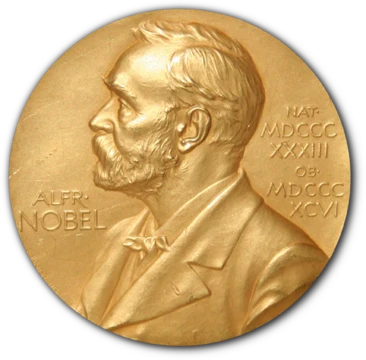
Lars Peter Hansen
Economist known for generalized method of moments and Nobel laureate.
Lars Peter Hansen is an American economist who received the 2013 Nobel Memorial Prize in Economic Sciences. He is best known for developing the generalized method of moments, a widely used econometric technique.
Quick Facts
- School tradition
- Chicago School of Economics
- Born
- 26 October 1952
- Birthplace
- Urbana, Illinois
- Institution
- University of Chicago; Carnegie Mellon University
- Field
- Macroeconomics
- Alma mater
- University of Minnesota (Ph.D.), Utah State University (B.Sc.)
- Doctoral advisor
- Christopher A. Sims
- Doctoral students
- Narayana Kocherlakota
- Masao Ogaki
- Amir Yaron
- Ravi Jagannathan
Facts from the source article.
Did You Know?
- Hansen's Nobel lecture was titled 'Uncertainty Inside and Outside Economic Models' and delivered on December 8, 2013.
- He is one of the founders of The Society for Financial Econometrics (SoFiE).
- He co-won the Frisch Medal with Kenneth Singleton in 1984 for his paper 'Generalized Instrumental Variables Estimation of Nonlinear Rational Expectations Models'.
Biography
After earning a B.S. in Mathematics and Political Science from Utah State University in 1974 and a Ph.D. in Economics from the University of Minnesota in 1978, Hansen served as assistant and associate professor at Carnegie Mellon University. He moved to the University of Chicago in 1981, where he is now the David Rockefeller Distinguished Service Professor in Economics, Statistics and the College. He is married to Grace Tsiang, daughter of economist Sho-Chieh Tsiang, and they have one son, Peter. His father, Roger Gaurth Hansen, was a biochemistry professor and provost at Utah State University; his brothers are immunologist Ted Howard Hansen and engineer Roger Hansen.
Contributions
Hansen developed the generalized method of moments (GMM), an econometric technique that uses moment conditions to construct estimators with desirable statistical properties under less stringent assumptions than maximum likelihood. He applied GMM with coauthors such as Kenneth J. Singleton, Scott F. Richard, and Robert Hodrick to study asset valuation models. With Ravi Jagannathan, he derived the Hansen–Jagannathan bound, which relates the standard deviation of a stochastic discount factor to asset Sharpe ratios; its empirical failure is known as the equity premium puzzle. Later work with José Scheinkman examined the long-run risk-return tradeoff, and he used dynamic valuation decomposition to study the term structure of pricing risk shocks in macroeconomic models.
Associations
Lars Peter Hansen serves as the first director of the Becker Friedman Institute and now leads its Macro Finance Research Program. He previously founded the Milton Friedman Institute, which later became the Becker Friedman Institute. He also co-directs a project examining the economic costs of policy uncertainty. His professional affiliations include membership in the National Academy of Sciences, the American Finance Association, and the American Academy of Arts and Sciences, along with a distinguished fellowship in the Macro Finance Society and a past presidency of the Econometrics Society. In 1984, he and Kenneth Singleton shared the Frisch Medal. He later received the 2006 Erwin Plein Nemmers Prize in Economics, the 2008 CME Group-MSRI Prize, and the 2011 BBVA Foundation Frontiers of Knowledge Award. Honorary doctorates have come from Utah State University and Colby College, and he holds honorary professorships at HEC Paris and Universidad del Pacífico.
Selected writings
Hansen coauthored 'Term Structure of Uncertainty in the Macroeconomy' with J. Borovička in the Handbook of Macroeconomics (2016). With Borovička and J. Scheinkman he wrote 'Misspecified Recovery' in the Journal of Finance (2016). He coauthored Uncertainty Within Economic Models (2014) and Robustness (2007) with Thomas J. Sargent, and Recursive Models of Dynamic Linear Economies (2013) with Sargent. His 1982 Econometrica paper 'Large Sample Properties of Generalized Methods of Moments Estimators' proposed the GMM procedure. He also contributed to the International Encyclopedia of the Social and Behavior Sciences (2000) and to Risk Topography (2012).
More in American Nobel Laureates
Spotted an error? Know more?
Reader corrections go straight into our review queue. Suggest an edit · How this site is sourced