Eugene F. Fama
Father of modern finance and the efficient-market hypothesis.
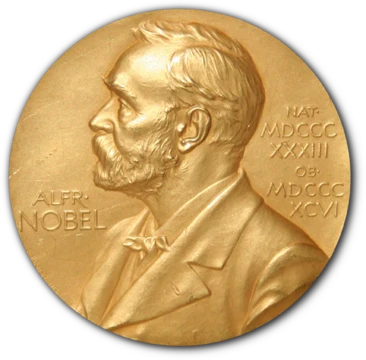
Eugene Francis Fama, an American economist and Nobel laureate, is renowned for his empirical research in portfolio theory, asset pricing, and the efficient-market hypothesis. He holds the Robert R. McCormick Distinguished Service Professorship of Finance at the University of Chicago Booth School of Business. In 2013, he was a co-recipient of the Nobel Memorial Prize in Economic Sciences alongside Robert J. Shiller and Lars Peter Hansen.
Quick Facts
- Born
- February 14, 1939
- Birthplace
- Boston, Massachusetts
- Doctoral supervisors
- Merton Miller and Harry V. Roberts
- Undergraduate degree
- Romance Languages magna cum laude from Tufts University (1960)
- Nobel prize
- 2013 Nobel Memorial Prize in Economic Sciences
- Ranking
- 9th-most influential economist of all time (Research Papers in Economics, 2019)
Facts from the source article.
Did You Know?
- Fama earned his undergraduate degree in Romance Languages magna cum laude from Tufts University, where he was selected as the school's outstanding student–athlete.
- All of his grandparents were immigrants from Italy.
- He is a Malden Catholic High School Athletic Hall of Fame honoree.
Graduate studies, career, and research
Fama completed his MBA and PhD in economics and finance at the University of Chicago Booth School of Business. His doctoral advisors were Nobel laureate Merton Miller and Harry V. Roberts, and Benoit Mandelbrot also shaped his thinking. He has taught at the University of Chicago for his entire academic career. His PhD thesis found that short-term movements in publicly traded stock prices are unpredictable and follow a pattern close to a random walk; this work appeared in the January 1965 Journal of Business as "The Behavior of Stock Market Prices." Later, with Kenneth French, he showed that predictability in expected stock returns stems from discount rates that change over time—for instance, higher average returns during recessions come from a systematic rise in risk aversion, which lowers prices and lifts average returns. His 1969 International Economic Review article, "The Adjustment of Stock Prices to New Information," was the first major event study, using the new CRSP database to examine how stock prices react to events; it sparked hundreds of similar studies. Since 1982, Fama has been on the board of Dimensional Fund Advisors, which managed $786 billion in assets by the end of 2024. He won the Nobel Memorial Prize in Economic Sciences in 2013. In 2019, the University of Chicago named a student house at Woodlawn Residential Commons after him. Fama is widely regarded as the originator of the efficient-market hypothesis, which grew from his PhD thesis. In 1965, he also published an analysis showing that stock prices have fat-tail distributions, meaning extreme movements occur more often than a normal distribution would predict.
Fama–French factor models
Fama’s later work, much of it with Kenneth French, has questioned the Capital Asset Pricing Model, which says a stock’s beta alone should determine its average return. Their research identifies two other factors—company size and relative price—that help explain why stock returns differ. They showed that many patterns previously called anomalies could be accounted for by a three-factor model. That model, introduced in a 1993 paper, uses market returns, a value factor (based on book-to-market equity), and a size factor (market capitalization) to describe portfolio returns. It quickly became a standard tool in academic studies for judging portfolio performance. In the model, SMB captures the size premium and HML captures the value premium.
In 2015, Fama and French added two more factors—profitability and investment—creating a five-factor model. They believed the three-factor version missed important variation in returns tied to how profitable firms are and how much they invest. The new model includes RMW, which compares firms with high and low operating profitability, and CMA, which compares firms that invest conservatively versus aggressively. Their findings indicated that, with these additions, the HML factor often becomes unnecessary for explaining average returns in some data sets.
Fama has doubted whether economic bubbles can be identified. He argues that a true bubble must be predictable in real time, not just recognized afterward. He says typical talk about bubbles offers no testable ideas or ways to measure them. He has also questioned bitcoin’s long-term prospects, pointing to its extreme price swings, lack of inherent value, and failure to follow basic monetary principles.
More in American Nobel Laureates
Spotted an error? Know more?
Reader corrections go straight into our review queue. Suggest an edit · How this site is sourced