Konrad Emil Bloch
German-American biochemist and Nobel laureate in cholesterol metabolism.
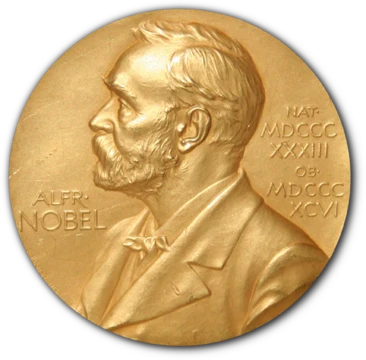
Konrad Emil Bloch was a German-American biochemist who shared the Nobel Prize in Physiology or Medicine in 1964 with Feodor Lynen. He was recognized for discoveries concerning the mechanism and regulation of cholesterol and fatty acid metabolism.
Quick Facts
- Born
- 21 January 1912
- Birthplace
- Neisse, Prussia, German Empire
- Died
- 15 October 2000
- Place of death
- Burlington, Massachusetts, United States
- Citizenship
- Germany, United States
- Workplaces
- University of Chicago
Facts from the source article.
Life and career
Konrad Emil Bloch was born into a Jewish family in Neisse, a town in the Prussian Province of Silesia of the German Empire that is now Nysa, Poland. He was the second child of Hedwig Striemer and Frederich D. "Fritz" Bloch, a middle-class couple. After attending the Gymnasium Carolinum in Nysa, he studied chemistry at the Technical University of Munich from 1930 to 1934. Facing Nazi persecution of Jews, he fled to the Schweizerische Forschungsinstitut in Davos, Switzerland, in 1934, and then moved to the United States in 1936. He earned a PhD in biochemistry from Columbia University in 1938 and stayed on as a teacher there until 1946. He later worked at the University of Chicago before joining Harvard University in 1954 as the Higgins Professor of Biochemistry, a role he kept until 1982. From 1979 to 1984, he also taught science at Harvard’s School of Public Health. After retiring from Harvard, he held the Mack and Effie Campbell Tyner Eminent Scholar Chair in the College of Human Sciences at Florida State University. In 1964, Bloch shared the Nobel Prize in Physiology or Medicine with Feodor Lynen for their discoveries about how the body regulates and synthesizes cholesterol and fatty acids. They showed that the body builds squalene from acetate through many steps, then turns squalene into cholesterol. Bloch tracked every carbon atom in cholesterol back to acetate, using radioactive acetate in bread mold—since fungi also make squalene—and confirmed his findings with rats. He was part of the group that discovered acetyl Coenzyme A becomes mevalonic acid, and he and Lynen demonstrated that mevalonic acid turns into chemically active isoprene, the building block of squalene. Bloch also found that bile and a female sex hormone come from cholesterol, leading to the conclusion that all steroids originate from cholesterol. His Nobel Lecture was titled "The Biological Synthesis of Cholesterol." In 1985, he was elected a Fellow of the Royal Society, and in 1988 he received the National Medal of Science. He was also a member of the American Academy of Arts and Sciences, the United States National Academy of Sciences, and the American Philosophical Society.
Frequently Asked Questions
When and where was Konrad Emil Bloch born?
Konrad Emil Bloch was born on 21 January 1912 in Neisse, Prussia, German Empire.
When did Konrad Emil Bloch die?
Konrad Emil Bloch died on 15 October 2000 in Burlington, Massachusetts, United States.
More in American Nobel Laureates
Spotted an error? Know more?
Reader corrections go straight into our review queue. Suggest an edit · How this site is sourced