Martin Rodbell
American biochemist who discovered G-proteins and signal transduction.
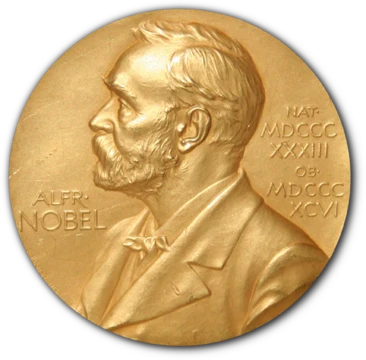
Martin Rodbell was an American biochemist and molecular endocrinologist. He is best known for his discovery of G-proteins. He shared the 1994 Nobel Prize in Physiology or Medicine with Alfred G. Gilman for their discovery of G-proteins and the role of these proteins in signal transduction in cells.
Quick Facts
- Born
- 1 December 1925
- Birthplace
- Baltimore, Maryland, U.S.
- Died
- 7 December 1998
- Place of death
- Chapel Hill, North Carolina, U.S.
- Field
- Biochemist
- Workplaces
- National Institute of Health
- Duke University
- University of North Carolina at Chapel Hill
- Education
- Johns Hopkins University; University of Washington
- Known for
- G-proteins; signal transduction
Facts from the source article.
Biography
Martin Rodbell came into the world in Baltimore, Maryland, born to Shirley Abrams Rodbell and Milton Rodbell, a grocer, in a Jewish household. After finishing high school at Baltimore City College, he enrolled at Johns Hopkins University in 1943, drawn to both biology and French existential literature. His college years were put on hold in 1944 when he served as a U.S. Navy radio operator during World War II. He returned to Hopkins in 1946 and earned a bachelor’s degree in biology in 1949. In 1950, he married Barbara Charlotte Ledermann, who had been a friend of Margot Frank, the older sister of diarist Anne Frank. The couple raised four children. Rodbell went on to earn his Ph.D. in biochemistry from the University of Washington in 1954, followed by post-doctoral work at the University of Illinois at Urbana-Champaign from 1954 to 1956. He then took a job as a research biochemist at the National Heart Institute, part of the National Institutes of Health in Bethesda, Maryland, in 1956. In 1985, he became Scientific Director of the NIH’s National Institute of Environmental Health Sciences in Research Triangle Park, North Carolina, a role he held until retiring in 1994. He also served as an adjunct professor of Cell Biology at Duke University from 1991 to 1998 and as an adjunct professor of pharmacology at the University of North Carolina at Chapel Hill. Rodbell passed away in Chapel Hill from multiple organ failure following a long illness. Drawing on the growing parallels between computer science and biology during the 1960s, Rodbell argued that the way computers and living organisms process information is fundamentally alike. He saw individual cells as cybernetic systems built from three distinct molecular parts: discriminators, transducers, and amplifiers (also called effectors). The discriminator, or cell receptor, picks up signals from outside the cell; the transducer moves that information across the cell membrane; and the amplifier boosts the signals to spark reactions inside the cell or pass messages to other cells.
Frequently Asked Questions
When and where was Martin Rodbell born?
Martin Rodbell was born on 1 December 1925 in Baltimore, Maryland, U.S.
When did Martin Rodbell die?
Martin Rodbell died on 7 December 1998 in Chapel Hill, North Carolina, U.S.
More in American Nobel Laureates
Spotted an error? Know more?
Reader corrections go straight into our review queue. Suggest an edit · How this site is sourced