Thomas Schelling
Nobel laureate economist who analyzed conflict and cooperation.
Thomas Schelling, an American economist, taught foreign policy, national security, nuclear strategy, and arms control at the University of Maryland. With Robert Aumann, he won the 2005 Nobel in economics for using game theory to illuminate conflict and cooperation.
Quick Facts
- Birth name
- Thomas Crombie Schelling
- Born
- 14 April 1921
- Birthplace
- Oakland, California, U.S.
- Died
- 13 December 2016
- Place of death
- Bethesda, Maryland, U.S.
- Institution
- Yale University
- Harvard University
- University of Maryland
- New England Complex Systems Institute
- Field
- Game theory
- Alma mater
- University of California, Berkeley (BA); Harvard University (PhD)
Facts from the source article.
Did You Know?
- Stanley Kubrick read an article by Schelling that described the Peter George novel Red Alert, leading to the 1964 film Dr. Strangelove.
- Schelling is credited with the first known use of the phrase collateral damage in a May 1961 article.
- His book Choice and Consequence explored nuclear terrorism, blackmail, daydreaming, and euthanasia from a behavioral economics perspective.
Biography
Thomas Schelling was born in Oakland, California, and finished high school in San Diego. He completed a bachelor's degree in economics at UC Berkeley in 1944, then earned his PhD in economics from Harvard in 1951. Between 1948 and 1953, he worked for the Marshall Plan in Europe, the White House, and the Executive Office of the President, penning most of his dissertation on national income behavior during nights while overseas. After leaving government, he taught economics at Yale. In 1956, he started as an adjunct fellow at the RAND Corporation, spent a year there as a full-time researcher after leaving Yale, and kept an adjunct role until 2002. Two years later, Harvard appointed him professor of economics, and that same year he helped launch the Center for International Affairs, later called the Weatherhead Center for International Affairs. In 1969, he moved to Harvard’s John F. Kennedy School of Government, where he held the Lucius N. Littauer Professorship of Political Economy and played a key role in steering the school’s focus from administration toward leadership. From 1994 to 1999, he did research at the International Institute for Applied Systems Analysis in Austria. In 1990, he left Harvard for the University of Maryland, joining both its School of Public Policy and Department of Economics. He led the American Economic Association as president in 1991 and the Eastern Economic Association in 1995. He also contributed to the Copenhagen Consensus. Schelling married Corinne Tigay Saposs in 1947; they had four sons before divorcing in 1991. That same year, he married Alice M. Coleman, gaining two stepsons. He died in Bethesda, Maryland, at age 95 from complications after a hip fracture.
Honors and awards
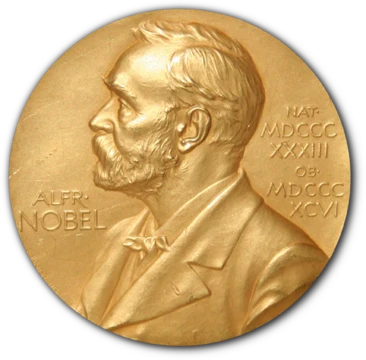
Thomas Schelling's honors include the 1977 Frank E. Seidman Distinguished Award in Political Economy and the 1993 Award for Behavior Research Relevant to the Prevention of Nuclear War from the National Academy of Sciences. He received honorary doctorates from Erasmus University Rotterdam in 2003, Yale University in 2009, and the RAND Graduate School of Public Analysis, plus an honorary degree from the University of Manchester in 2010. In 2005 he shared the Nobel Memorial Prize in Economic Sciences with Robert Aumann for game-theory insights into conflict and cooperation. He was the 2008 Witten Lecturer at Witten/Herdecke University. After his death, his family auctioned his Nobel medal for $187,000 and donated the proceeds to the Southern Poverty Law Center. His wife Alice noted that he considered Smoky the Cowhorse by Will James the most influential book he ever read.
Notable works
Schelling's 1960 book The Strategy of Conflict pioneered the study of bargaining and strategic behavior in what he called conflict behavior. The Times Literary Supplement in 1995 ranked it among the 100 most influential books since 1945. The book introduced concepts such as the focal point and credible commitment. Morton Kaplan in a 1961 review called it a strikingly original contribution and a landmark in the literature. The book comprised a series of scholarly journal articles Schelling had published from 1957 to 1960. Schelling encouraged a strategic view toward conflict that is both rational and successful, arguing that conflict must address the advantages associated with a course of action and that those advantages should be fixed in an explicit and consistent value system. He defined conflict as not merely defeating an opponent but also seizing opportunities to cooperate, noting that pure conflict—where interests are implacably opposed—occurs only rarely, as in a war of complete extermination. Cooperation may take forms including deterrence, limited war, disarmament, and negotiation, turning conflict into a bargaining situation where gains depend on the choices or decisions of the opponent. Communication can be explicit, such as offering concessions, or tacit, through action-based maneuvers like occupying or evacuating strategic territory.
Global warming
Schelling first entered the climate debate in 1980, when he led a commission for President Carter. He saw global warming as a serious problem for poor countries, but thought its danger to the United States was overstated. He pointed out that very little of America’s economy depends on outdoor production, and even a steep drop in farm output would only delay economic growth by a year. Using lessons from the Marshall Plan, he framed climate action as a bargaining challenge: rich nations would pay most of the costs for cutting emissions, while poor nations would gain most of the benefits.
Frequently Asked Questions
When and where was Thomas Schelling born?
Thomas Schelling was born on 14 April 1921 in Oakland, California, U.S.
When did Thomas Schelling die?
Thomas Schelling died on 13 December 2016 in Bethesda, Maryland, U.S.
More in American Nobel Laureates
Spotted an error? Know more?
Reader corrections go straight into our review queue. Suggest an edit · How this site is sourced