Edmund S. Phelps
American economist and 2006 Nobel laureate in economic sciences.
Edmund Strother Phelps was an American economist awarded the 2006 Nobel Prize. He identified the golden rule savings rate and the natural rate of unemployment, and he grounded macroeconomic theory in microfoundations.
Quick Facts
- Born
- July 26, 1933, Evanston, Illinois
- Died
- May 15, 2026
- Nobel prize
- 2006, Sveriges Riksbank Prize in Economic Sciences in Memory of Alfred Nobel
- Doctoral institution
- Yale University (Ph.D., 1959)
- Key academic positions
- Cowles Foundation (1960–1966)
- University of Pennsylvania (1966–1971)
- Columbia University (1971–2021)
- Notable title
- McVickar Professor of Political Economy at Columbia (1982–2021), then McVickar Professor Emeritus (2022)
Facts from the source article.
Did You Know?
- Phelps moved with his family to Hastings-on-Hudson, New York at age six and spent his school years there.
- He studied under future Nobel laureates James Tobin and Thomas Schelling at Yale, and was strongly influenced by William Fellner's course on expectations.
- In the 1980s he collaborated with European institutions including Banca d'Italia and OFCE in Paris, and published on persistent high unemployment in Europe with Jean-Paul Fitoussi.
Research in 1960s and 1970s
After completing his Ph.D., Phelps worked briefly at the RAND Corporation but left because he could not pursue macroeconomics there, as the organization focused on defense work. In 1960 he took a research position at the Cowles Foundation while also teaching at Yale. His research there concentrated on neoclassical growth theory, following the work of Robert Solow. In 1961 he published a paper on the Golden Rule savings rate, a major contribution. He also wrote on monetary economics and Ricardian equivalence in relation to optimal growth. At Cowles he interacted with Arthur Okun and collaborated with David Cass and future Nobel laureates Tjalling Koopmans. During the 1962–63 academic year he visited MIT, where he was in contact with Paul Samuelson, Robert Solow, and Franco Modigliani. In 1966 he moved to the University of Pennsylvania as a tenured professor. There his research shifted to the link between employment, wage setting, and inflation. His first pioneering paper on this topic, in 1967, developed a model of the Expectations Augmented Phillips Curve, solving for macro variables by maximizing discounted social welfare. He labeled the equilibrium unemployment rate U and later called it the natural rate. His 1968 paper "Money-Wage Dynamics and Labor Market Equilibrium" laid out a framework where involuntary unemployment can exist even at the natural rate, and money wage dynamics are driven largely by firm decisions.
Research in 1990s
In 1990 Phelps participated in a mission from the new EBRD to Moscow, where he and Kenneth Arrow designed a reform proposal for the Soviet Union. After the EBRD was established, he served on its Economic Advisory Board until 1993. Through this work and collaboration with former student Roman Frydman, he developed a strong interest in Eastern Europe's transition economies. Over the late 1980s and early 1990s he created a non-monetary theory of employment in which business asset values drive the natural rate. This theory was first fully set out in his 1994 book Structural Slumps, which explained Europe's 1980s slump without disinflation through factors such as elevated world real interest rates, declining technological catching-up opportunities, and growing social wealth from welfare states. Two sequel papers in 2000 and 2001 on "structural booms" explained the U.S. inflationless expansion of the late 1990s and argued it was transient. In the mid-1990s his research turned to economic inclusion, and in 1997 he published Rewarding Work, a book for the general public about joblessness and low wages among disadvantaged workers.
Later work
Phelps's later work focused on the benefits and sources of a country's structural dynamism, including enterprise and creativity of entrepreneurs, financiers' skill in selecting projects, and managers' knowledge in using new methods and products. He argued that great dynamism brings advantages in virtually every dimension of economic performance, not just productivity, and that a creative business sector provides most people with a vehicle for developing their talents. His research on dynamism began at the European Bank for Reconstruction and Development in 1990 and 1992–93, where he worked on the theory of capitalism and mass privatization in Eastern Europe. Later he studied economic institutions in Western Europe and the United States, focusing on the Italian economy as Senior Advisor to Italy in Europe of the Consiglio Nazionale delle Ricerche from 1997 to 2000. In 2001 he co-founded the Center on Capitalism & Society at Columbia with Roman Frydman and others. In 2008, writing after the Great Recession, he criticized "false" models of neoclassical economics and expressed skepticism about the Keynesian resurgence.
Honors and awards
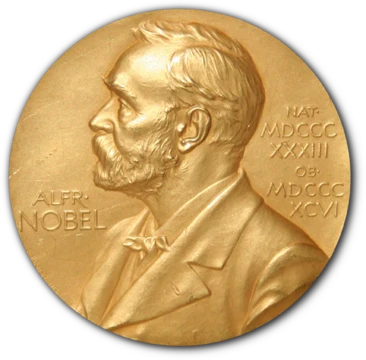
In 1981 Phelps was elected to the National Academy of Sciences in the USA. In 2006 he received the Sveriges Riksbank Prize in Economic Sciences in Memory of Alfred Nobel for "his analysis of inter-temporal tradeoffs in macroeconomic policy. The Royal Swedish Academy of Sciences said his work had "deepened our understanding of the relation between short-run and long-run effects of economic policy. In 2000 he was made a Distinguished Fellow of the American Economic Association. In February 2008 he was named Chevalier of France's Legion of Honor, and four months later received the Global Economy Prize of the Kiel Institute for the World Economy. He also received honorary degrees from Amherst College (1985), the University of Mannheim (2001), Universidade Nova de Lisboa (2003), Paris Dauphine University (2004), the University of Iceland (2004), the Institut d'Etudes Politiques de Paris (2006), the University of Buenos Aires (2007), Tsinghua University (2007), and the Université libre de Bruxelles (2010). From 2010 to 2016 he served as Dean of the New Huadu Business School at Minjiang University in Fuzhou, Fujian, PRC.
More in American Nobel Laureates
Spotted an error? Know more?
Reader corrections go straight into our review queue. Suggest an edit · How this site is sourced