Bruce Beutler
American immunologist and Nobel laureate who discovered the LPS receptor.
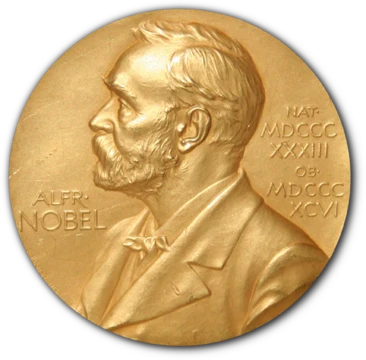
Bruce Alan Beutler is an American immunologist and geneticist who shared the 2011 Nobel Prize in Physiology or Medicine with Jules A. Hoffmann for discoveries concerning the activation of innate immunity. He identified the receptor for lipopolysaccharide by finding mutations in the mouse Toll-like receptor 4 gene. Beutler currently serves as a Regental Professor and Director of the Center for the Genetics of Host Defense at the University of Texas Southwestern Medical Center.
Quick Facts
- Born
- 29 December 1957
- Birthplace
- Chicago, Illinois, U.S.
- Fields
- Immunology
- Workplaces
- University of Texas Southwestern Medical Center, Trinity College Dublin
- Education
- University of Chicago
- University of California
- San Diego
- Spouse
- Barbara Lanzl (c. 1980-1988; divorced; 3 children)
Facts from the source article.
Early life and education
Beutler was born in Chicago, Illinois, to a Jewish family and lived in Southern California from age 2 to 18, mostly in Arcadia, a northeastern Los Angeles suburb in the San Gabriel Valley. During these years he hiked extensively in the San Gabriel Mountains and national parks including Sequoia, Yosemite, Joshua Tree, and Grand Canyon, developing a strong interest in living things. Between ages 14 and 18, he worked in his father Ernest Beutler's laboratory at the City of Hope Medical Center in Duarte, California, learning to assay red blood cell enzymes and protein isolation methods. At 17 he published studies of an electrophoretic variant of glutathione peroxidase and the catalytic activity of inorganic selenite. He also worked in the City of Hope laboratory of Susumu Ohno, studying H-Y antigen and becoming familiar with immunology and mouse genetics. As a college student at the University of California at San Diego, Beutler worked in Dan Lindsley's Drosophila genetics laboratory, learning to map phenotypes to chromosomal regions, and in Abraham Braude's laboratory, studying LPS biology.
Scientific contributions
Beutler's focus on innate immunity began during his postdoctoral and assistant professor years in Anthony Cerami's lab at Rockefeller University. Using skills from earlier training, he isolated mouse cachectin from LPS-activated mouse macrophage conditioned medium. Cachectin was hypothesized to mediate wasting in chronic disease by suppressing lipoprotein lipase synthesis in adipocytes. Beutler purified cachectin to homogeneity through sequential fractionation, determined its N-terminal sequence, recognized it as mouse tumor necrosis factor (TNF), and showed it had strong TNF activity; human TNF also had strong cachectin activity. He demonstrated that TNF acted as a key mediator of endotoxin-induced shock by raising an antibody against mouse TNF and neutralizing it in mice challenged with lipopolysaccharide, significantly mitigating the lethal systemic inflammatory response. With J.-M. Dayer, Beutler showed purified TNF caused inflammation-associated responses in cultured human synoviocytes, including secretion of collagenase and prostaglandin E2. He demonstrated TNF receptors on most cell types and inferred two types distinguished by affinities, later cloned as p55 and p75 TNF receptors.
Family
Bruce Beutler was the third son of Ernest Beutler and Brondelle May Beutler (née Fleisher). His siblings included two older brothers, Steven and Earl, and a younger sister, Deborah. Ernest Beutler was a hematologist and medical geneticist known for studies of G-6-PD deficiency, hemolytic anemias, iron metabolism, glycolipid storage diseases, leukemias, and discovery of X chromosome inactivation; he was a professor and department chairman at The Scripps Research Institute. Both of Ernest Beutler's parents were physicians: Bruce's paternal grandmother Kathe Beutler (née Italiener) was a pediatrician trained at the Charité hospital in Berlin, and Alfred Beutler, also a physician, was a cousin to spectral physicist Hans G. Beutler.
More in American Nobel Laureates
Spotted an error? Know more?
Reader corrections go straight into our review queue. Suggest an edit · How this site is sourced