Jeffrey C. Hall
Geneticist who revealed molecular mechanisms of the circadian clock.
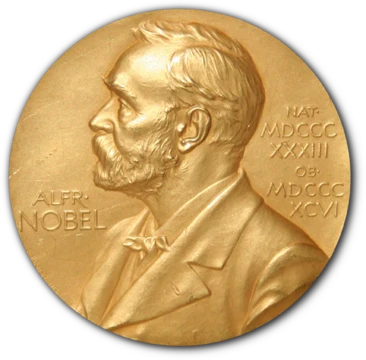
Jeffrey C. Hall is an American geneticist and chronobiologist who uncovered essential mechanisms of the circadian clock through research on Drosophila melanogaster. He was awarded the 2017 Nobel Prize in Physiology or Medicine alongside Michael W. Young and Michael Rosbash for discoveries of molecular mechanisms controlling the circadian rhythm. Hall is Professor Emeritus of Biology at Brandeis University and resides in Cambridge, Maine.
Quick Facts
- Birth name
- Jeffrey Connor Hall
- Born
- 3 May 1945
- Birthplace
- New York City, U.S.
- Known for
- Cloning the period gene
- Education
- Amherst College (BA); University of Washington, Seattle (MS, PhD)
- Fields
- Genetics
- Workplaces
- Brandeis University; University of Maine
- Thesis year
- 1971
Facts from the source article.
Life
Jeffrey Hall was born in Brooklyn, New York, and raised in the suburbs of Washington D.C. while his father, Joseph W. Hall, worked as a reporter for the Associated Press covering the U.S. Senate. His father encouraged him to stay updated on recent events through the daily newspaper. Hall attended Walter Johnson High School in Bethesda, Maryland, graduating in 1963. Initially planning a career in medicine, he began pursuing a bachelor's degree at Amherst College in 1963. During his undergraduate years, Hall found his passion in biology. For his senior project, he worked with Philip Ives, whom Hall regarded as one of the most influential people in his formative years. Working in Ives' lab, Hall became fascinated with Drosophila and studied recombination and translocation induction in the flies. Department faculty recommended that Hall pursue graduate school at the University of Washington in Seattle, where an entire department was devoted to genetics. In 1967, Hall began working in Lawrence Sandler's laboratory, analyzing age-dependent enzyme changes in Drosophila with a focus on genetic control of chromosome behavior in meiosis. Hershel Roman encouraged Hall to pursue postdoctoral work with Seymour Benzer at the California Institute of Technology. Hall joined Benzer's laboratory in 1971, where he worked with Doug Kankel and learned about Drosophila neuroanatomy and neurochemistry. In his third year as a postdoctoral researcher, Roman contacted Hall about faculty positions. Hall joined Brandeis University as an Assistant Professor of Biology in 1974. He is known for his eccentric lecturing style.
Drosophila courtship behavior
Hall's work on Drosophila courtship behavior began as a collaborative effort with Kankel during the last months of his postdoctoral years in Benzer's laboratory. They used fruit fly sex mosaics to correlate courtship behaviors with genetic sex in various regions of the nervous system. This work triggered Hall's interest in the neurogenetics of Drosophila courtship. In the late 1970s, collaborating with Florian von Schilcher, Hall identified the nervous system regions in Drosophila that contributed to regulating male courtship songs. He realized courtship singing behavior was elegantly quantifiable and decided to study it further. With postdoctoral fellow Bambos Kyriacou, Hall discovered that Drosophila courtship song was produced rhythmically with a normal period of about one minute. Suspecting the period mutation for abnormal sleep-wake cycles might also alter courtship song cycles, Hall and Kyriacou tested period mutations on courtship song. They found that period mutations affected courtship song in the same way they changed circadian rhythms: pers produced a shorter oscillation of about 40 seconds, perl produced a longer oscillation of about 76 seconds, and pero produced a song with no regular oscillation.
Circadian rhythm of period gene and protein
Jeffrey C. Hall studied circadian rhythms in fruit flies, but instead of tracking when the insects emerged from their pupal cases, he measured their movement. In 1990, working with Michael Rosbash and Paul Hardin, Hall found that the Period protein, or PER, could shut down its own production. This led them to propose a negative feedback loop: when PER levels rose high enough, the gene that made it stopped being active, causing PER to drop, which then allowed the gene to start up again. This transcription-translation feedback loop became a key idea for how the fly’s internal clock works. In 1997, Hall joined a team that showed the genes involved in this loop were active in cells all over the body, though at different levels in different tissues. He even managed to set separate groups of cells to different light-dark schedules at the same time. In 2003, Hall identified the pigment dispersing factor protein, or PDF, as the synchronizing signal. PDF, produced in small ventral lateral neurons in the fly brain, helped coordinate the clock genes and control movement. Hall concluded these neurons acted as the main pacemaker, with PDF keeping cells in sync. In 1998, Hall helped refine the feedback loop model with two discoveries. First, he found that Cryptochrome, or CRY, was a key light receptor for setting the clock and regulating activity, and he suggested it might also work as a pacemaker itself. Second, he uncovered how the clock genes per and timeless were turned on: the CLOCK and Cycle proteins paired up through a PAS domain, then attached to an E box DNA sequence using a bHLH domain to trigger the genes’ activity. Hall received the 2017 Nobel Prize in Physiology or Medicine for this work.
Frequently Asked Questions
When and where was Jeffrey C. Hall born?
Jeffrey C. Hall was born on 3 May 1945 in New York City, U.S.
What is Jeffrey C. Hall known for?
Jeffrey C. Hall is known for Cloning the period gene.
More in American Nobel Laureates
Spotted an error? Know more?
Reader corrections go straight into our review queue. Suggest an edit · How this site is sourced