David Card
Canadian-American labour economist and 2021 Nobel laureate.
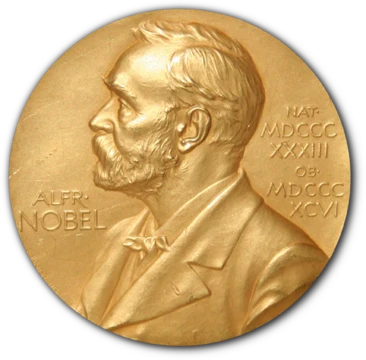
David Edward Card, a Canadian-American labour economist born in 1956, has been a professor at the University of California, Berkeley since 1997, holding the Class of 1950 chair. In 2021, he received half of the Nobel Memorial Prize in Economic Sciences for his empirical work in labour economics; the other half was shared by Joshua Angrist and Guido Imbens.
Quick Facts
- Born
- 1956
- Birthplace
- Guelph, Ontario, Canada
- Field
- Labour economics
- Institutions
- University of California
- Berkeley
- University of Chicago
- Doctoral advisor
- Orley Ashenfelter
- Education
- Queen's University at Kingston (BA); Princeton University (MA, PhD)
Facts from the source article.
Did You Know?
- Card was born in Guelph, Ontario, to a family of dairy farmers.
- He originally pursued a degree in physics before switching to economics during his undergraduate studies.
- He served as co-editor of The American Economic Review from 2002 to 2005.
Academic work
In the early 1990s, Card, with his then Princeton colleague Alan B. Krueger, found that a minimum wage increase in New Jersey did not lead to job reduction among fast food companies in that state, contrary to widely accepted economic beliefs. The methodology and its claim have been disputed, but later studies of minimum wage increases have tended to confirm their findings, and economists including Joseph Stiglitz and Paul Krugman accept them. Card has also contributed to research on immigration, education, job training, and inequality, often comparing the United States and Canada. His immigration research shows that the economic impact of new immigrants is minimal; for example, studying the Mariel boatlift, he found that despite a 7% increase in low-skilled labor in Miami, wages for low-skilled workers were not significantly affected, and overall unemployment and wages in Miami were unchanged. Card does not publicly take stands on political issues or make policy suggestions, though his work is regularly cited in support of increased immigration and minimum wage legislation. He served as an expert witness for Harvard in the 2018 Harvard admissions case.
Contributions to Economics of Education
David Card reshaped the economics of education by examining how access and school settings shape long-term results. In a key study, he used distance to a college as a tool to show that those living nearer were more likely to attend, and that extra schooling led to higher earnings. He also demonstrated that smaller classes, teacher pay, and resources improve outcomes, especially for disadvantaged students. By focusing on real-world differences, institutional factors, and student experiences, his research pushed economists toward stronger empirical methods. This work helped establish education as a field where credible evidence could reveal how opportunity and mobility are influenced by school environments.
Awards
Card's early recognition came with the 1995 John Bates Clark Medal, awarded for his studies on minimum wage and the Mariel boatlift's economic impact. He delivered the American Economic Association's Richard T. Ely Lecture in 2009, and a 2011 survey of economics professors ranked him as their fifth favorite living economist under 60. In 2014, he was elected vice president of the American Economic Association alongside N. Gregory Mankiw. That same year, he and Richard Blundell shared the BBVA Foundation Frontiers of Knowledge Award in Economics, Finance and Management for their empirical microeconomics work. Card joined the U.S. National Academy of Sciences in 2021 and won the 2021 Nobel Memorial Prize in Economic Sciences for research showing minimum wage increases do not reduce hiring and that immigrants do not lower wages for native-born workers.
More in American Nobel Laureates
Spotted an error? Know more?
Reader corrections go straight into our review queue. Suggest an edit · How this site is sourced