The Danelaw
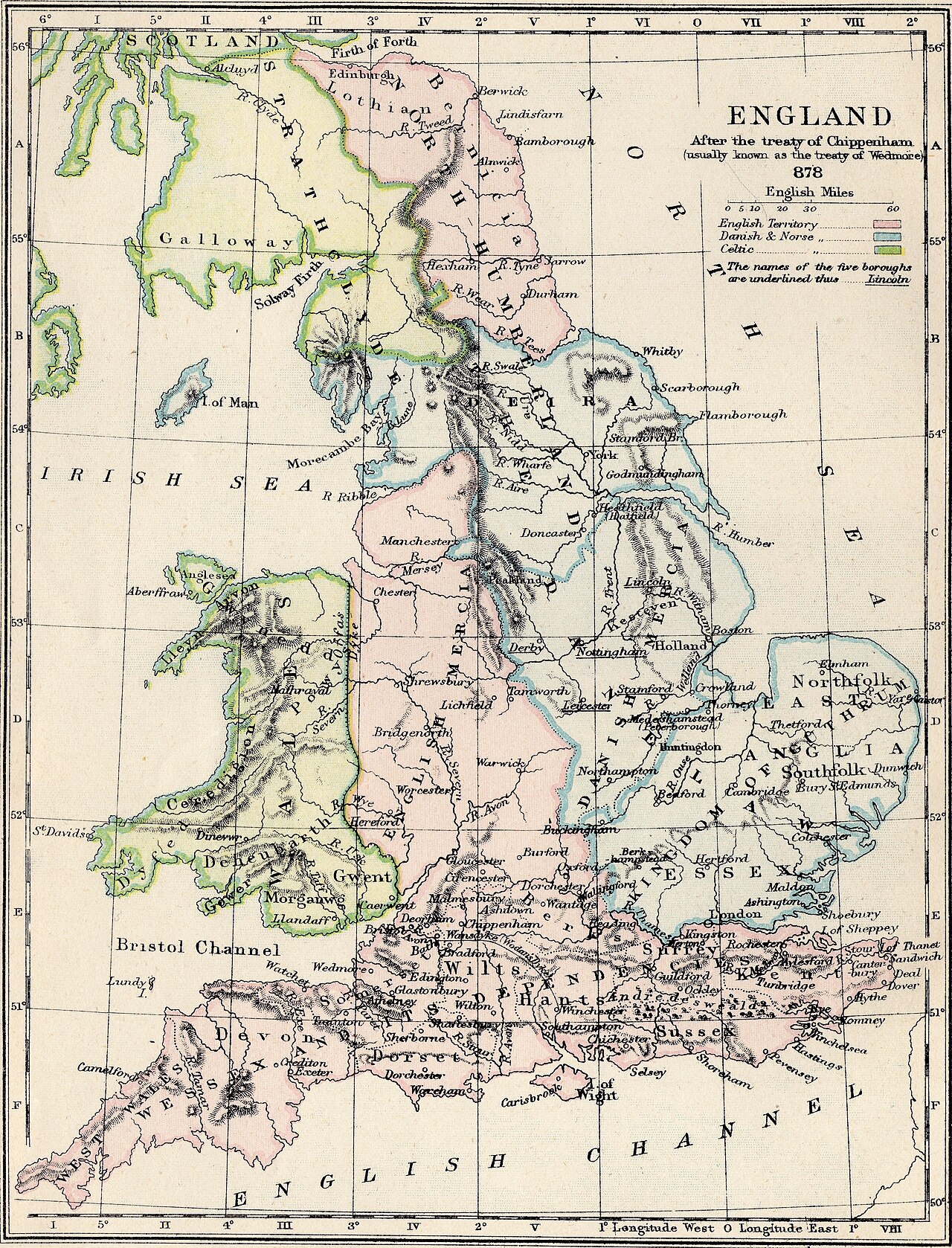
Region of England under Danish law after Viking conquest.
Last updated

S. R. Gardiner · Public domain
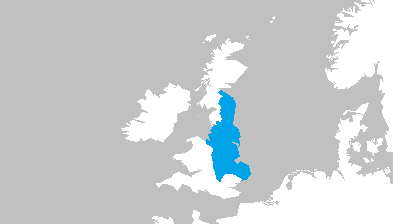
Between the late ninth century and the Norman Conquest, the region of England where Danish laws were in effect was known as the Danelaw.[1]
What happened
This combined force, described as the Great Heathen Army, captured Northumbria and its capital York in 867.[2] After several campaigns, Guthrum and the Danes brokered peace with Wessex in 876.[3] The Treaty of Alfred and Guthrum was formalised between 886 and 890, defining boundaries and allowing Danish self-rule.[4] Eric Bloodaxe was expelled from Northumbria in 954, bringing Viking rule there to an end.[5]
What the cited sources add
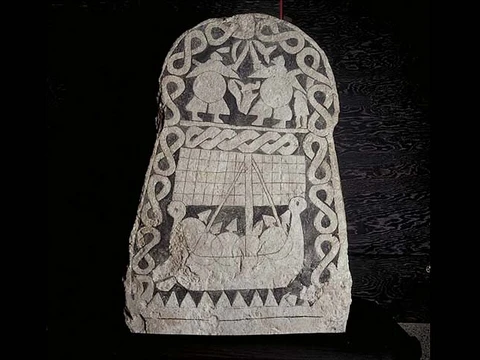
The Viking Network account states it is impossible to know how many Scandinavians settled in the Danelaw.[6] According to the same source, a form of language had to quickly develop so everyone could communicate in work, home, trade, and administration.[6] The Viking Network notes that the effect went beyond loan words to create new Anglo-Norse dialects more Scandinavian than English.[6] The same source records that combined Anglo-Norse decoration can be found on stone crosses and hog-back gravestones in the Danelaw.[6]
References
- Wikipedia, "Danelaw" (CC BY-SA 4.0), which cites: M. Pons-Sanz, "Norse-derived Vocabulary in late Old English Texts: Wulfstan's Works. A Case Study", John Benjamins Publishing Company, 2007, p. 71 (original not read by us) en.wikipedia.org
- Wikipedia, "Danelaw" (CC BY-SA 4.0), which cites: Sawyer. The Oxford Illustrated History of the Vikings. pp. 52–55; ASC 865 – English translation at project Gutenberg . Retrieved 16 January 2013 (original not read by us) en.wikipedia.org
- Wikipedia, "Danelaw" (CC BY-SA 4.0), which cites: Abels, "Alfred the Great: War, Kingship and Culture in Anglo-Saxon England", Routledge, 1998, p. 153–154; ASC 878 – English translation at project Gutenberg . Retrieved 9 June 2014; Kendrick, "A History of the Vikings", Charles Scribner's Sons, 1930, p. 238 (we also read that source) en.wikipedia.org
- Wikipedia, "Danelaw" (CC BY-SA 4.0), which cites: Yorke 2014, p. 228; "The laws of the earliest English kings", Cambridge University Press, 1922, p. 96–101 (original not read by us) en.wikipedia.org
- Wikipedia, "Danelaw" (CC BY-SA 4.0), which cites: Lesley Abrams, 'Edward the Elder's Danelaw', in N. J. Higham & D. H. Hill eds, Edward the Elder 899–924, Routledge, 2001, pp. 138–139 (original not read by us) en.wikipedia.org
- "Danelaw Heritage", The Viking Network. facts only, no text reused. viking.no
Each numbered sentence above was checked against the source it cites before publication. Sentences citing Wikipedia adapt text from the English Wikipedia article Danelaw (contributors), used under CC BY-SA 4.0; this entry is available under the same licence. Other sources were used for facts only; no text or images are copied from them.
More in The Viking Age
Sources
Compiled from Wikipedia and the sources listed below. Text from Wikipedia is available under CC BY-SA 4.0; this entry is adapted from it.
- Wikipedia: Danelaw (CC BY-SA 4.0).
Spotted an error? Know more?
Reader corrections go straight into our review queue. Suggest an edit · How this site is sourced