
TRAPPIST-1d
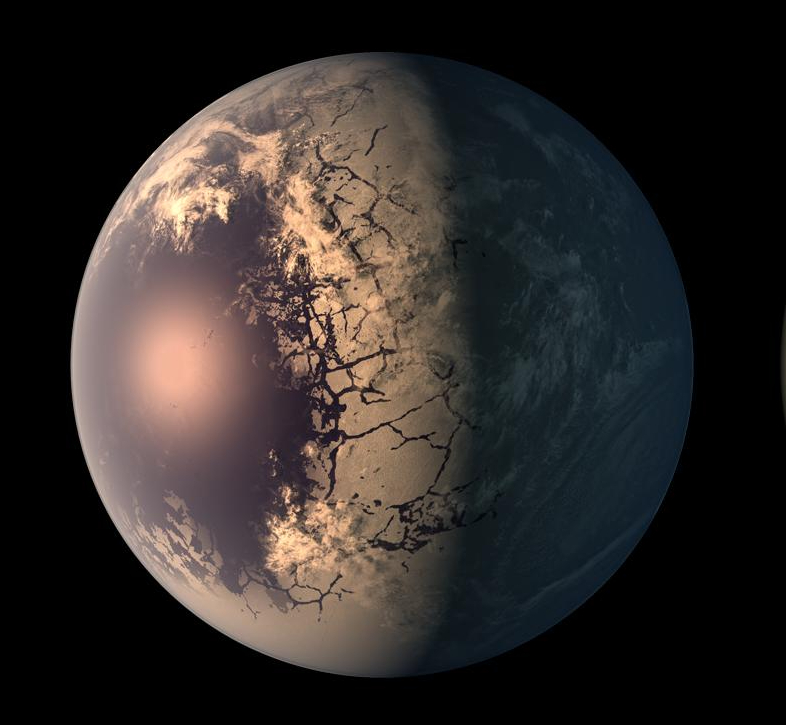
A small, rocky world on the inner edge of its star's habitable zone.

NASA/JPL-Caltech · Public domain
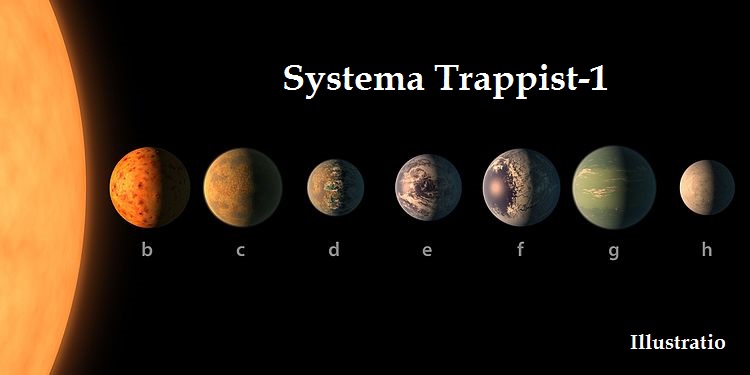
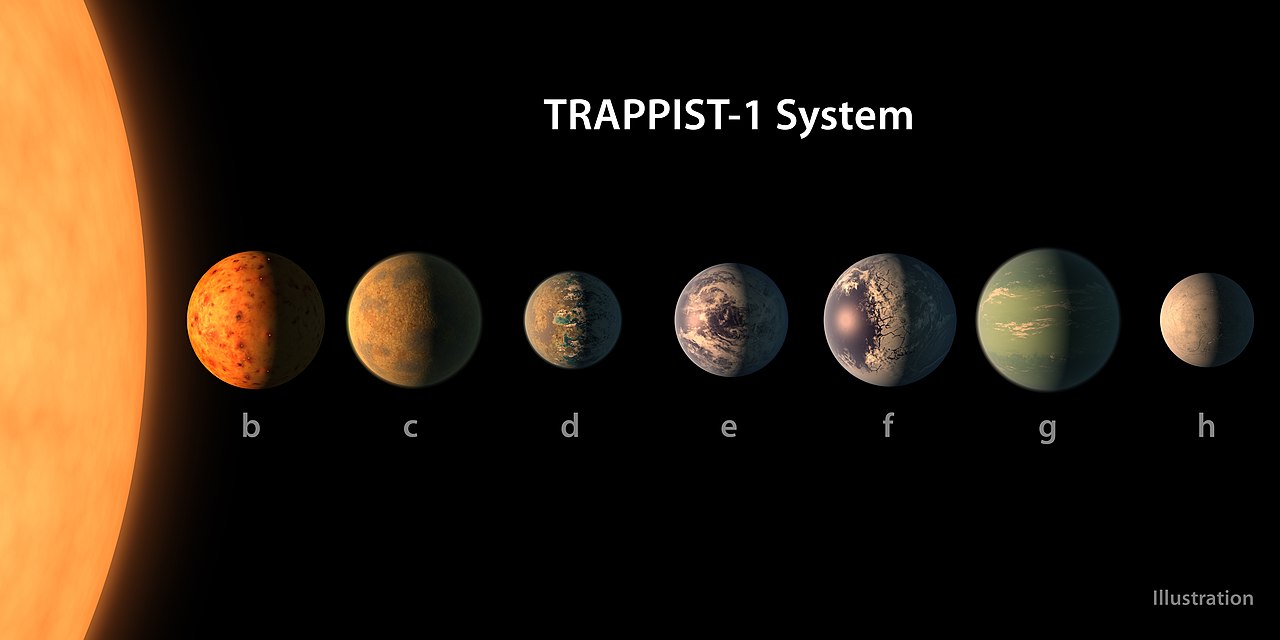
TRAPPIST-1d is a small exoplanet with roughly 40% of Earth’s mass, orbiting the ultra-cool red dwarf star TRAPPIST-1 at the inner edge of the habitable zone. The star lies 40.7 light-years away in the constellation Aquarius. This planet is the second least massive in its system and was detected using the transit method; initial signs emerged in 2016, with more details gathered in the years that followed.
The planet’s radius was measured precisely through transits, with an error margin of about 70 kilometers. Its mass was determined using transit timing variations and computer simulations, which also allowed calculations of density, surface gravity, and composition. Early estimates gave it 61.6% of Earth’s density and less than half Earth’s gravity. Though it has nearly three times the mass of Mars, it was thought to be significantly less dense, suggesting a thick volatile layer—possibly an atmosphere, ocean, or ice. Refined data later showed a higher density, about 79.2% of Earth’s. Its equilibrium temperature is 282.1 K if it reflects no light (albedo of 0), or around 258 K with an Earth-like albedo of 0.3—very close to Earth’s 255 K.
TRAPPIST-1d orbits extremely close to its star, completing one lap every 4.05 days at a distance of just 0.0223 AU—about 2.2% of the Earth-Sun distance. For comparison, Mercury takes 88 days at 0.38 AU. The planet is in a 5:3 orbital resonance with TRAPPIST-1c and a 3:2 resonance with TRAPPIST-1e. Because the star is so small and the orbit so tight, TRAPPIST-1 appears 5.5 times larger in the planet’s sky than the Sun does from Earth. Despite the close orbit, the star’s low luminosity means the planet receives only 1.043 times the starlight Earth gets, placing it on the inner edge of the conservative habitable zone.
The host star, TRAPPIST-1, is an ultracool dwarf with a mass near the boundary between brown dwarfs and hydrogen-fusing stars. It has a temperature of 2566 K, a radius of about 0.12 solar radii, and is 7.6 billion years old—older than the Sun’s 4.6 billion years. Its metallicity is 109% of the Sun’s, unusually high for such a low-mass star. TRAPPIST-1’s luminosity is very low, and it appears too dim to be seen with the naked eye from Earth (apparent magnitude beyond 6.5).
Quick Facts
- Discoverer
- Michaël Gillon et al.
- Discovery Site
- TRAPPIST
- Discovered
- 2 May 2016
- Discovery Method
- Transit
- Apsis
- astron
- Eccentricity
- 0.00837 · 0.00093
- Star
- TRAPPIST-1
Facts from the source article.
Lore & Background
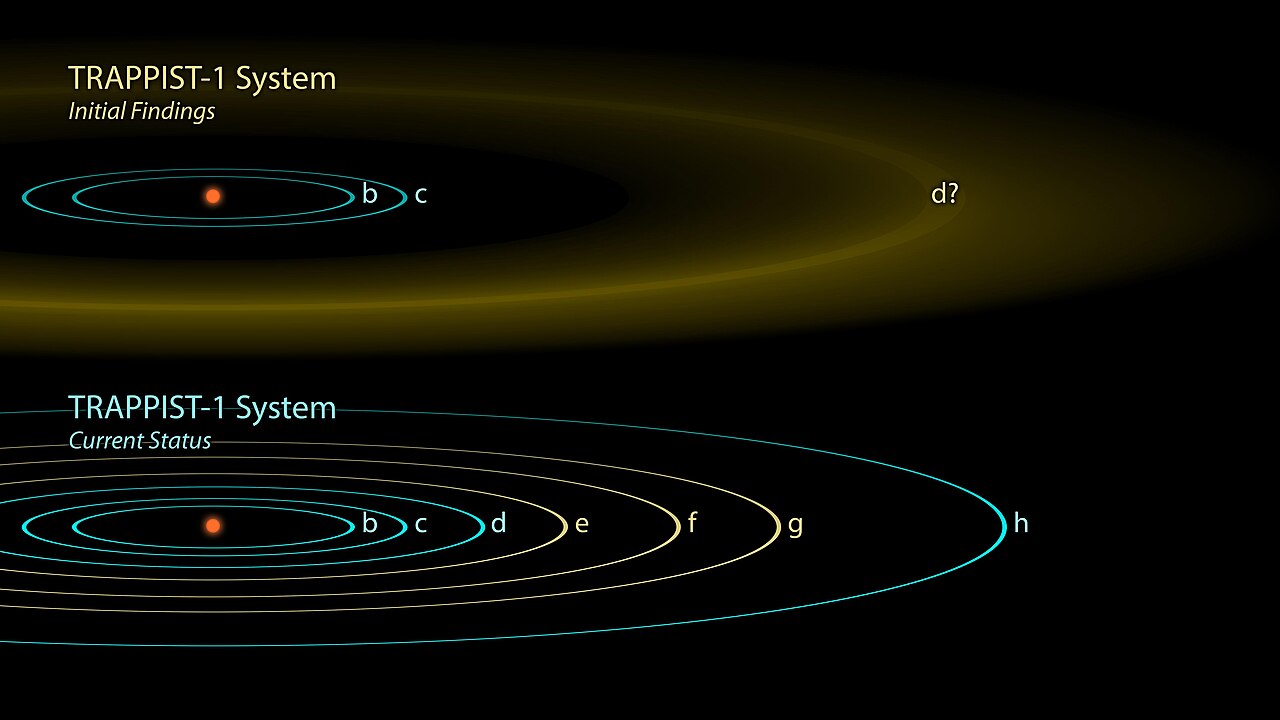
TRAPPIST-1d was first detected in 2016 by a team led by Michaël Gillon using the TRAPPIST telescope at La Silla Observatory in Chile, via transit photometry. The original three-planet system was later revised in 2017 when Spitzer observations revealed a total of seven planets, with TRAPPIST-1d becoming the third planet. The planet orbits extremely close to its star—just 0.0223 AU—completing a full orbit every 4.05 days, and is in 5:3 resonance with TRAPPIST-1c and 3:2 resonance with TRAPPIST-1e.
Physical characteristics have been refined over time. Initial density estimates suggested a low density (61.6% of Earth's) implying a significant volatile layer, but later estimates indicated a higher density (79.2% of Earth's). The planet receives 4.3% more sunlight than Earth, placing it on the inner edge of the habitable zone. Its equilibrium temperature ranges from 282.1 K (assuming no albedo) to about 258 K (with Earth-like albedo). The host star appears 5.5 times larger than the Sun from Earth's sky, but due to the star's low luminosity, the planet receives less than 1% of Earth's visible light, making days no brighter than twilight.
A 2025 study using the James Webb Space Telescope found that the data were 'satisfactorily' consistent with TRAPPIST-1d having no atmosphere at all, similar to Mercury or the Moon. However, a marginal possibility remains that the planet possesses an atmosphere with high-altitude clouds or aerosols, which could include a thin Mars-like CO2 atmosphere, a Venus-like greenhouse scenario, or an Earth-like composition with water clouds. This scenario lies at the edge of statistical significance and cannot be confidently ruled out, but is not a good fit for the data. The lead scientist noted that transmission spectroscopy is only one approach, and while the result does not eliminate prospects for finding an atmosphere, it makes detection 'a bit harder.'
Reader's Guide
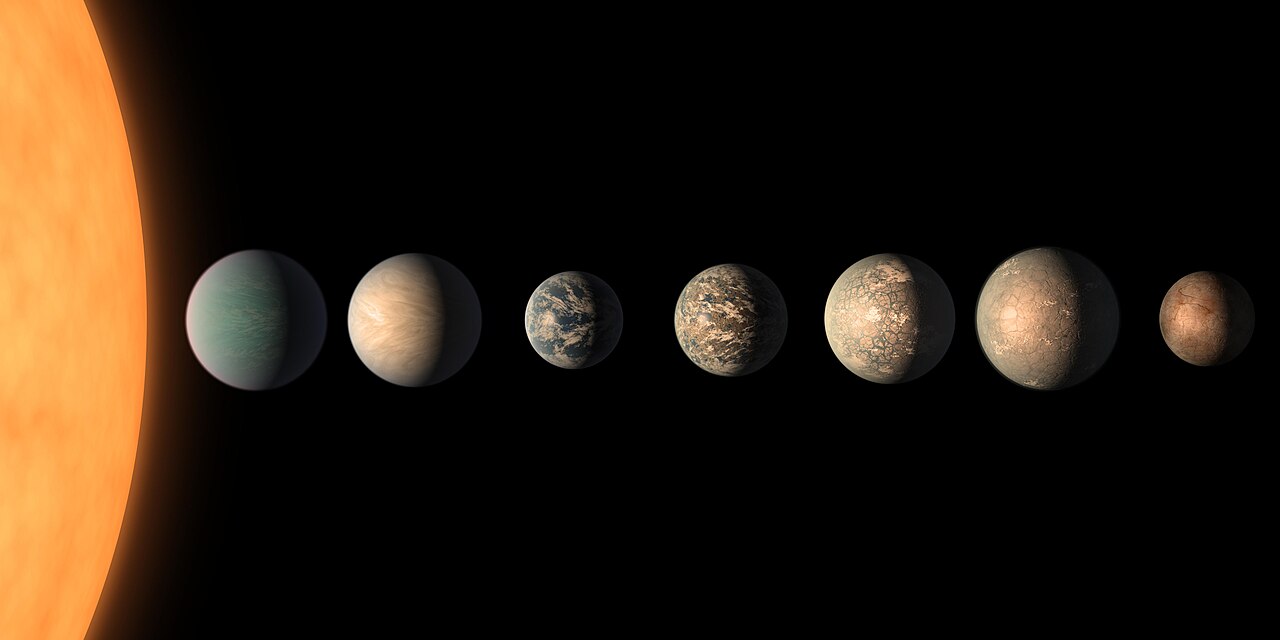
TRAPPIST-1d holds significance as one of the least massive exoplanets found and as a key target in the search for atmospheres around small, rocky worlds. Its location on the inner edge of the habitable zone of an ultra-cool dwarf star makes it a critical case study for understanding planetary habitability around low-mass stars, which are the most common type in the galaxy. The 2025 James Webb Space Telescope observations represent a milestone in exoplanet atmospheric characterization, demonstrating both the power and limitations of transmission spectroscopy for Earth-sized planets. The study's ability to rule out thick, cloud-free atmospheres with high confidence, while leaving open the possibility of atmospheres with high-altitude clouds, highlights the complexity of interpreting such data. The planet's low mass—only about 30% of Earth's—raises questions about magnetic field generation and atmospheric retention, as it may lack a protective magnetic field, allowing stellar wind to strip volatile components. The TRAPPIST-1 system itself is notable for its seven Earth-sized planets, and TRAPPIST-1d's position in the orbital resonance chain provides insights into planetary system formation and evolution. The star's extreme longevity—up to 4–5 trillion years—means that any potential biosphere on TRAPPIST-1d could have an extraordinarily long window for development compared to Earth.
Did You Know?
- TRAPPIST-1d receives only 1.043 times the starlight Earth receives, despite orbiting at just 2.2% of Earth's distance from the Sun.
- A 2025 JWST study found that a thick, cloud-free atmosphere is ruled out with >95% confidence, but a thin or cloudy atmosphere remains marginally possible.
Discovery and Physical Profile
TRAPPIST-1d was identified through the transit method, in which a planet's passage across its host star dims the starlight in a measurable way. Initial evidence for the world surfaced in 2016, but the full picture of its physical nature emerged only in the years that followed. The transit signal yielded a radius of roughly 0.788 Earth radii with an uncertainty of only about seventy kilometres. More complex techniques—transit timing variations combined with detailed computer simulations—allowed researchers to pin down the mass at approximately 0.388 Earth masses, making it the second-least massive member of the TRAPPIST-1 family. From these two numbers, scientists derived density, surface gravity, and composition. Early estimates placed the bulk density at about 61.6 percent of Earth's (roughly 3.39 g/cm³) and gravity at just under half that of our planet, hinting at a substantial volatile envelope of up to five percent of total mass. Refined analyses later pushed the density closer to 79.2 percent of Earth's value (about 4.35 g/cm³), reinforcing the picture of a predominantly rocky world with only a thin layer of volatiles—possibly atmosphere, ocean, or ice.
A Tight Orbit on the Habitable Edge
TRAPPIST-1d completes one full circuit of its star in just 4.05 days, travelling at a distance of 0.0223 astronomical units—roughly 3.34 million kilometres. To put that in perspective, Mercury needs 88 days at about 0.38 AU. The planet is locked into a chain of orbital resonances: a 5:3 ratio with TRAPPIST-1c and a 3:2 ratio with TRAPPIST-1e, a configuration that helps keep the system dynamically stable over billions of years. Because TRAPPIST-1 is so small, the star would loom 5.5 times larger in the planet's sky than the Sun does from Earth. Despite the extreme closeness, the star's very low luminosity means the planet receives only about 4.3 percent more stellar energy than Earth does, seating it squarely on the inner rim of the conservative habitable zone. Assuming a zero albedo, the equilibrium temperature works out to 282 K (about 9 °C); with a more Earth-like albedo of 0.3, it drops to roughly 258 K, barely warmer than Earth's own 255 K equilibrium value.
The Ultra-Cool Star at the Centre
The world circles TRAPPIST-1, an ultra-cool red dwarf that sits right at the boundary between true hydrogen-fusing stars and brown dwarfs. Its mass is only 0.09 solar masses and its radius a mere 0.12 solar radii, with a surface temperature of 2,566 K—less than half the Sun's 5,778 K. The star is already 7.6 billion years old, older than the Sun, and its luminosity is just 0.05 times that of our Sun. One striking anomaly is its metallicity: at 109 percent of the solar value, it is metal-rich in a way that defies expectations for such a low-mass object. From Earth, the star's apparent magnitude of 18.8 makes it far too faint for the naked eye. Because it radiates mostly in infrared rather than visible light, even from TRAPPIST-1d's close vantage point the dayside would never brighten beyond what we recognise as twilight. Yet the star would still outshine our full Moon by a factor of at least three thousand. Thanks to its tiny fuel consumption, TRAPPIST-1 could persist for four to five trillion years, potentially outlasting nearly every other star in the galaxy.
The Atmosphere Question and JWST
In 2025, the James Webb Space Telescope observed TRAPPIST-1d, and the resulting transmission spectroscopy data placed a significant constraint on the planet's atmospheric inventory. With greater than 95 percent confidence, the observations ruled out thick, cloud-free atmospheres analogous to a clear-sky Venus, early Mars, Titan, or the Archean Earth. What remained consistent with the data fell into two broad scenarios. The first, termed the "satisfactory fit" by the study's authors, is that the planet has no atmosphere at all, resembling Mercury or the Moon. The second is a "marginal possibility" that a thin envelope exists but is veiled by high-altitude clouds or aerosols muting molecular signatures. That case could involve an extremely tenuous Mars-like CO₂ layer, a Venus-like greenhouse wrapped in upper clouds, or a modern-Earth-like CO₂ signature once water clouds are factored in. However, this scenario sits at the very edge of the 2-sigma boundary and is not a strong match to the data. Lead scientist Piaulet-Ghorayeb noted that transmission spectroscopy is only one detection technique, and resolving the question with greater confidence will require a fundamentally different observational approach.
Gallery
Frequently Asked Questions
What is TRAPPIST-1d?
TRAPPIST-1d is a small rocky exoplanet that circles the ultra-cool red dwarf star TRAPPIST-1, located roughly 40.7 light-years away in the constellation Aquarius. It sits at the inner boundary of its star's habitable zone and is the second lightest world in that seven-planet system.
How massive is TRAPPIST-1d compared to Earth?
The planet weighs in at roughly 40% of Earth's mass, making it a compact rocky body. Its radius was pinned down through transit observations with a tight error margin of around 70 kilometers.
How long is a year on TRAPPIST-1d?
One full orbit around TRAPPIST-1 takes just 4.05 days, as the planet hugs its host star at a distance of about 0.0223 AU. That tight orbit means it receives roughly 1.04 times the stellar flux that Earth gets from the Sun.
Is TRAPPIST-1d in the habitable zone?
Yes, it sits right at the inner edge of TRAPPIST-1's habitable zone, where conditions could theoretically allow liquid water to persist. Its equilibrium temperature works out to around 282 K with zero albedo, or closer to 258 K if it reflects about 30% of incoming light.
How did astronomers find TRAPPIST-1d?
The planet was identified through the transit method, with the first hints of its presence appearing in 2016 data. Its mass was later refined using transit timing variations combined with computer simulations of the system's gravitational interactions.
More in Transiting Exoplanets 1-24
Spotted an error? Know more?
Reader corrections go straight into our review queue. Suggest an edit · How this site is sourced