
Kepler-16b
First confirmed circumbinary planet, orbiting two stars.

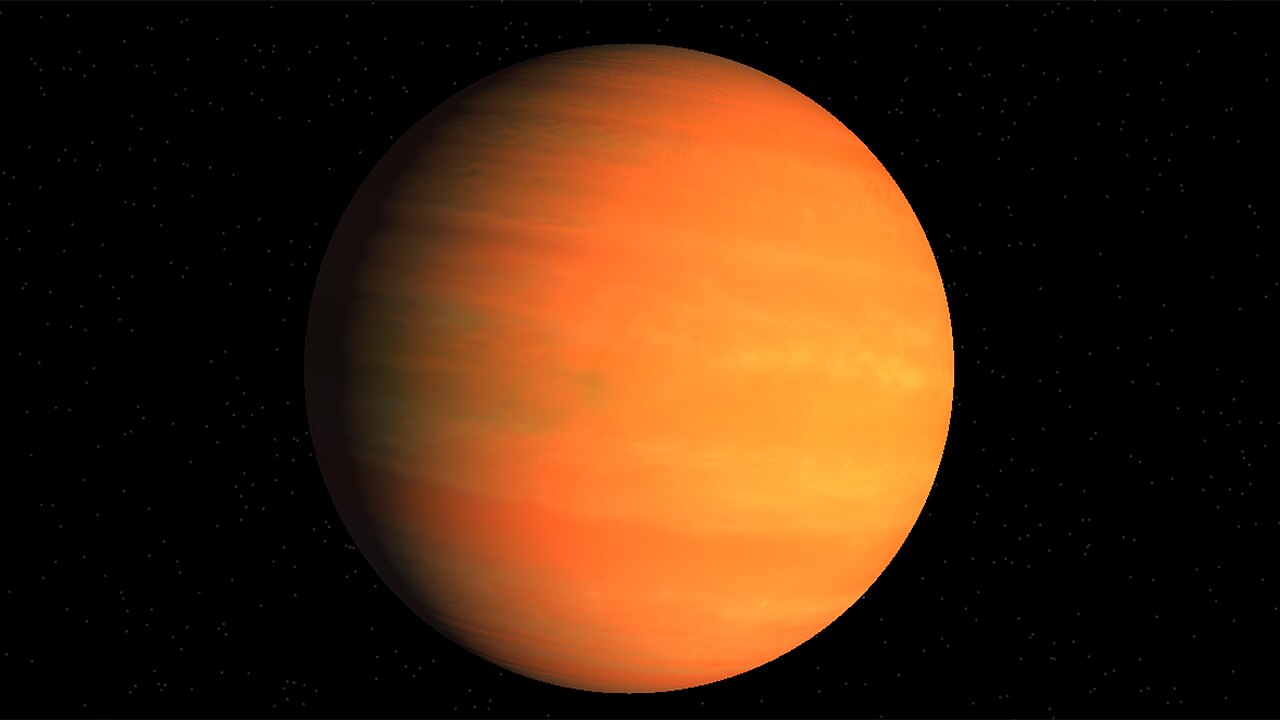
Jet Propulsion Laboratory (JPL) / NASA («Courtesy NASA/JPL-Caltech») · Public domain
Kepler-16b is a Saturn-sized exoplanet composed of roughly half gas and half rock and ice. It orbits a binary star system, Kepler-16, with a period of 229 days. It is the first confirmed, unambiguous example of a circumbinary planet—a planet orbiting two stars rather than one.
Quick Facts
- Discoverer
- Laurance Doyle
- Discovered
- 15 September 2011
- Discovery Method
- Transit (Kepler Mission)
- Apsis
- astron
- Semimajor
- 0.7048 ±
- Eccentricity
- 0.0069 ± 0.0015
- Period
- 228.776 ± 0.037 d
- Inclination
- 90.0322 ± 0.0023
- Asc Node
- 0.003 ± 0.013
- Long Periastron
- 106.51 ± 0.32
- Arg Peri
- 318 ± 22
- Star
- Kepler-16
Facts from the source article.
Lore & Background
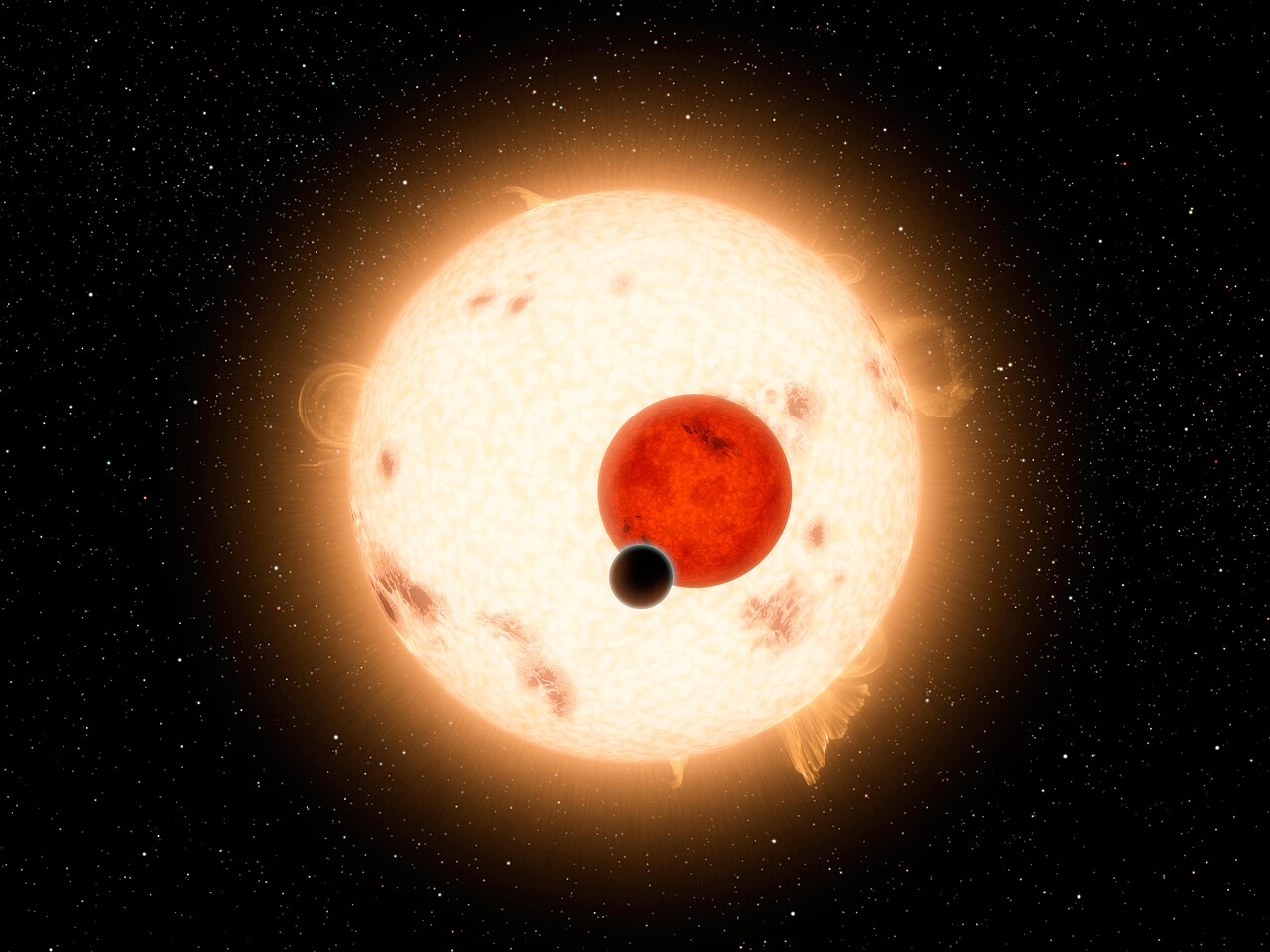
Kepler-16b was discovered in 2011 using NASA's Kepler space observatory via the transit method. Scientists detected the planet when they noticed the dimming of one of the system's stars even when the other was not eclipsing it. The precision of the transit and eclipse timings allowed unusually accurate measurements of the system's objects; the discovery team leader, Laurance Doyle of the SETI Institute, stated that Kepler-16b's radius is known to within 0.3%, better than any other known exoplanet as of September 2011. As seen from Earth, the planet ceased transiting the dimmer star in 2014 and stopped crossing the brighter star in 2018, making it undetectable by the transit method until around 2042. In 2021, Kepler-16b became the first circumbinary planet detected by the radial velocity method.
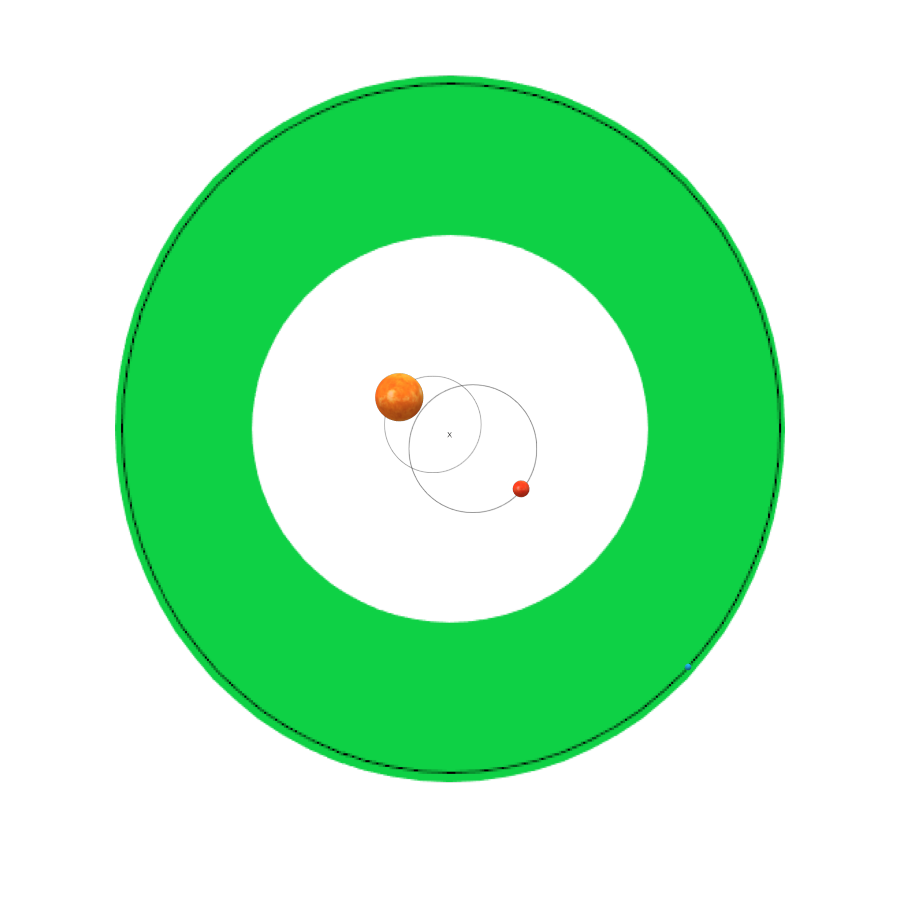
The planet orbits near the outer edge of the habitable zone, but as a gas giant with surface temperatures around −100 to −70 °C, it is not considered habitable. Its orbit lies inside the radius previously thought to be the inner limit for planet formation in a binary star system; according to planetary expert Sara Seager, stable orbits were expected only at distances at least seven times the separation of the two stars, but Kepler-16b's orbit is only about half that distance. The small eccentricity of its orbit remains unexplained.
Reader's Guide
Kepler-16b's significance lies in being the first confirmed circumbinary planet, demonstrating that planets can form and remain stable in orbits around two stars despite earlier theoretical expectations. Its discovery challenged the assumed inner limit for planet formation in binary systems, as its orbit is only about half the distance that was thought necessary for stability. The precision of its measured radius—better than any other known exoplanet as of September 2011—made it a benchmark for exoplanetary science. The planet also became the first circumbinary world detected via the radial velocity method in 2021, expanding the toolkit for finding such worlds. Although the gas giant itself is uninhabitable, simulations suggest that an Earth-sized moon could potentially be captured and remain stable, with tidal effects possibly sustaining plate tectonics and a magnetic field. The system's habitable zone extends from about 55 to 106 million kilometers from the binary, and Kepler-16b orbits at roughly 104 million kilometers, near the outer edge. The planet has been informally referred to as 'Tatooine' by the Smithsonian Center, referencing the fictional two-sun planet from Star Wars.
Did You Know?
- Kepler-16b is the first confirmed circumbinary planet, orbiting two stars.
- Its radius is known to within 0.3%, the best precision for any exoplanet as of September 2011.
- The planet's orbit lies only half the distance from its stars that was previously thought necessary for stability.
A Landmark Detection
In 2011, NASA's Kepler space observatory revealed something no one had confirmed before: a planet circling two stars simultaneously. The detection relied on the transit method—astronomers noticed the dimmer star in the Kepler-16 pair dimming even when the brighter companion was not being eclipsed, a signature that could only come from a third body sweeping across the pair. Laurance Doyle of the SETI Institute led the discovery team, and Josh Carter of the Harvard-Smithsonian Center for Astrophysics emphasized that this was the first unambiguous circumbinary planet ever confirmed. The richness of the data was extraordinary: by tracking the duration and timing of every eclipse and transit in the system, researchers achieved an unprecedented level of precision. Doyle called it the best-measured exoplanet known outside our Solar System at the time, with the planet's radius pinned down to within just 0.3 percent. The transit window, however, is finite. As viewed from Earth, the planet stopped crossing the dimmer star in 2014 and the brighter one in 2018, leaving it invisible to the transit technique until roughly 2042. In 2021, a new chapter opened when Kepler-16b became the first circumbinary planet ever identified through the radial velocity method.
An Orbit That Shouldn't Exist
Kepler-16b completes one full circuit around its twin suns in roughly 228 days, at a mean distance of 0.704 astronomical units—comparable to Venus's distance from our Sun. What makes that distance remarkable is not the number itself but what it implies about planetary formation. For decades, models suggested a stable circumbinary orbit required a planet to sit at least seven times farther from the stars than the stars are from one another. Sara Seager of MIT noted that Kepler-16b orbits at only about half that predicted threshold, placing it well inside the region once considered too chaotic for a planet to form or survive. The two stars complete their mutual orbit in just 41 days, creating a gravitational environment that should, by older estimates, strip away or eject any nascent planet so close. Yet here it is, persisting. Researchers believe the planet almost certainly did not form in its present location and instead migrated inward from a wider orbit, though the mechanism remains unclear. Equally puzzling is the orbit's small eccentricity; in a system with two gravitationally tugging stars, one might expect a more elongated path, yet Kepler-16b traces a nearly circular ellipse.
A World of Gas, Ice, and Twin Suns
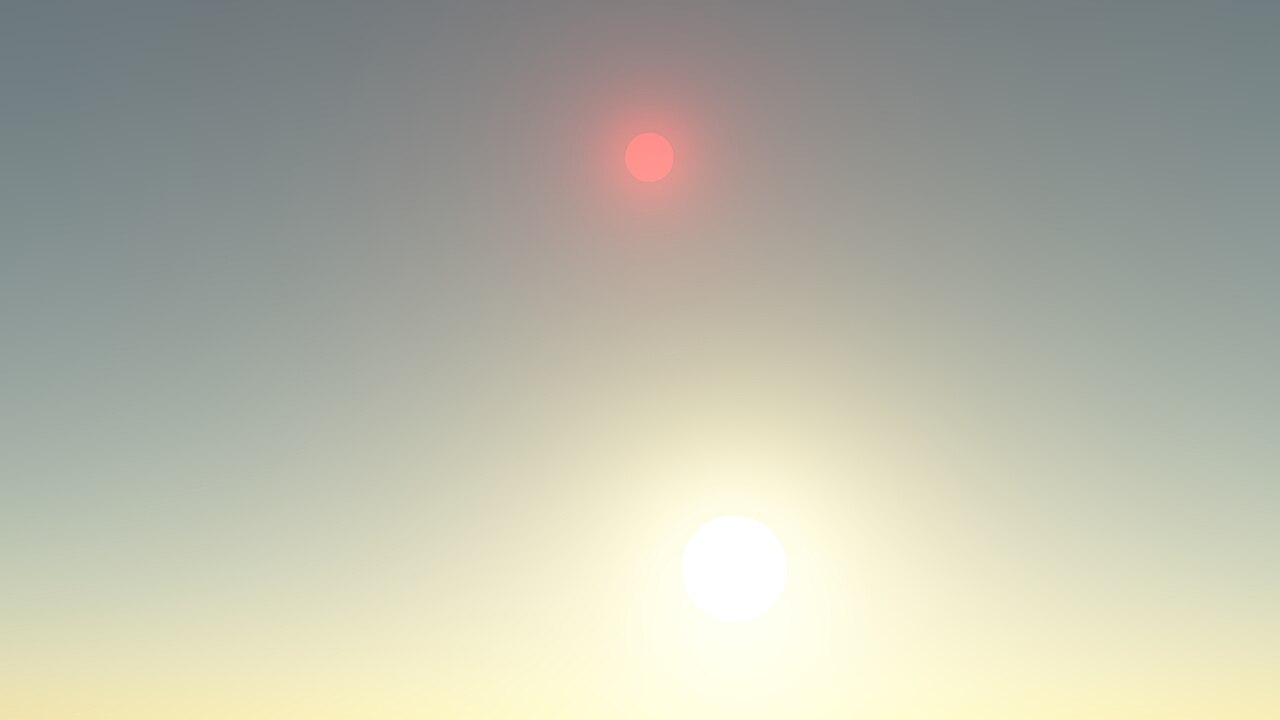
Kepler-16b is a gas giant with no solid surface, composed roughly of half gas and half rock and ice. Its radius measures 0.77 times that of Jupiter—slightly smaller than Saturn's—and its mass sits in the same ballpark as those two familiar giants. The planet's equilibrium temperature hovers around 188 kelvin, roughly minus 85 degrees Celsius, far too cold for liquid water on any hypothetical surface. It circles a pair of stars quite different from our Sun: a K-type star with 0.68 solar masses and a surface temperature of 4,450 kelvin, and a much smaller M-type companion at just 0.20 solar masses and 3,311 kelvin. Together they shine with only about 14.5 percent of the Sun's total luminosity. Based on stellar characteristics and orbital dynamics, the system is estimated to be around two billion years old—less than half the Sun's 4.6-billion-year age. The stars trace their mutual orbit every 41 days, and the entire system presents a cooler, dimmer, and younger picture than the Solar System we know.
Could a Moon Hide a World?
Although the gas giant itself is far too cold and gaseous to harbor life, its position near the outer boundary of the system's habitable zone—roughly 104 million kilometers from the binary pair, within a zone spanning 55 to 106 million—sparked a fascinating hypothesis. Researchers at the University of Texas ran simulations suggesting that gravitational perturbations from other bodies could, over the system's history, have nudged an Earth-sized world out of the habitable zone's center and into a stable orbit around Kepler-16b as a captured moon. For such a moon to remain bound, its orbital period would need to stay under roughly 45 to 60 days, well within the stability threshold of a 1-to-9 ratio relative to the planet's 228-day year. Tidal interactions between the moon and its gas-giant host could drive plate tectonics, volcanic outgassing, and a geodynamo that generates a protective magnetic field. That field would be crucial: it could deflect stellar wind and radiation, helping the moon retain an Earth-like atmosphere for billions of years. NASA's Galileo probe already demonstrated that even a body as small as Ganymede—just 0.025 Earth masses—can sustain its own magnetosphere, lending plausibility to the idea.
Gallery
Frequently Asked Questions
What is Kepler-16b?
Kepler-16b is a Saturn-sized world that circles two stars simultaneously—a K-type and an M-type star—making it a circumbinary planet. It holds the distinction of being the first such planet ever confirmed with certainty.
What makes Kepler-16b unique compared to other exoplanets?
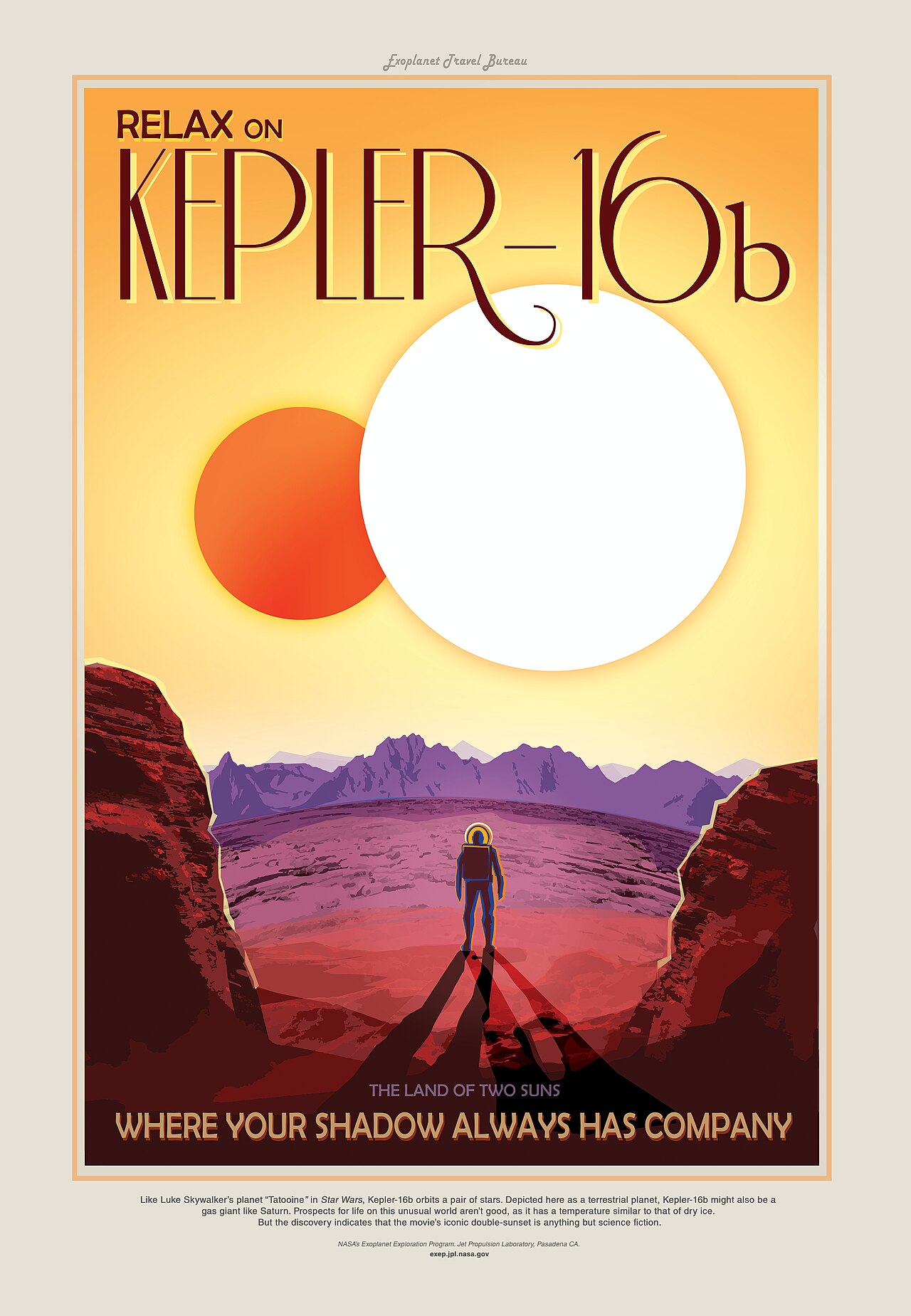
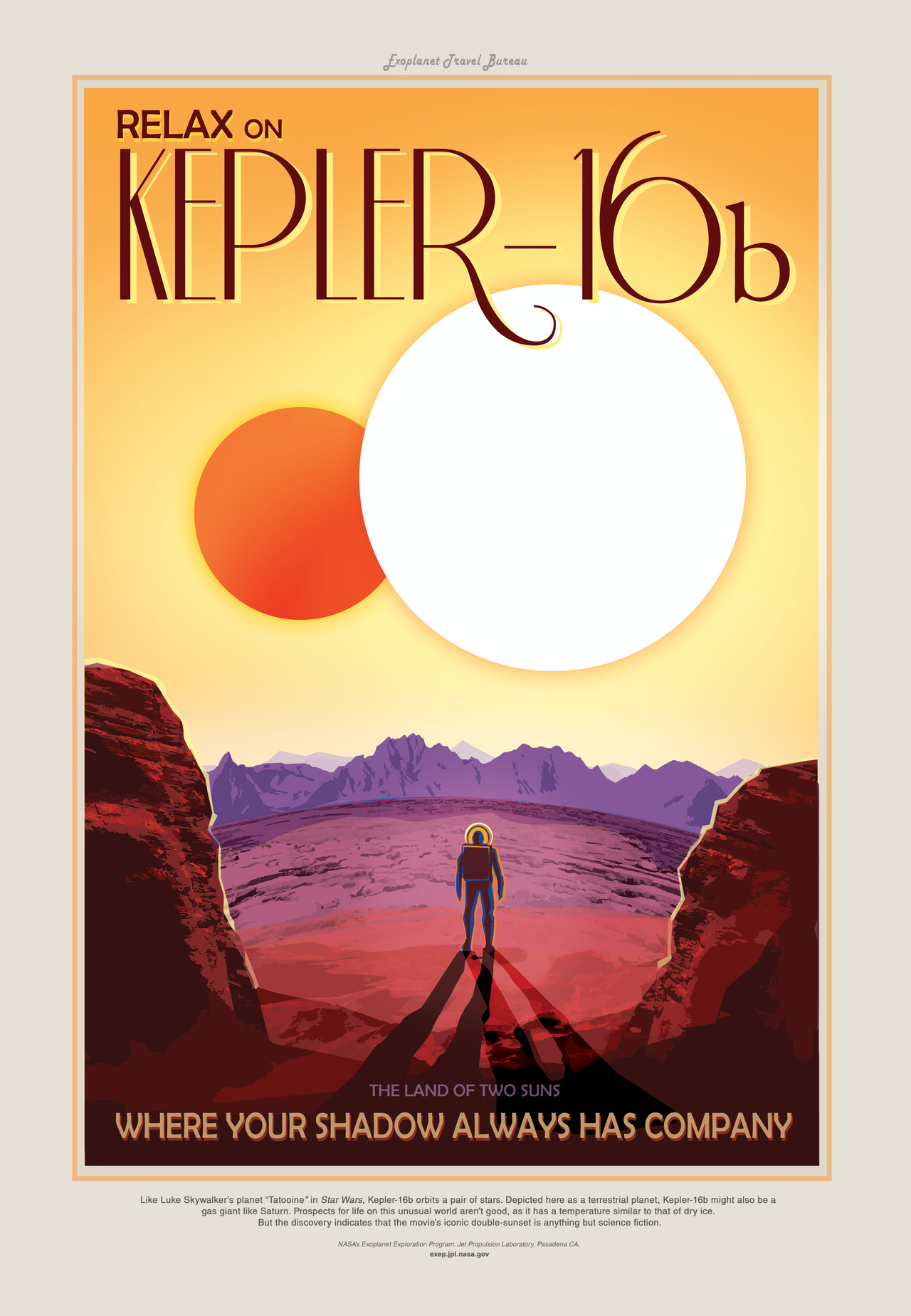
Unlike nearly every other known planet, Kepler-16b doesn't orbit a single star but instead traces an elliptical path around a binary pair. This 'Tatooine' configuration was the first one ever verified beyond doubt.
How long is a year on Kepler-16b?
One full orbit around its two host stars takes about 229 Earth days. The planet sits roughly 0.704 AU from the system's barycenter.
What is the surface temperature of Kepler-16b?
The planet's equilibrium temperature hovers around 188 K, which translates to roughly −100 to −70 °C. That makes it a cold, frigid world despite receiving light from two stars.
What is Kepler-16b made of?
Its composition is estimated to be about half gas and half rock and ice, giving it a mass in the Jupiter-to-Saturn range. Its radius measures roughly 0.77 times that of Jupiter.
More in Transiting Exoplanets 1-24
Spotted an error? Know more?
Reader corrections go straight into our review queue. Suggest an edit · How this site is sourced