
GJ 1214 b
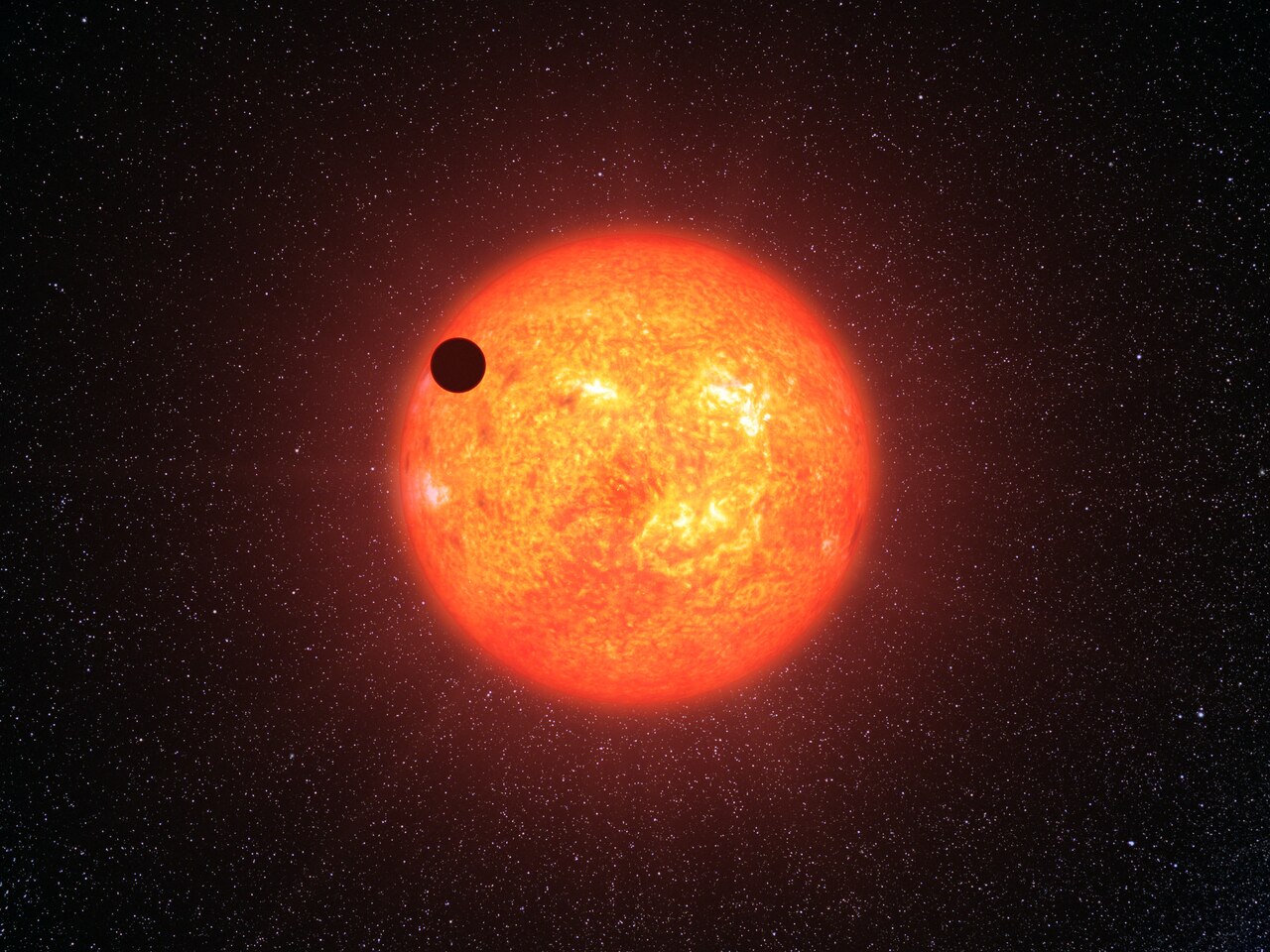
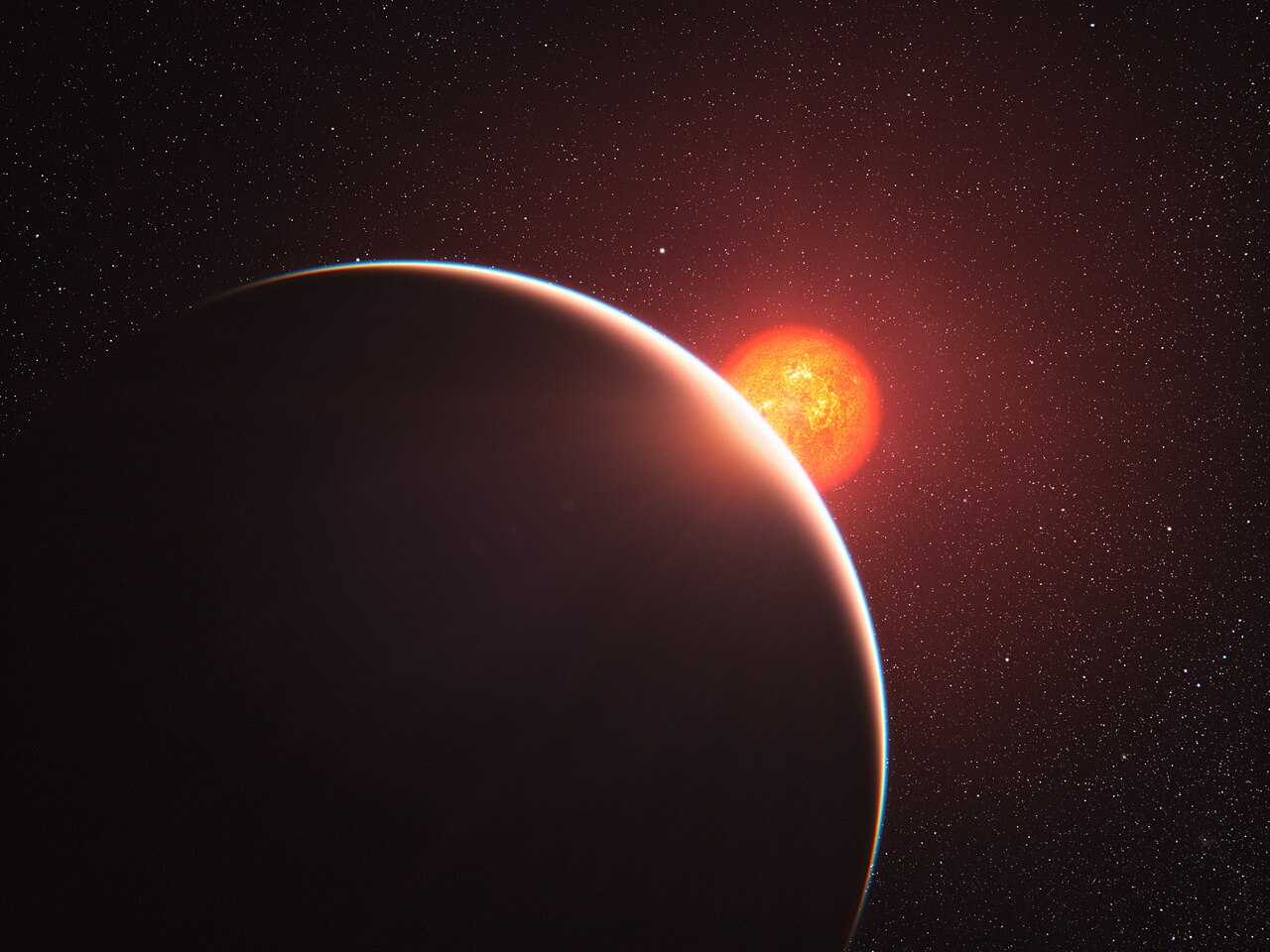
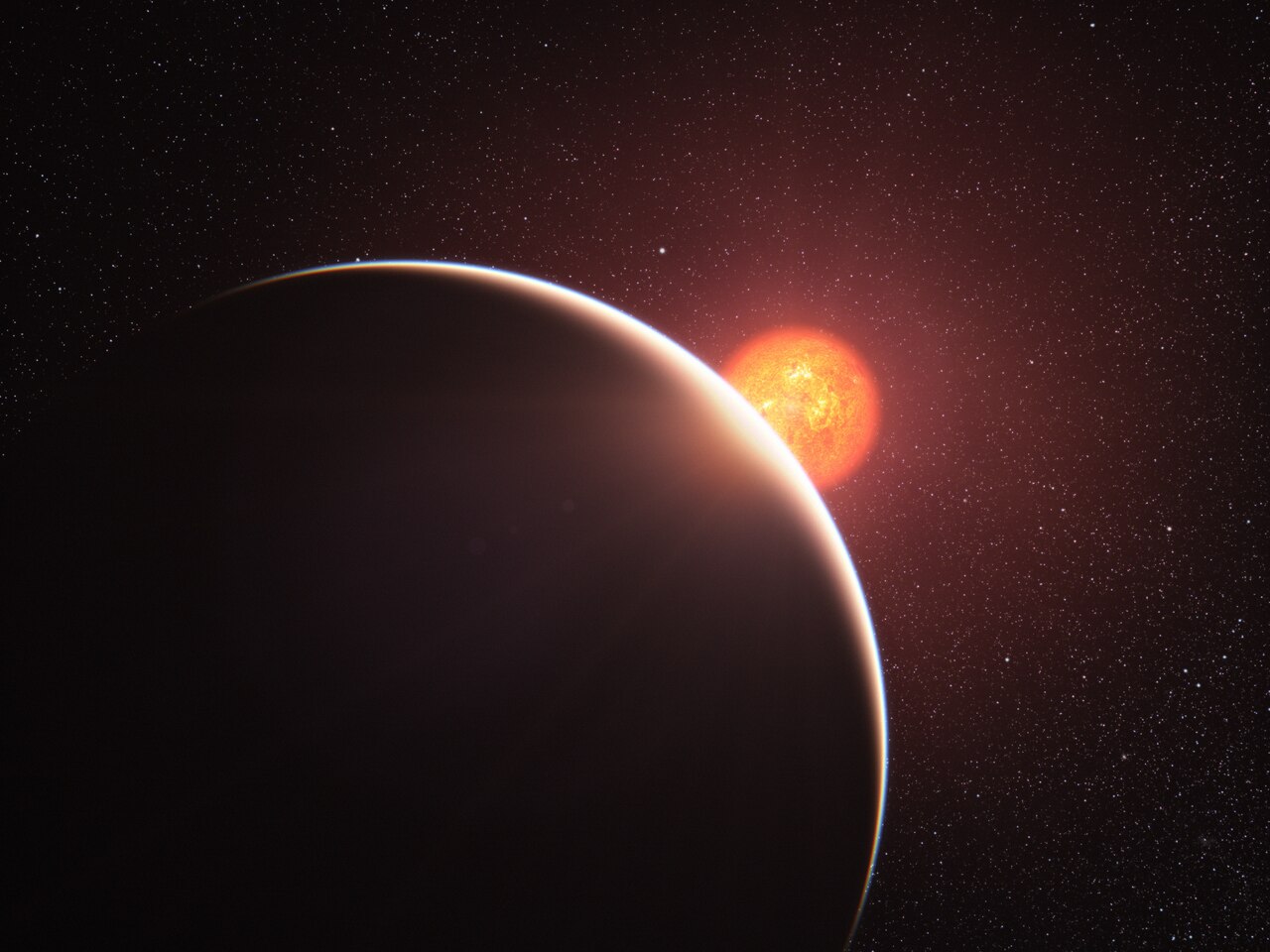
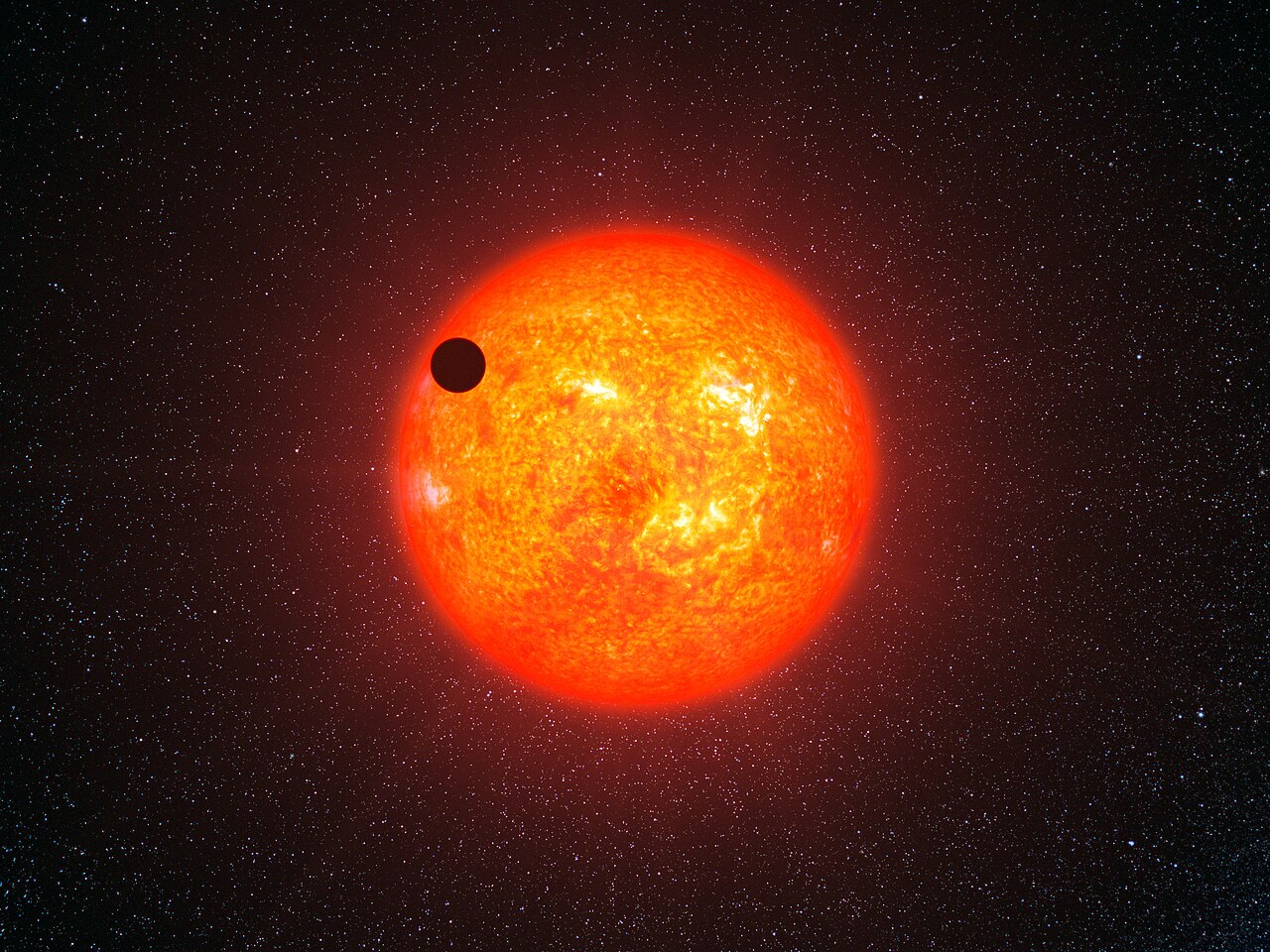
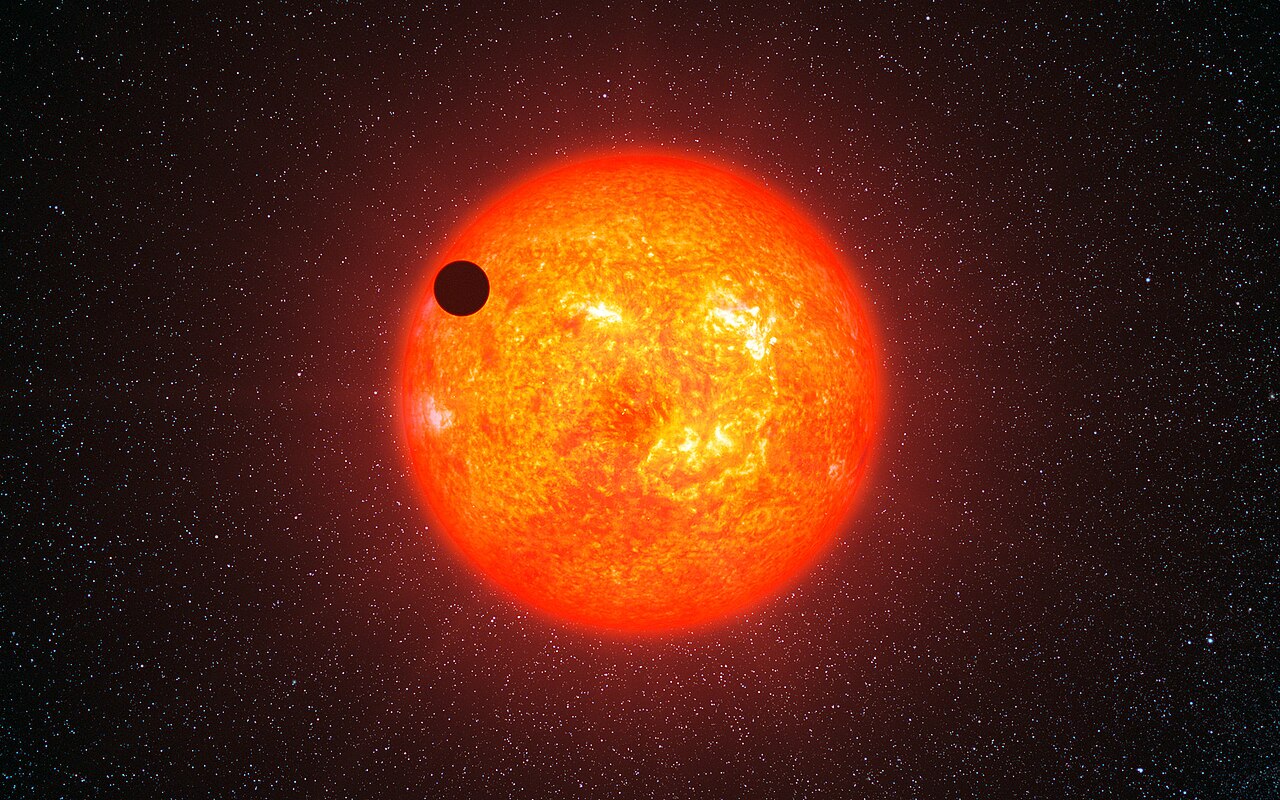
A sub-Neptune exoplanet once thought to be a waterworld.

ESO/L. Calçada · CC BY 4.0
GJ 1214 b (formally named Enaiposha since 2023) is a transiting exoplanet orbiting the star GJ 1214, located 48 light-years from the Sun in the constellation Ophiuchus. Discovered in December 2009, it was the most likely known candidate for being an ocean planet at the time, often called a "waterworld." It is a sub-Neptune, larger than Earth but smaller than the Solar System's gas giants, and was the second planet between Earth and Neptune in mass to have both its mass and radius measured, making it the first of a new class of planets with small size and relatively low density.
Quick Facts
- Discoverer
- David Charbonneau, et al.
- Discovery Site
- Fred Lawrence Whipple Observatory
- Discovered
- December 16, 2009
- Discovery Method
- Transit (MEarth Project)
- Apsis
- astron
- Semimajor
- 0.01505 · 0.00011
- Eccentricity
- 0.0062 · 0.0044 · 0.0079
- Star
- Orkaria/GJ 1214
Facts from the source article.
Lore & Background
GJ 1214 b was first detected by the MEarth Project in early 2009, which observed small drops in brightness as the planet transited its parent star. The star dimmed by roughly 1.5% every 1.58 days, and follow-up radial-velocity measurements with the HARPS spectrograph confirmed the planet's existence. A paper announcing the discovery was published in Nature. The planet's radius was inferred from transit dimming, and its mass from Doppler shifts in stellar spectral lines, yielding a density that provides limited but useful information about its composition.
At the time of discovery, GJ 1214 b was considered the most likely known candidate for an ocean planet, leading scientists to call it a "waterworld." However, a recent study using James Webb Space Telescope observations suggests a waterworld composition is implausible; the planet is more likely to host a thick gaseous envelope of hydrogen, helium, water, and other volatiles like methane or carbon dioxide. Spectroscopic studies in December 2010 showed a largely featureless spectrum over 750–1000 nm, ruling out a thick, cloud-free hydrogen-rich atmosphere. In December 2013, clouds were possibly detected in its atmosphere, and a 2024 study suggested it may be abundant in carbon dioxide, resembling Venus.
In August 2022, the planet and its host star were included in the third NameExoWorlds project. Approved names, proposed by a team from Kenya, were announced in June 2023: GJ 1214 b is named Enaiposha, and its host star Orkaria, from Maa words for a large body of water and red ochre, alluding to the planet's likely composition and the star's color. In January 2025, spectroscopic analysis revealed its atmospheric contents to be metallic, with carbon dioxide acting as an aerosol, a layout similar to a "Super-Venus," though further analysis is needed to confirm the findings.
Reader's Guide
GJ 1214 b is significant as the first of a new class of planets with small size and relatively low density, bridging the gap between Earth and Neptune. Its parent star's proximity (48 light-years) and the planet's transiting nature allow its atmosphere to be studied spectroscopically, making it a key target for understanding exoplanet atmospheres. The planet's discovery and characterization have informed debates about planetary composition, particularly the possibility of ocean planets versus mini-Neptunes or rocky planets with thick atmospheres. The evolution of scientific understanding—from initial waterworld speculation to recent evidence of a metallic, carbon-dioxide-rich atmosphere—illustrates how observational advances, such as those from the James Webb Space Telescope, can reshape models. The planet's atmospheric loss, estimated at 900 tonnes per second, and the detection of helium in 2022 further contribute to knowledge of atmospheric evolution. Its naming through the NameExoWorlds project also highlights cultural engagement with exoplanetary science.
Did You Know?
- Its equilibrium temperature ranges from 393 to 555 K.
- The planet's atmosphere may be abundant in carbon dioxide, resembling Venus according to a 2024 study.
- In January 2025, spectroscopic analysis suggested its atmospheric contents are metallic, similar to a 'Super-Venus.'
Discovery & the Birth of a New Planetary Class
GJ 1214 b first entered the astronomical record in December 2009, when the MEarth Project detected the subtle dimming of its host star as the planet passed across its face. Orbiting a star located roughly 48 light-years away in the constellation Ophiuchus, this world immediately captured attention for a reason that went beyond mere proximity. It was the second planet, after CoRoT-7b, to fall in the mass range between Earth and Neptune with both its mass and radius successfully measured. More importantly, it represented the first confirmed member of an entirely new planetary category: bodies of modest size paired with surprisingly low density. Astronomers classified it as a sub-Neptune—larger than our own planet yet far smaller than Jupiter or Saturn. Its transiting orbit around a relatively nearby star made it an exceptionally valuable target, because the geometry allowed researchers to probe its atmosphere through spectroscopy in a way that non-transiting worlds simply could not permit. In that sense, GJ 1214 b did not merely add a dot to a catalog; it opened a window into a class of planets that had previously existed only in theoretical models.
From Waterworld to Super-Venus: A Shifting Identity
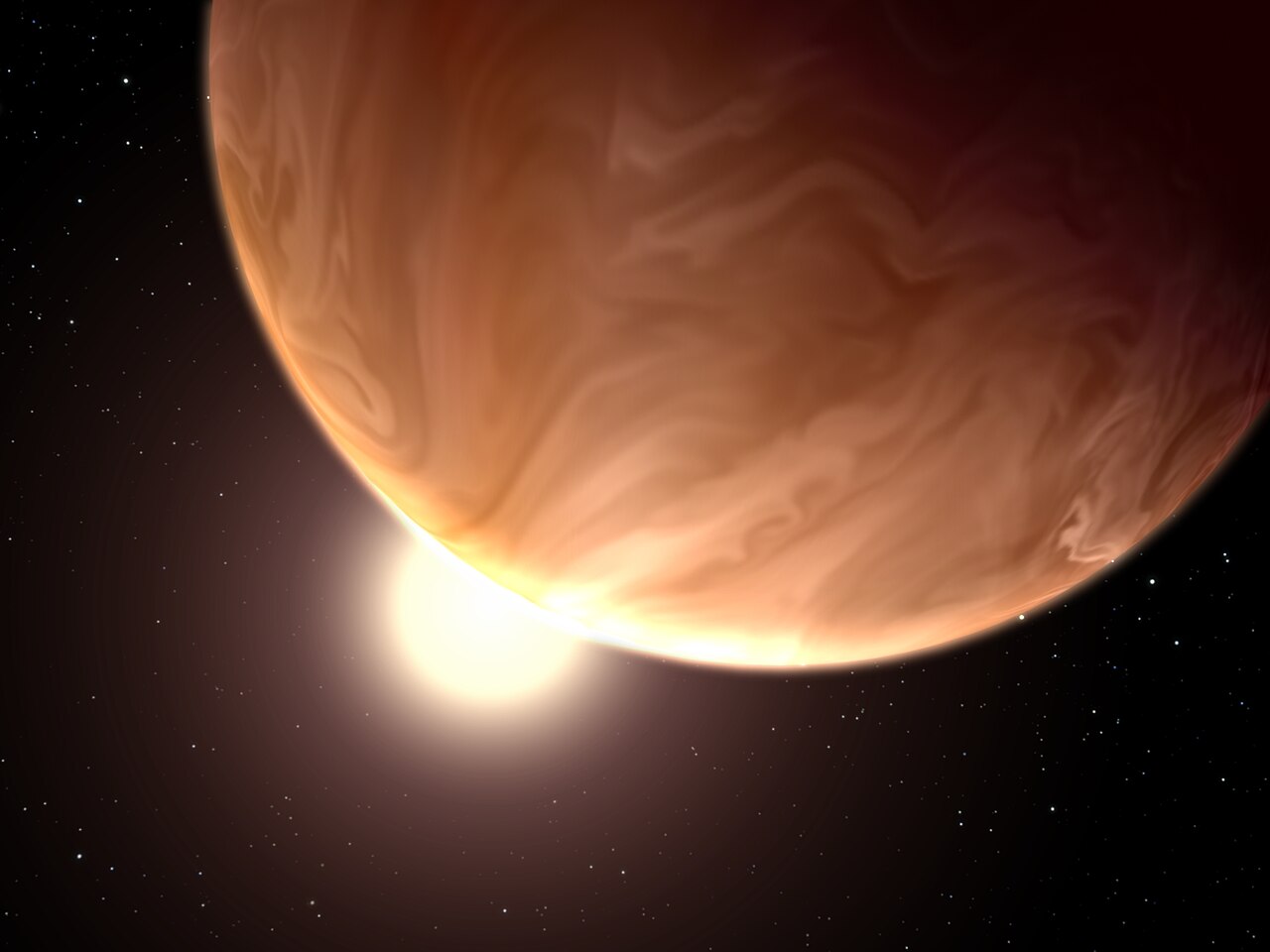
When GJ 1214 b was first identified, it quickly earned the informal label "waterworld," because its mass and radius made it the strongest known candidate for an ocean planet at the time. Models imagining such a composition painted a picture of a body roughly 25 percent rock and 75 percent water, wrapped in a thin veil of hydrogen and helium—essentially a larger, hotter cousin of Jupiter's moon Europa. Yet the story evolved dramatically. Observations from the James Webb Space Telescope later indicated that a water-dominated interior was implausible, pointing instead toward a thick gaseous envelope rich in hydrogen, helium, water vapor, and volatile compounds like methane and carbon dioxide. Then, in January 2025, spectroscopic analysis revealed an atmosphere with metallic character, with carbon dioxide suspended as an aerosol above it—a configuration researchers compared to a "Super-Venus." While further work is still needed to rule out statistical anomalies in the weak elemental signals, the cumulative evidence has steadily eroded the ocean-planet hypothesis and replaced it with a far more complex, Venus-like atmospheric picture.
Reading the Atmosphere: Spectroscopy and Atmospheric Escape
The relatively small size of GJ 1214's host star makes it an ideal backdrop for transit spectroscopy: by comparing the starlight before and during the planet's passage, researchers can extract the spectral fingerprint of the planetary atmosphere. Early work in December 2010 produced a largely featureless spectrum between 750 and 1000 nanometers, a result that effectively ruled out a thick, cloud-free, hydrogen-rich atmosphere. The data were consistent either with a water-vapor-dominated envelope or with a dense layer of high-altitude clouds absorbing the starlight. NASA reported in December 2013 that such clouds had likely been detected. A 2024 study further suggested the atmosphere could be rich in carbon dioxide, drawing a parallel to Venus. Meanwhile, calculations of hydrodynamic escape—roughly 900 tonnes of gas lost per second—indicated that the planet has shed a substantial fraction of its original atmosphere over its long lifetime. The absence of helium in 2020 observations supported this conclusion, though a tentative helium detection followed in 2022. The current atmosphere, scientists agree, is not primordial.
Enaiposha: A Name Rooted in Water and Earth
In August 2022, the International Astronomical Union's third NameExoWorlds campaign selected GJ 1214 b and its host star among twenty systems eligible for public naming. A team from Kenya submitted the proposal that was ultimately approved, and the names were formally announced in June 2023. The planet received the name Enaiposha, drawn from the Maa language, where it refers to a large body of water—a deliberate nod to the planet's long-standing association with water-rich compositions. Its host star was given the name Orkaria, the Maa word for red ochre, an earthy pigment whose color echoes the reddish hue of the star. Together, the pair of names encodes both the suspected chemistry of the planet and the visual character of the star, weaving a small piece of East African linguistic heritage into the international vocabulary of astronomy. Since 2023, Enaiposha has served as the planet's formal name alongside its catalog designation, giving this distant sub-Neptune an identity that connects its physical story to a human cultural tradition.
Gallery
Frequently Asked Questions
What is GJ 1214 b?
GJ 1214 b, officially renamed Enaiposha in 2023, is a sub-Neptune exoplanet that circles the red dwarf star GJ 1214 roughly 48 light-years away in the constellation Ophiuchus. It laps its host star in just under 1.6 days.
Why is GJ 1214 b so famous?
Spotted in late 2009, it quickly became the strongest known candidate for a true ocean world and earned the popular nickname 'waterworld.' It also filled a critical gap in planetary science as the second planet between Earth and Neptune in mass to have both its mass and radius measured, effectively opening a brand-new size class.
How big and heavy is GJ 1214 b?
The planet carries about 6.55 Earth masses inside a sphere 2.678 times Earth's radius, yielding a surprisingly low density for its size. That combination of modest mass and puffy radius is exactly what set it apart from both rocky super-Earths and full-blown gas giants.
Is GJ 1214 b really a waterworld?
Early spectral hints of abundant water vapor fueled the ocean-planet hypothesis, but subsequent observations have muddied that picture considerably. It is now more cautiously described as a sub-Neptune with a thick, hazy atmosphere rather than a confirmed global ocean.
Where can I find GJ 1214 b in the sky?
Its host star GJ 1214 (also called Orkaria) sits in Ophiuchus, about 48 light-years from our Solar System. Because the planet transits its star every 1.58 days, each pass gives astronomers a fresh window to probe the planet's atmosphere.
More in Transiting Exoplanets 1-24
Spotted an error? Know more?
Reader corrections go straight into our review queue. Suggest an edit · How this site is sourced