
LHS 1140 b
A potentially habitable super-Earth with a debated atmosphere.

M. Weiss/CfA · CC BY 4.0
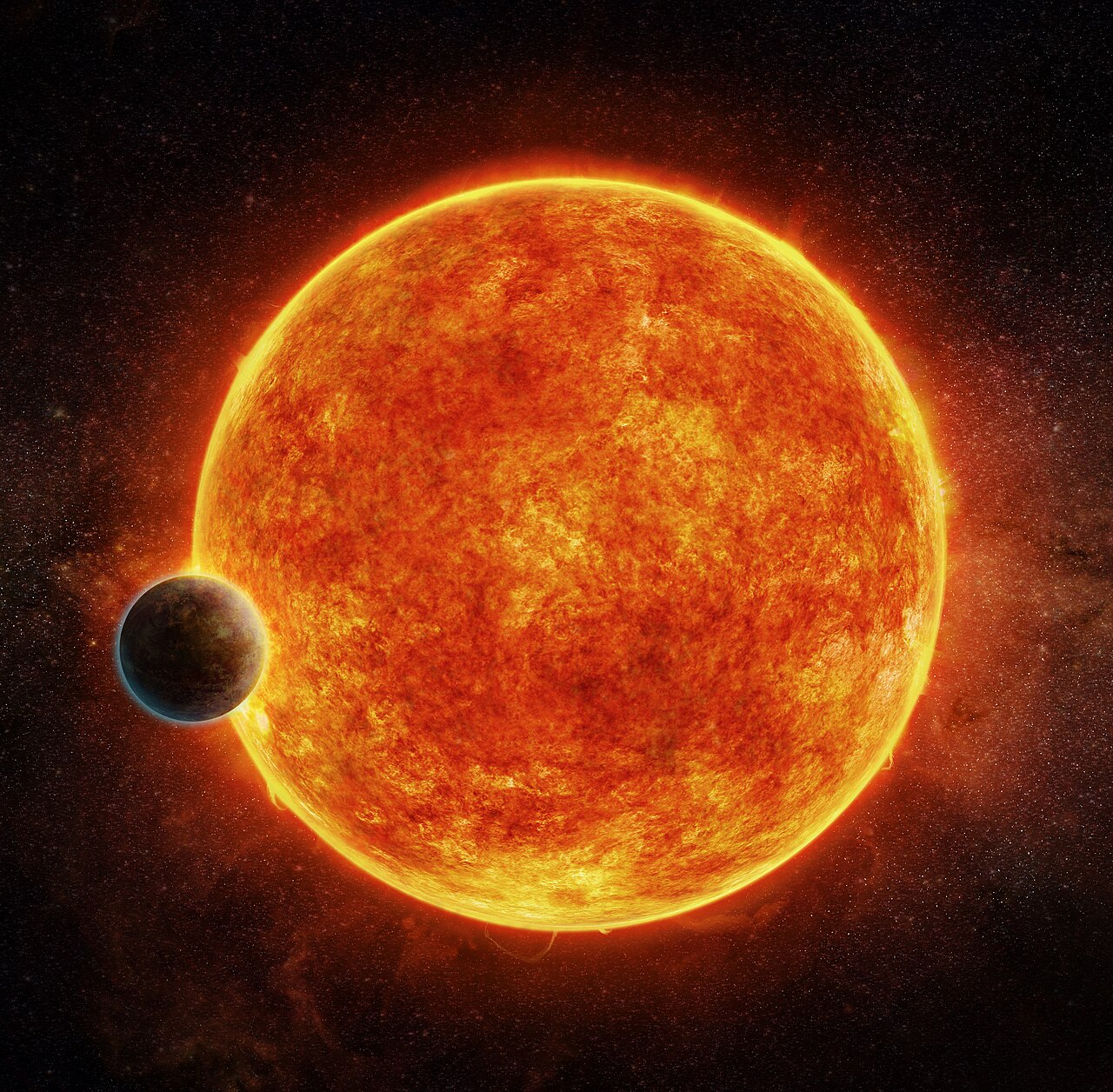
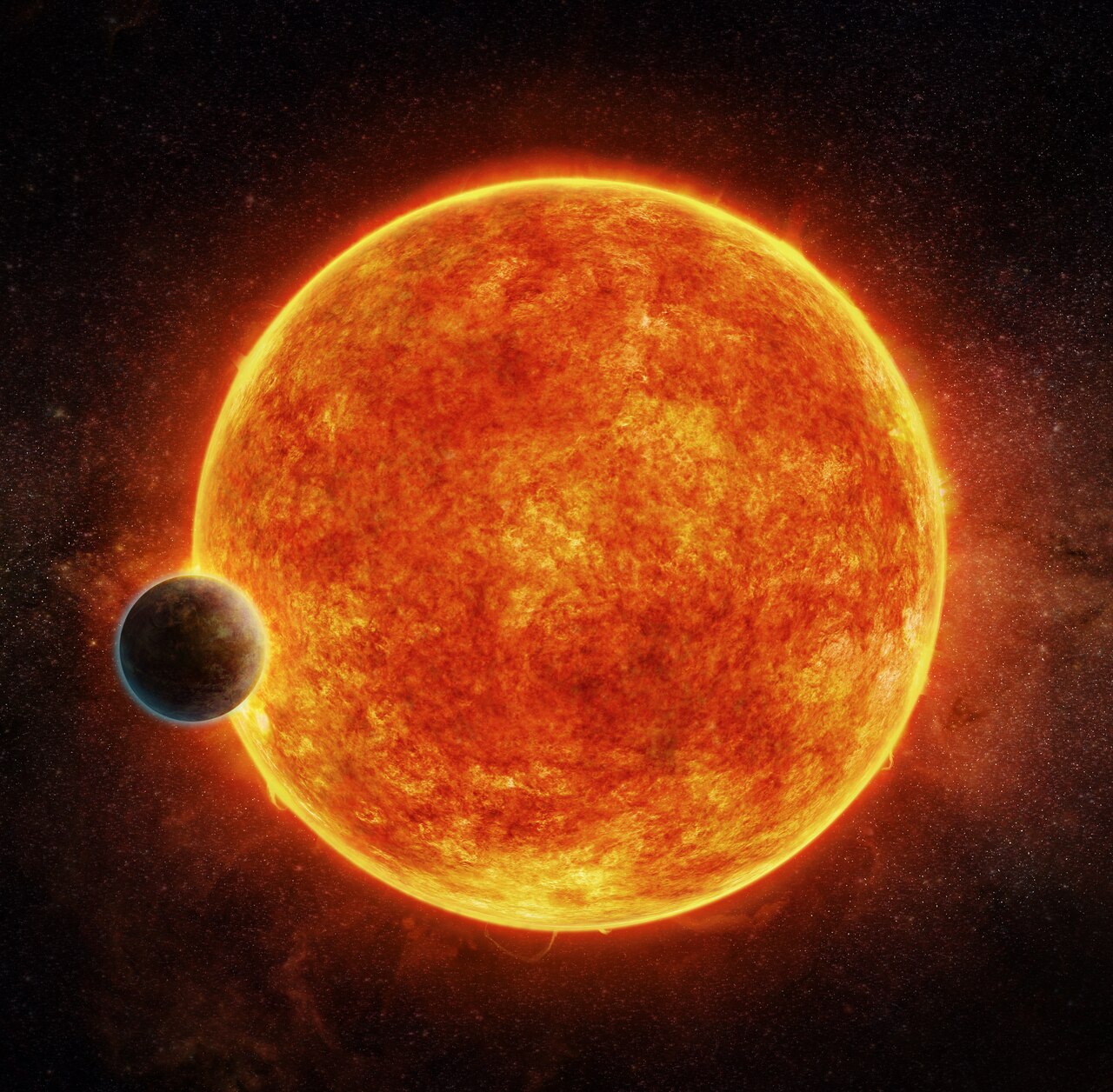
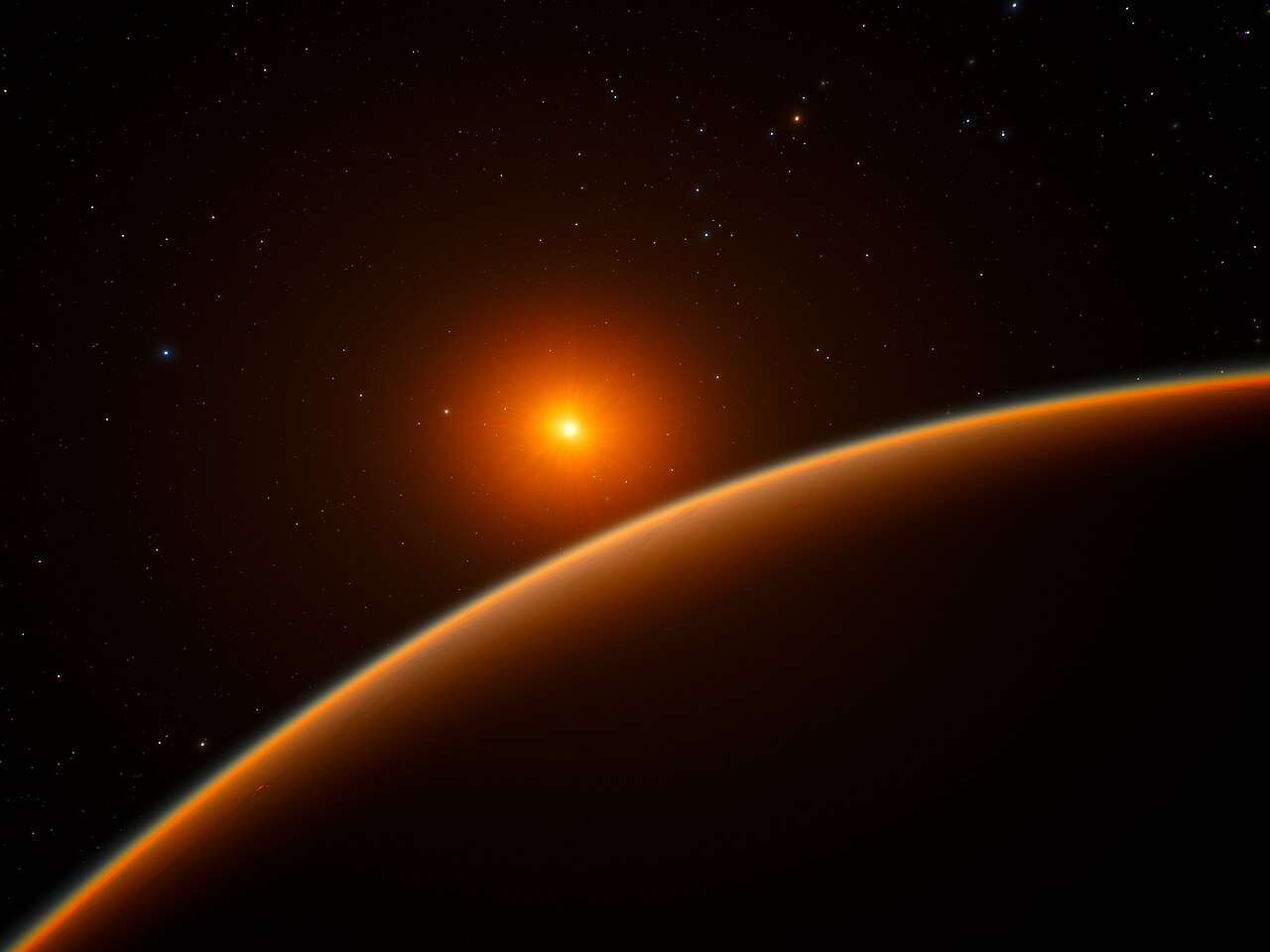
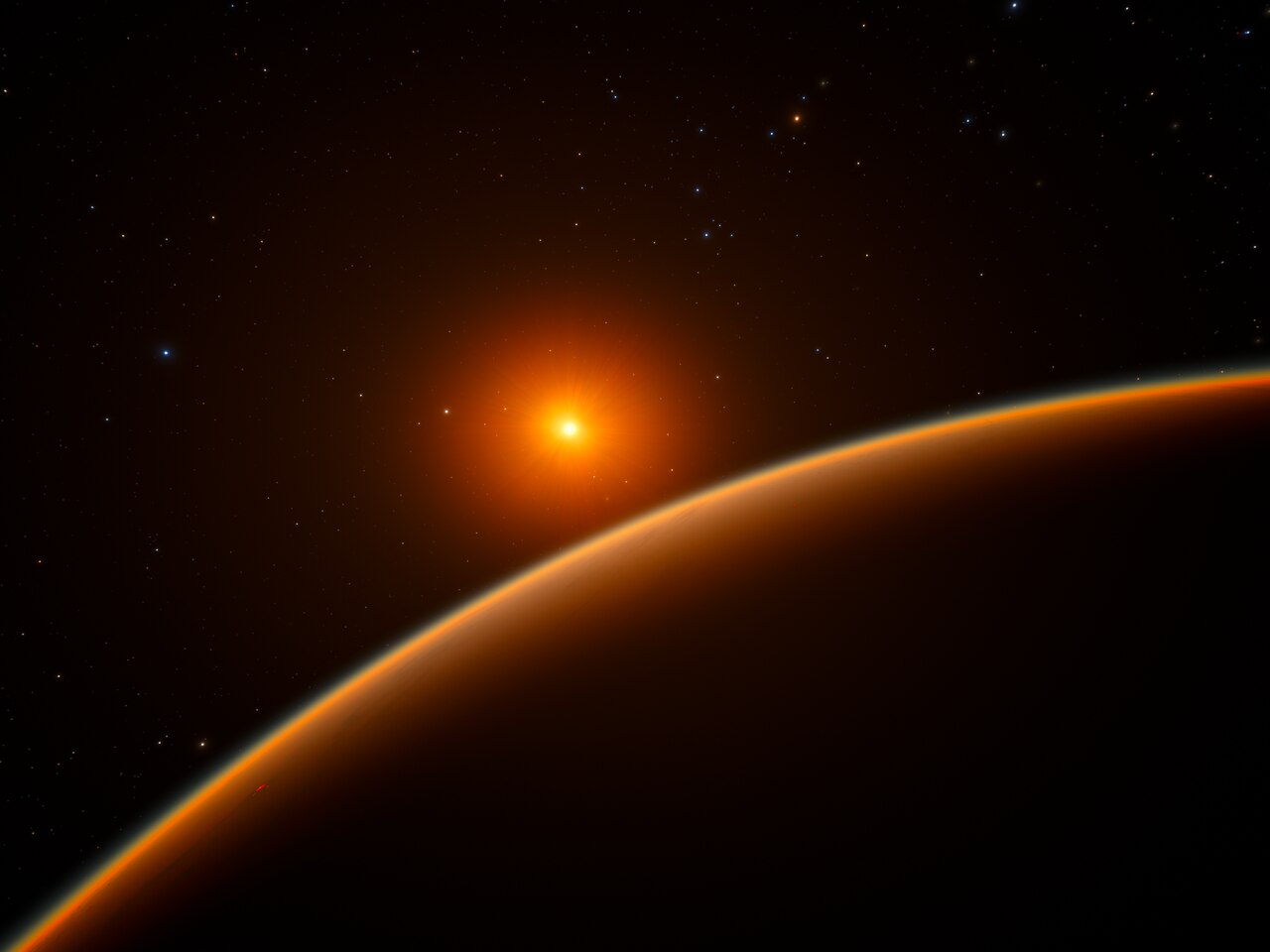
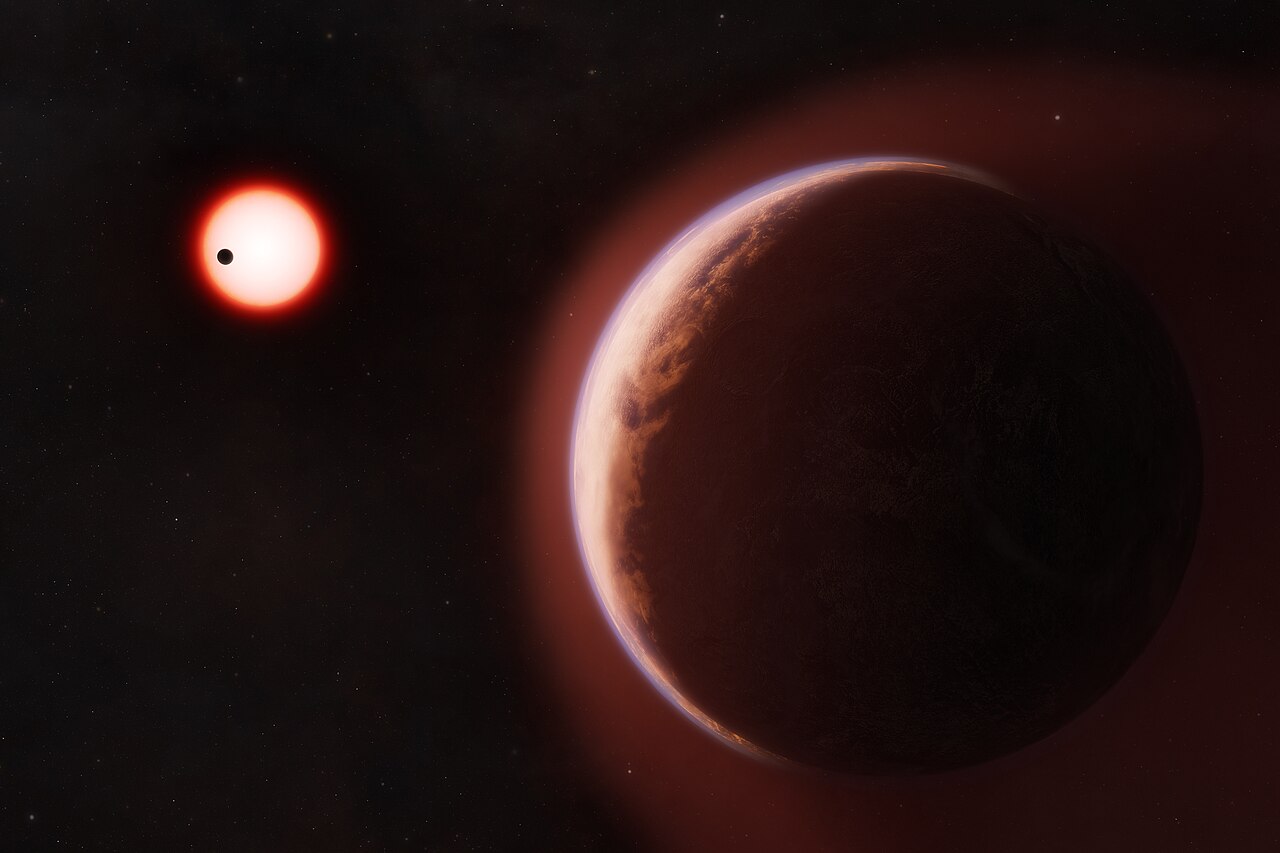
LHS 1140 b is a transiting exoplanet orbiting within the conservative habitable zone of the red dwarf star LHS 1140, located 49 light-years away. Discovered in 2017 by the MEarth Project, it is a super-Earth about 5.6 times the mass of Earth and roughly 70% larger in radius. It is notable as one of the few potentially habitable exoplanets with both a measured mass and radius, and as a candidate for atmospheric studies with ground-based and space telescopes.
Quick Facts
- Discoverer
- MEarth Project
- Discovered
- 20 April 2017 (Published)
- Discovery Method
- Transit
- Apsis
- astron
- Eccentricity
- <0.043
- Star
- LHS 1140
Facts from the source article.
Lore & Background
LHS 1140 b was initially thought to be a dense rocky planet with an iron-nickel core comprising up to 75% of its mass. However, refined measurements in 2023 revised its mass downward and radius upward, yielding a lower density inconsistent with a purely rocky composition. The planet is now considered likely an ocean world, with water making up 9–19% of its mass, or possibly a dense mini-Neptune. Its orbit is nearly circular, with an eccentricity below 0.29 at 90% confidence, and it receives 43% of the incident flux Earth gets from the Sun.
The host star LHS 1140 is a very inactive M4.5V red dwarf, about 18.4% the mass and 21.6% the radius of the Sun, with a temperature of 3096 K and a rotation period of 130 days. The star's low activity suggests atmospheric erosion of the planet may be minimal over long timescales. The planet's equilibrium temperature of 230 K is cold, but with an Earth-like greenhouse effect the surface temperature could reach about 266 K, and with a stronger greenhouse effect it could be as high as 296 K.
Atmospheric studies have yielded conflicting results. Ground-based near-infrared spectroscopy suggested the presence of helium, which would have been the first detection of a rocky exoplanet atmosphere in the habitable zone. However, JWST observations between 2023 and 2026 did not detect helium or any evidence of atmospheric mass loss. In 2024, a team using the Magellan Clay Telescope reported a detection of escaping helium during a transit, interpreted as hydrodynamic outflow driven by stellar heating, but a follow-up observation in 2025 showed no helium absorption, indicating time-variable escape. JWST data from 2024 rule out a hydrogen-rich atmosphere and support a high mean molecular weight atmosphere possibly composed of nitrogen, water vapor, and carbon dioxide. Tentative hints of atmospheric nitrogen were reported in July 2024, which if confirmed would be the first evidence of a secondary atmosphere on a potentially habitable exoplanet.
Reader's Guide
LHS 1140 b holds significance as one of the few potentially habitable exoplanets with both a measured mass and radius, placing it among a small group that includes the TRAPPIST-1 planets. Its location within the habitable zone of a very inactive red dwarf makes it a prime target for atmospheric characterization. The conflicting results regarding its atmosphere—helium detections from ground-based telescopes versus non-detections by JWST, and the time-variable nature of atmospheric escape—highlight the challenges in studying exoplanet atmospheres and the need for multiple observing campaigns. If the tentative detection of nitrogen is confirmed, it would mark the first identification of a secondary atmosphere on a potentially habitable rocky world. The planet's revised composition as an ocean world or mini-Neptune rather than a dense rocky planet has shifted understanding of its habitability, suggesting that if it has a thick atmosphere, surface temperatures could be temperate despite its low equilibrium temperature. Its legacy lies in demonstrating the complexity of characterizing habitable-zone exoplanets and the importance of combining multiple observational techniques.
Did You Know?
- LHS 1140 b was discovered in 2017 by the MEarth Project.
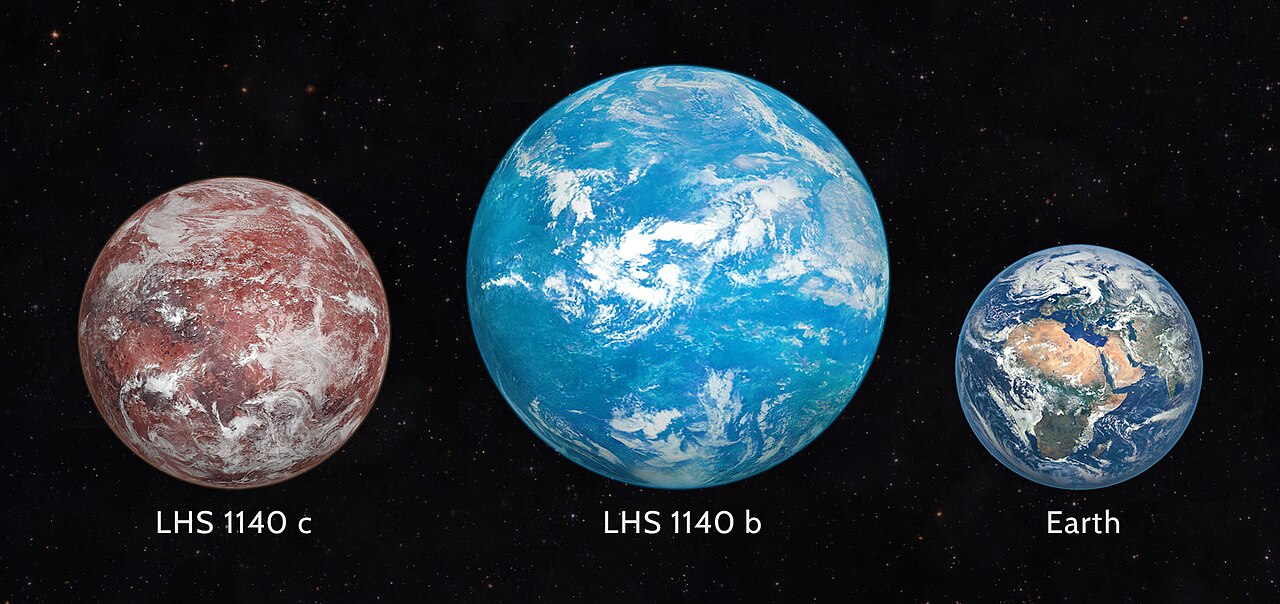
- The planet's mass is about 5.6 times Earth's, and its radius is about 1.7 times Earth's.
- It receives only 43% of the incident flux that Earth gets from the Sun.
- JWST observations rule out a hydrogen-rich atmosphere, supporting an ocean world or high-mean-molecular-weight atmosphere scenario.
Discovery & Physical Profile
LHS 1140 b entered the astronomical record in 2017, identified by the MEarth Project as a transiting world circling the red dwarf LHS 1140 at a distance of roughly 49 light-years. What immediately set it apart was the rarity of having both its mass and radius measured—achieved through the combined use of radial-velocity Doppler shifts and transit photometry. Only a handful of potentially habitable exoplanets, all orbiting TRAPPIST-1, share that distinction. The planet's radius is tightly constrained at 1.730 ± 0.025 Earth radii, translating to a diameter of approximately 11,000 kilometres, a size remarkably close to that of Kepler-62e. Its mass, refined in a 2023 analysis to 5.60 ± 0.19 Earth masses, places it firmly in the super-Earth class. Because the planet periodically passes in front of its host star, it presents an ideal target for transmission spectroscopy from both ground-based facilities and space telescopes, a property that has made it one of the most heavily studied temperate-zone worlds known to science.
The Composition Reckoning
When LHS 1140 b first appeared in the literature, its inferred density of roughly 12.5 grams per cubic centimetre made it one of the densest rocky worlds ever catalogued, with models suggesting an iron-nickel core that could claim as much as three-quarters of the planet's total mass. That picture began to erode almost immediately. Revised radius measurements published in 2018 and again in 2020 pushed the density down to about 7.8 g/cm³ and the core fraction to roughly 49 per cent, while also hinting that a thin veneer of water—around four per cent of total mass—might drape the surface, implying an average ocean depth on the order of several hundred kilometres. The most decisive blow came with a 2023 reanalysis that lowered the mass to 5.6 Earth masses and widened the radius, rendering a purely rocky interior physically implausible at that size. The planet is now best described as either a water-rich ocean world, with nine to nineteen per cent of its mass locked up in H₂O, or a dense mini-Neptune. Critically, JWST observations have excluded a hydrogen-dominated envelope, lending strong support to the ocean-world interpretation.
The Host Star & Orbital Setting
LHS 1140 is a small, cool M4.5V dwarf that weighs just 18.4 per cent of the Sun and spans only 21.6 per cent of its radius. Its effective temperature sits near 3,096 kelvin, and it shines with a mere 0.0038 times solar luminosity. The star is at least five billion years old—older than the Sun—and, unusually for a star of its class, it is remarkably quiet: the discovery team found no significant flare events, and the star completes one rotation roughly every 130 days. Despite the star's feeble output, LHS 1140 b orbits at a tight 0.0946 AU, completing a lap in just 24.7 days. The result is that the planet receives only 43 per cent of the stellar flux Earth enjoys. With a zero-albedo assumption the equilibrium temperature works out to about 230 kelvin; adopting an Earth-like albedo drops it further to 201 kelvin. A greenhouse effect at least as vigorous as Earth's, however, would push surface temperatures above 266 kelvin. The orbit is notably circular, with eccentricity below 0.29 at 90 per cent confidence—a circularity that stellar tides cannot explain and which is therefore thought to be a natal property of the system.
The Atmospheric Detective Story
The search for a detectable atmosphere around LHS 1140 b has unfolded as a multi-instrument saga. In late 2020, Hubble Space Telescope data yielded a low-confidence hint of water vapour in the planet's sky. The James Webb Space Telescope then delivered a more definitive statement in 2024: a hydrogen-rich envelope was ruled out, and the spectral signatures favoured a high-mean-molecular-weight atmosphere possibly built from nitrogen, water vapour, and carbon dioxide. In July of that same year, tentative nitrogen features appeared in JWST data, raising the tantalising prospect that the surface is largely frozen with scattered liquid-water patches—an eyeball configuration. If confirmed, it would represent the first evidence of a secondary atmosphere on a potentially habitable exoplanet. The story took another turn in 2026 when astronomers using the Magellan Clay Telescope at Las Campanas reported helium escaping from the upper atmosphere during a 6.5-hour transit observation in September 2024, interpreted as hydrodynamic outflow driven by stellar X-ray and extreme-ultraviolet heating. A follow-up 2025 observation, however, found no helium, suggesting the escape is time-variable and linked to the star's modest activity level.
Gallery
Frequently Asked Questions
What is LHS 1140 b?
LHS 1140 b is a super-Earth exoplanet that circles the red dwarf star LHS 1140, sitting roughly 49 light-years from our Solar System. It was identified in 2017 by the MEarth Project as it periodically passes in front of its host star.
How big is LHS 1140 b compared to Earth?
The planet packs about 5.6 times Earth's mass into a radius roughly 1.7 times ours, giving it a diameter near 11,000 km. That makes it a solid super-Earth rather than a gas giant.
Is LHS 1140 b actually habitable?
It orbits inside the conservative habitable zone of its M4.5V star at about 0.0946 AU, with an equilibrium temperature around 230 K under a zero-albedo assumption. Whether it truly retains a life-friendly atmosphere remains an open question that telescopes are still working to resolve.
How long is a year on LHS 1140 b?
One full orbit around LHS 1140 takes approximately 24.7 days, meaning a 'year' there is barely a month by Earth standards. The short period is typical for planets hugging close to their host stars.
Why do astronomers care so much about LHS 1140 b?
It is one of the rare potentially habitable worlds where both mass and radius have been measured, making it a prime target for atmospheric characterization. Ground-based and space telescopes can probe its skies, offering a real shot at detecting water vapor or other biosignature gases.
More in Transiting Exoplanets 1-24
Spotted an error? Know more?
Reader corrections go straight into our review queue. Suggest an edit · How this site is sourced