
Kepler-442b
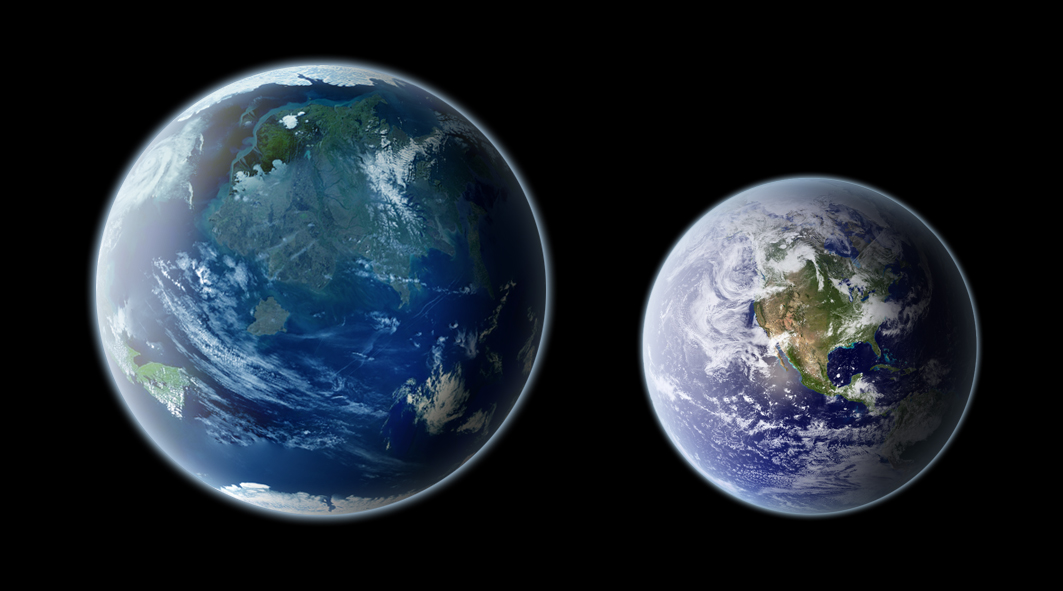
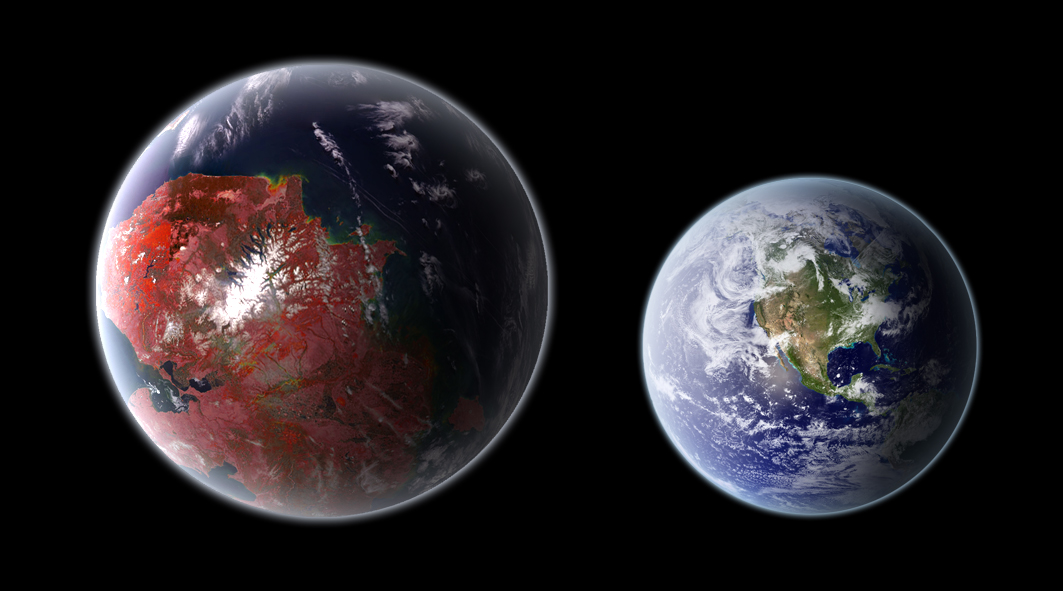
A super-Earth in the habitable zone of a K-type star.

Ph03nix1986 · CC BY-SA 4.0
Kepler-442b is a confirmed exoplanet roughly the size of Earth, likely rocky, and orbits within the habitable zone of its star, a K-type main-sequence star called Kepler-442. The system lies about 1,196 light-years away in the constellation Lyra. The planet is considered one of the most Earth-like worlds found in both size and temperature, and as of July 2018, it was regarded as the most habitable exoplanet discovered that is not tidally locked to its star.
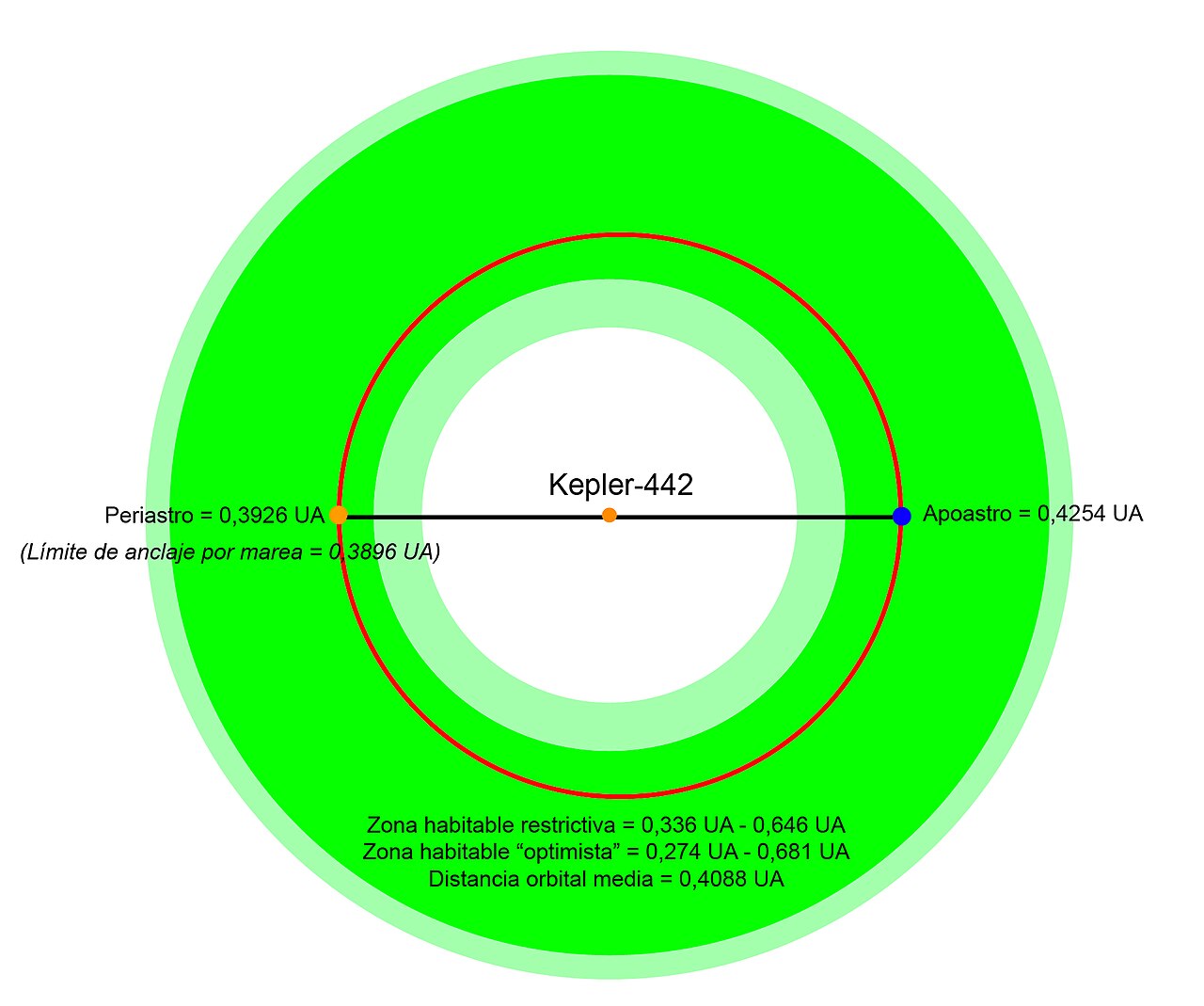
The planet orbits its star at a distance of about 0.409 AU—slightly farther than Mercury’s distance from the Sun—completing one orbit every 112.3 days. It has a mass estimated at 2.36 times Earth’s and a radius about 1.34 times Earth’s. Its equilibrium temperature is 233 K. According to some estimates, this places Kepler-442b on the borderline between being a rocky super-Earth and a mini-Neptune gas planet. If it has a rocky composition similar to Earth’s, its surface gravity would be about 30% stronger than Earth’s.
The host star, Kepler-442, is a K-type star with a mass 0.61 times the Sun’s and a radius 0.60 times the Sun’s. Its surface temperature is 4,402 K, and it is about 2.9 billion years old—younger than the Sun’s 4.6 billion years. The star is metal-poor, with a metallicity of −0.37, or about 43% of the Sun’s iron content. Its luminosity is just 12% of the Sun’s, and its apparent magnitude of 14.76 makes it too dim to see without a telescope.
Kepler-442b receives about 70% of the sunlight Earth gets from the Sun. Its orbit is nearly circular, with an eccentricity of 0.04, so it lacks the seasonal changes caused by a stretched orbit. The planet sits just outside the distance where tidal forces from its star would fully lock it, meaning it likely rotates much more slowly than Earth—its day could last weeks or months. Its axial tilt is probably tiny, so it would not have tilt-driven seasons like Earth or Mars.
K-type stars like Kepler-442 are smaller and longer-lived than the Sun, remaining stable for 18 to 34 billion years compared to the Sun’s 10 billion. However, they can be active early in their lives, emitting strong stellar winds. Because Kepler-442’s age is uncertain, it may have already passed that turbulent phase, which could make Kepler-442b more favorable for habitability.
Quick Facts
- Discoverer
- Kepler spacecraft
- Discovered
- 6 January 2015
- Discovery Method
- Transit
- Apsis
- astron
- Semimajor
- 0.409 · 0.209 · 0.060 AU
- Eccentricity
- 0.04 · 0.08 · 0.04
- Period
- 112.3053 · 0.0024 · 0.0028 d
- Inclination
- 89.94 · 0.06 · 0.12
- Star
- Kepler-442 (KOI-4742)
- Single Temperature
- T / eq / : 233 K
Facts from the source article.
Lore & Background
Kepler-442b was discovered by NASA's Kepler spacecraft using the transit method, which measures the dimming effect as a planet crosses in front of its star. Observations for potential candidates took place between 13 May 2009 and 17 March 2012, and NASA announced the confirmation on 6 January 2015. The planet orbits its host star at a distance of about 0.409 AU with an orbital period of roughly 112.3 days, receiving about 70% of Earth's sunlight.
The planet is a super-Earth, with a mass estimated at 2.36 Earth masses and a radius of 1.34 Earth radii. Its equilibrium temperature is 233 K. According to Ethan Siegel, this puts the planet 'right on the border' between likely being a rocky planet and a Mini-Neptune gas planet. The surface gravity would be 30% stronger than Earth, assuming a rocky composition similar to Earth's. The host star Kepler-442 has a mass of 0.61 solar masses, a radius of 0.60 solar radii, a temperature of 4,402 K, and is about 2.9 billion years old. It is somewhat metal-poor, with a metallicity of −0.37, or 43% of the solar amount.
The planet is in the habitable zone of its star, just outside the zone where tidal forces would fully lock it. Its axial tilt is likely tiny, so it would not have tilt-induced seasons, and its orbit is probably close to circular (eccentricity 0.04). Because of its proximity to its star, the planet likely rotates much more slowly than Earth, with a day possibly lasting weeks or months.
Reader's Guide
Kepler-442b holds significance as one of the most promising candidates for a potentially habitable exoplanet. A 2015 review essay concluded that Kepler-442b, along with Kepler-186f and Kepler-62f, were likely the best candidates for being potentially habitable planets. According to an index developed in 2015, Kepler-442b is even more likely to be habitable than a hypothetical 'Earth twin' with physical and orbital parameters matching those of Earth, with a rating of 0.836 compared to Earth's 0.829. However, the paper introducing the habitability index clarifies that a higher-than-Earth value 'does not mean these planets are more habitable than Earth'.
The actual habitability remains uncertain because Kepler-442b's atmosphere and surface are unknown. The planet is located approximately 370 parsecs (1,200 light-years) away, presenting a challenge for current telescopes and even the upcoming generation of planned ones to ascertain its mass or the presence of an atmosphere. The Kepler spacecraft concentrated on a limited portion of the sky, limiting its ability to gather comprehensive data. However, planet-hunting space telescopes like TESS and CHEOPS are poised to survey nearby stars across the entire celestial sphere, potentially shedding light on the properties of distant exoplanets like Kepler-442b. The James Webb Space Telescope and future large ground-based telescopes can then study nearby stars with planets to analyze atmospheres, determine masses, and infer compositions.
Did You Know?
- Kepler-442b receives about 70% of Earth's sunlight from its star.
- Its surface gravity would be 30% stronger than Earth's, assuming a rocky composition.
- Kepler-442b has a higher habitability index rating (0.836) than Earth (0.829) according to a 2015 index.
Physical Profile and the Rocky-or-Gaseous Question
Kepler-442b sits squarely in the super-Earth category, larger than our own world yet well below the ice giants Uranus and Neptune. Its radius measures roughly 1.34 times Earth's, while its mass is estimated at about 2.36 Earth masses. The planet's equilibrium temperature hovers around 233 kelvin, equivalent to minus 40 degrees Celsius, a figure that mirrors the modest energy it harvests from its dimmer-than-Sun host. A critical uncertainty surrounds its internal composition. As astrophysicist Ethan Siegel observed, the planet sits right on the boundary between a likely rocky world and a mini-Neptune shrouded in thick gaseous envelopes. If its interior does resemble Earth's silicate-and-iron structure, surface gravity would be approximately 30 percent stronger than what we experience here. That combination of slightly inflated size, moderate mass, and borderline composition makes Kepler-442b a compelling yet genuinely ambiguous target for planetary scientists trying to classify what Earth-like truly means beyond our solar system.
A Dimmer Sun and a Slower Year
The star Kepler-442 is a K-type main-sequence dwarf with a mass of 0.61 solar masses and a radius of 0.60 solar radii. Its surface temperature of roughly 4,402 kelvin makes it noticeably cooler than our Sun's 5,778 kelvin, and its luminosity is only about 12 percent of solar output. The star is also somewhat metal-poor, carrying just 43 percent of the Sun's iron-to-hydrogen ratio. At an estimated age of 2.9 billion years, it is considerably younger than the Sun's 4.6 billion. From Earth, the star's apparent magnitude of 14.76 renders it entirely invisible to the unaided eye. Kepler-442b circles this comparatively faint star at roughly 0.409 astronomical units, a distance slightly greater than Mercury's orbit around the Sun. The resulting orbital period is about 112 days, and the planet intercepts approximately 70 percent of the solar flux that reaches Earth. This dimmer, cooler stellar environment is central to why the planet's temperature and orbital dynamics differ so markedly from our own.
Habitability at the Tidal Edge
Kepler-442b occupies the habitable zone of its host star, the orbital band where surface liquid water could theoretically persist, and is frequently cited as one of the most Earth-like worlds identified in both size and temperature. A particularly noteworthy detail is its position relative to tidal locking: the planet orbits just outside the roughly 0.362 AU threshold where stellar gravity would be strong enough to pin one hemisphere permanently toward the star. As of mid-2018, it held the distinction of being the most habitable non-tidally-locked exoplanet known. Its rotation is nonetheless expected to be far slower than Earth's, with a single day potentially lasting weeks or months. The orbit is nearly circular, with an eccentricity of about 0.04, and the axial tilt is likely very small, meaning the planet would lack both tilt-driven and eccentricity-driven seasons. A 2015 habitability index scored Kepler-442b at 0.836, marginally above Earth's 0.829, though the authors stressed that a higher number does not make it more habitable than our home world, and the planet's atmosphere remains entirely unknown.
From Kepler's Photometer to Webb's Mirrors
The planet was first flagged during a 2009 calibration run of NASA's Kepler spacecraft, which was testing its photometer by monitoring roughly 50,000 stars in the Kepler Input Catalog, and Kepler-442 was among them. The transit method, detecting the tiny periodic dip in stellar brightness as a planet crosses the disk, revealed a recurring dimming every approximately 113 days. Follow-up observations continued until March 2012, after which the science team confirmed a planetary body was responsible. NASA publicly announced the discovery on 6 January 2015, alongside the systems around Kepler-438 and Kepler-440. The planet's designation as KOI-4742.01 reflects its origin in Kepler's catalog of objects of interest. At roughly 1,196 light-years away, Kepler-442b is an enormous challenge for current instrumentation; even next-generation observatories will struggle to resolve its mass or detect an atmosphere. Kepler itself surveyed only a small patch of sky, but wider-survey missions such as TESS and CHEOPS, combined with the James Webb Space Telescope and future large ground-based facilities, offer the best prospects for finally characterizing this distant world.
Gallery
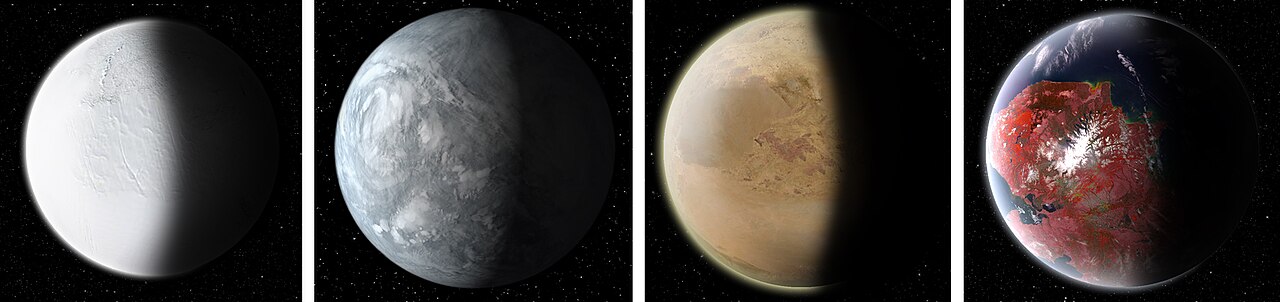
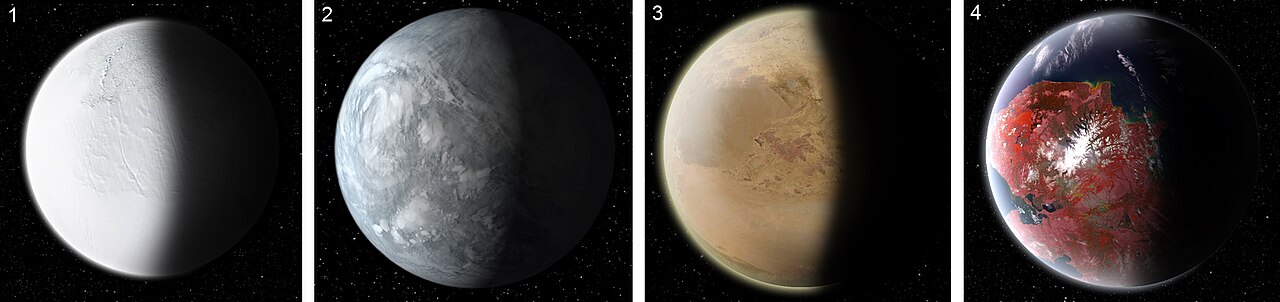
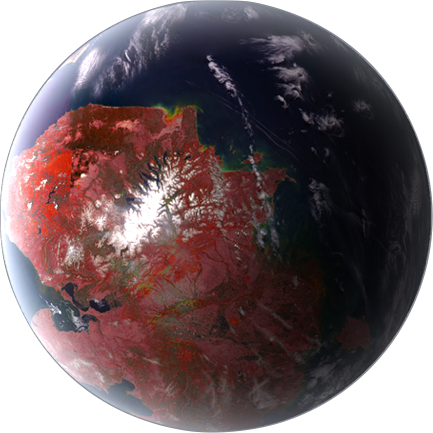
Frequently Asked Questions
What is Kepler-442b?
It is a confirmed super-Earth exoplanet that circles a cooler, dimmer K-type star called Kepler-442. The planet sits squarely in that star's habitable zone, and the whole system lies roughly 1,196 light-years out in the constellation Lyra.
Is Kepler-442b actually habitable?
With an equilibrium temperature near 233 K and a rocky composition suggested by its size, it is frequently cited as one of the most Earth-like worlds known in both radius and thermal environment. As of mid-2018 it held the title of the most habitable non-tidally-locked exoplanet discovered, though we still cannot confirm the presence of an atmosphere or surface liquid water.
How long is a year on Kepler-442b, and how far is it from us?
One full orbit around its host star takes about 112.3 days, so a local year is shorter than four Earth months. The system is approximately 1,196 light-years away, meaning the light reaching our telescopes left that star over a thousand years ago.
What are Kepler-442b's key physical stats?
The planet measures about 1.34 Earth radii and carries roughly 2.36 Earth masses, placing it firmly in super-Earth territory with a likely rocky interior. It orbits at about 0.409 AU from its star, a distance just beyond where Mercury circles the Sun.
Why do exoplanet fans keep singling out Kepler-442b?
Because it hits so many Earth-like benchmarks simultaneously—comparable size, a temperate orbital distance, and a host star that isn't a blazing G-type sun—it became a go-to example in discussions of the best candidates for life beyond our solar system. Its K-type star also burns fuel more slowly than the Sun, potentially granting any emerging biosphere extra time to flourish.
More in Transiting Exoplanets 1-24
Spotted an error? Know more?
Reader corrections go straight into our review queue. Suggest an edit · How this site is sourced