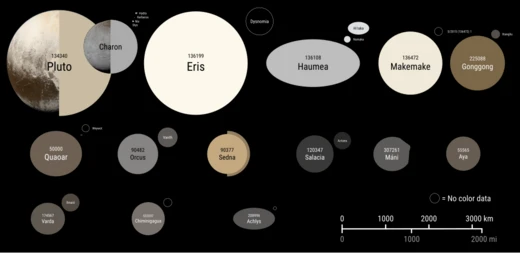
Phil Nicholson
Australian-born astronomer and longtime editor-in-chief of Icarus.

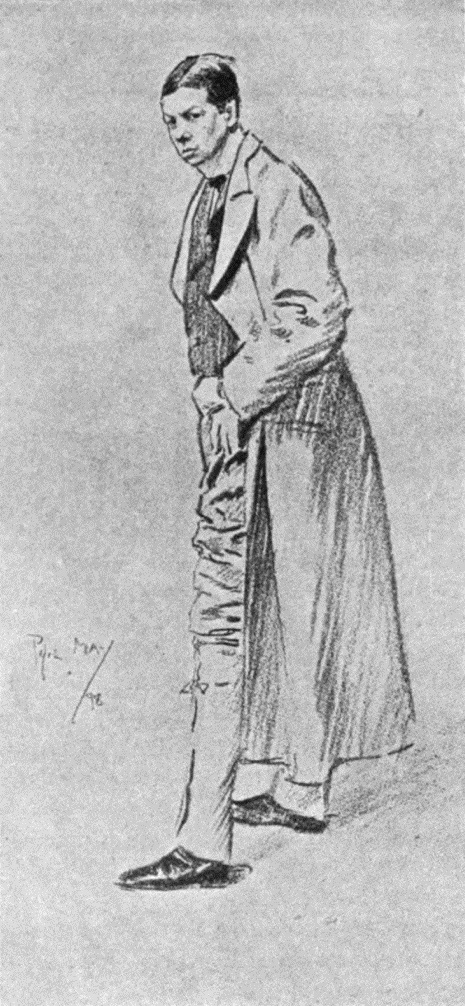
Phil May (1864–1903) · Public domain
Phil Nicholson, an Australian-born astronomer, is a professor in Cornell University’s Astronomy department, where his work focuses on planetary sciences. He served as editor-in-chief of the journal *Icarus* for two decades, from 1998 to 2018. His research centers on the orbital dynamics of planetary ring systems and infrared observations of planets, their moons, and rings. Nicholson earned his Ph.D. from Caltech in 1979. He has studied the ring systems of Saturn, Uranus, and Neptune using Voyager data and ground-based stellar occultations, and has used the Hale Telescope at Palomar Observatory to observe small moons of Jupiter and Saturn discovered by Voyager. His work also includes dynamical studies of the planetary system around the pulsar PSR 1257+12, the rotational evolution of natural satellites, and investigations of zodiacal dust bands found by the Infrared Astronomical Satellite in 1983. With colleagues in Canada and at Harvard, he helped discover numerous outer satellites of Uranus, Saturn, and Neptune. Nicholson was part of the Visual Infrared Mapping Spectrometer science team for the Cassini-Huygens mission to Saturn and led a Cornell-Caltech team that used the Hale Telescope to study the impact of Comet Shoemaker-Levy 9 into Jupiter in July 1994. He has served on National Research Council committees for planetary and lunar exploration and for astronomy and astrophysics, time assignment committees for the Kuiper Airborne Observatory and Hubble Space Telescope, and scientific advisory committees for Arecibo and IPAC. He has coauthored review articles on planetary ring dynamics and the ring systems of Uranus and Neptune. The inner main-belt asteroid 7220 Philnicholson, discovered in 1981, was named in his honor, with the citation published in 1998. In 2019, he received the Harold Masursky Award for meritorious service to planetary science, recognizing his role as *Icarus* editor-in-chief. He was elected a Legacy Fellow of the American Astronomical Society in 2020.
- Born
- 1951
- Nationality
- Australian-born
- Position
- Professor of astronomy at Cornell University
- Phd year
- 1979
- Phd institution
- Caltech
- Editor in chief of
- Icarus
- Editor in chief years
- 1998–2018
Lore & Background
Nicholson received his Ph.D. from Caltech in 1979. His research centers on orbital dynamics in planetary ring systems and infrared observational studies of planets, their satellites, and their rings. He has studied the ring systems of Saturn, Uranus, and Neptune via Voyager observations and ground-based stellar occultations, and made Earth-based observations with the 5-meter Hale Telescope at Palomar Observatory of several small moons of Jupiter and Saturn discovered by Voyager. He also conducted dynamical investigations of the planetary system around the pulsar PSR 1257+12 and of the rotational evolution of natural satellites, and studied the zodiacal dust bands discovered by the Infrared Astronomical Satellite in 1983. Together with colleagues in Canada and at Harvard, he has been involved in the discovery of numerous outer satellites of Uranus, Saturn, and Neptune. He was a member of the Visual Infrared Mapping Spectrometer science team on the Cassini–Huygens mission to Saturn and led a team of Cornell and Caltech astronomers studying the impact of Comet Shoemaker-Levy 9 into Jupiter in July 1994 using the Hale Telescope.
Reader's Guide
Nicholson's significance lies in his extensive contributions to planetary science through both research and service. His work on ring systems and outer satellites has advanced understanding of the dynamics and composition of planetary rings and small moons. As editor-in-chief of Icarus for two decades, he shaped the field's primary journal. His service on national committees, including the Committees on Planetary and Lunar Exploration and on Astronomy and Astrophysics of the National Research Council, and on time assignment committees for the Kuiper Airborne Observatory and Hubble Space Telescope, reflects his influence on observational and policy decisions. He coauthored review articles on planetary ring dynamics and on the Uranian and Neptunian ring systems. The asteroid 7220 Philnicholson was named in his honor, and he received the Harold Masursky Award in 2019 for meritorious service to planetary science. He was elected a Legacy Fellow of the American Astronomical Society in 2020.
A Member of the Discovery Team
Phil Nicholson was part of the astronomical team that identified the trans-Neptunian object 2004 XR190 on 11 December 2004. Working under the leadership of Lynne Allen of the University of British Columbia, Nicholson was one of several collaborators—including Brett Gladman, John Kavelaars, Jean-Marc Petit, and Joel Parker—who contributed to the Canada–France Ecliptic Plane Survey. The team conducted their observations using the Canada–France–Hawaii Telescope, scanning near the ecliptic plane from the Mauna Kea Observatories in Hawaii. The object they found would later be informally dubbed "Buffy" by the group, a nod to the fictional vampire slayer, and in 2005 the team submitted several Inuit-based name proposals to the International Astronomical Union. Six precovery images dating back to 2002 and 2003 were subsequently identified within Sloan Digital Sky Survey archives in 2015, confirming the object had been present in earlier data all along.
The Canada–France Ecliptic Plane Survey
The Canada–France Ecliptic Plane Survey, the program under which Phil Nicholson participated, was a collaborative effort designed to catalog objects in the outer Solar System. Conducted from the Mauna Kea Observatories in Hawaii using the Canada–France–Hawaii Telescope, the survey focused its scans near the ecliptic plane—the approximate plane in which most planets orbit the Sun. Nicholson's involvement placed him among a small, dedicated group of astronomers, including team leader Lynne Allen of the University of British Columbia, who were systematically searching for distant bodies beyond Neptune. The survey's methodology proved productive: the team's observations on 11 December 2004 yielded the detection of 2004 XR190, a trans-Neptunian object that would later be classified as both a scattered disc object and a detached object. The collaborative, multinational nature of the project—spanning Canadian, French, and Hawaiian institutions—reflected the international spirit of modern deep-sky astronomy.
A Landmark Trans-Neptunian Object
The object Phil Nicholson helped identify, 2004 XR190, stands out among the known population of distant Solar System bodies. With an estimated diameter ranging from 335 to 850 kilometers—a mean of roughly 562 kilometers, about a quarter of Pluto's width—it ranks among the largest known objects with an orbital inclination exceeding 45 degrees. Its orbit carries it between 51.1 and 63.4 AU from the Sun, completing one full revolution in approximately 433 years. The perihelion of 51 AU places it in a small, poorly understood class of very distant bodies that combine large perihelia with only moderate eccentricities, a grouping that also includes 2014 FC72, 2014 FZ71, 2015 FJ345, and 2015 KQ174. For the discovery team, including Nicholson, finding such an object represented a significant contribution to the inventory of the outer Solar System's most remote and enigmatic residents.
Orbital Puzzles and Open Questions
The orbital characteristics of 2004 XR190, which Phil Nicholson co-discovered, present a genuine challenge to current models of the outer Solar System. Classified as both a scattered disc object and a detached object, it nonetheless possesses an unusually circular orbit for a scattered-disc body, with a moderate eccentricity of just 0.11. Traditional scattered-disc objects are thought to have been ejected into their present trajectories by gravitational encounters with Neptune, yet they typically exhibit highly eccentric orbits with perihelia below 38 AU—neither of which applies here. The Kozai mechanism, which can transfer orbital eccentricity into higher inclination, has been proposed as a possible explanation for its 47-degree tilt. Other hypotheses invoked by researchers include close stellar passages, unseen rogue planets or planetary embryos in the early Kuiper belt, and resonance interactions with an outward-migrating Neptune. As of 2018, no well-documented spectral type, rotational lightcurve, or definitive shape had been established, leaving the object's physical nature still largely unresolved.
Gallery


Frequently Asked Questions
Who is Phil Nicholson?
Phil Nicholson is an Australian-born astronomer who holds a professorship in the Astronomy department at Cornell University. He is best known for his decades-long work on planetary ring dynamics and infrared observations of solar-system bodies.
What is Phil Nicholson's primary research focus?
Nicholson's research centers on the orbital mechanics of planetary ring systems and infrared spectroscopy of planets, their satellites, and their rings. He has applied Voyager flyby data and ground-based stellar occultation measurements to study the rings around Saturn, Uranus, and Neptune, often using the Hale Telescope at Palomar Observatory.
What role did Phil Nicholson play in the journal Icarus?
He served as editor-in-chief of Icarus, the leading peer-reviewed journal in planetary science, for a twenty-year stretch from 1998 through 2018. In that capacity he helped shape the editorial direction of the field's most prominent publication.
Where did Phil Nicholson earn his doctorate?
Nicholson completed his Ph.D. at the California Institute of Technology (Caltech) in 1979, after which he went on to build his long academic career at Cornell University.
Why is Phil Nicholson important to the study of trans-Neptunian objects and planetary science?
His two-decade tenure steering Icarus gave him a direct influence on which TNO and outer-planet research papers reached the broader community. His own observational work on ring dynamics and infrared properties of distant solar-system bodies also provided foundational data that informed later TNO characterization efforts.
More in Trans-Neptunian Objects, Part 2 1-24
Spotted an error? Know more?
Reader corrections go straight into our review queue. Suggest an edit · How this site is sourced