Clyde Tombaugh
Discovered Pluto, the first known Kuiper belt object.

brewbooks from near Seattle, USA · CC BY-SA 2.0
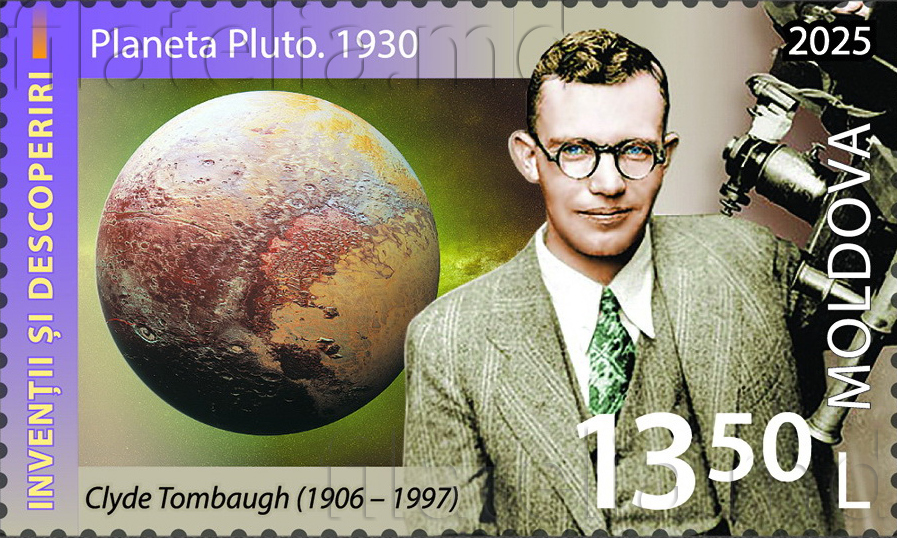
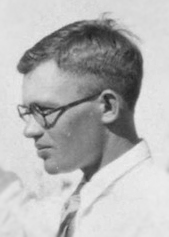
Clyde William Tombaugh (February 4, 1906 – January 17, 1997) was an American astronomer and telescope maker. He is most famous for finding Pluto in 1930, which was the first object discovered in what later became known as the Kuiper belt. At the time, Pluto was called the ninth planet, a status it kept for more than seventy years. Tombaugh grew up on farms in Illinois and Kansas, teaching himself astronomy and optical engineering. He built his own telescopes from spare parts and ground his own lenses by hand. His skill earned him a job at Lowell Observatory in Flagstaff, Arizona, where he photographed the night sky. Besides Pluto, he found hundreds of asteroids, along with star clusters, galaxies, and variable stars, adding greatly to the catalog of celestial objects. Later, as a professor at New Mexico State University, he ran the Planetary Patrol project. That work helped determine how long Mercury takes to rotate, tracked Jupiter’s Great Red Spot, and created new photographic methods for finding satellites. After retiring in 1973, Tombaugh kept building telescopes, supported observation programs, and pushed for continued research into unidentified flying objects (UFOs).
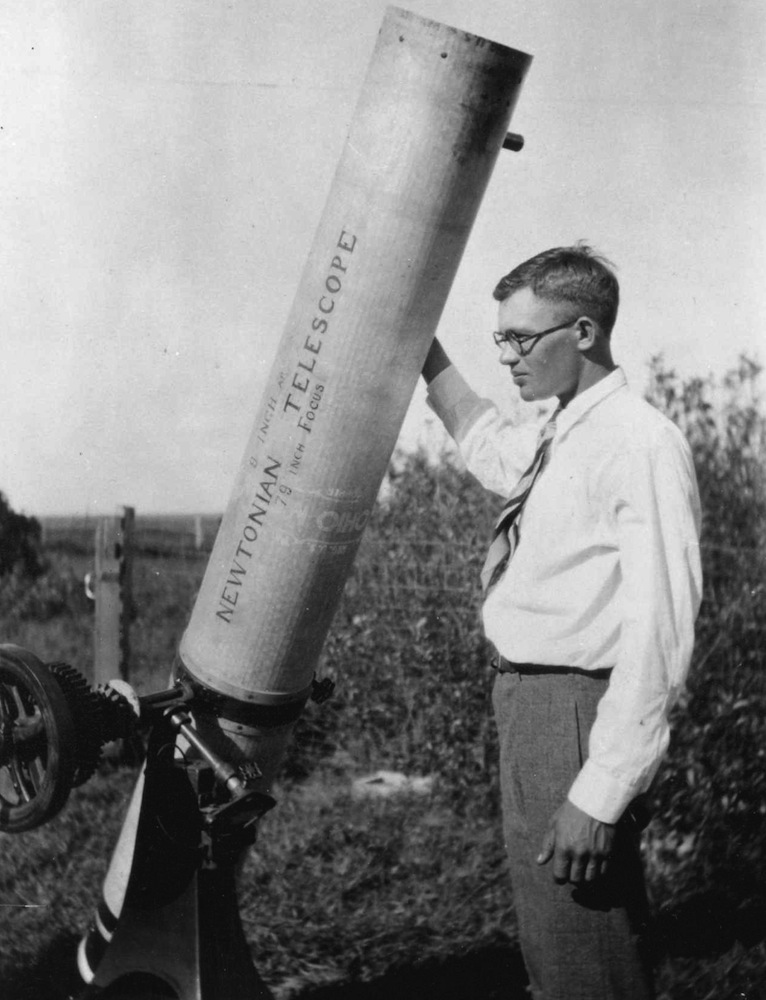
Tombaugh was born in Streator, Illinois, on February 4, 1906, to Muron Dealvo Tombaugh, a farmer of Pennsylvania Dutch background, and Adella Pearl Chritton. He was the first of six children, followed by sister Esther, then brothers Roy, Charles, Robert, and sister Anita Rachel. His interest in astronomy started when he visited Yerkes Observatory in Lake Geneva, Wisconsin, at age twelve in 1918. His uncle Lee, an amateur astronomer with a 3-inch refractor telescope, also sparked his curiosity and gave him astronomy books. The family’s finances suffered from bad weather and a poor corn harvest in 1921, forcing them to move to a new farm in Burdett, Kansas, in 1922. Because they arrived in August and needed to prepare crops quickly, Tombaugh left high school for a year to help his father. He graduated in 1925. Plans for college fell through when a hailstorm in June 1928 destroyed the family’s crops. In 1924, he read an article in *Popular Astronomy* by amateur Latimer J. Wilson titled “The Drift of Jupiter’s Markings,” which showed sketches of Jupiter. That inspired him to build his own telescope so he could see Jupiter’s features himself.
- Born
- February 4, 1906, Streator, Illinois
- Died
- January 17, 1997
- Discovery
- Pluto, February 18, 1930
- Asteroids discovered
- 15
- Notable award
- Jackson-Gwilt Medal (1931)
- Positions
- Lowell Observatory (1929–1945); professor at New Mexico State University
Lore & Background
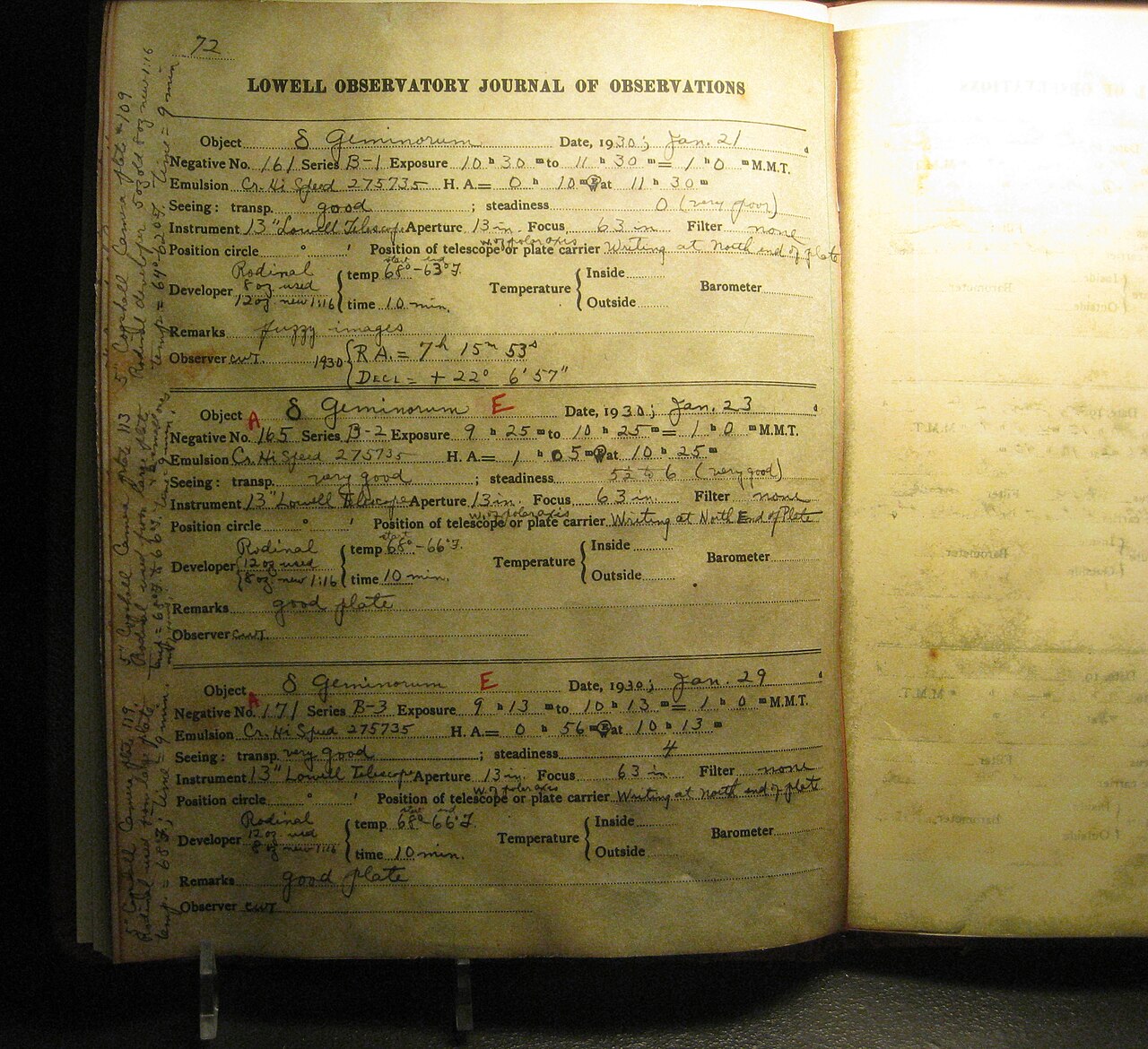
Tombaugh's interest in astronomy began when he visited Yerkes Observatory at age 12 in 1918. His family's poor finances forced him to drop out of high school for a year to help on the farm, and a hailstorm in 1928 ruined plans for college. He built several telescopes starting in 1926, digging a pit to test mirrors, and sent drawings of Jupiter and Mars to Lowell Observatory, which offered him a job in 1929. At Lowell, he was tasked with a systematic search for a trans-Neptunian planet (Planet X) predicted by Percival Lowell. Using a 13-inch astrograph and blink comparator, he discovered Pluto on February 18, 1930, using images taken the previous month. The name Pluto was proposed by 11-year-old Venetia Burney and officially adopted on May 1, 1930. Following the discovery, it was recognized that Pluto was not massive enough to be the expected ninth planet, and Tombaugh searched for additional trans-Neptunian objects for years; finding none, he concluded Pluto was a planet. The reclassification of Pluto as a dwarf planet occurred on August 24, 2006, after the discovery of Eris. Tombaugh also discovered hundreds of asteroids, variable stars, star clusters, galaxy clusters, and a galaxy supercluster, and may have discovered the Perseus–Pegasus Filament in 1936.
Reader's Guide
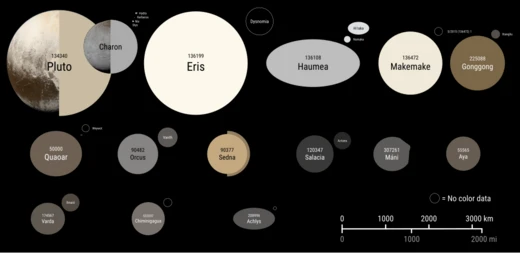
Clyde Tombaugh's discovery of Pluto in 1930 was the first detection of what would eventually be recognized as the Kuiper belt, a region of icy bodies beyond Neptune. His systematic search for a trans-Neptunian planet, using photographic plates and a blink comparator, demonstrated the power of patient observation. Although Pluto was initially classified as the ninth planet, later discoveries of other Kuiper belt objects, including Eris, led the International Astronomical Union to reclassify Pluto as a dwarf planet in 2006. Tombaugh's widow noted he would have accepted the change as a scientist. Hal Levison remarked that Tombaugh 'discovered the Kuiper Belt. That's a helluva lot more interesting than the ninth planet.' Beyond Pluto, Tombaugh contributed to astronomy by discovering hundreds of asteroids, variable stars, and galaxy clusters, and by leading the Planetary Patrol project at New Mexico State University, which helped determine Mercury's rotation period and monitored Jupiter's Great Red Spot. He also reported seeing unidentified flying objects in 1949 near Las Cruces, New Mexico.
Did You Know?
- The name Pluto was proposed by an 11-year-old English girl, Venetia Burney.
- Tombaugh may have discovered the Perseus–Pegasus Filament, a galaxy filament roughly a billion light years in diameter.
From Farm to Observatory: A Self-Taught Path
Clyde William Tombaugh entered the world on February 4, 1906, in Streator, Illinois, as the eldest of six children born to Muron Dealvo Tombaugh, a Pennsylvania Dutch farmer, and Adella Pearl Chritton. His fascination with the night sky ignited at age twelve during a 1918 visit to the Yerkes Observatory in Wisconsin, and was further nurtured by his uncle Lee, an amateur astronomer who shared his small refractor telescope and a collection of astronomy books. Financial hardship forced the family to relocate to a farm in Burdett, Kansas, in 1922, and young Clyde temporarily abandoned school to help prepare crops. A hailstorm in the summer of 1928 destroyed the family's harvest and derailed his college ambitions. Yet in 1924, an article in Popular Astronomy depicting sketches of Jupiter's surface convinced him he needed his own instrument. Beginning in 1926, he ground lenses and mirrors by hand, constructing multiple telescopes from spare parts. To test his mirrors under stable conditions, he excavated a pit twenty-four feet long, eight feet deep, and seven feet wide using nothing but a pick and shovel—a space that doubled as the family's root cellar and storm shelter. His hand-drawn observations of Jupiter and Mars eventually reached Lowell Observatory, which extended him a position.
The Blink Comparator and a New World
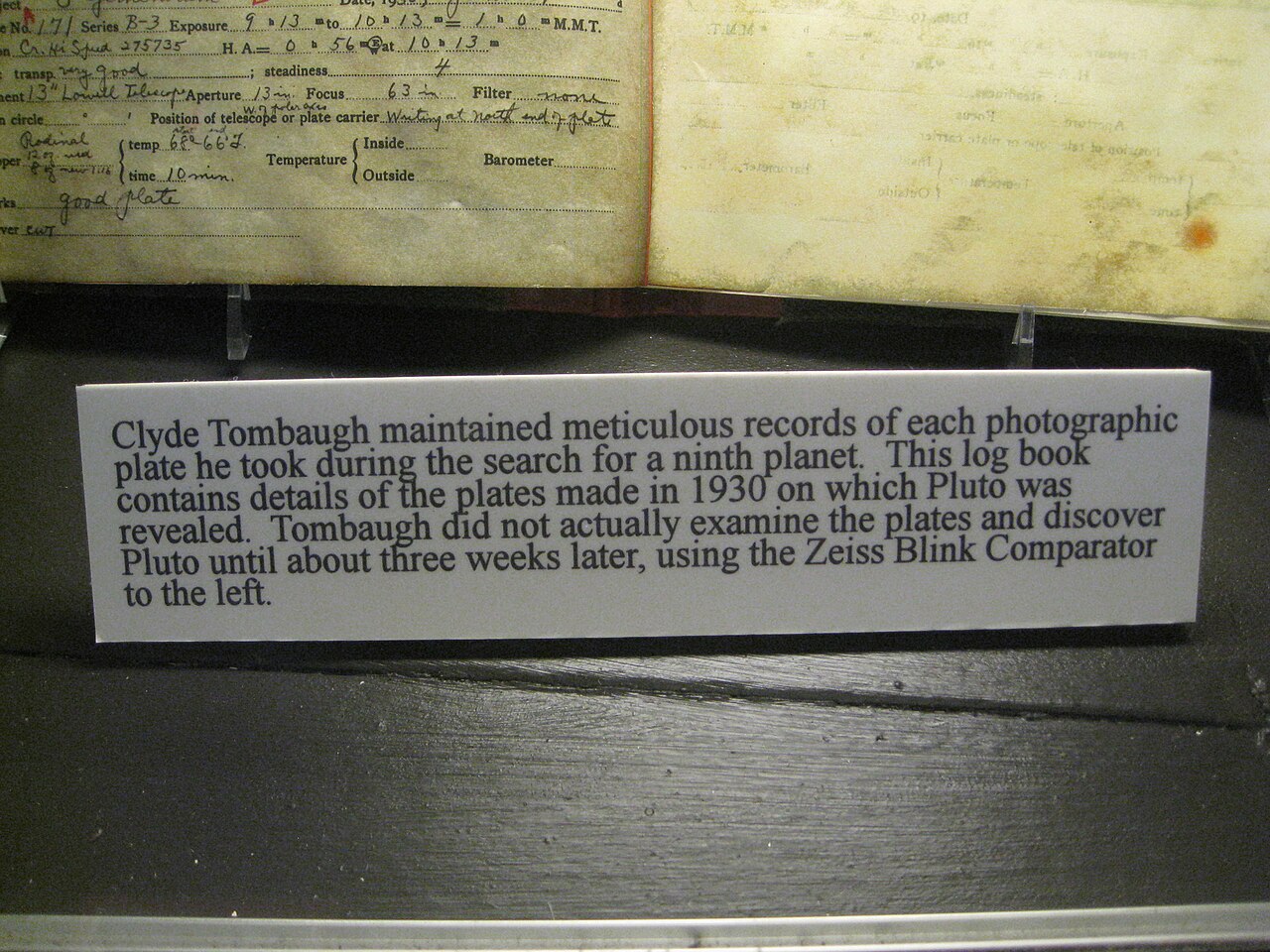
At Lowell Observatory in Flagstaff, Arizona, Tombaugh was tasked with a systematic search for a trans-Neptunian body that Percival Lowell had predicted based on calculations by Elizabeth Williams and William Pickering. Beginning April 6, 1929, he used the observatory's thirteen-inch astrograph to photograph the same stretch of sky on successive nights. He then compared pairs of images with a blink comparator, a device that rapidly alternated between two photographs so that any moving object would appear to jump while background stars held still. On Tuesday, February 18, 1930, examining plates taken the previous month, he spotted exactly such a wandering point near the region Lowell had predicted. Follow-up observations confirmed an orbit well beyond Neptune, eliminating the asteroid classification. Three names were floated—Minerva, Cronus, and Pluto. Minerva was already claimed by an asteroid, and Cronus was dropped because a widely disliked astronomer who championed it might falsely claim credit. Pluto, proposed by an eleven-year-old English girl named Venetia Burney, carried the advantage that its first two letters matched Lowell's initials and evoked the Roman god who could render himself invisible. Both the American Astronomical Society and the Royal Astronomical Society approved the name unanimously, and it was officially adopted on May 1, 1930.
A Broader Sky: Contributions Beyond One Discovery
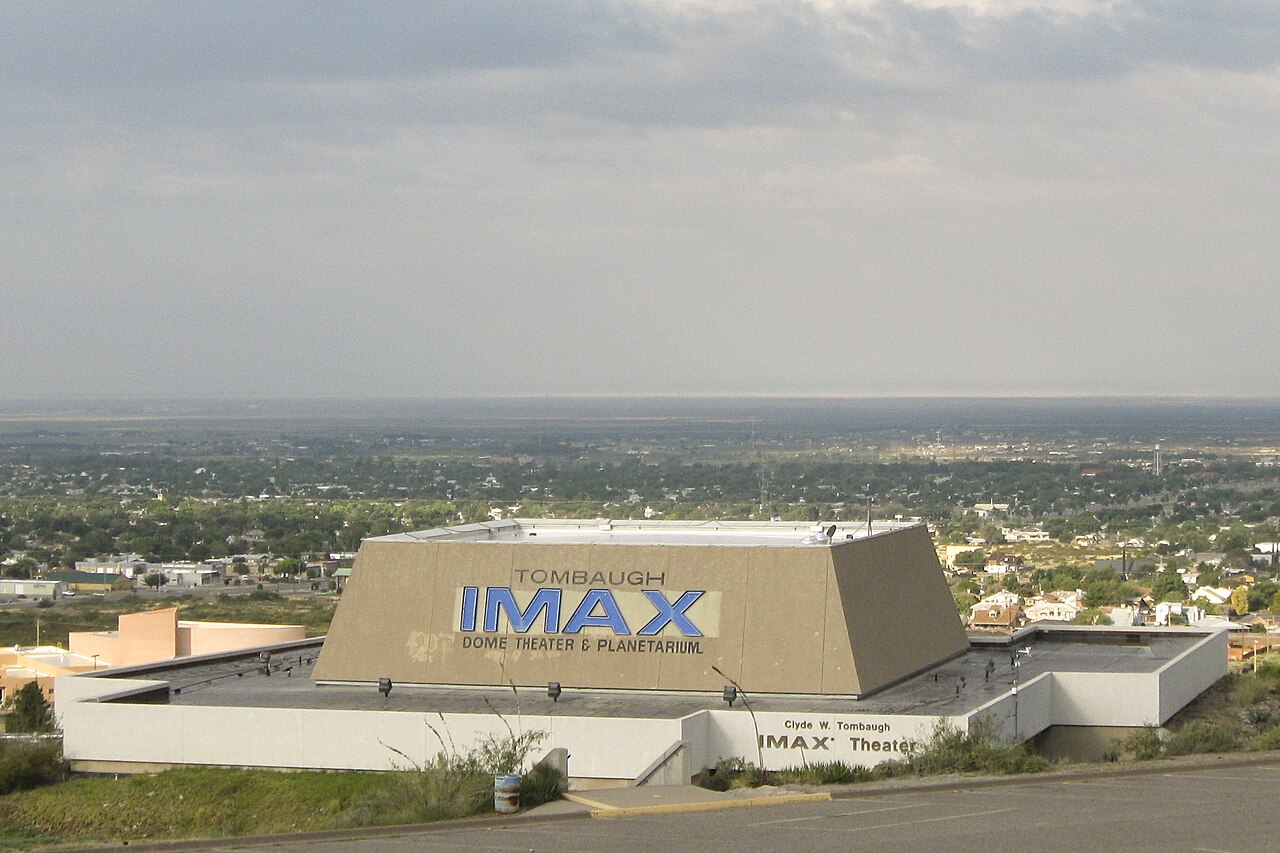
During his tenure at Lowell Observatory from 1929 to 1945, Tombaugh's work extended far beyond a single famous detection. He identified hundreds of asteroids and catalogued a variety of star clusters, galaxies, and variable stars, making substantial contributions to the broader mapping of the night sky. After leaving Lowell, he earned both a bachelor's and a master's degree in astronomy from the University of Kansas in 1936 and 1938, respectively. He then joined the faculty at New Mexico State University, where he directed the Planetary Patrol project. Through that program, his team helped pin down Mercury's rotation period, kept watch on Jupiter's Great Red Spot, and developed novel photographic techniques aimed at finding new satellites. Even after his 1973 retirement, Tombaugh never set down his tools. He continued building telescopes, lending his expertise to ongoing observational programs, and championing the continued scientific study of unidentified flying objects. His career thus spanned from a self-taught farm boy grinding mirrors in a Kansas pit to a university professor shaping planetary science for decades.
A Shifting Sky: Legacy and Reclassification
For more than seventy years, Pluto held its place as the ninth planet of the Solar System, a classification that stood from its 1930 discovery until the mid-2000s. Yet even in the years immediately following the find, some astronomers noted that the object was not massive enough to match the expected ninth planet and speculated it might represent the first member of an entirely new class of body. Tombaugh himself spent years searching for additional trans-Neptunian objects, but the absence of further discoveries led him to conclude that Pluto was indeed a planet. The minority view that it was not a true planet persisted until the late 1990s, when a growing population of similar icy bodies in the same region of space revealed that Pluto did not orbit in isolation. The discovery of Eris, a body more massive than Pluto, finally prompted the International Astronomical Union to reclassify Pluto as a dwarf planet on August 24, 2006, reducing the Solar System to eight planets. Tombaugh's widow Patricia noted that he might have felt some disappointment at the change, given that he had spent his life identifying the object as a world in its own right.
Gallery
Frequently Asked Questions
Who is Clyde Tombaugh?
Clyde William Tombaugh (1906–1997) was an American astronomer and hand-built telescope craftsman best known for identifying Pluto on February 18, 1930. He worked at Lowell Observatory in Flagstaff, Arizona, from 1929 to 1945 and later taught at New Mexico State University.
How did Clyde Tombaugh find Pluto?
He systematically compared pairs of photographic star plates taken a few days apart using a blink comparator, looking for a tiny dot that shifted against the fixed background. That method let him spot the faint moving object now classified as the first known Kuiper belt dwarf planet.
What was Clyde Tombaugh's background before he entered astronomy?
He grew up on farms in Illinois and Kansas, where he taught himself optics and basic astronomy from books. He hand-ground his own telescope lenses from spare parts, and that self-made instrument is what eventually earned him a position at Lowell Observatory in 1929.
Why is Clyde Tombaugh significant to trans-Neptunian object history?
His 1930 discovery of Pluto was the very first detection of any body beyond Neptune, making it the opening entry in what we now call the Kuiper belt. Because Pluto carried the label "ninth planet" for more than seventy years, Tombaugh's find shaped public understanding of the outer solar system for generations.
What did Clyde Tombaugh do after the Pluto discovery?
He stayed at Lowell Observatory until 1945 and then moved to New Mexico State University, where he taught astronomy for the remainder of his career. He also identified fifteen asteroids and was awarded the Jackson-Gwilt Medal in 1931 for his contributions to the field.
More in Trans-Neptunian Objects, Part 2 1-24
Spotted an error? Know more?
Reader corrections go straight into our review queue. Suggest an edit · How this site is sourced