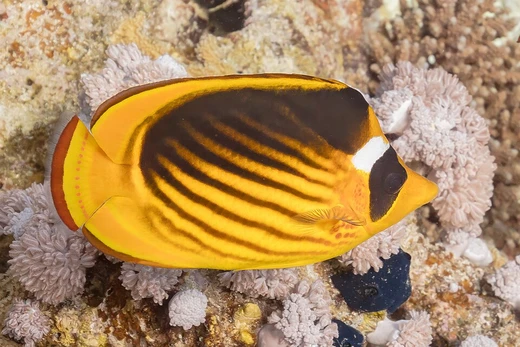
Hippocampus kuda
A dark sentinel of the seagrass, guarding its young in a father's pouch.

Hippocampus kuda, commonly known as the black seahorse or black-tailed seahorse, is a marine teleost in the family Syngnathidae native to the shallow coastal waters of the Indo-Pacific. It inhabits seagrass meadows, mangrove root tangles, and the outer margins of coral reefs, where its dark, mottled coloration provides cryptic camouflage against algae-covered substrates and seagrass blades.
Ecologically, H. kuda functions as a mid-trophic ambush predator in these nearshore communities, preying on small crustaceans, mysids, and zooplankton. Its male-brooded reproduction—unique among most fishes—means that a single male carries hundreds of embryos in a ventral pouch, releasing fully formed juveniles that immediately join the benthic microfauna. The species is assessed on the IUCN Red List and is subject to CITES Appendix II regulation, reflecting ongoing pressure from habitat loss and the ornamental trade.
- Common name
- Black seahorse / Black-tailed seahorse
- Family
- Syngnathidae
- Distribution
- Indo-Pacific (shallow coastal waters)
- Habitat
- Seagrass beds, mangroves, coral-reef periphery
- Reproduction
- Male brood pouch; oviparous with paternal incubation
- Diet
- Small crustaceans, mysids, zooplankton
- Conservation
- Assessed on IUCN Red List; CITES Appendix II
Lore & Background
In the seagrass meadows of the Andaman Sea and the mangrove channels of the Malay Peninsula, Hippocampus kuda drifts in slow, undulating bouts, its prehensile tail coiled around a blade of Enhalus acoroides or a pneumatophore root. Unlike the more brightly patterned H. kuda's congeners, this species favours darker microhabitats—shaded reef flats, turbid estuarine outflows, and the dense understory of seagrass stands—where its charcoal-to-olive coloration, broken by faint pale spots, renders it nearly invisible to both predators and prey. Field surveys in the Philippines and Indonesia record the species at depths from the intertidal zone down to roughly twenty metres, always in association with structured substrate rather than open water.
The reproductive biology of H. kuda mirrors that of the genus: the female transfers a clutch of eggs into the male's ventral brood pouch, where they are incubated for a period of several weeks before being expelled as free-swimming juveniles. Males are observed to remain largely sedentary during gestation, their tail anchored and their pectoral fins beating in short, rhythmic bursts to maintain position in the current. This paternal investment means that male fitness is tightly coupled to the quality of the local seagrass or mangrove habitat, a link that makes the species a sensitive indicator of nearshore ecosystem health.
Hippocampus kuda is also a well-documented subject of the ornamental aquaria trade. Specimens are collected from wild populations across the Indo-Pacific and exported under CITES Appendix II permits. The trade pressure, combined with the degradation of seagrass and mangrove habitats by coastal development and eutrophication, has prompted regional conservation listings and calls for captive-bred stock to replace wild-caught individuals in the aquarium market.
Reader's Guide
Trigger: A small mysid shrimp enters the foraging radius of an anchored H. kuda in a seagrass meadow. The seahorse remains motionless, its body aligned with the current and its prehensile tail coiled around a Halodule blade. When the prey passes within a few centimetres, the seahorse executes a rapid suction strike—its tubular snout opens, a negative-pressure pulse draws the prey into the buccal cavity, and the snout closes. The entire event lasts under a second. Ecological consequence: by removing small crustaceans and zooplankton from the water column near the benthos, H. kuda helps regulate microfaunal densities in seagrass communities, a role documented in benthic food-web studies from the Gulf of Thailand.
Trigger: A female approaches a gestating male in a mangrove root tangle. She presents a series of undulating body undulations and a brief display of her oviduct region. The male responds by inflating his brood pouch and performing a short, rhythmic fin-beat display. The female then deposits a cluster of eggs into the pouch. Ecological consequence: the male's subsequent sedentary, pouch-guarding behaviour means he is highly vulnerable to predation and habitat disturbance during the multi-week gestation window, linking reproductive success directly to the structural integrity of the mangrove or seagrass habitat.
Trigger: A juvenile H. kuda is expelled from a male's pouch into open water above a coral-reef margin. The juvenile is fully formed, with functional fins and a developed snout. It immediately seeks out a tuft of algae or a small coral branch to anchor its tail. Ecological consequence: the release of hundreds of juveniles in a single event creates a localized pulse of small benthic predators, which can temporarily suppress microcrustacean populations in the immediate area before the juveniles disperse across the reef.
More in Behavior & Ecology
Elsewhere in Diagonal butterflyfish
Spotted an error? Know more?
Reader corrections go straight into our review queue. Suggest an edit · How this site is sourced