Courtship display
A slow, chromatic duet where the male carries the next generation.

Giles Laurent · CC BY-SA 4.0
Courtship display is a suite of coordinated visual, chromatic, and locomotor signals that marine organisms use to attract a mate, confirm species identity, and synchronize the act of reproduction. In the marine realm, the most celebrated example belongs to the seahorses (genus Hippocampus), in which the male—not the female—carries the developing embryos in a specialized abdominal brood pouch. Because the male bears the full cost of gestation, courtship in seahorses is an extended, ritualized negotiation between partners rather than a brief encounter, and it stands as one of the most thoroughly documented reproductive behaviors in marine biology.
Courtship displays are not unique to seahorses. Cuttlefish flash rapid chromatophore patterns, clownfish perform structured approach sequences, and wrasses shift coloration to advertise reproductive readiness. Yet the seahorse remains the canonical case study: its display is slow enough to observe, visually rich, and tied to a reproductive strategy (male oviparity) found in virtually no other vertebrate group. Understanding it illuminates how sexual selection, parental investment, and sensory ecology intertwine in a reef or seagrass environment.
- Subject
- Courtship display (marine vertebrates)
- Primary model species
- Hippocampus spp. (seahorses)
- Reproductive strategy
- Male abdominal brood pouch (oviparity with male gestation)
- Core display elements
- Synchronized swimming, body coloration shifts, mutual circling
- Egg transfer
- Female deposits eggs into male's brood pouch
- Display duration
- Multiple encounters spanning days to weeks
- Sensory channel
- Visual (chromatic + kinematic)
Lore & Background
In seahorses, the asymmetry of parental investment is stark: the female produces the eggs, but the male provides the sole site of embryonic development, a vascularized brood pouch on his abdomen. This reversal of the typical vertebrate pattern means that female seahorses compete for access to a receptive male, and the courtship sequence functions as a mutual quality-assessment ritual. Pairs that have mated in previous seasons often re-form, suggesting a degree of pair fidelity, though in many species a male will court multiple females in succession, each depositing a clutch of eggs into his pouch before the next female arrives.
The display itself is a choreography of movement and color. Both partners raise their snouts, arch their bodies, and execute a slow, undulating swim in tight circles—often described as the 'seahorse dance.' During this phase, their skin darkens, brightens, or shifts hue depending on the species and the individual's arousal state. The male may puff his body, extend his dorsal fin, and present his pouch mouth to the female. The female, in turn, inserts her short, pointed ovipositor-like structure into the pouch opening and releases a clutch of eggs. The entire transfer takes only a few seconds, but the courtship that precedes it can stretch over many hours of repeated circling, color flashing, and mutual inspection.
Researchers have noted that the intensity and duration of the display correlate with the male's condition and the female's reproductive state. A well-nourished male with a partially filled pouch may display more vigorously to signal available space. In some species, the female will test the pouch repeatedly before committing her eggs, effectively 'auditing' the male's readiness. This makes the courtship display not merely a mating lure but a genuine information-exchange event, one in which both partners extract data about the other's fitness and capacity before the costly act of reproduction begins.
Reader's Guide
Imagine you are hovering motionless in a seagrass meadow, camera at your chest, and a pair of seahorses drift into your field of view. What you see first is stillness. Both animals hang nearly vertical, tails anchored to a blade, dorsal fins beating at a slow, steady cadence. They face each other at a distance of perhaps ten body-lengths. Nothing dramatic yet.
Then the male's coloration shifts. A deepening wave of rust or violet sweeps along his flanks, and his body puffs slightly, making him look a fraction larger. He tilts his head up, snout toward the surface, and his dorsal fin beats a little faster. The female mirrors the head-tilt. This is the 'call and response' phase—each animal is checking that the other is present, attentive, and the right species.
Next comes the dance. Both seahorses release their tail grip, and they begin a slow, synchronized circle. Their bodies undulate in a gentle S-curve, pectoral fins flaring and folding in unison. The circle is tight—maybe two body-diameters across—and they complete it in a lazy, unhurried rhythm. The male's pouch mouth is visible, slightly open, and he periodically puffs his body to advertise the available space. The female circles with him, her coloration shifting in response—brighter, more saturated—signaling her readiness.
The climax is brief. The female angles her anterior end toward the pouch opening, and the male freezes, fins locked, body rigid. For two or three seconds her body overlaps his, and then she is gone, swimming away with a slightly lighter gait. The male resumes his slow orbit, alone, his pouch a little rounder. The entire display, from first color shift to egg transfer, may have taken only a few minutes, but the pair will repeat it—sometimes many times over the course of a day or a week—before the male's pouch is full and the season's brooding begins. What you are watching is not a single event but a negotiation, conducted in color and motion, between two small, ancient vertebrates who have turned reproduction into a duet.
Did You Know?
- The female seahorse deposits her eggs into the male's pouch in a transfer that lasts only a few seconds, yet the courtship display that precedes it can span multiple hours of synchronized swimming and color changes.
- A single male seahorse can court and receive eggs from multiple females in succession, with each female depositing a separate clutch before the next arrives.
- The intensity of a seahorse's courtship display—color saturation, body puffing, fin-beat rate—has been linked to the male's nutritional condition and the available space remaining in his brood pouch.
Female-Initiated Courtship and Pair Bonding
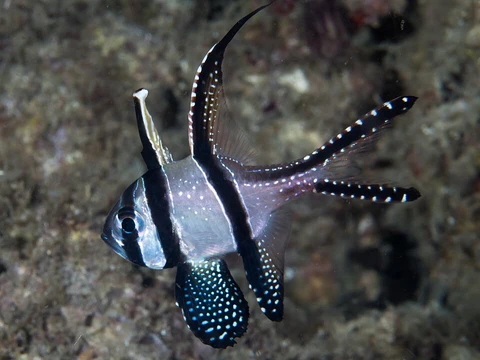
In Banggai cardinalfish, the courtship display is a female-driven affair that unfolds well before spawning. Pairs form up to two weeks prior to the actual spawning event, and throughout this entire window the female actively courts her chosen male. Once a mate is selected, the female isolates him from the rest of the colony by establishing a spherical spawning site roughly 50 to 60 centimeters in diameter. The signature movement of this display is known as 'side by side trembling': the female approaches the male from behind, executing a vigorous trembling motion while the male remains perfectly still. She then positions herself alongside him. This behavior is not a fleeting gesture but a sustained ritual that runs from initial pair formation all the way through to spawning. The female's active role in selecting a partner and initiating the display underscores a reproductive strategy in which she controls the timing and location of reproduction, while the male commits to the energetically costly task of carrying the eggs in his enlarged oral cavity.
Paternal Mouthbrooding and Size-Matched Pairing
The Banggai cardinalfish employs a reproductive strategy that sets it apart from most marine fish: it is a paternal mouthbrooder with no planktonic larval stage. After spawning, the eggs—each roughly 2.5 millimeters in diameter—remain in the male's mouth cavity for an undetermined period following hatching. This arrangement creates a fascinating size-matching dynamic. The female's body size governs both her fecundity and the size of individual eggs, whereas the male's size dictates the total reproductive output, meaning the number of eggs the pair can produce. Because the male must physically carry all the eggs, pairing tends to occur between individuals of comparable size, ensuring he can accommodate the full clutch. The male's conspicuously enlarged oral cavity, visible only during brooding, is the key anatomical adaptation that makes this possible. In optimal captive conditions the species lives about four years, though in the wild its lifespan may be only one to two years, making each successful courtship and spawning event a critical window for population continuity.
Social Structure and Spawning Territory Defense
Banggai cardinalfish inhabit shallow tropical waters, typically between 1.5 and 2.5 meters depth, forming stable groups of around nine individuals in habitats ranging from coral reefs and seagrass beds to open sandy or rubble areas. They favor calm, sheltered waters on the protected sides of larger islands. The species is the only member of its family that is strictly diurnal, active during daylight hours. When a mating pair forms, they establish a spawning territory several meters away from the main group and defend it vigorously against intruders. This territorial behavior is a critical component of the courtship display, providing a safe, isolated space for the female's trembling ritual and the subsequent spawning. The groups themselves are notably sedentary, with very limited movement between them, partly because the fish feed on plankton carried by water currents. This restricted dispersal, combined with the species' confinement to the Banggai Archipelago and a handful of nearby sites, means that courtship and spawning opportunities are geographically constrained, amplifying the vulnerability of each local population.
Conservation Pressures on Reproductive Success
Despite being one of the few marine fish regularly bred in captivity, the Banggai cardinalfish remains an endangered species. Its entire natural range spans only about 5,500 square kilometers, with an estimated total population of 2.4 million individuals distributed across isolated groups around 17 large and 10 small islands in the Banggai Archipelago of Indonesia. Heavy exploitation by aquarium collectors has reduced wild numbers, and the removal of these fish has been shown to cause a decline in the abundance of associated invertebrates such as sea urchins and anemones that serve as their shelter. Iridovirus diseases represent another significant source of mortality. The species' low fecundity, limited dispersal ability, and small population size compound these threats. A small introduced population was established in the Lembeh Strait in 2000 by aquarium traders, and tiny groups have been observed in Bali, but these do not offset the pressure on wild breeding pairs whose courtship displays and spawning territories are increasingly disrupted by human activity and environmental degradation.
Gallery
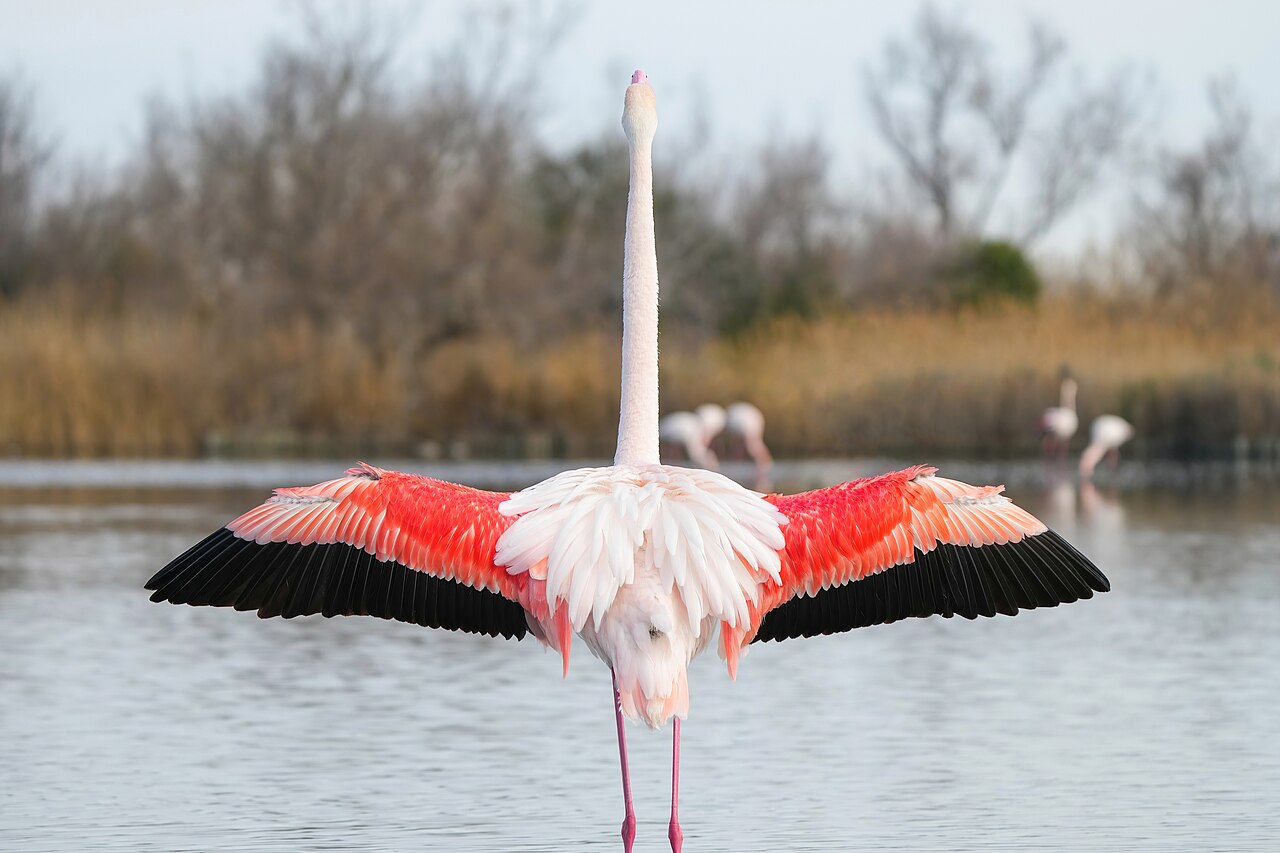
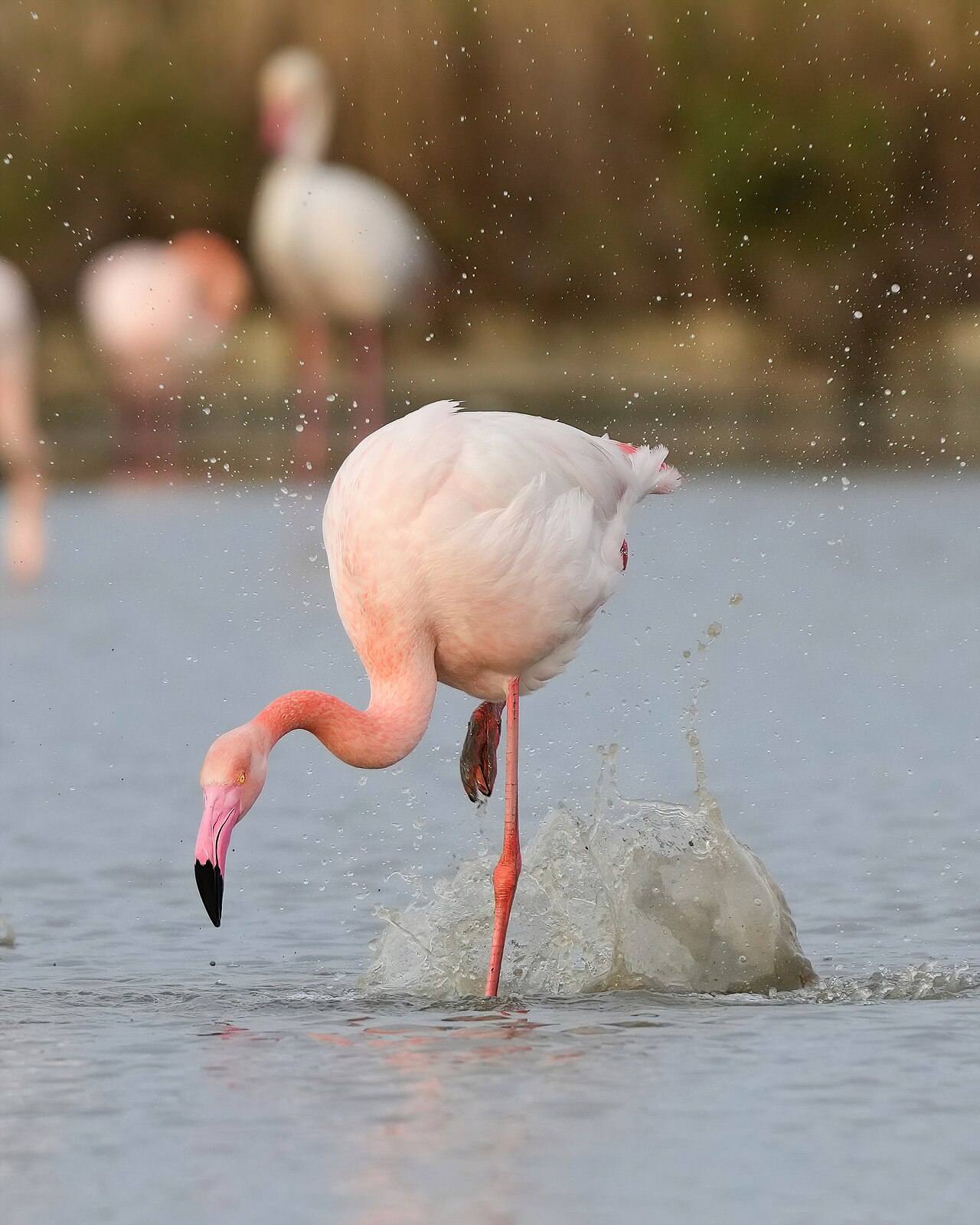
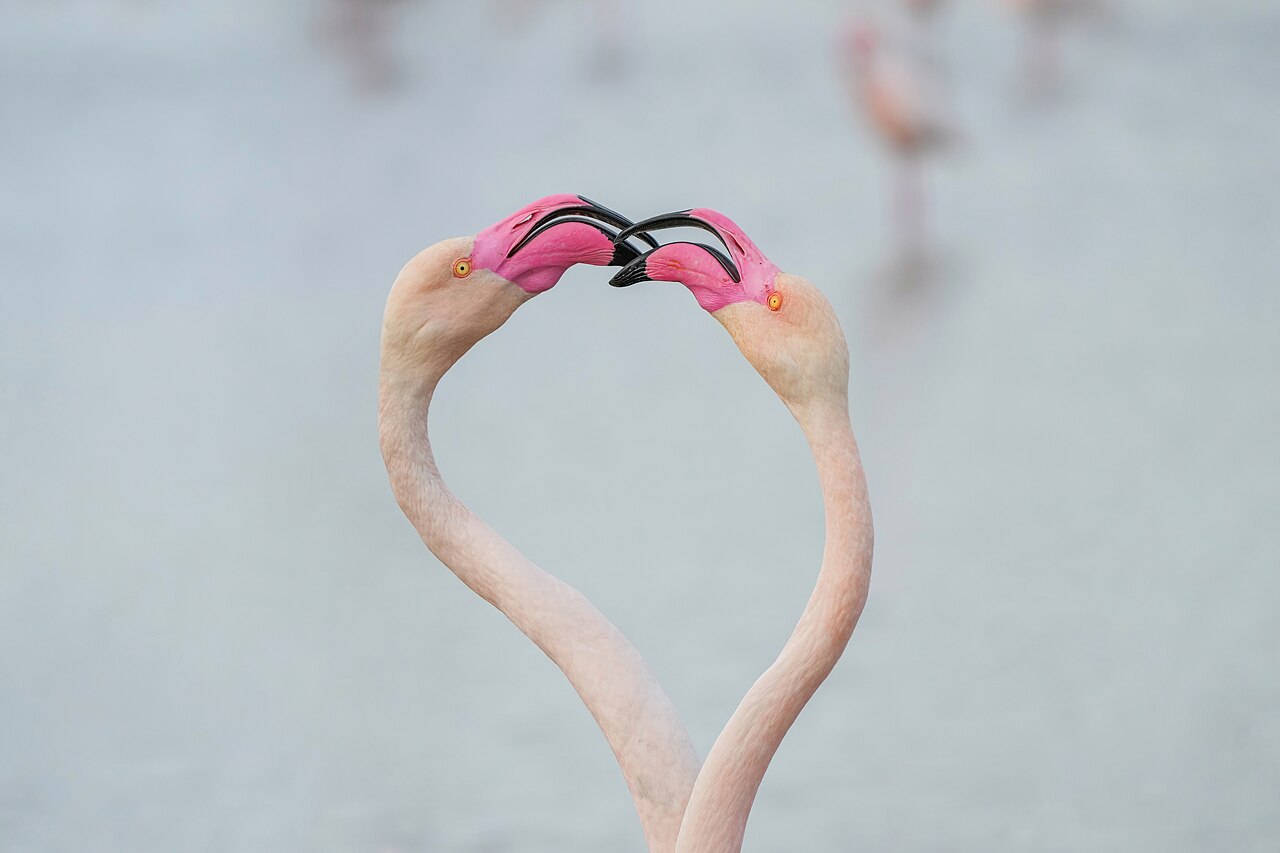
Frequently Asked Questions
What is Courtship display in marine biology?
It is a coordinated package of visual, chromatic, and locomotor signals that marine animals use to lure a potential mate, verify species identity, and synchronize the timing of reproduction.
Which species serves as the primary model for Courtship display?
Seahorses (genus Hippocampus) are the flagship example, because the male—not the female—houses developing embryos in a specialized abdominal brood pouch, turning mating into a long, ritualized negotiation between partners.
What are the core elements of a Courtship display?
The sequence typically involves synchronized swimming, visible shifts in body coloration, and the two partners circling one another in a slow, chromatic duet.
How long does a Courtship display last?
Rather than a single brief encounter, the display unfolds across multiple meetings that can stretch over days or even weeks of repeated interaction before egg transfer occurs.
Why is Courtship display considered significant in marine reproductive biology?
Because the male shoulders the entire cost of gestation, the pre-mating ritual becomes an extended, mutual negotiation instead of a quick hand-off, making it one of the most thoroughly studied courtship sequences among marine vertebrates.
More in Biology
Elsewhere in Banggai cardinalfish
Spotted an error? Know more?
Reader corrections go straight into our review queue. Suggest an edit · How this site is sourced