Droëwors
A dried sausage preserved without curing agents.

Popo le Chien · CC0
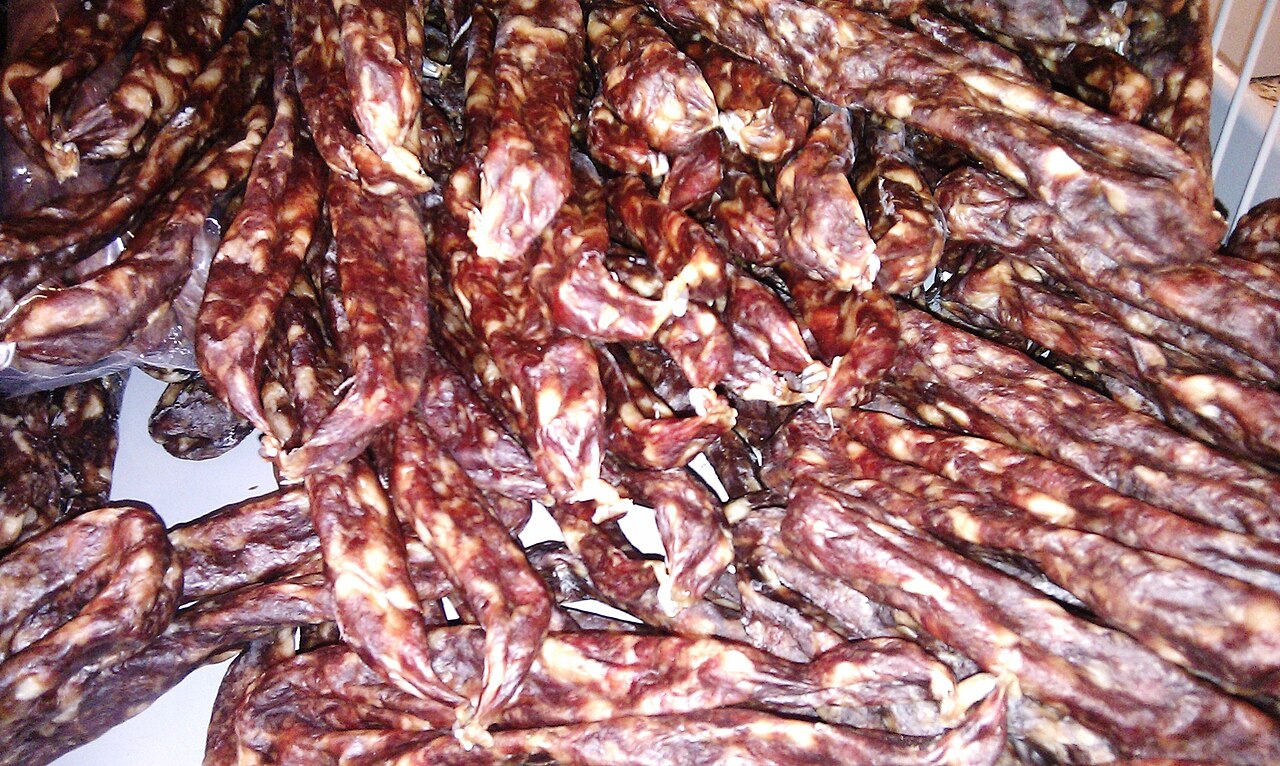
Droëwors is a Southern African snack food, derived from the traditional, coriander-seed spiced boerewors sausage. Its name comes from Afrikaans for 'dry sausage,' and it is typically made as a thin sausage (dunwors) to dry quickly and reduce spoilage before preservation.
- Type
- Snack food
- Origin
- Southern Africa
- Also known as
- Dry sausage, metworst
- Related to
- Boerewors, Dutch droge worst
- Key ingredient
- Beef, mutton fat, coriander seed
Lore & Background
Droëwors is made from a recipe similar to boerewors, but pork and veal are replaced by beef to avoid rancidity during drying, and mutton fat substitutes for pork fat. The sausage is dried quickly in warm, dry conditions, unlike traditional Dutch droge worst or Italian cured salumi, which are dried slowly in cold, humid environments. It does not contain a curing agent, so it can become moldy if kept in moist conditions.
Reader's Guide
Droëwors is significant as a preserved meat product that does not require refrigeration, relying on rapid drying rather than curing. Its preparation method—using thin sausages or flattened thick ones—maximizes surface area for drying, reflecting practical adaptation to Southern African climates. Unlike many dried meats, it lacks curing agents, making it susceptible to mold in humidity, which distinguishes it from cured sausages. Its name and nature connect it to Dutch droge worst (metworst), showing a culinary lineage. Droëwors remains a common snack in Southern Africa, valued for its portability and long shelf life under dry conditions.
Did You Know?
- Droëwors is usually made as a thin sausage (dunwors) to dry more quickly and reduce spoilage.
- If thick sausage (dikwors) is used, it is flattened to increase surface area for drying.
- Droëwors does not contain a curing agent, unlike cured sausage.
- It is dried quickly in warm, dry conditions, unlike traditional droge worst and Italian cured salumi.
Gallery
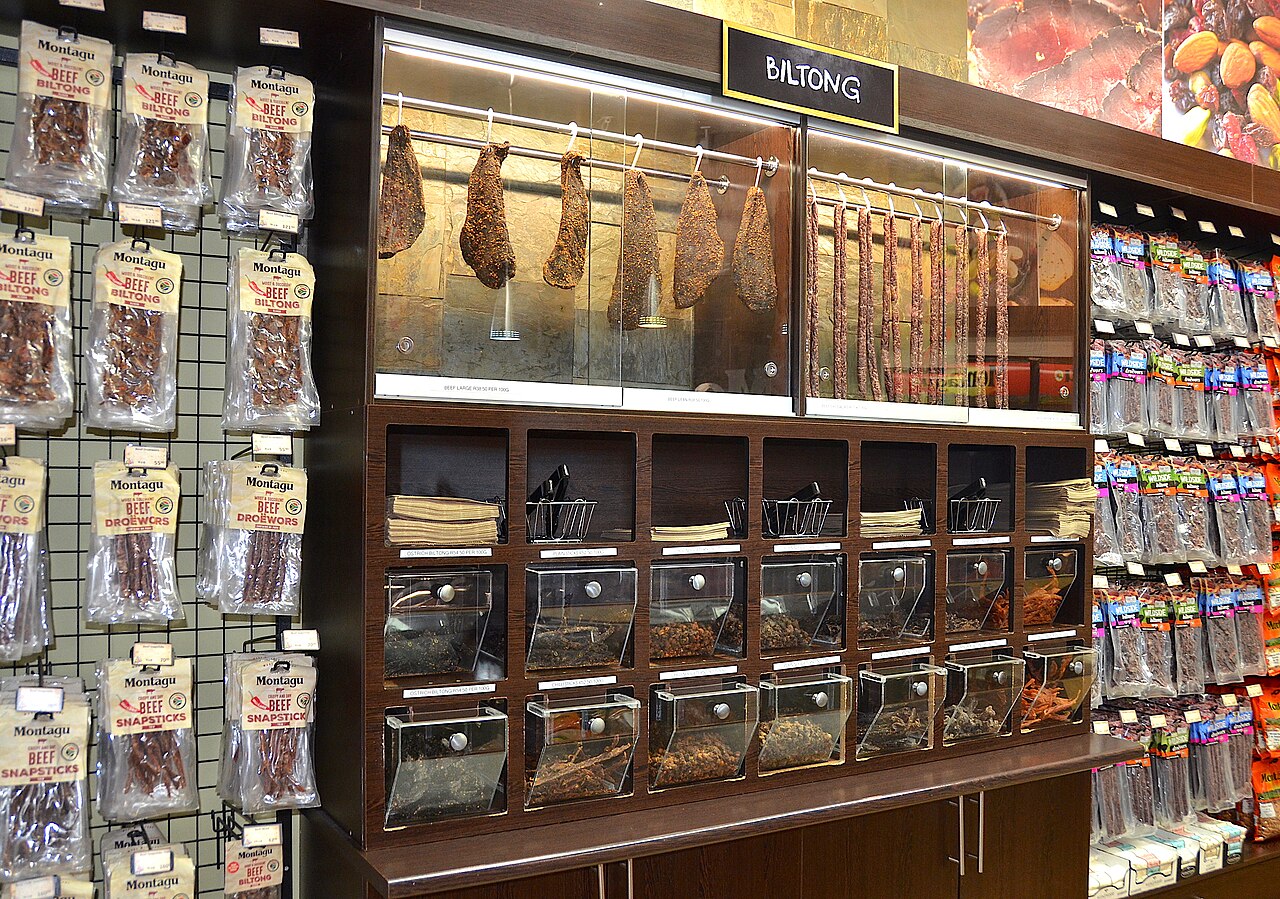
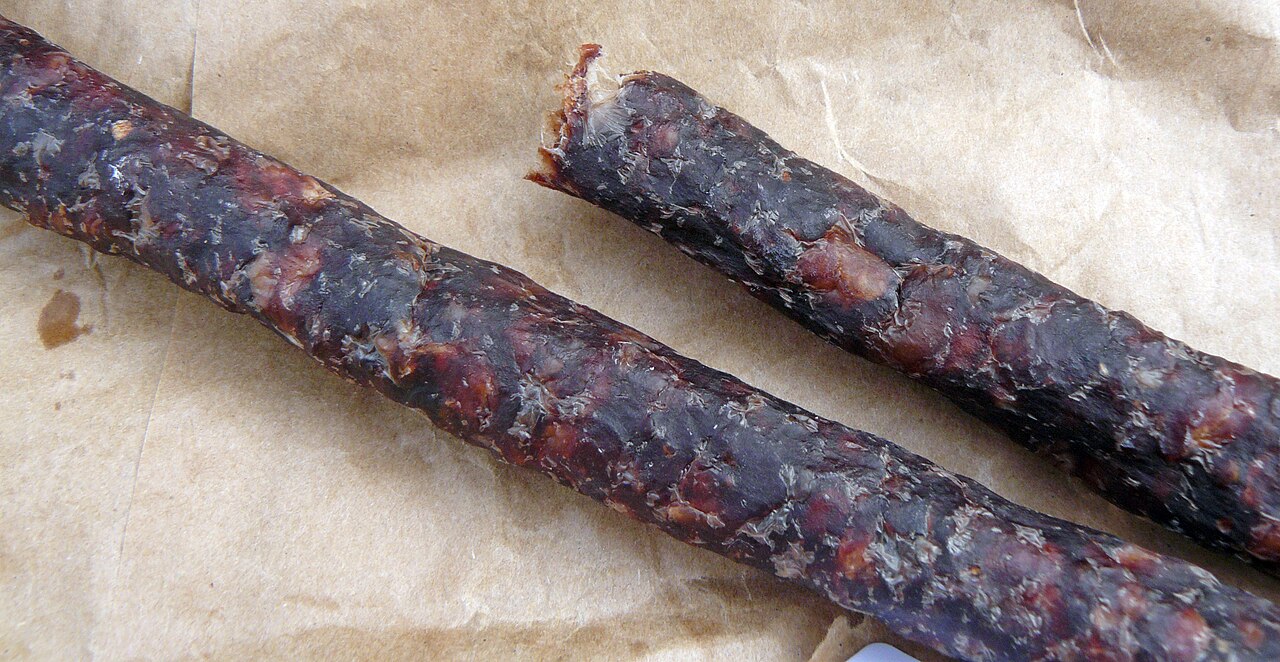
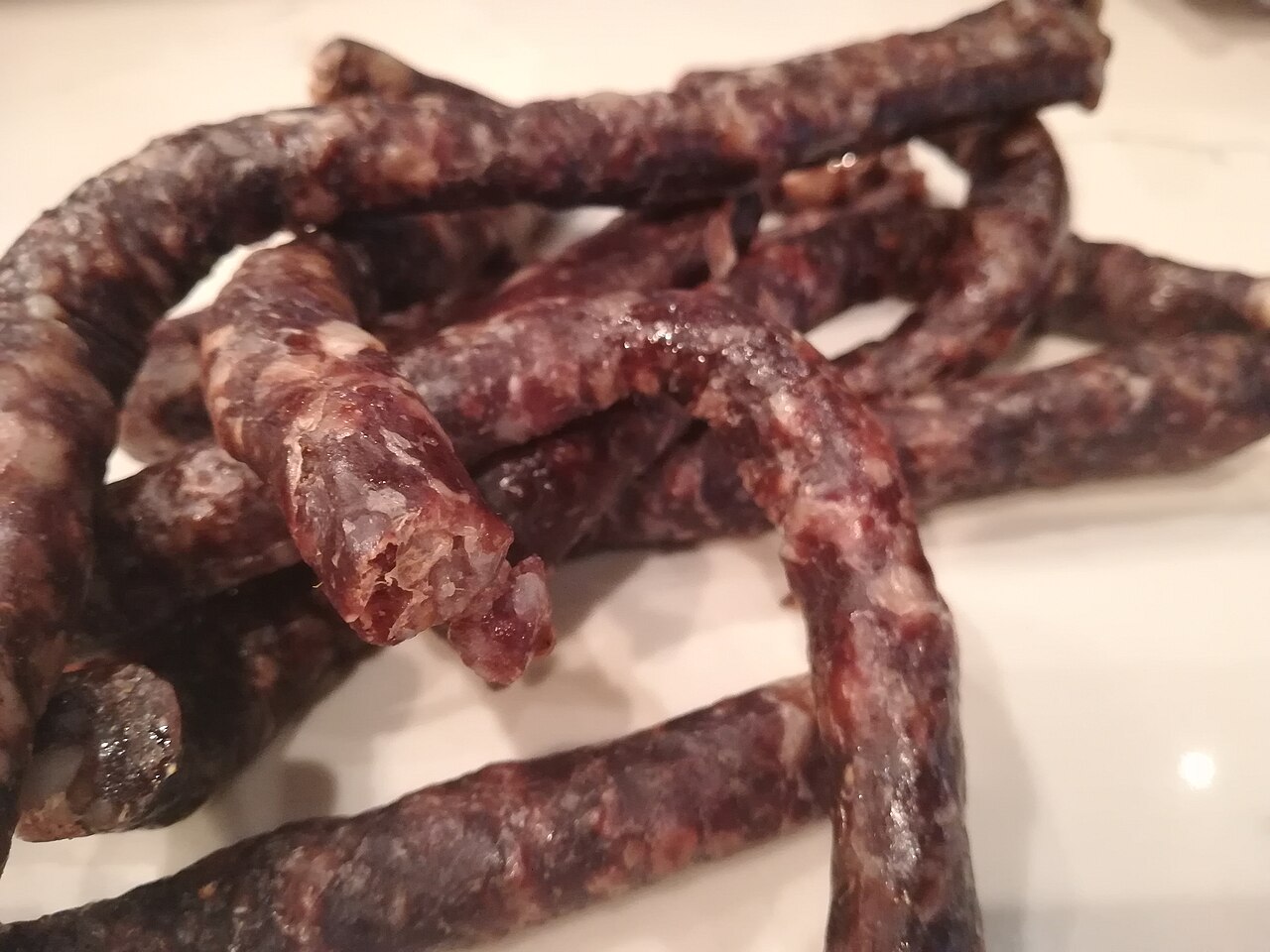
Frequently Asked Questions
What is Droëwors?
Droëwors is a Southern African snack food that takes the traditional boerewors recipe and turns it into a thin, air-dried sausage. It's made deliberately slim so it can lose moisture fast and stay edible long after fresh sausages would spoil.
How is Droëwors different from regular Boerewors?
Boerewors is a thicker, fresh-eaten sausage, whereas Droëwors is its slim, dried-out sibling built specifically for shelf stability. The thinner 'dunwors' format is the whole point: the smaller cross-section means the sausage dries through much faster.
What's actually in Droëwors?
The core mix is beef, mutton fat, and coriander seed, which gives the sausage its warm, peppery bite. It's a straightforward dried product that leans on those ingredients rather than any added curing chemicals.
Where does the name 'Droëwors' come from?
It's straight Afrikaans: 'droë' means dry and 'wors' means sausage, so the word literally says what the product is. You'll also see it called 'metworst,' and the name traces back to the Dutch 'droge worst' tradition of making thin, air-dried links.
How does Droëwors stay preserved without curing agents?
The trick is speed and thinness: because the sausage is made narrow, moisture evaporates quickly, and that low water activity is what keeps bacteria from taking hold. No nitrites or smoke are needed—the drying itself does the preserving.
More in South African cuisine 1-24
Spotted an error? Know more?
Reader corrections go straight into our review queue. Suggest an edit · How this site is sourced