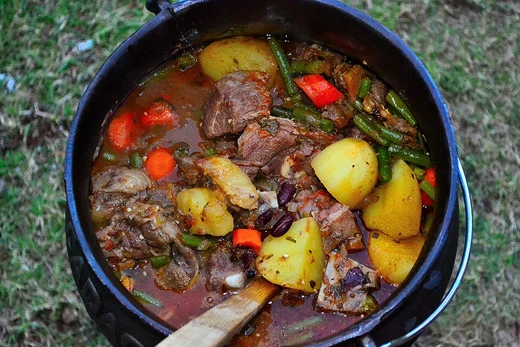
Beer in South Africa
South African beer blends European brewing with indigenous sorghum traditions.

Discott · CC0
Beer in South Africa has a corporate history dating back to the early 20th century, with brewing traditions spanning over 300 years. The industry has been shaped by European settlers and indigenous knowledge, producing both European-style beers and traditional sorghum-based Bantu beer.
- Field
- Brewing industry
- Nationality
- South African
- Known for
- Dominance of South African Breweries (SAB) and traditional Bantu beer
- Market share
- 34% of Africa's formal beer market
- Per capita consumption 2012
- 55–58 litres per capita
Lore & Background
Beer reached South Africa with its first white settlers and has been brewed there for over 300 years. On October 4, 1658, Jan van Riebeeck recorded in his diary that the first beer was brewed at the Cape. European settlers from the 1650s onward, including Dutch and British immigrants, contributed knowledge of alcohol production. Indigenous groups such as the Sotho, Zulu, and Xhosa brewed forms of sorghum beer long before any Europeans arrived. Umqombothi, a traditional beer from the Nguni languages, is made from maize, maize malt, sorghum malt, yeast, and water.
Reader's Guide
Bantu beer played an important role in Bantu tribal life, traditionally brewed from malted sorghum and considered both food and drink. In the 1960s, the South African Government used profits from municipal Bantu beer production to build schools, libraries, and clinics for Black communities, while also removing them to townships. The Malan Liquor Commission in 1960 recommended encouraging consumption of natural alcoholic beverages over spirits. Today, South African Breweries (SAB) controls the vast majority of the market, producing brands like Carling Black Label, Castle Lager, and Castle Lite. Microbreweries have grown, with 211 producing 34 million litres of craft beer annually as of 2019. Beer tourism initiatives have also emerged, including Beer Route and KZN Craft Revolution.
Did You Know?
- The first beer brewed at the Cape was recorded by Jan van Riebeeck on October 4, 1658.
- Bantu beer is traditionally brewed from malted sorghum and retains solid matter, serving as both food and drink.
- In 1960, the Malan Liquor Commission recommended encouraging natural alcoholic beverages over spirits.
- South African Breweries (SAB), now part of AB InBev, has long dominated the South African beer market.
Ancient Roots and Ceremonial Significance
Long before European settlers set foot on South African soil, indigenous communities were already brewing beer from locally available grains, with sorghum standing out as the primary ingredient. This ancient practice was far more than a casual refreshment; it occupied a sacred place in the social fabric of precolonial life. Beer featured prominently in pivotal ceremonies, including betrothals and weddings, where one family would ceremonially present it to another as a gesture of alliance and goodwill. The character of this traditional brew differed markedly from what European colonisers would later bring to the continent. South African traditional beer was unfiltered and cloudy, with a notably low alcohol content, setting it apart from the clearer, stronger varieties that would eventually dominate urban markets. This indigenous brewing tradition was rooted in the agricultural knowledge of Bantu-speaking communities, who had introduced grain cultivation to the region since at least the second century AD, and it persisted through centuries of cultural exchange with Khoisan foragers and later European arrivals, remaining a living thread in South African food culture.
A Nutritional Revelation in the Industrial Age
Around the turn of the twentieth century, a remarkable discovery reshaped how South Africans understood their traditional beer. As white-owned industrial enterprises began investigating malnutrition among urban workers, researchers found that the cloudy, low-alcohol brew made from sorghum and other local grains was actually a vital source of vitamins. These nutrients were often missing from the grain-heavy traditional diet and even scarcer in the cramped conditions of urban industrial slums. This finding elevated traditional beer from a simple cultural beverage to a recognised nutritional staple for working communities. The discovery also highlighted how deeply intertwined brewing was with the broader food system: Bantu-speaking communities had long cultivated sorghum, millet, and other grains that formed the backbone of both everyday meals and fermented drinks. In the precolonial period, cooked grains, fermented milk, and roasted or stewed meat constituted the dietary core, and beer sat naturally within that ecosystem. The nutritional significance of traditional beer thus reflected centuries of accumulated agricultural and fermentation knowledge, passed down through generations of indigenous brewers long before colonial agriculture and industrial food production arrived to transform the South African landscape.
Shebeen Queens and the Migrant Labour Economy
The development of South Africa's mining industry and the resulting urbanisation of black South Africans created a unique social dynamic around beer. As men migrated to cities for labour—often single, or with their wives left behind in rural areas under the migrant labour system—women followed to the urban centres and took up brewing. They produced beer specifically for the predominantly male workforce, filling a gap that the absence of family life in the cities left behind. This tradition gave rise to the shebeen, an informal bar or tavern that became a cornerstone of township life. Crucially, these establishments were typically owned and operated by women, who earned the title of shebeen queens. During the apartheid era, when disinvestments and sanctions stifled formal economic activity and culinary output, shebeens took on an even greater role. Situated in urban townships, they functioned as non-formal community centres where black South Africans maintained their cultural and culinary traditions despite the oppressive political climate. The shebeen thus became more than a drinking establishment; it was a space of social cohesion, cultural preservation, and economic survival, with beer at its very heart.
Two Beers, One Nation: The Modern Duality
Contemporary South Africa presents a striking duality in its beer culture. In urban centres, the majority of residents now purchase their beer from large industrial breweries that produce products closely resembling those sold across Europe and America. These commercial operations represent the modern, globalised face of South African brewing. Yet this industrial dominance has not erased the older tradition. Rural communities and more recent migrants to the cities continue to brew and consume the cloudy, unfiltered traditional beer made from sorghum and other local grains—a practice that stretches back centuries and predates European contact entirely. The post-apartheid era has brought a broader culinary renaissance, with diverse food and drink options flourishing in major cities and catering to tourists, expatriates, and local residents alike. South African ingredients and dishes have also gained greater international visibility, partly driven by the growing South African diaspora. In this landscape, traditional beer occupies a space of cultural identity and continuity, a tangible link to precolonial brewing knowledge that coexists alongside the sleek, filtered lagers of the global market.
Gallery

Frequently Asked Questions
What is Beer in South Africa as a cuisine topic?
It refers to the country's entire brewing culture, which fuses European-style lager production with centuries-old indigenous sorghum fermentation practices. The tradition stretches back more than 300 years, making it one of the oldest continuous brewing scenes on the continent.
What makes South African beer distinct from other African beer markets?
South Africa is one of the few places where two parallel brewing lineages coexist: mass-produced European-style lagers and traditional Bantu beer brewed from sorghum and millet. This dual heritage gives the market a flavour profile and cultural depth that purely industrial or purely traditional markets lack.
Who dominates the South African commercial beer market?
South African Breweries (SAB) has long been the industry's heavyweight, holding roughly 34 percent of Africa's entire formal beer market. Its reach and distribution network have made it the default brand for most urban drinkers across the region.
How much beer does the average South African consume?
By 2012 estimates, per-capita consumption sat in the range of 55 to 58 litres per person per year. That figure reflects both the popularity of commercial lagers and the ongoing home-brewing of traditional Bantu beer in rural communities.
How did the South African beer industry get its corporate structure?
While informal and indigenous brewing predates it by centuries, the formal corporate brewing sector only took shape in the early twentieth century. That era laid the factory and distribution foundations that companies like SAB still build on today.
More in South African cuisine 1-24
Spotted an error? Know more?
Reader corrections go straight into our review queue. Suggest an edit · How this site is sourced