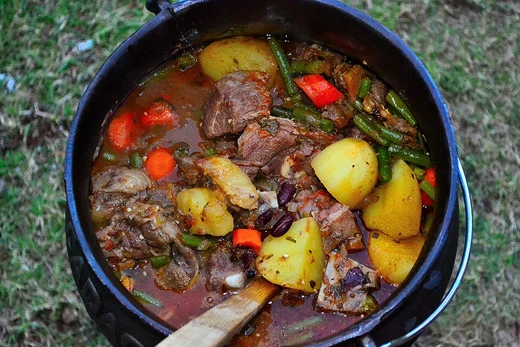
Bunny chow
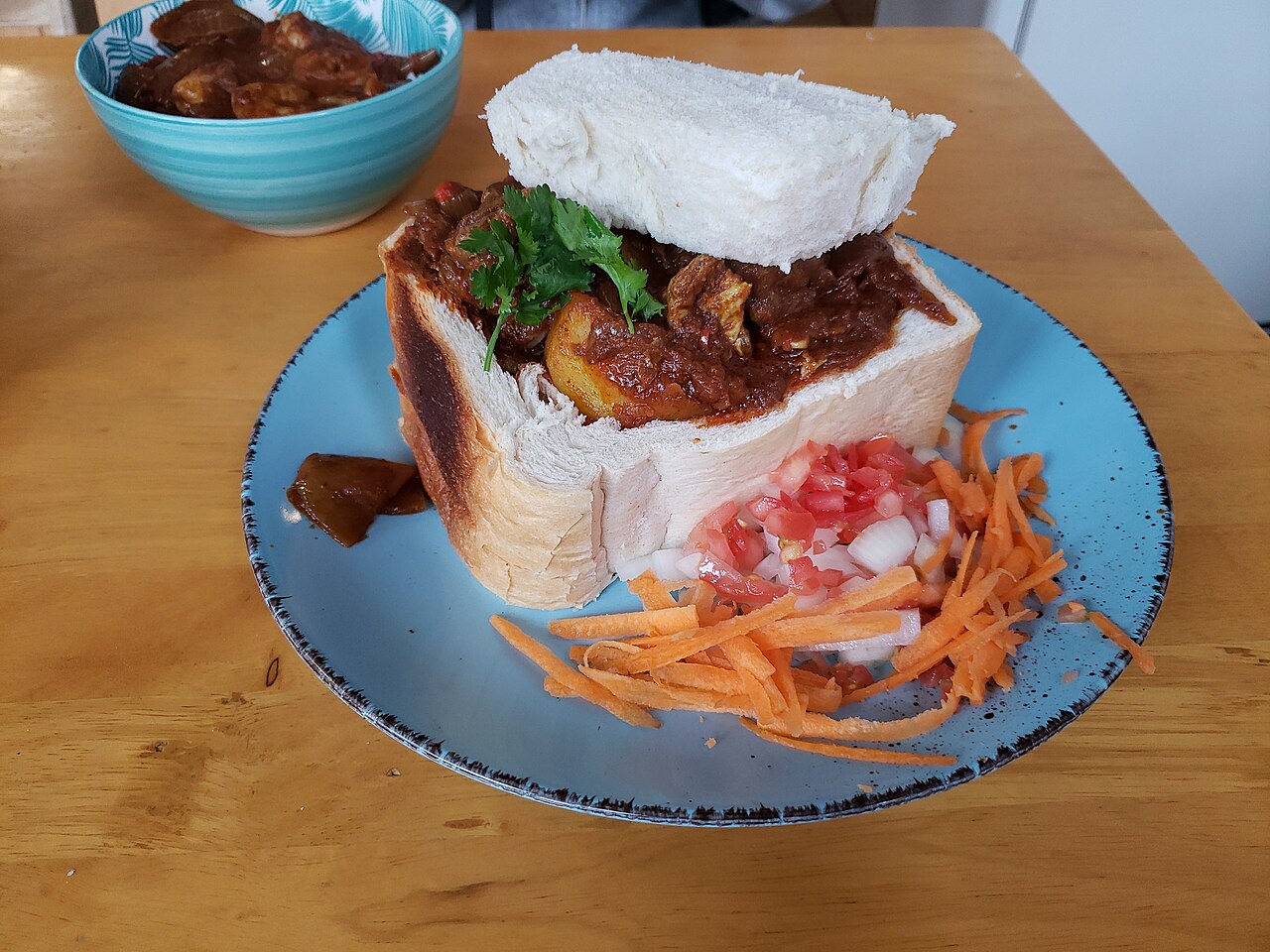
Indian South African hollowed bread loaf filled with curry.

Aneledeysel · CC BY-SA 4.0
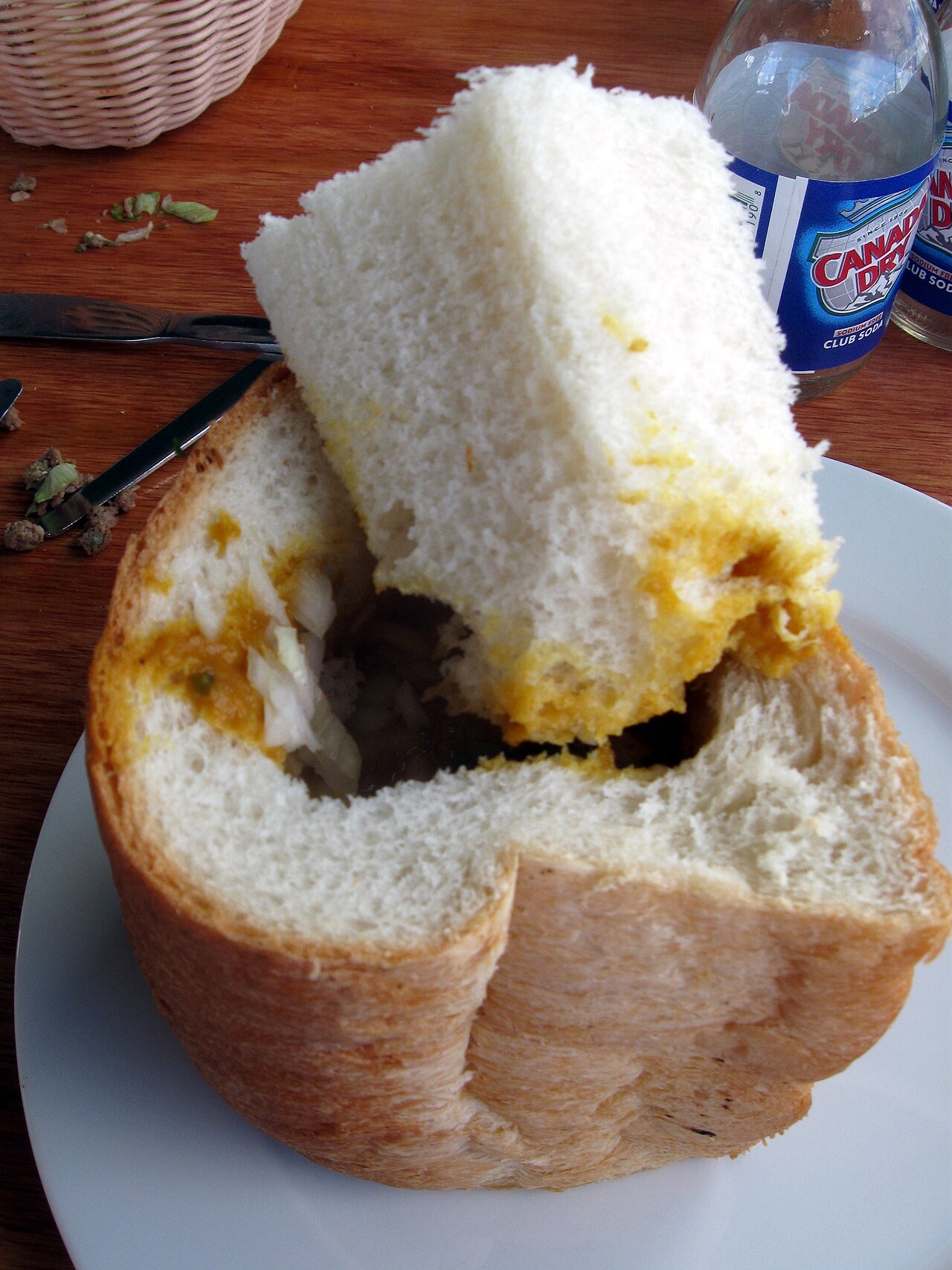
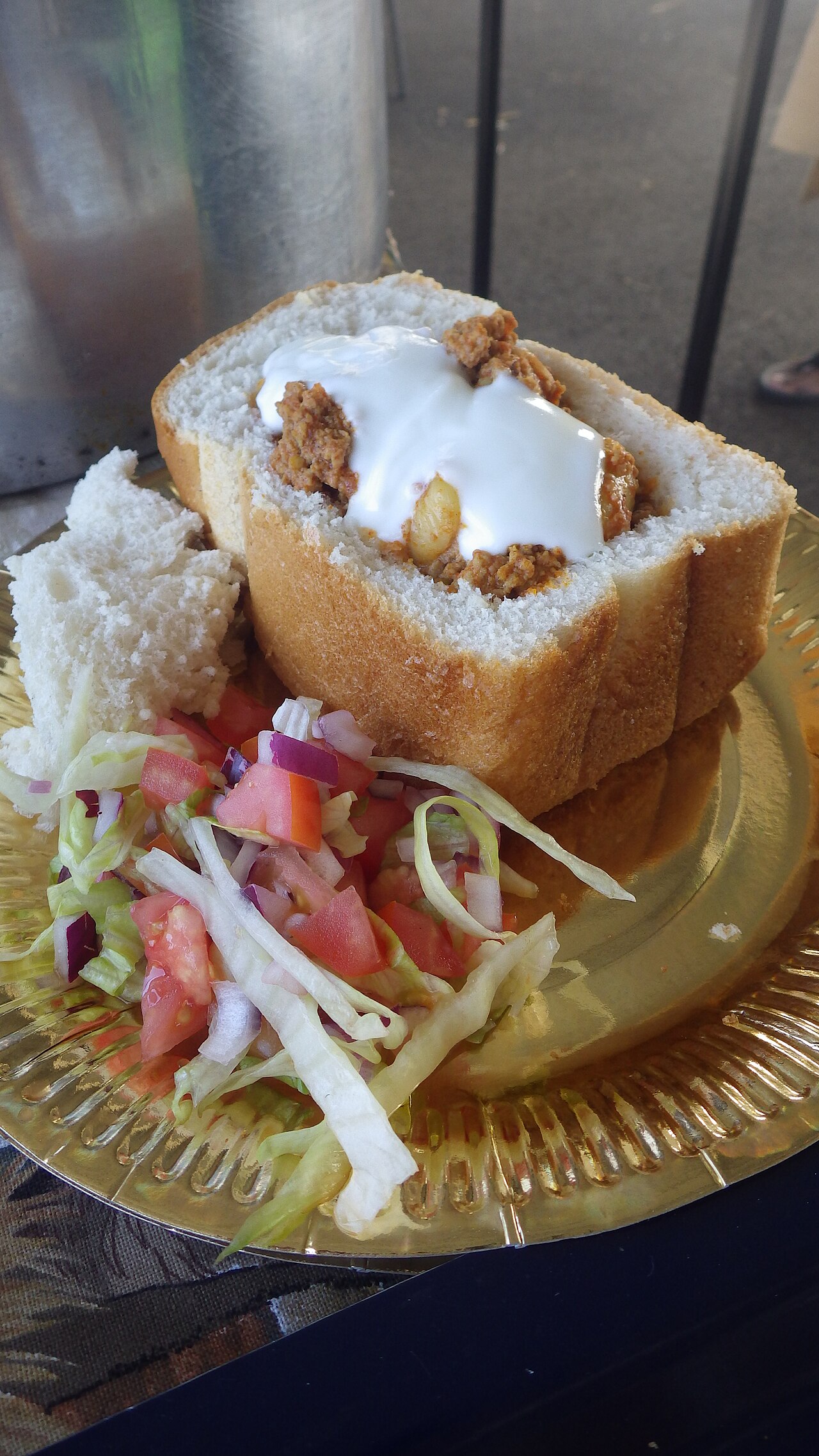
Bunny chow, commonly shortened to "bunny," is an Indian South African fast food made from a hollowed-out loaf of white bread packed with curry and served with a side of salad. It originated among Indian South Africans in Durban and has since spread across South Africa, with different communities creating their own versions. The original uses a quarter loaf of bread and is sometimes called skhambane, kota (meaning "quarter"), or shibobo—a name it shares with sphatlho, a dish that evolved from bunny chow.
The dish was created in Durban, home to a large Indian-origin population. Its exact origins are debated, but it dates to the 1940s. Stories trace it back to Indian migrant workers on KwaZulu-Natal's sugar cane plantations. These laborers had short breaks and long hours. Initially, they laid food on large leaves, but this took too long. They found a quicker way: hollowing out bread to hold curries and vegetables, keeping the food warm and portable. Meat fillings came later. White bread was used because traditional roti was unavailable and too fragile; cheap, widely available loaves made an ideal substitute.
One origin story credits a South African restaurant run by Banias (an Indian caste) called Kapitan's, at the corner of Victoria and Albert streets in Durban. "Chow" in South African English means "food" or "to eat." The traditional meal was roti and beans, but roti fell apart as takeaway. So, the center of a white loaf was hollowed out, filled with curry, and capped with the removed piece. The vegetarian version is sometimes called a "beans bunny." An unlikely etymology suggests it's a mondegreen of "bun" and "achar" (Indian pickles), though pickles are not usually part of the dish.
Bunny chows are popular among Indians and other ethnic groups in Durban. Common fillings include mutton or lamb curry, chicken curry, trotters and beans curry, and beans curry—all made with traditional Durban recipes. Less traditional fillings across South Africa include chips with curry gravy, fried sausage, cheese, eggs, and polony. The original bunny chow was vegetarian.
- Origin
- Durban, South Africa
- Created
- 1940s (disputed)
- Field
- Cuisine
- Nationality
- Indian South African
- Known for
- Hollowed bread loaf filled with curry
- Variations
- Quarter, half, or full loaf; also called skhambane, kota, or shibobo
Lore & Background
Bunny chow was created in Durban, home to a large Indian-origin community, with its precise origins disputed but dated to the 1940s. One account traces it to migrant Indian workers on sugar cane plantations who needed a quick, portable meal during short breaks; they hollowed out cheap white bread to hold curry, as roti was too fragile. Meat fillings came later, and the dish was originally vegetarian.
Reader's Guide
Bunny chow holds significance as a symbol of Indian South African culinary innovation, adapting traditional curry to a portable form using readily available white bread. Its creation reflects the resourcefulness of migrant laborers under apartheid-era restrictions, such as the claim that Indian golf caddies were not allowed to carry knives. The dish has evolved beyond its origins, with variations like chips, sausage, or cheese fillings, and is commonly eaten with fingers. It remains popular across ethnic groups in Durban and is sold in takeaways and restaurants nationwide, often packaged in 'bunny boxes' instead of the historical newspaper wrapping. The annual 'Bunny Chow Barometer' competition in September near the Umgeni River celebrates its legacy.
Did You Know?
- Bunny chow is also called skhambane, kota, or shibobo in different communities.
- The dish originated in Durban in the 1940s, likely among Indian migrant workers.
From the Plantations to the Plate
Bunny chow was born in Durban, South Africa, home to a substantial community of people of Indian descent. While the exact moment of its creation remains debated, most accounts place its invention in the 1940s. The story traces back to Indian migrant laborers who arrived to work the sugar cane fields of KwaZulu-Natal. These workers faced grueling shifts with only brief pauses for a meal. Initially, they spread their food out on large leaves, but the process was slow and their breaks too short to justify the effort. The solution was practical: a loaf of white bread, hollowed into a bowl shape, into which curry and vegetables could be quickly poured. The bread kept the food warm and portable, making it easy to carry back into the fields. Meat-based fillings arrived later; the earliest versions were vegetarian. The choice of white bread was driven by necessity—traditional roti was too fragile to hold together as a takeaway item, while the cheap, sturdy loaf was readily available at local shops. The dish also made its way to Gwelo in Rhodesia, now Zimbabwe, during World War II, and persists in the nearby town of Kadoma, formerly called Gatooma.
A Name with Many Stories
The name "bunny chow" itself carries multiple origin tales. One account credits a restaurant-café called Kapitan's, run by members of the Banias caste, located on the corner of Victoria and Albert streets in Durban, as the first establishment to serve the dish. Another popular story links the handheld format to Indian golf caddies who, during apartheid, were not permitted to carry sharp cutlery such as knives in public. In South African English, "chow" is simply slang for food or the act of eating. A less likely etymology suggests the name is a mondegreen of "bun" and "achar," the Hindi word for pickles, though pickles are not a standard component of the dish. Beyond Durban, the food has acquired local names in various South African communities: a quarter-loaf version is sometimes called a skhambane, a kota (meaning "quarter"), or a shibobo—a name it shares with sphatlho, a South African dish that evolved from the bunny chow tradition. The vegetarian variant is colloquially known as a "beans bunny."
Anatomy of the Dish
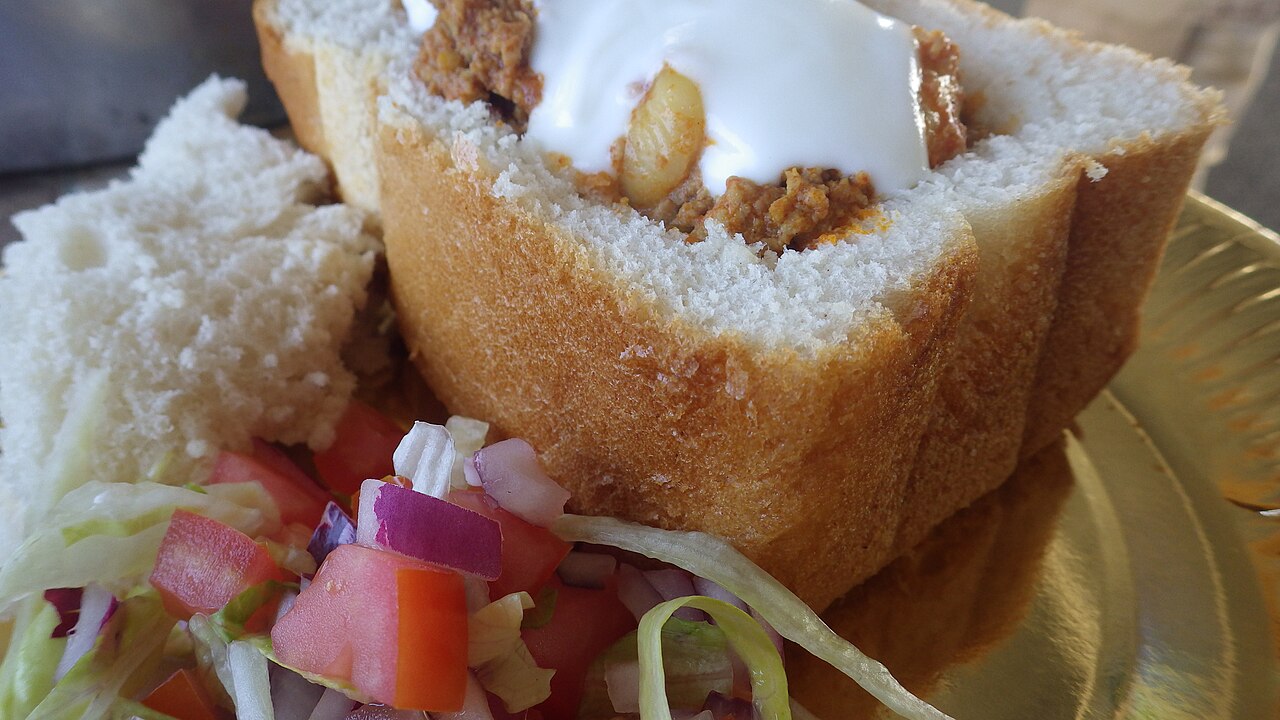
At its core, a bunny chow is a hollowed-out loaf of white bread filled with curry, served alongside a portion of salad. In Durban, the most traditional fillings follow Indian recipes: mutton or lamb curry, chicken curry, trotters and beans, and a simple beans curry. Across the wider country, less traditional variations have emerged, including chips in curry gravy, fried sausage, cheese, eggs, and polony. The original version, however, was vegetarian. A defining quality of a well-made bunny chow is the way curry gravy soaks into the walls of the bread, creating a soft, flavorful edge. Sides typically include sambals—chopped tomatoes, onions, and green chilies dressed with white vinegar—or a grated carrot, chilli, and onion salad. Indian pickles such as mango, lime, lemon, or seasonal vegetable varieties are also common accompaniments. Bunny chows come in quarter, half, and full loaf sizes. In Durban, ordering is casual: one simply asks for a "quarter mutton" or whatever flavor and size is desired. The dish is eaten with the fingers; utensils are unusual. Historically wrapped in the previous day's newspaper, takeaway bunnies are now sold in insulated "bunny boxes" that retain heat and prevent curry leaks.
A Living Tradition
Bunny chow has grown far beyond its Durban roots to become a staple across South Africa, enjoyed by Indians and members of other ethnic groups alike. It is available in small takeaways and Indian restaurants throughout the country, with prices ranging from roughly R15 for a quarter beans bunny or dhal to R50 for a quarter mutton bunny; a full loaf typically costs three to four times the quarter price. The dish is particularly well suited to picnics and beach trips, and sharing a single bunny chow among friends is a common practice. Each September, the Bunny Chow Barometer takes place on the south bank of the Umgeni River, just above Blue Lagoon, a beloved Sunday picnic spot for Durban's Indian community. Competitors from across the Durban Metro region gather to vie for the title of top bunny maker. The dish has also inspired cultural adaptations in other communities, giving rise to the skhambane, the kota, and the shibobo, as well as the sphatlho, a South African dish that evolved directly from the bunny chow tradition.
Gallery

Frequently Asked Questions
What is Bunny Chow and what's it made of?
It's a hollowed-out white bread loaf stuffed with curry and typically served alongside a small side salad. The dish is the signature street food of Indian South African cuisine.
Where did Bunny Chow come from and when?
It was born in Durban among the city's large Indian-origin population, with the 1940s most often cited as its birth era, though the exact date remains contested. Since then it has spread across South Africa, with different communities developing their own regional twists.
What sizes can Bunny Chow be ordered in?
The classic cut is a quarter loaf, but half and full loaf portions are also common depending on the eatery. The quarter size carries its own specific names, kota or skhambane, to distinguish it from the larger versions.
What other names does Bunny Chow go by?
Depending on the region you'll hear skhambane, kota (which simply means "quarter"), or shibobo. The shibobo label is shared with sphatlho, a later dish that evolved out of the original recipe.
Why is Bunny Chow culturally significant in South Africa?
It embodies the resourcefulness of working Indian South Africans who needed an affordable, portable meal they could carry to their jobs. Its journey from a Durban street food to a nationwide staple shows how one community's invention became a shared national identity.
More in South African cuisine 1-24
Spotted an error? Know more?
Reader corrections go straight into our review queue. Suggest an edit · How this site is sourced