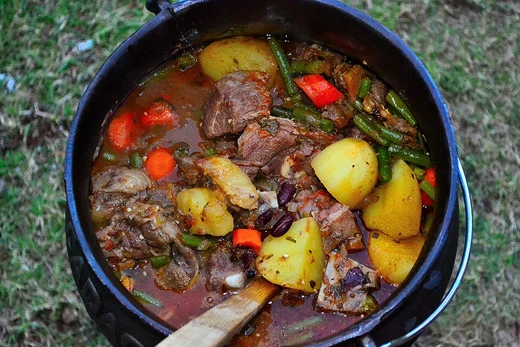
Amasi
A traditional sour fermented milk staple of southern Africa.

Sailko · CC BY 3.0
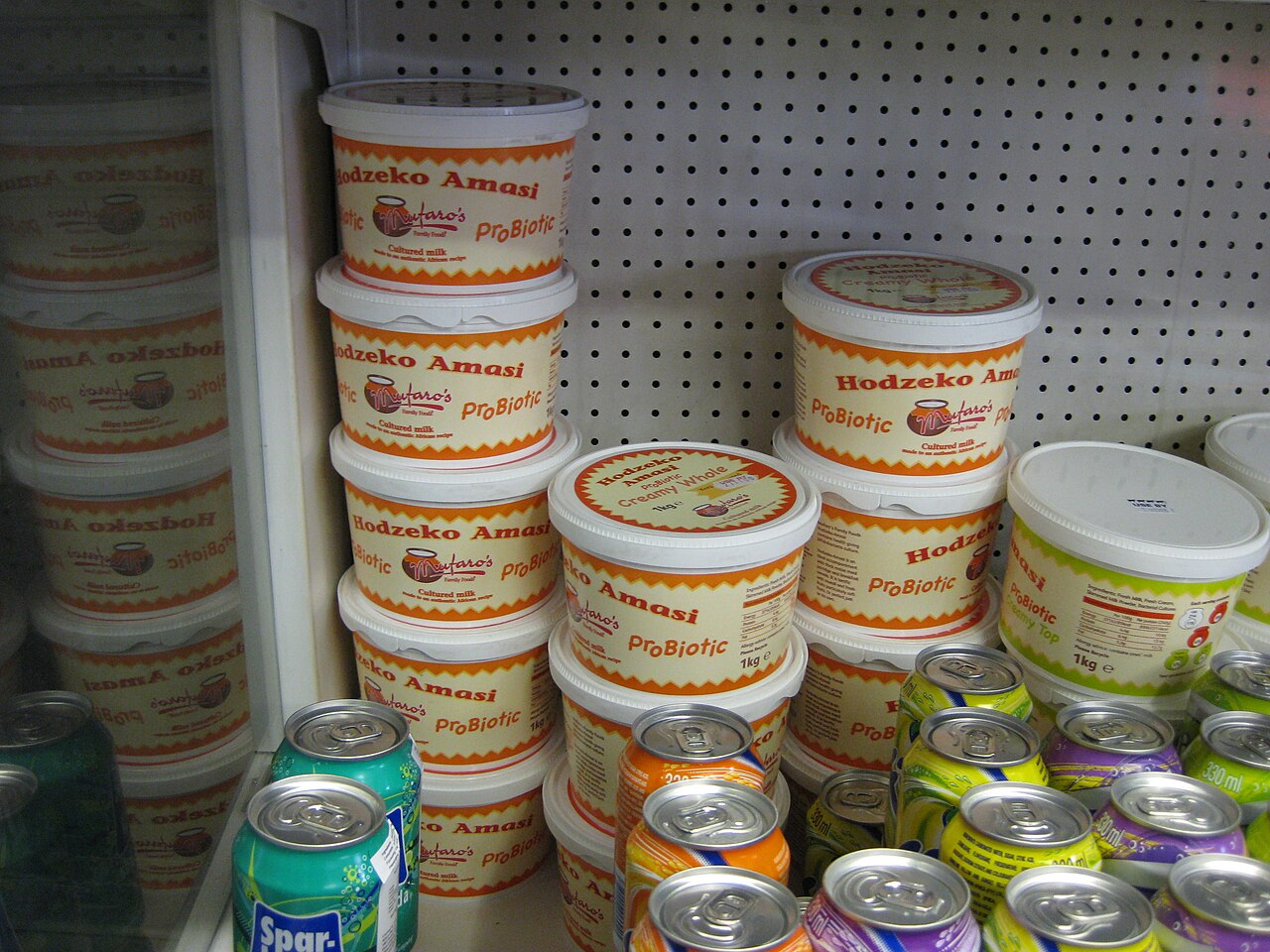
Amasi is a thick, sour, fermented milk product with a flavor notably stronger than cottage cheese or plain yogurt. It was a dietary staple before the colonial period and is still a common snack in South Africa, Zimbabwe, and Lesotho. Known by various names—amasi in Ndebele, Zulu, and Xhosa; emasi in Swazi; maas in Afrikaans; and mafi in Sesotho—it is traditionally made by storing unpasteurized cow’s milk in a smoked calabash container or a hide sack for one to five days. During fermentation, a watery whey called umlaza separates, leaving the thick amasi. This is often poured over mealie meal porridge (pap) and can also be drunk. Commercially, the milk is first filtered to remove impurities, then enriched with skim milk powder and gelatine, pasteurized at 72°C for 15 seconds, cooled to 30°C, and inoculated with *Lactococcus lactis* (including the subspecies *cremonis*) at a level of 10⁶ cfu/ml, then incubated at 30°C for 16 to 24 hours.
In Zulu tradition, amasi is believed to make a man strong, healthy, and desirable, but those experiencing taboos—such as menstruation or contact with death—must avoid it. Fresh milk is rarely drunk, though it may be used to thin amasi that is too thick. Nelson Mandela once recalled overhearing Zulu workers remark that seeing milk left to ferment on a windowsill was unusual, because whites seldom consumed amasi. In South African Indian cuisine, amasi is used similarly to curd. Among the Xhosa, a bride is welcomed into her new family by being served amasi and a piece of meat, a ceremony called uTsiki.
- Also known as
- emasi (Swazi), maas (Afrikaans), mafi (Sesotho)
- Type
- fermented milk product
- Traditional container
- calabash (iselwa or igula) or hide sack
- Fermentation time
- 1–5 days
- Commercial starter culture
- Lactococcus lactis and Lactococcus lactis subsp. cremonis
- Pasteurization temperature
- 72 °C for 15 seconds
- Incubation conditions
- 30 °C for 16–24 hours
Lore & Background
Amasi is traditionally prepared by storing unpasteurised cow's milk in a smoked calabash or hide sack to ferment for 1–5 days, developing a sharp acidic taste. The fermenting milk produces a watery whey called umlaza, leaving the thick amasi. It is often poured over mealie meal porridge called pap (umphokoqo) and served in a clay pot, or drunk directly. Commercially, amasi is produced using Lactococcus lactis; the milk is first cleared of impurities, enriched with skim milk powder and gelatine, pasteurised at 72 °C for 15 seconds, cooled to 30 °C, then inoculated with the culture and incubated for 16–24 hours.
Reader's Guide
Amasi holds deep cultural significance among the Zulu, Xhosa, and other southern African peoples. In Zulu tradition, it is believed to make a man strong, healthy, and desired, and is avoided during periods of taboo such as menstruation or contact with death. Nelson Mandela recalled an incident where Zulu workers found it strange to see milk left to ferment on a windowsill, as whites seldom drank amasi. In Xhosa culture, a bride is served amasi and meat (uTsiki) as a sign of welcome into her new family. Amasi also appears in South African Indian cuisine, used similarly to curd. Its enduring popularity as a snack and its role in rituals and daily life underscore its importance as a link to pre-colonial foodways.
Did You Know?
- Amasi is sometimes compared to cottage cheese or plain yogurt but has a much stronger flavor.
- Traditionally, amasi is fermented in a smoked calabash or hide sack for 1–5 days.
- Commercially, amasi is produced using Lactococcus lactis and pasteurised at 72 °C for 15 seconds.
Gallery
Frequently Asked Questions
What is Amasi?
Amasi is a thick, sharply tangy fermented milk product that served as a dietary staple across southern Africa well before the colonial era. Its sour, pungent flavor is distinctly stronger than that of plain yogurt or cottage cheese.
How is Amasi traditionally made?
The traditional process involves placing raw, unpasteurized cow's milk into a smoked calabash gourd (called iselwa or igula) or a hide sack and letting it ferment for one to five days. Over that period a watery liquid known as umlaza separates out, leaving the dense, sour curd behind.
What are the different names for Amasi in South African languages?
The product is called amasi in Ndebele, Zulu, and Xhosa; emasi in Swazi; maas in Afrikaans; and mafi in Sesotho. These varied names reflect the many communities that have prepared and consumed it for generations.
How is Amasi typically eaten?
It is most often enjoyed as a simple everyday snack and is frequently poured over a bowl of mealie meal porridge. It remains a common food in South Africa, Zimbabwe, and Lesotho.
What goes into commercially produced Amasi today?
Modern commercial versions are made from pasteurized milk (heated to 72 °C for 15 seconds) inoculated with specific starter cultures, chiefly Lactococcus lactis and Lactococcus lactis subsp. cremonis. This gives producers a consistent, shelf-stable product while preserving the characteristic sour tang.
More in South African cuisine 1-24
Spotted an error? Know more?
Reader corrections go straight into our review queue. Suggest an edit · How this site is sourced