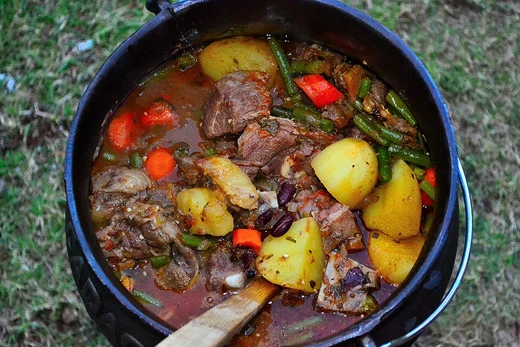
Biltong
Air-dried cured meat originating in Southern Africa.

Jamsta at English Wikipedia · CC BY-SA 3.0
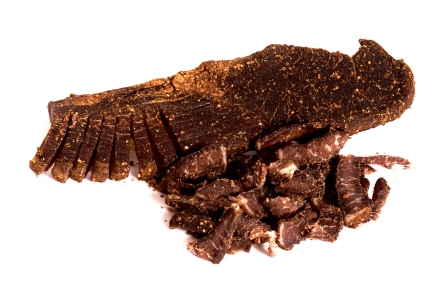
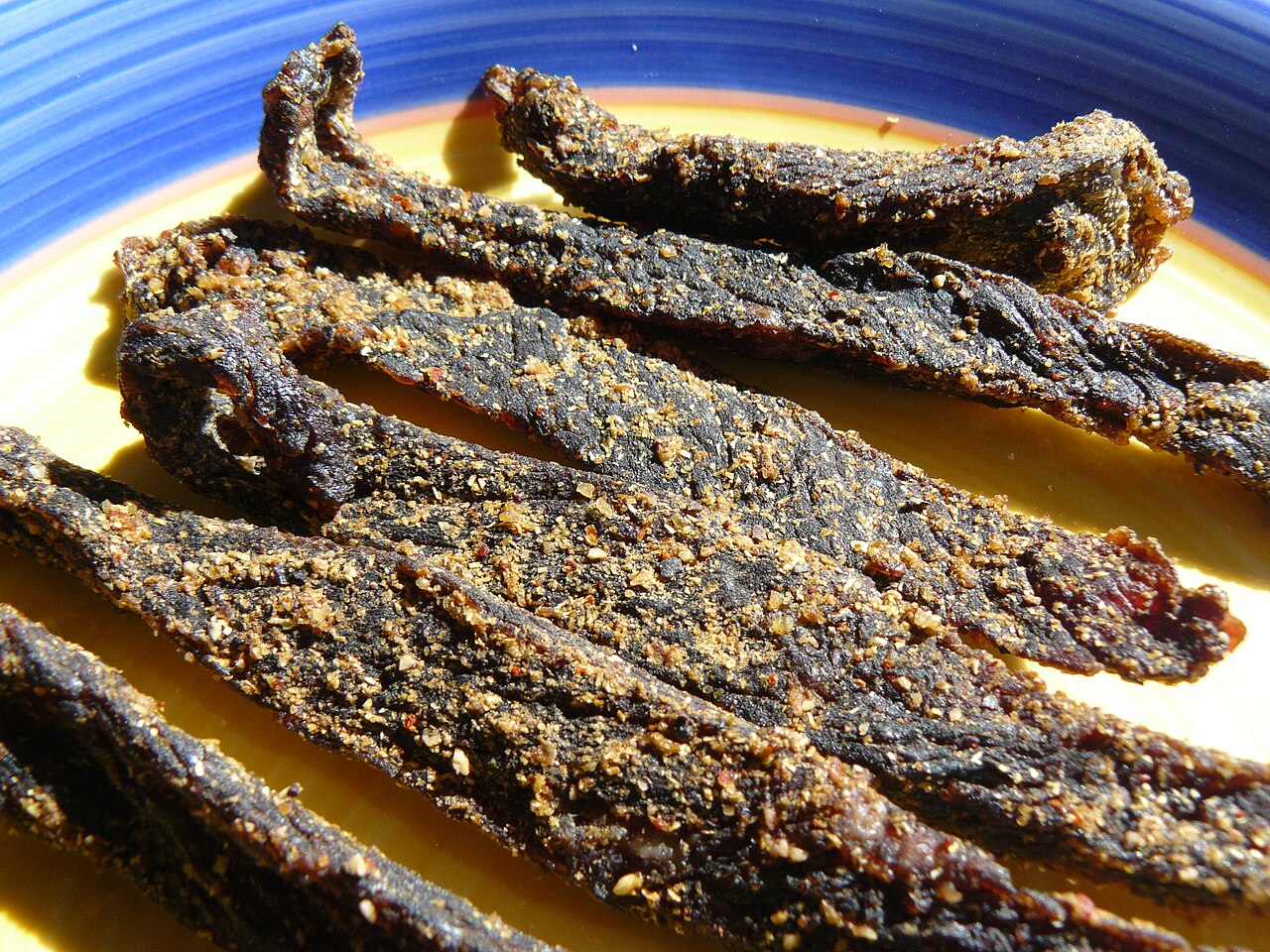
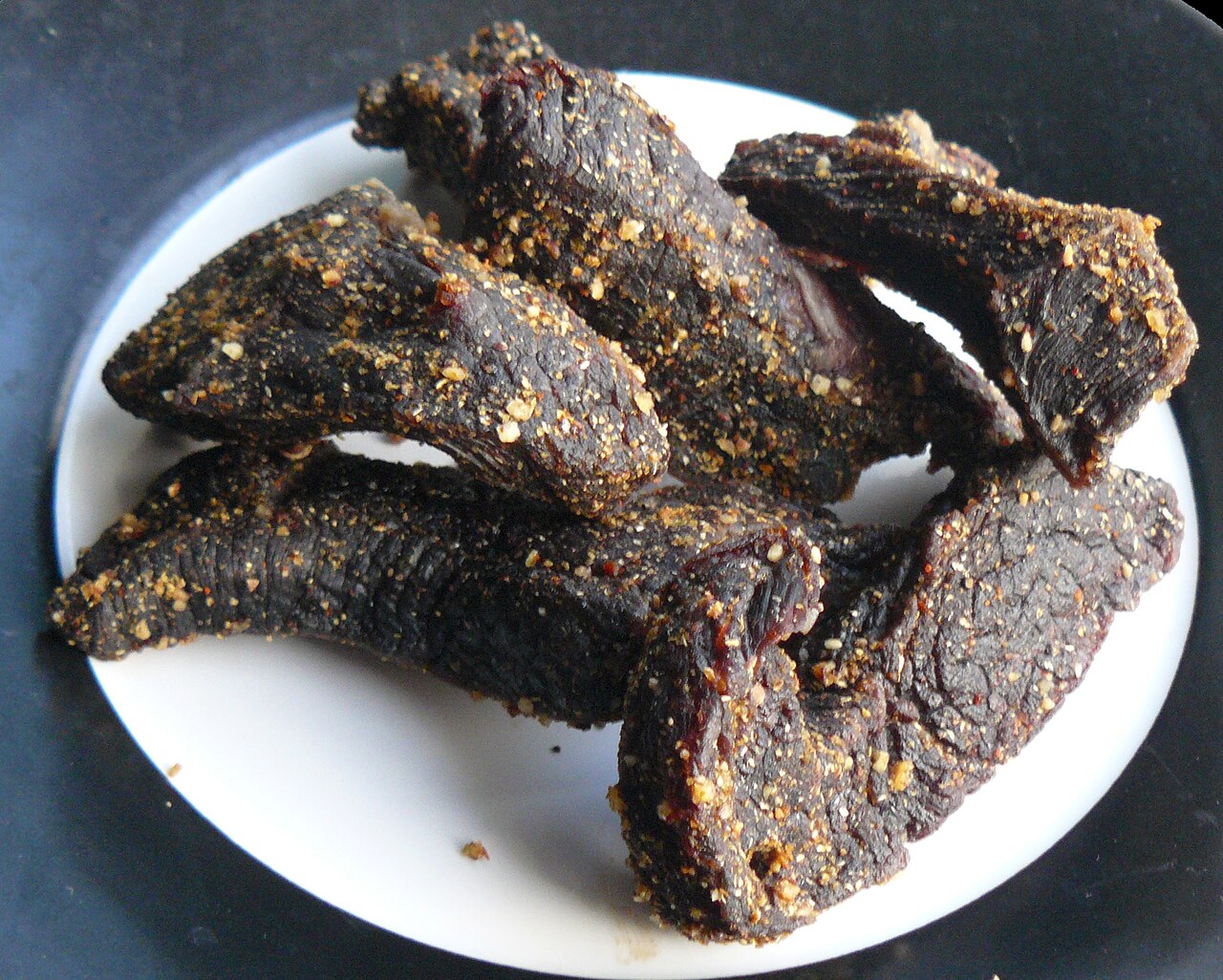
Biltong is an air-dried, cured meat from Southern Africa. It can be made from beef or game meats like ostrich and kudu. The meat is cut either into strips along the muscle grain or into flat pieces across the grain. While related to beef jerky, biltong is air-dried rather than heated, giving it a distinct texture and flavor. The name comes from the Afrikaans words *bil* (buttock) and *tong* (strip or tongue).
Meat preservation has ancient roots. Methods include curing with salt, brine, vinegar, or saltpetre, which kills the bacteria that cause botulism; vinegar’s acidity also prevents that bacteria’s growth. Spices like pepper and coriander, introduced by the Dutch, have antimicrobial properties. One local story claims 17th-century Dutch pioneers dried meat under horse saddles, using the animals’ salty sweat for preservation and tenderization, but this is unlikely since horses arrived later with systematic colonization. Another theory is that settlers adopted an indigenous preservation method. During the Second Boer War, commandos relied on biltong for sustenance, and in World War I, South African soldiers on the Western Front had it shipped from home. Before refrigeration, preserving meat was essential in Southern Africa, where game was abundant. Meat was prepared with vinegar and spices, then air-dried for about two weeks in winter. Once dried, it was stored in cloth bags to allow airflow and prevent mold.
Common ingredients include meat, black pepper, coriander, salt, and vinegar. Modern recipes may add balsamic or malt vinegar, sugar, chili, nutmeg, paprika, lemon juice, garlic, bicarb soda, Worcestershire sauce, onion powder, or saltpetre. Beef is now most common due to availability and cost, with premium cuts like fillet, sirloin, topside, or silverside. Other meats include game like kudu, springbok, and wildebeest, ostrich, and venison.
Traditionally, biltong was made only in winter to reduce bacterial and mold risk. Some recipes marinate meat in vinegar for a few hours, then pour off the liquid before adding salt and spices. Saltpetre may be added as an extra preservative.
- Common meats
- Beef, ostrich, kudu, springbok, wildebeest
Lore & Background
According to local lore, biltong was originally made in the 17th century by Dutch pioneers who placed large strips of raw meat under horses' saddles to dry with the horses' salty sweat, which preserved and tenderized the meat. This is considered unlikely, as the use of horses did not begin until the systematized colonization of South Africa. Others speculate that early Dutch settlers adopted a local indigenous custom of preserving meat. During the Second Boer War, commandos relied on making biltong to sustain them on the open veld, and in the First World War, some South African soldiers on the Western Front had biltong specially shipped from home.
Reader's Guide
Biltong is a significant food in Southern African culture, valued for its long shelf life and high protein content. It was developed as a preservation method before refrigeration, using vinegar, salt, and spices to inhibit bacterial growth, including Clostridium botulinum. The meat is air-dried over days, typically during cold winters, resulting in a tender, juicy texture distinct from jerky, which is heated. Biltong is commonly made from beef today but also from game meats. It is sold in butcheries and grocery stores in various forms, from wide strips to shredded chips. Its popularity has spread to countries with large South African populations, such as Canada, the United Kingdom, Australia, and the United States, where it is often regarded as a defining national food. A 2017 study found that coriander oil, a key spice in biltong, killed 10 of 12 bacterial strains tested, highlighting its antimicrobial properties.
Did You Know?
- Biltong is air-dried, while jerky is heated to at least 71 °C (160 °F).
- The word 'biltong' comes from Afrikaans 'bil' (buttock) and 'tong' (strip or tongue).
- A 2017 study found that coriander oil killed 10 of 12 bacterial strains tested.
- Biltong can be used as a teething aid for babies.
Roots in the Highveld: A History of Necessity
Meat preservation stretches back to antiquity, but in Southern Africa the practice took on a distinctly local character. The region's abundant game—including eland and other large African animals—meant that preserving kills was essential in an era before iceboxes or refrigeration existed, and when building up livestock herds was a slow, uncertain process. Local lore credits 17th-century Dutch pioneers with an origin tale involving strips of raw meat tucked beneath horse saddles, where salty sweat both preserved and tenderized the flesh. Historians consider this unlikely, since systematic horse use arrived with formal colonization. A more plausible account holds that early Dutch settlers simply absorbed an indigenous meat-preservation custom already practiced by local communities. Whatever the true origin, biltong proved its worth on the battlefield: during the Second Boer War, commandos depended on it to sustain themselves across the open veld, and in the First World War, South African troops stationed on the Western Front had biltong specially shipped from home. Traditionally, the meat was hung to air-dry for a full fortnight during winter's cold, then packed in breathable cloth bags to prevent mould.
A Kitchen Alchemy: The Science Behind the Cure
Long before modern food science gave names to bacterial threats, Southern African cooks had already assembled a layered defence against spoilage. Salt, brine, vinegar, and saltpetre (potassium nitrate) each played a distinct role: the nitrate directly kills Clostridium botulinum, the bacterium responsible for botulism, while vinegar's acidity keeps the environment below the pH 4.6 threshold at which that pathogen can multiply. The Dutch later added pepper, coriander, and cloves to the spice palette, and each of these carries its own antimicrobial properties. That coriander's contribution is no mere tradition was confirmed in January 2017, when researchers at the University of Beira Interior in Portugal tested coriander oil against twelve bacterial strains. At a concentration as low as 1.6 percent, the oil eliminated ten of the twelve; the two survivors—Bacillus cereus and Enterococcus faecalis—saw their growth significantly curtailed. In practical terms, the vinegar-and-spice combination that gives biltong its sharp, complex flavour is also a time-tested food-safety strategy passed down through generations.
Winter, Vinegar, and the Art of Air-Drying
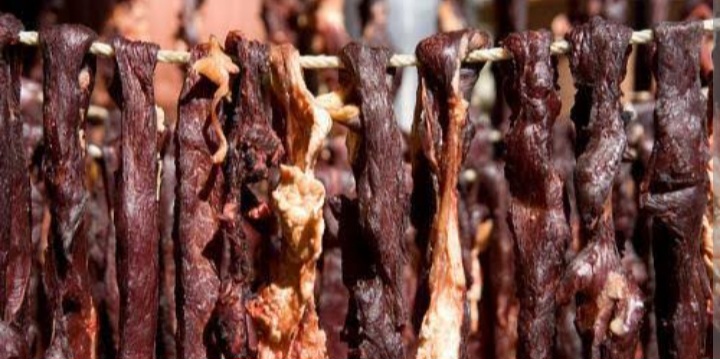
The defining characteristic that separates biltong from its cousin beef jerky is the absence of heat. Where jerky must be heated to at least 71 °C (160 °F), biltong is exclusively air-dried, a method that preserves a tender, juicy texture and a deeper, more nuanced flavour. Traditionally, the process was confined to the cold, dry winters of the South African highveld, when low temperatures naturally suppressed mould and bacterial growth. The meat—typically fillet, sirloin, topside, or silverside, cut into strips along the grain or flat pieces across it—was first marinated in a vinegar solution. Grape vinegar is the classic choice, though balsamic and cider varieties also feature in modern recipes. After a few hours, or an overnight soak in some family recipes, the liquid was drained and a spice rub of rock salt, slightly roasted whole coriander, roughly ground black pepper, and brown sugar was worked generously into the surface. Saltpetre could be added as an extra preservative for wet biltong not destined for freezing. The strips were then hung in a dryer, where the cold air slowly drew out moisture over days, yielding a darker colour and a richer mouthfeel than any heated method could achieve.
Beyond Beef: Cuts, Game, and the Evolving Pantry
While the name "biltong" literally translates from Afrikaans bil (buttock) and tong (strip or tongue), the meat itself has always been flexible. Today beef dominates simply because it is widely available and cheaper than game, but the tradition stretches far beyond the cow. Game species such as kudu, springbok, and wildebeest feature prominently, as does ostrich meat—bright red and often mistaken for game. In Europe, venison fills a similar role. Chicken biltong is a straightforward adaptation, and the fish variant, known as bokkoms (shark being the classic South African example), must not be confused with other dried fish like angelfish, snoek, or tuna. The base spice quartet of black pepper, coriander, salt, and vinegar remains the backbone of most recipes, yet contemporary makers freely layer in malt or balsamic vinegar, sugar, dry chilli, nutmeg, paprika, lemon juice, garlic, bicarb soda, Worcestershire sauce, and onion powder. This flexibility—rooted in a centuries-old preservation need yet open to personal taste—keeps biltong as much a canvas for flavour as it is a survival technique.
Gallery

Frequently Asked Questions
Who is Biltong?
Biltong is a traditional air-dried, cured meat that hails from Southern Africa. It is typically crafted from beef or game meats such as ostrich, kudu, springbok, and wildebeest.
What are Biltong's powers?
Its signature strength is the air-drying process, which sets it apart from beef jerky's heat-based method and gives it a uniquely dense, chewy texture with a deeper flavor. The meat is either sliced into long strips following the muscle grain or cut into flat pieces across it.
Why is Biltong important?
Biltong carries centuries of Southern African food heritage, rooted in ancient preservation methods that relied on salt, brine, vinegar, or saltpetre to keep meat safe from spoilage and dangerous bacteria. It remains a beloved staple that connects modern South Africans to that practical culinary past.
What is Biltong's true name?
The name traces back to two Afrikaans words: 'bil,' meaning buttock (a nod to the traditional cut), and 'tong,' meaning strip or tongue. Together they paint a picture of long, thin pieces of meat dried to perfection.
More in South African cuisine 1-24
Spotted an error? Know more?
Reader corrections go straight into our review queue. Suggest an edit · How this site is sourced