Bokkoms
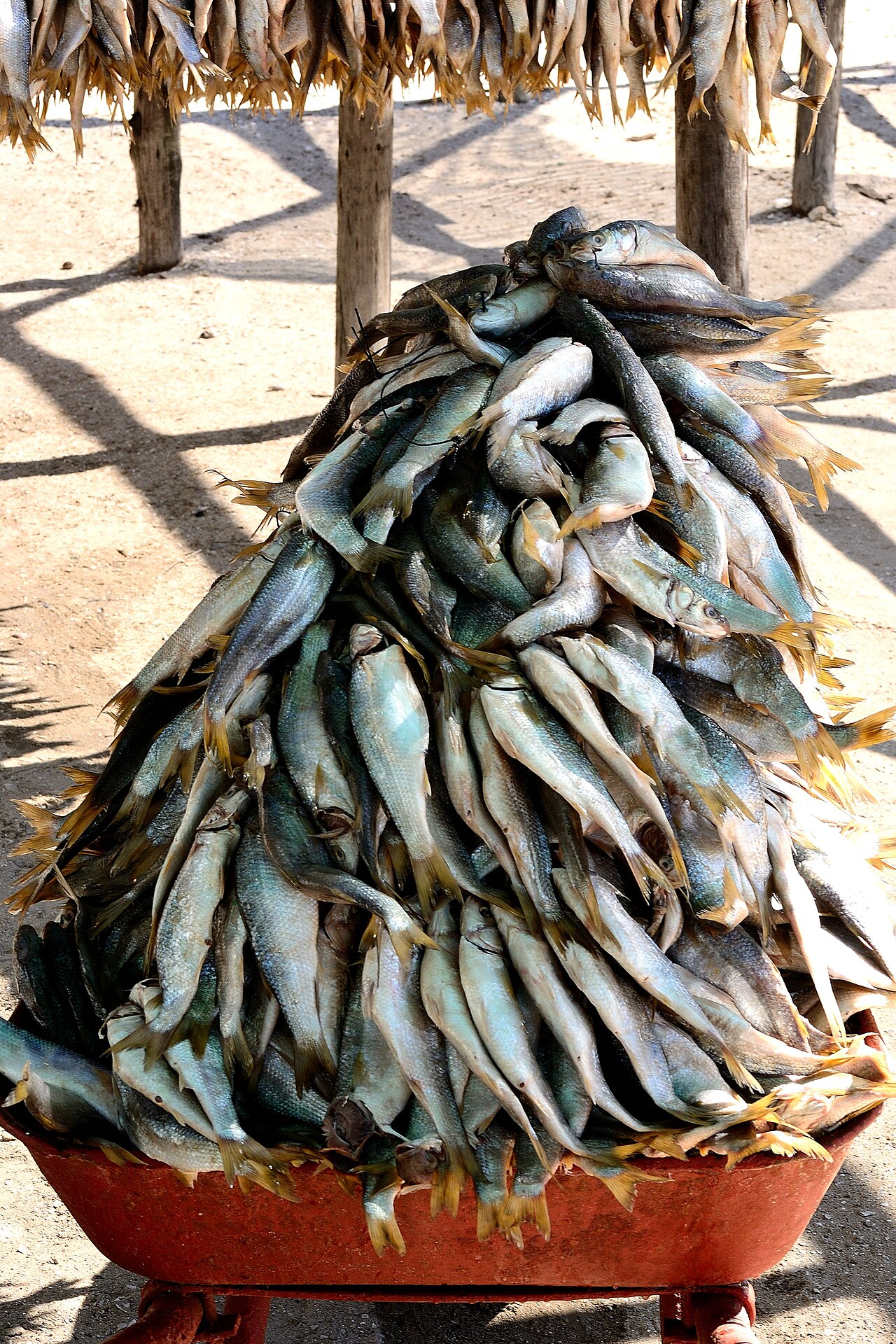
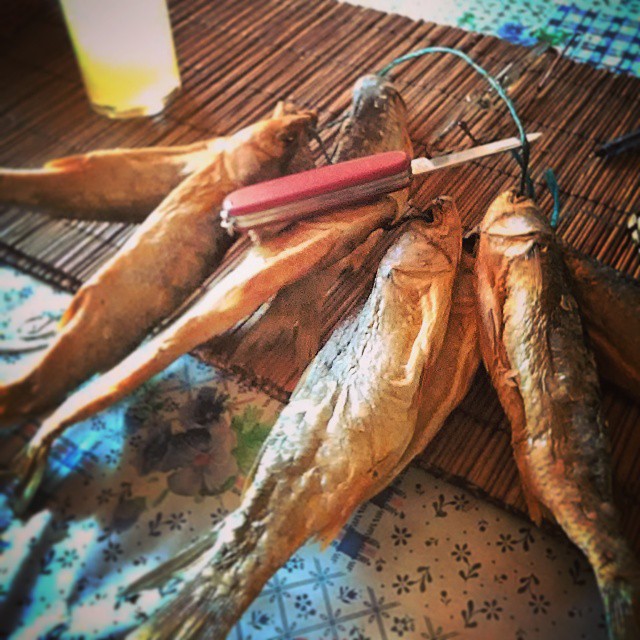
Salted, dried mullet, a West Coast South African specialty.

Lucinda jolly · CC BY-SA 4.0
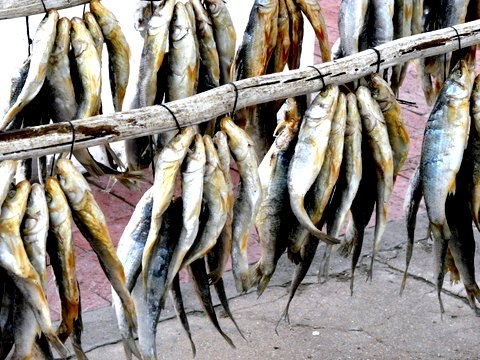
Bokkoms (or bokkems) are whole, salted and dried mullet, specifically the Southern mullet (Chelon richardsonii), known locally in the Western Cape of South Africa as 'harders'. They are a well-known specialty of the West Coast region of South Africa, sometimes referred to as 'fish biltong'. The salted fish is dried in the sun and wind and eaten after peeling off the skin; in some cases it is also smoked.
- Type
- Salted and dried fish
- Species
- Southern mullet (Chelon richardsonii)
- Region
- West Coast, Western Cape, South Africa
- First recorded word
- 1902 in Patriotwoordeboek as 'bokkom'
- Earliest known production
- 1658, Saldanha Bay
- Known for
- Specialty of the West Coast; 'fish biltong'
Lore & Background
The word bokkom derives from the Dutch word bokkem, a variant of bokking (or buckinc in Middle Dutch). Bokking comes from bok (Dutch for buck or goat), referring to the fish's resemblance to goat horns in shape, hardness, and smell. The first official record of the word in Afrikaans was in the Patriotwoordeboek in 1902.
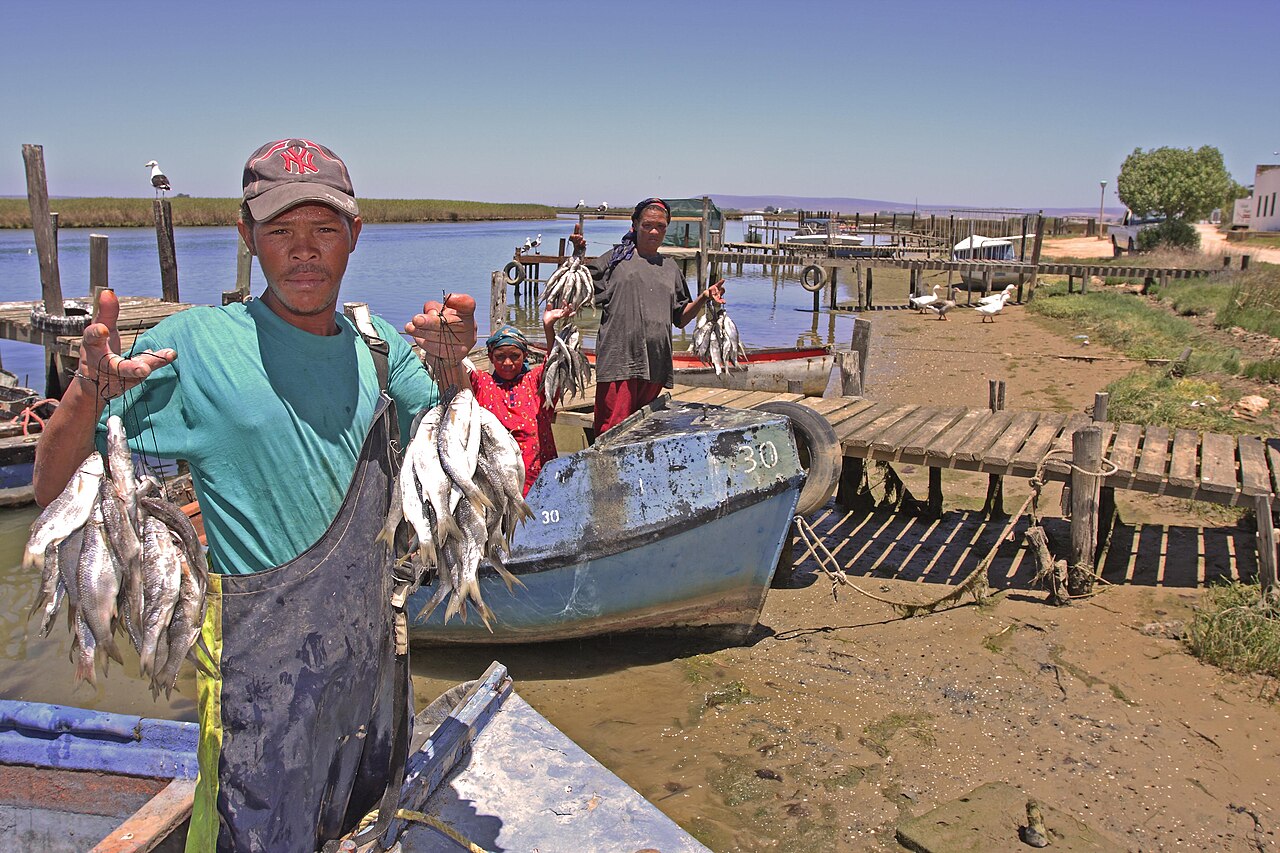
As early as 1658, four free burghers were given permission by the Dutch East India Company to settle in Saldanha Bay and fish its waters. They had sole fishing rights until 1711, and one fifth of their catch had to be delivered salted and dried—the origins of bokkoms in South Africa.
Preparation involves juvenile mullet, coarse salt, and fresh water. The fish are layered with salt in a tank, pressed, then strung in bunches of 10 to 25 through the eyes, dipped in fresh water, and hung on scaffolds to dry for about five days. Modern drying ovens with fans simplify the process.
Reader's Guide
Bokkoms are a distinctive dried fish product from the West Coast of South Africa, with a history dating to 1658. They are produced primarily in Velddrif, the 'bokkom capital', where around 95% of South Africa's bokkoms are made in small factories along the Berg River. The industry relies on access to mullet, ideal drying weather, sea salt from local salt pans, and fresh water. Bokkoms are eaten with white wine, bread, apricot jam, or used in soups and other dishes. The Southern mullet is on the WWF SASSI Orange list as an unsustainable species due to overfishing. The word appears in Afrikaans proverbs describing a dull person, an incompetent person, or a very thin person. Bokkoms are similar to dried herring, bloaters, kippers, and buckling, but use mullet and are not regularly smoked.
Did You Know?
- The word 'bokkom' comes from Dutch 'bokkem', related to 'bok' (goat), because the dried fish resembles goat horns in shape, hardness, and smell.
- Around 95% of South Africa's bokkoms are produced in Velddrif, along the Berg River.
- The Southern mullet is listed as Green on the WWF SASSI list, indicating it is a sustainable seafood choice.
Gallery
Frequently Asked Questions
What exactly are bokkoms?
Bokkoms are whole mullet fish that have been salted and then dried, with some batches also smoked for extra flavour. They are a traditional West Coast South African specialty, often nicknamed "fish biltong" because of the preservation method.
What species of fish is used to make bokkoms?
Bokkoms are made from the Southern mullet (Chelon richardsonii), a fish that locals in the Western Cape call "harders." This specific species is what distinguishes bokkoms from other dried or salted fish products.
How are bokkoms prepared and eaten?
The salted fish is hung out to dry in the sun and wind, and in some cases it is also smoked. To eat them, you simply peel off the skin and enjoy the flesh inside.
Where and when did the bokkom tradition begin?
The earliest recorded production of bokkoms dates back to 1658 in Saldanha Bay, making it a centuries-old West Coast practice. The word "bokkom" itself first appeared in print in the 1902 Patriotwoordeboek.
Why are bokkoms considered a special part of South African cuisine?
They represent a unique West Coast, Western Cape specialty that showcases a local preservation technique passed down through generations. The "fish biltong" nickname highlights how they bridge the gap between fresh seafood and the biltong tradition most people associate with South African food.
More in South African cuisine 1-24
Spotted an error? Know more?
Reader corrections go straight into our review queue. Suggest an edit · How this site is sourced