Boerewors
A South African sausage made from coarsely minced meat and spices.

Ossewa · CC BY 4.0
Boerewors, pronounced [ˈbuːrəˌvɔrs], is a sausage that comes from South Africa and is a staple in South African, Setswana, and Zimbabwean cooking, as well as across Southern Africa. Its name combines the Afrikaans words *boer* (farmer) and *wors* (sausage). South African law requires that boerewors be at least 90% meat (including fat) from beef, pork, lamb, or goat, with the remaining 10% made up of spices and other ingredients. No more than 30% of the meat content can be fat, and the sausage cannot contain offal except for the casings, nor any mechanically separated meat.
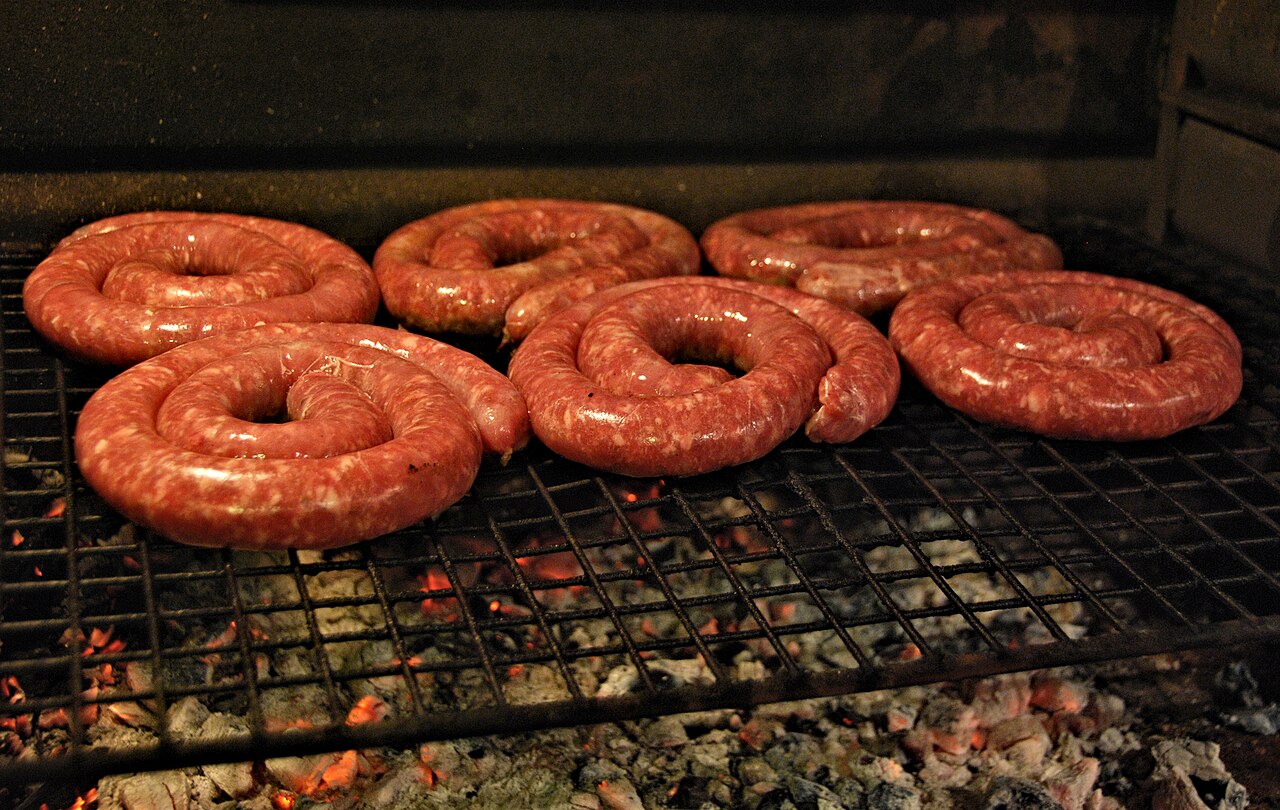
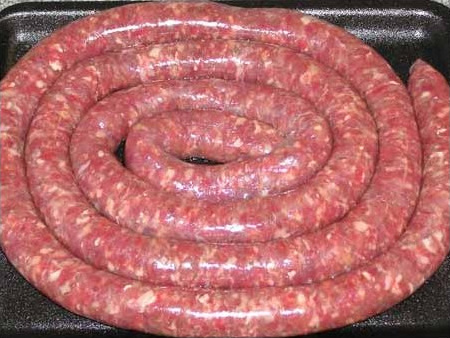
The sausage is made from coarsely minced beef, pork, lamb, and/or goat. If antelope like springbok or oryx is included, the label must specify the species. Typical spices include toasted coriander seed, black pepper, nutmeg, cloves, and allspice. Like many sausages, it can have a high fat content and is preserved with salt and vinegar, packed in edible casings (the only allowed offal). Traditional boerewors is shaped into a continuous spiral and often served with pap, a South African porridge made from mielie-meal. It is also common in Namibia, Botswana, Mozambique, and among South African expatriates worldwide.
On 3 May 2014, a Guinness World Record was set in South Africa for braaiing the longest boerewors, measuring 1,557.15 meters. It was distributed to old-age homes and the Abraham Kriel Orphanage.
A standard recipe uses 2kg of beef (30% fat), 1kg of fatty pork (neck, shoulder, or belly), 45ml whole coriander seeds, 5ml whole cloves, 15ml fresh ground black pepper, 2ml grated nutmeg, 10ml ground allspice, 10ml brown sugar, 125ml dry red wine or dark vinegar, and 90g thick sausage casings soaked in water.
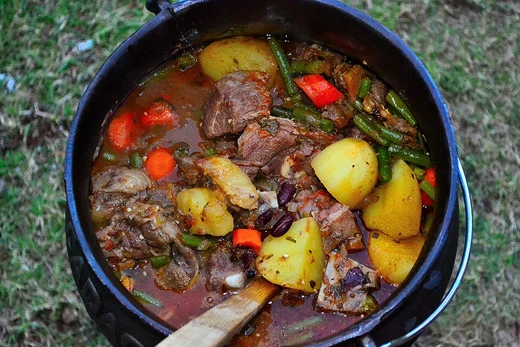
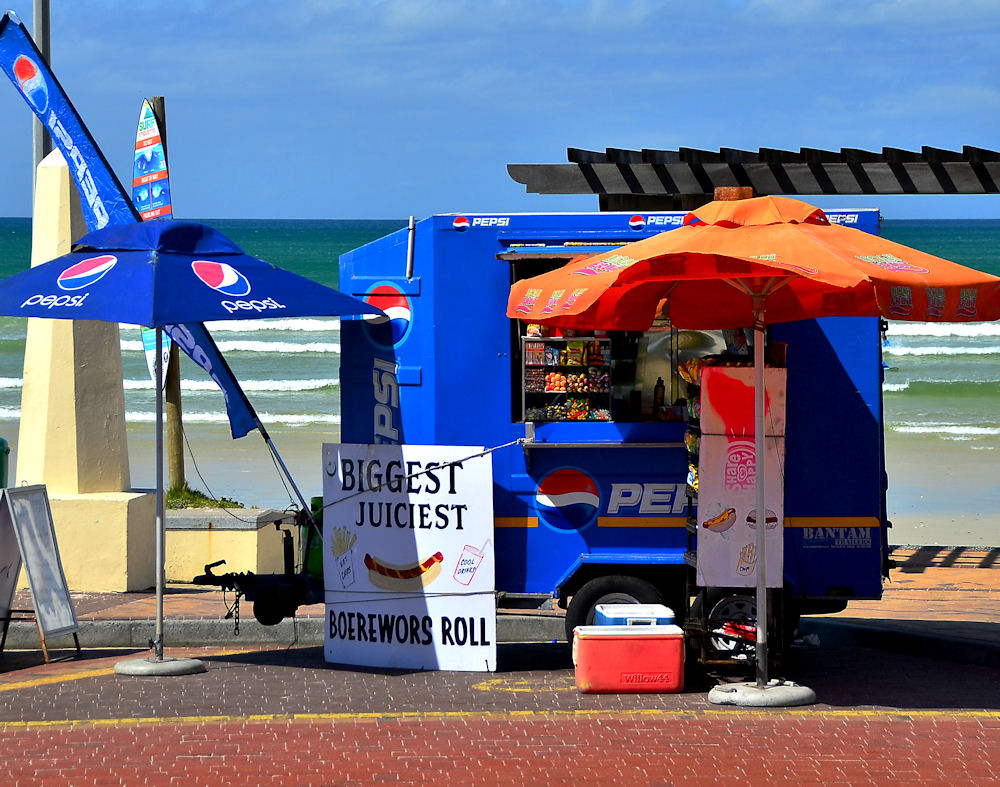
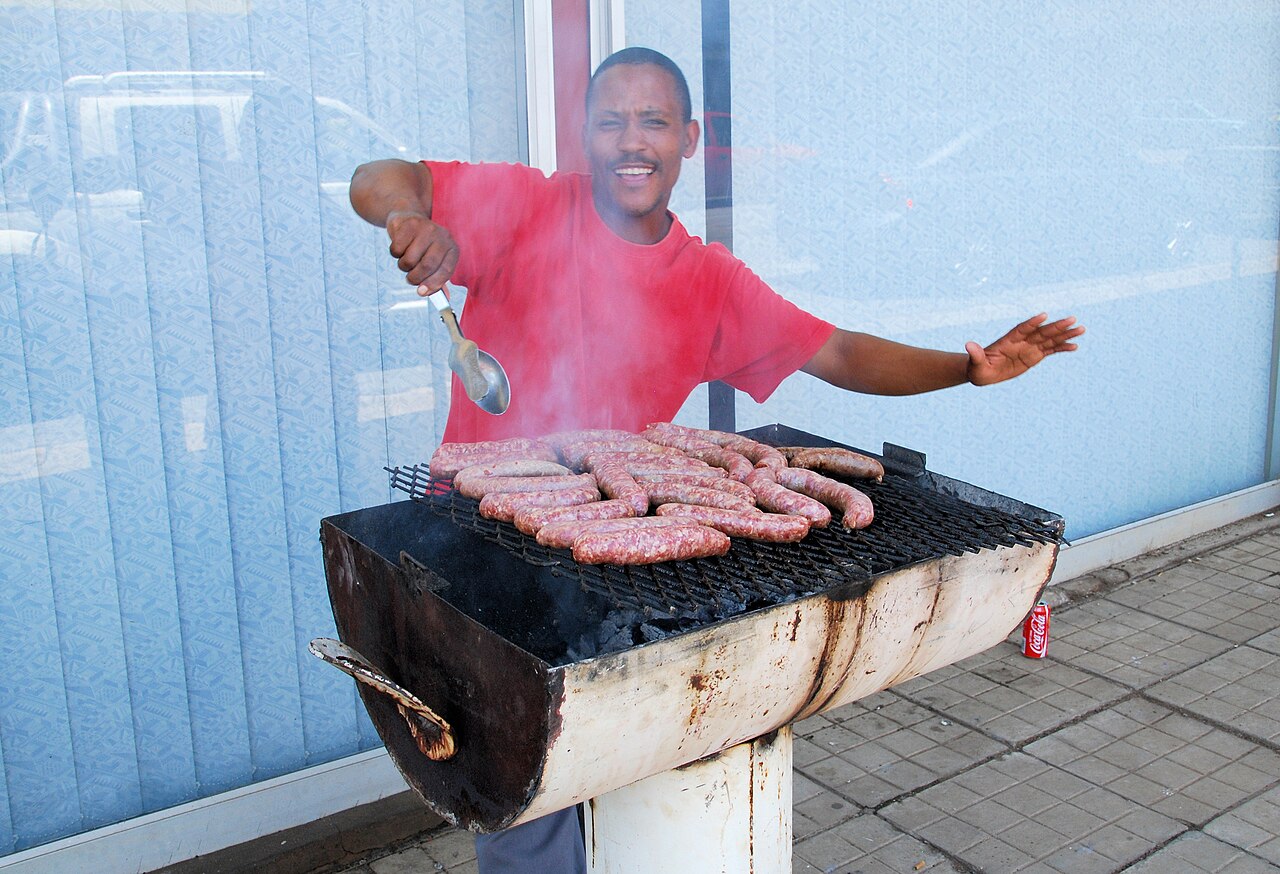
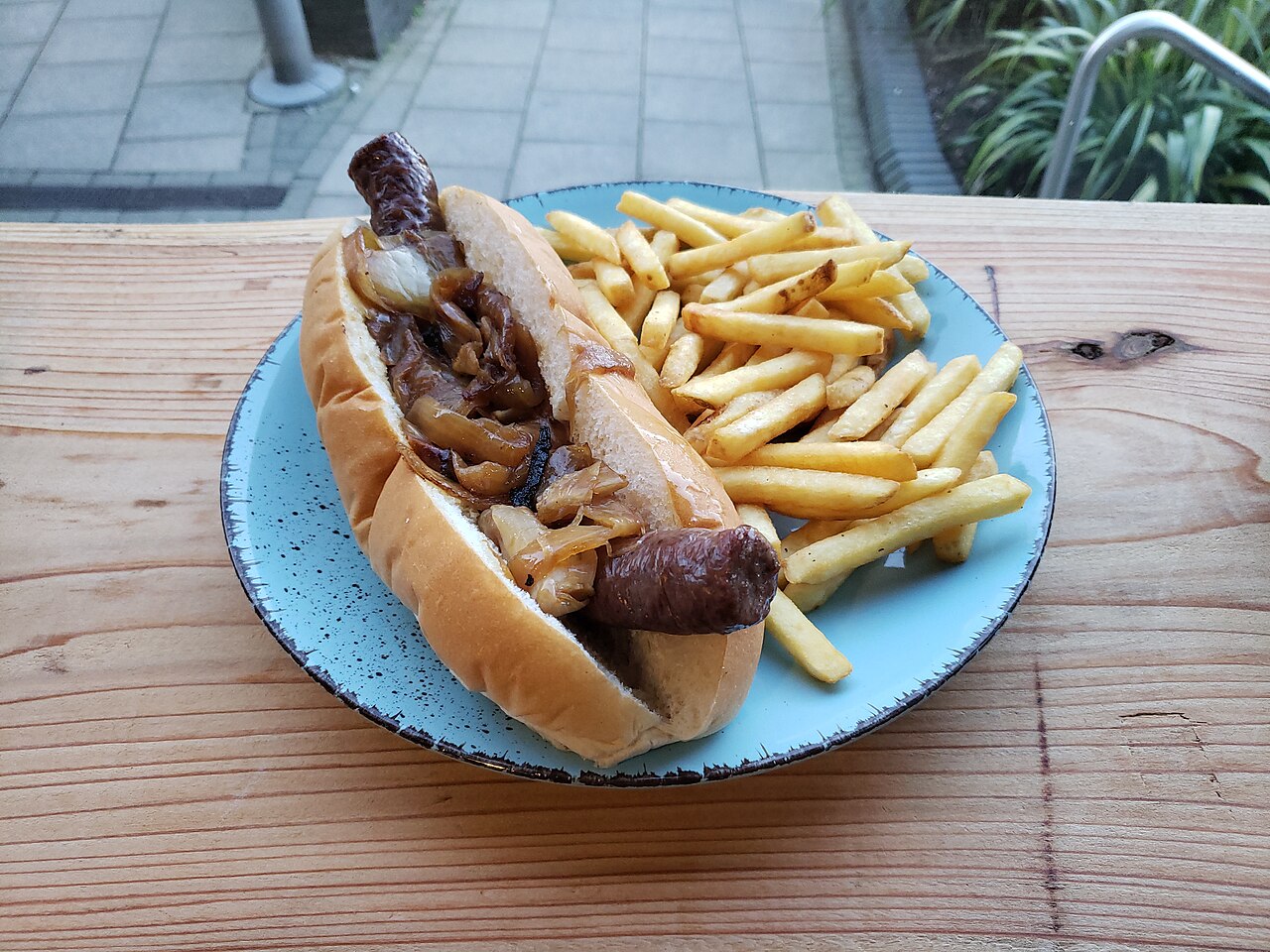
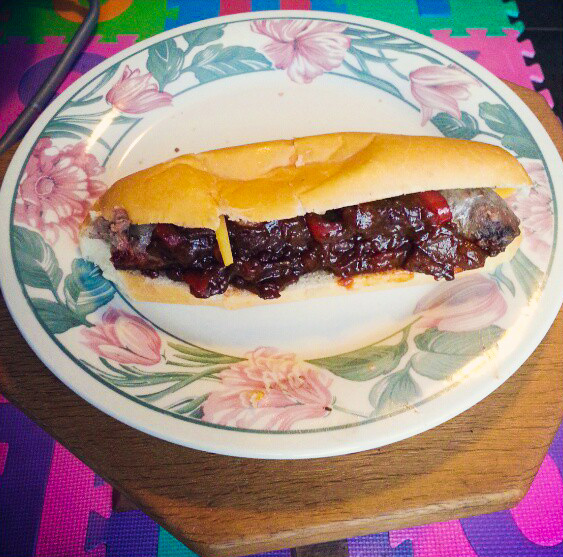
Boerewors is most traditionally braaied over charcoal or wood, but can also be grilled, roasted, or fried. Pricking the casing during cooking causes it to lose moisture and fat. A popular variation is the boerewors roll, or "boerie" roll, served in a hot dog bun with tomato, chili, and onion relish or chakalaka. Some prefer boerewors stew with mashed potatoes or pap.
Varieties include garlic wors, kameeldoring (camel thorn), Karoowors from the Karoo region, and spekwors with cubed pork fat. Other additions can be cheese and chili peppers.
- Origin
- South Africa
- Type
- Sausage
- Main ingredients
- Beef, pork, lamb, or goat (at least 90% meat, including fat)
- Fat limit
- Not more than 30% of meat content may be fat
- Regulation
- South African government regulation
- Common serving
- Braaied (grilled) or in a boerewors roll
Lore & Background
Boerewors is made from coarsely minced beef, minced pork, lamb, and/or goat. When locally available antelopes such as springbok or oryx are included, the sausage must be labelled with the species from which the meat originates. It also contains spices, usually toasted coriander seed, black pepper, nutmeg, cloves, and allspice. Like many other forms of sausage, boerewors may contain a high proportion of fat and is preserved with salt and vinegar, packed in edible sausage casings, which are the only part of the sausage that may be offal. Traditional boerewors is usually formed into a continuous spiral and is often served with pap, a traditional South African porridge or polenta made from mielie-meal. Boerewors is also very common throughout Namibia, Botswana, Mozambique, as well as with expatriate South African communities worldwide.
Reader's Guide
Boerewors holds cultural significance across Southern Africa as a staple of braais (barbecues) and everyday meals. Its preparation and grilling have become a fine art, with many local, regional, and national competitions taking place. The Shoprite supermarket chain hosts an annual competition to determine the best new preparations, with the winner having their product manufactured and sold in all Checkers stores under the Championship Boerewors brand. Boerewors is most traditionally braaied over charcoal or wood, but is often cooked under an electric grill, roasted in an oven, or fried in a pan. Pricking the casing during cooking leads to loss of moisture and fat. A local variant is the boerewors roll, or 'boerie' roll, served with tomato, chili, and onion relish or chakalaka. The sausage does not keep well unrefrigerated, leading to a similar dried or cured sausage called droëwors. In response to the modern plant-based food movement, various vegan boerewors substitutes have appeared but may not be labeled as boerewors.
Did You Know?
- On 3 May 2014, the Guinness World Record for braaiing the longest boerewors was broken in South Africa, measuring 1,557.15 m.
- Boerewors must contain at least 90% meat or fat from beef, pork, lamb, or goat, with not more than 30% fat.
- Boerewors may not contain offal other than the casings or any mechanically separated meat.
- A similar sausage made from game meat like kudu or springbok may not be sold as boerewors unless it contains at least 75% meat from that species.
Origins & Regulatory Identity
The name boerewors is a straightforward compound from Afrikaans: boer meaning farmer and wors meaning sausage. This etymology points to its rural South African roots. The sausage has since become a cornerstone of South African, Setswana, and Zimbabwean cuisines, with broad popularity stretching across Southern Africa into Namibia, Botswana, and Mozambique, as well as among expatriate South African communities around the globe. South African government regulation sets strict boundaries on what qualifies as boerewors: at least 90 percent of the product must be meat or fat sourced from beef, pork, lamb, or goat, with the remaining 10 percent reserved for spices and other ingredients. Fat content is capped at 30 percent of the meat portion. Offal is permitted only in the form of edible casings, and mechanically separated meat is entirely prohibited. If antelope species like springbok or oryx are included, the label must identify the specific animal.
The Craft of Preparation & Cooking
Traditional boerewors is formed into a continuous spiral, a shape that has become almost synonymous with the sausage itself. The base recipe calls for coarsely minced beef at around 30 percent fat, fatty pork cuts such as neck, shoulder, or belly, and a spice blend typically featuring toasted coriander seed, black pepper, nutmeg, cloves, and allspice, along with brown sugar and either dry red wine or dark vinegar for preservation. The sausage is packed into thick edible casings soaked in water. The most traditional cooking method is braaiing—grilling over charcoal or wood—though it is also commonly prepared under an electric grill, roasted in an oven, or fried in a pan. A critical cooking tip is to avoid pricking the casing, as doing so causes the sausage to lose much of its moisture and fat. Boerewors is frequently served alongside pap, a traditional South African porridge made from mielie-meal, and in a local hot-dog variant called the boerie roll, often topped with tomato, chili, and onion relish or chakalaka.
Variations & the Broader Sausage Family
Boerewors sits within a wider family of South African sausages, each with its own character. Garlic wors, Karoowors from the Karoo region, and spekwors—distinguished by its cubed pork fat—are well-known specialties, while some makers incorporate cheese or chilli peppers. Sausages made from game meats such as kudu or springbok cannot carry the boerewors label; instead, they must be named after the predominant species, provided that meat constitutes at least 75 percent of the content. Mixed-game sausages must be labelled as game sausage with all species listed. For those seeking a shelf-stable option, droëwors offers a dried or cured alternative prepared in a manner similar to biltong, and it has grown into a popular snack in its own right. More recently, the plant-based food movement has inspired small and home-based producers to create vegan boerewors substitutes, now appearing in South African retailers and food markets, though these products may not use the boerewors name.
Cultural Celebrations & Competitions
The preparation and grilling of boerewors has evolved into a celebrated craft, with local, regional, and national competitions showcasing the skill of braai masters. The Shoprite supermarket chain hosts an annual competition to identify the best new preparations, and the winner earns the distinction of having their recipe manufactured and sold nationwide in Checkers stores under the Championship Boerewors brand. The sausage's communal spirit was vividly displayed on 3 May 2014, when a Guinness World Record for the longest braaied boerewors was set in South Africa: a single sausage stretching 1,557.15 metres (5,108 feet 9 inches), prepared by Aiden. Rather than being consumed at a single event, the enormous sausage was distributed freely to old-age homes and the Abraham Kriel Orphanage, turning a record-breaking feat into an act of community generosity. These events underscore boerewors' role not merely as food but as a shared cultural ritual across Southern Africa.
Gallery
Frequently Asked Questions
Who is Boerewors?
Boerewors is a South African sausage whose name blends the Afrikaans words for 'farmer' and 'sausage,' and it sits as a staple across South African, Setswana, and Zimbabwean home cooking.
What are Boerewors's powers/role?
It is a coarsely minced, spice-laden sausage made from beef, pork, lamb, or goat, and it anchors the South African braai as the default grilled sausage on the coals.
Why is Boerewors important?
It functions as a cultural touchstone of Southern African food, appearing in South African, Setswana, and Zimbabwean traditions, and it is further cemented by national legislation that defines exactly what the sausage must contain.
What are Boerewors's rules of origin?
South African law requires at least 90% meat (including fat) from beef, pork, lamb, or goat, caps fat at 30% of the meat portion, and bars offal (except casings) and mechanically separated meat.
More in South African cuisine 1-24
Spotted an error? Know more?
Reader corrections go straight into our review queue. Suggest an edit · How this site is sourced