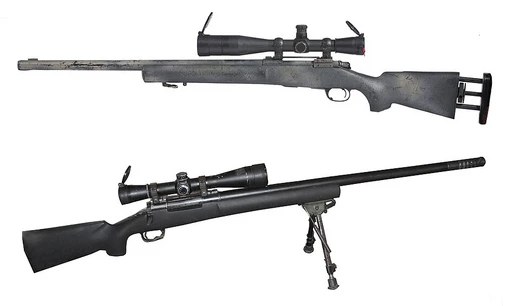
Vidhwansak
Indian multi-caliber anti-materiel rifle developed by Ordnance Factory Tiruchirappalli.

The Vidhwansak, whose name means "Destroyer" in Sanskrit, is an Indian multi-caliber anti-materiel rifle and large-caliber sniper rifle built by Ordnance Factory Tiruchirappalli. It is designed to take out enemy bunkers, lightly armored vehicles, radar systems, communication gear, parked aircraft, and fuel storage. It also works well for long-range sniping, counter-sniping, and disposing of ordnance.
Development began in November 2005, when the Ordnance Factory Tiruchirapalli teamed up with the Defence Research and Development Organisation. The rifle closely copies the Denel NTW-20. After all-terrain and all-weather testing, user trials started in March 2006, and production kicked off in February 2007. Following those trials, the Border Security Force ordered 100 units for border use, with delivery completed by October 2008. The rifle was also offered to the Indian Army and the National Security Guards, but the Army passed on it because it did not meet their weight requirements. As of 2011, the Vidhwansak sold for about Rs 10 lakh (roughly $20,000), compared to the Denel NTW-20’s Rs 23 lakh (about $45,000). Indigenizing this weapon saved over 90 million USD in foreign exchange.
The Vidhwansak is a manually operated, rotating bolt-action rifle. Its barrel and receiver recoil inside a chassis frame against a damping system. It feeds from a detachable box magazine inserted from the left side. The rifle breaks down quickly into two man-portable packs, each weighing 12 to 15 kg. A muzzle brake on the barrel absorbs an estimated 50 to 60 percent of the recoil, helped by a buffered slide in the receiver. It comes with an 8× magnification, long-eye-relief telescopic sight with parallax adjustment, and a 12× ballistic scope can also be attached. Effective range is 1800 meters (1300 meters for the 20 mm version), though shots can reach up to 2000 meters.
The rifle can be converted between three calibers—12.7 mm, 14.5 mm, and 20 mm—by swapping the barrel, bolt, and magazine. This takes about a minute in the field with no special tools needed.
Users include the Border Security Force (100 rifles) and the Central Reserve Police Force. The Indo-Tibetan Border Police is looking to acquire 450 Vidhwansaks for high-altitude operations.
- Manufacturer
- Ordnance Factory Tiruchirappalli
- Calibers
- 12.7 mm, 14.5 mm, 20 mm
- Effective range
- 1800 m (1300 m for the 20 mm version)
- Maximum range
- 2000 m
- Magazine capacity
- Detachable box magazine inserted from the left side
- Weight per pack
- 12 to 15 kg (each of two man-portable packs)
- Cost
- Rs 10 lakh (about $20,000) as of 2011
Lore & Background
The Vidhwansak was developed in November 2005 by the Ordnance Factory Tiruchirapalli in association with the Defence Research and Development Organisation. It is almost an exact copy of the Denel NTW-20 rifle. After all-terrain and all-weather trials, user trials began in March 2006, and production began in February 2007. The Border Security Force ordered 100 Vidhwansaks for use in border areas, which were supplied by October 2008. The rifle was also offered to the Indian Army and the National Security Guards, but the Indian Army chose not to bring it into use as it did not meet weight requirements.
The Vidhwansak is a manually operated, rotating bolt-action rifle. The barrel along with the receiver recoil inside the chassis frame against a damping system. A muzzle brake absorbs an estimated 50–60% of recoil, supplemented by a buffered slide in the receiver. The rifle can be quickly disassembled and carried in two man-portable packs, each weighing about 12 to 15 kg. It is equipped with an 8× magnification, long-eye-relief telescopic sight with parallax adjustment, and a 12× ballistic scope can also be attached.
The rifle can be easily converted between the three calibers (12.7 mm, 14.5 mm, and 20 mm) by replacing the barrel, bolt, and magazine, which takes about one minute in the field without specialized tools. Users include the Border Security Force (100 rifles) and the Central Reserve Police Force. The Indo-Tibetan Border Police is seeking to acquire 450 Vidhwansaks for high-altitude operations. The Royal Danish Army used it as a test weapon by the Hærens kampskole (Army Combat and Fire Support Center) for testing materials and protection, chambered in 14.5×114mm.
Reader's Guide
The Vidhwansak represents a significant indigenisation effort in Indian defence manufacturing. Due to its development, foreign exchange worth over 90 million USD would be saved. It is sold at Rs 10 lakh (about $20,000) as of 2011, compared to the Denel NTW-20 AMR which costs Rs 23 lakhs (about $45,000). The rifle's multi-caliber capability allows rapid field conversion between 12.7 mm, 14.5 mm, and 20 mm calibers, making it adaptable for various roles from anti-materiel to long-range sniping. Despite its capabilities, the Indian Army declined to adopt it due to weight requirements. The Vidhwansak has seen service with the Border Security Force and Central Reserve Police Force, and the Indo-Tibetan Border Police is seeking to acquire 450 units for high-altitude operations. Its use as a test weapon by the Royal Danish Army indicates international interest in its design.
Did You Know?
- It can be converted between three calibers (12.7 mm, 14.5 mm, 20 mm) in about one minute without specialized tools.
- The Indian Army chose not to adopt the Vidhwansak because it did not meet weight requirements.
Development & the Case for Indigenisation
The Vidhwansak was born from a collaboration between the Ordnance Factory Tiruchirappalli and the Defence Research and Development Organisation, with the rifle taking shape in November 2005. Its design closely mirrors South Africa's Denel NTW-20 anti-materiel rifle. After completing all-terrain and all-weather trials, user trials kicked off in March 2006, and serial production followed in February 2007. The strategic logic behind the program was compelling: by manufacturing the weapon domestically, India projected savings exceeding 90 million USD in foreign exchange. The Vidhwansak carried a price tag of roughly 10 lakh rupees (approximately $20,000), a steep discount relative to the Denel NTW-20's 23 lakh rupees (around $45,000) as recorded in 2011. This cost differential, paired with the ability to produce the rifle on home soil, made it an economically attractive heavy-caliber option for Indian security forces seeking to reduce dependence on imported systems.
Mechanical Design & Recoil Management
The Vidhwansak is a manually operated, rotating bolt-action rifle in which the barrel and receiver recoil together inside a chassis frame, working against a damping system to absorb the energy of each discharge. A detachable box magazine feeds the weapon from the left side, and the whole assembly can be field-stripped rapidly into two man-portable packs, each weighing between 12 and 15 kilograms. To counter the substantial kick of a large-caliber round, a muzzle brake at the barrel's tip is credited with absorbing an estimated 50 to 60 percent of recoil, while a buffered slide within the receiver provides a secondary layer of mitigation. For precision aiming, the rifle carries an 8× magnification telescopic sight with long eye relief and parallax adjustment, and a 12× ballistic scope can be fitted as an alternative. The standard configuration delivers an effective range of 1,800 metres (1,300 metres for the 20 mm variant), with maximum achievable shots reaching 2,000 metres.
Multi-Role Capability & Caliber Flexibility
The Vidhwansak was conceived as a genuinely multi-role platform, filling anti-materiel, long-range sniping, counter-sniping, and ordnance disposal niches. In its primary anti-materiel capacity, it is tasked with neutralising enemy bunkers, lightly armoured vehicles, radar installations, communication gear, parked aircraft, and fuel storage facilities. Perhaps its most operationally significant feature is rapid caliber conversion: the rifle can be reconfigured among 12.7 mm, 14.5 mm, and 20 mm by swapping the barrel, bolt, and magazine—a procedure that takes roughly one minute in the field and demands no specialized tools. This adaptability lets a single platform shift between engaging soft targets at extended range and delivering heavier rounds against more robust equipment. The magazine-fed, bolt-action feeding system keeps mechanical complexity manageable for field maintenance while ensuring reliable cycling in austere environments.
Service Record & International Testing
After clearing trials, the Border Security Force ordered 100 Vidhwansaks for border-area deployment, with delivery completed by October 2008. The rifle was also put forward to the Indian Army and the National Security Guards, yet the Army passed, judging that the weapon failed to satisfy its weight thresholds. The Central Reserve Police Force has since adopted the system, and the Indo-Tibetan Border Police has indicated an intention to procure 450 units tailored for high-altitude operations. Beyond India's borders, the Royal Danish Army has fielded the Vidhwansak as a test weapon at the Hærens kampskole, the Army Combat and Fire Support Center, chambered in 14.5 × 114 mm for evaluating materials and protective equipment. This patchwork of domestic border-security adoption, selective military rejection, and foreign ballistic testing paints a picture of a weapon that carved out a specialized niche rather than becoming a broad-spectrum standard issue.
Frequently Asked Questions
What does the name 'Vidhwansak' mean?
The name is a Sanskrit term meaning 'Destroyer,' a fitting label for a weapon engineered to eliminate hardened targets such as bunkers, armored vehicles, and parked aircraft.
What calibers does the Vidhwansak come in?
The rifle is offered in three chamberings: 12.7 mm, 14.5 mm, and 20 mm. The 20 mm variant has a reduced effective range of 1,300 m, while the smaller calibers reach 1,800 m.
What is the Vidhwansak primarily designed to engage?
As an anti-materiel platform, it is built to knock out bunkers, lightly armored vehicles, radar and communications gear, parked aircraft, and fuel depots. It doubles as a long-range sniping, counter-sniping, and ordnance-disposal tool.
Who developed the Vidhwansak and when did the project begin?
Ordnance Factory Tiruchirappalli kicked off development in November 2005 in a joint effort with the Defence Research and Development Organisation. The overall design closely mirrors the South African Denel NTW-20.
How is the Vidhwansak carried in the field?
The system is broken into two man-portable packs, each weighing 12 to 15 kg, so a two-person team can shoulder the load. Feeding is handled by a detachable box magazine that slides in from the left side.
More in Sniper Rifles 1-22
Spotted an error? Know more?
Reader corrections go straight into our review queue. Suggest an edit · How this site is sourced