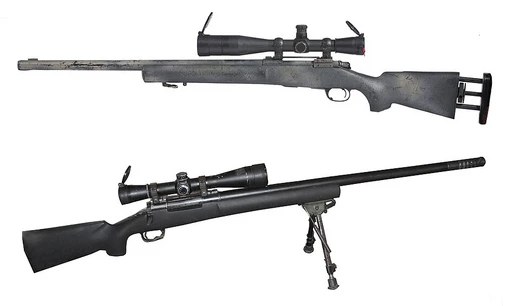
Argentine Mauser Model 1909
Argentine Mauser 1909: a Gewehr 98 derivative replaced without combat.

Piero71 · Public domain
The Argentine Mauser Model 1909 is a bolt-action battle rifle based on the Gewehr 98 pattern, designed for the Argentine Army. It was produced both in Germany and in Argentina, with Deutsche Waffen und Munitionsfabriken delivering 200,000 rifles and the Fabrica Militar de Armas Portatiles manufacturing around 85,000 rifles at governmental plants in Rosario and Santa Fe. The Model 1909s were replaced by FN FALs without having seen combat.
Quick Facts
- Origin
- Germany/Argentina
- Service
- 1905–1960s
- Used By
- Argentina / Paraguay / Dominican Republic
- Manufacturer
- DWM / Fabrica Militar de Armas Portatiles
- Wars
- United States occupation of the Dominican Republic (1916–1924) / Chaco War
- Is Ranged
- yes
- Design Date
- 1909
- Production Date
- 1909–1959
- Number
- ~285,000
- Weight
- 4.17 kg / 3.6 kg
- Length
- 1240 mm / 1056 mm
- Part Length
- 740 mm / 556 mm
Facts from the source article.
Lore & Background
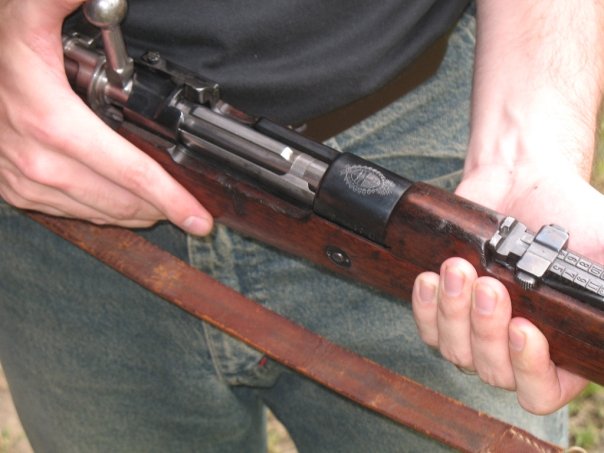
The Mauser 1909 was a slightly modified copy of the Gewehr 98. Among other modifications, the Lange Visier sight was replaced by a tangent leaf sight. The M1909 was also able to use the bayonet of the Mauser 1891 it replaced. Some Argentine Mauser 1909 rifles and carbines without crests were sold to Paraguay during the Chaco War.
Variants include a sniper rifle version with a German-made scope and a bent-down bolt handle, a cavalry carbine with a straight grip stock and a forecap covering all the barrel (with bayonet attachment under the forecap), and a Mountain Carbine or Engineers Carbine. The Peruvian Mauser 1909, chambered in 7.65 Mauser, was a closer copy of the Gewehr 98 including the Lange Visier sight, with differences such as a larger receiver ring, a 5 mm shorter breech, modified strip guide for older Model 1891 strips, a longer hammer, an aspheric bolt handle, and Peruvian markings. These Peruvian rifles were used during the Leticia Incident and the Ecuadorian–Peruvian War.
Reader's Guide
The Argentine Mauser Model 1909 represents a late-stage development of the Mauser bolt-action rifle lineage, adapted from the German Gewehr 98 for Argentine service. Its production in both Germany and Argentina reflects a common pattern of licensed manufacture for export markets. The rifle's replacement by FN FALs without having seen combat underscores its role as a peacetime service arm, though some examples were sold to Paraguay during the Chaco War. The sniper variant, with a German-made scope and bent-down bolt handle, indicates an early attempt at specialized marksman equipment. The Peruvian variant, chambered in 7.65 Mauser and used in the Leticia Incident and the Ecuadorian–Peruvian War, saw actual combat service. After 1945, Peruvian Mauser 1909s were replaced by American weapons and sold on the civilian market in the 1960s, with a few retained as ceremonial rifles. The rifle's design modifications, such as the tangent leaf sight and compatibility with the earlier Mauser 1891 bayonet, show an effort to integrate with existing Argentine equipment.
Design Philosophy & Key Modifications
The Argentine Mauser Model 1909 was conceived as a bolt-action battle rifle for the Argentine Army, built on the well-established Gewehr 98 pattern but with deliberate local adaptations. Rather than retaining the German Lange Visier sight, Argentine designers opted for a tangent leaf sight, a change that reflected practical preferences in the field. A particularly thoughtful design choice was the rifle's compatibility with the bayonet previously issued with the Mauser 1891, the very weapon the 1909 was meant to replace. This meant that existing bayonet stocks and training could carry over without the logistical burden of introducing an entirely new blade system. The overall result was a modestly altered derivative of the Gewehr 98 — recognizable in its core architecture but tailored to Argentine service requirements. The rifle sat within a broader family of Mauser-derived weapons that would go on to serve multiple South American militaries, though the Argentine version carried its own distinct identity through these specific modifications.
Dual-Source Manufacturing & Industrial Ambition
Manufacturing the Model 1909 was a genuinely international endeavor. The primary German producer was Deutsche Waffen und Munitionsfabriken, which delivered a substantial batch of 200,000 rifles to the Argentine military. However, Argentina did not rely solely on foreign supply. The Fabrica Militar de Armas Portatiles, a network of governmental arms plants located in the cities of Rosario and Santa Fe, took on domestic production and turned out approximately 85,000 additional rifles. Together, these two sources supplied roughly 285,000 weapons to the Argentine Army. The split between German and Argentine manufacture reflected a broader mid-twentieth-century trend among South American nations to build local industrial capacity for small arms while still leveraging established European engineering. The Rosario and Santa Fe plants represented a significant investment in sovereign manufacturing, ensuring that the country could sustain its own arsenals without depending entirely on overseas shipments. This dual-source approach also meant that rifles from the two origins could differ subtly in finishing and component sourcing, even though they shared the same fundamental design.
Specialized Variants & Tactical Roles
Beyond the standard infantry rifle, the Model 1909 platform was adapted into several specialized variants to meet different tactical needs. The sniper rifle version featured a German-made telescopic scope mounted on the receiver, along with a bent-down bolt handle — a modification that allowed the shooter to cycle the action without the handle interfering with the scope's position. The cavalry carbine offered a shortened overall length, a straight-grip stock for better one-handed control in the saddle, and a distinctive forecap that extended to cover the entire barrel. On this variant, the bayonet was designed to attach beneath the forecap rather than at the muzzle, a practical accommodation for mounted troops. A third variant, designated the Mountain Carbine or Engineers Carbine, served specialized support and engineering roles while sharing the core Mauser action. These variants demonstrated the flexibility of the Gewehr 98-derived platform, allowing a single basic design to be stretched across infantry, cavalry, and technical units without requiring entirely new weapon systems.
Post-Service Fate & Neighboring Combat Histories
The Argentine Model 1909 never saw active combat in the hands of the Argentine Army, as it was eventually replaced by the FN FAL before any such engagement occurred. However, the rifle's story did not end with retirement. During the Chaco War, a number of Argentine Mauser 1909 rifles and carbines — specifically those lacking national crests — were sold to Paraguay, giving the weapon a brief but notable combat life on the other side of the border. The Peruvian variant of the 1909, delivered between 1910 and 1914 in 7.65 Mauser caliber, saw actual service in the Leticia Incident and the Ecuadorian–Peruvian War. After 1945, Peru replaced its Mausers with American weapons, and the surplus rifles entered the civilian market in the 1960s, with a small number preserved as ceremonial pieces. Thus, a rifle designed for Argentine service ultimately found its most dramatic military chapters in the hands of neighboring nations.
Gallery
Frequently Asked Questions
What is the Argentine Mauser Model 1909?
It is a bolt-action battle rifle developed for the Argentine Army, built as a modified copy of the German Gewehr 98 pattern. Production was split between a German manufacturer and domestic Argentine government plants.
Who produced the Argentine Mauser Model 1909 and in what quantities?
Deutsche Waffen und Munitionsfabriken delivered 200,000 rifles from Germany, while Argentina's Fabrica Militar de Armas Portatiles manufactured roughly 85,000 more at facilities in Rosario and Santa Fe.
What sighting system did the Argentine Mauser Model 1909 feature?
The rifle was fitted with a tangent leaf sight, which replaced the Lange Visier found on the original Gewehr 98.
Did the Argentine Mauser Model 1909 ever see combat?
No. The entire Model 1909 inventory was phased out and replaced by FN FALs before a single round was fired in battle.
Why is the Argentine Mauser Model 1909 notable to firearms historians?
It is a textbook case of a nation licensing, co-producing, and fielding a foreign bolt-action design at scale, only to retire the whole run before it ever entered a war.
More in Sniper Rifles 1-22
Spotted an error? Know more?
Reader corrections go straight into our review queue. Suggest an edit · How this site is sourced