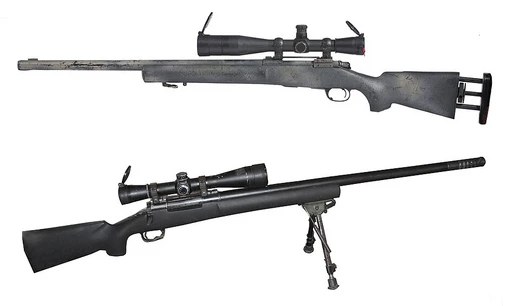
Sniper rifle
A high-precision, long-range rifle for military and law enforcement.

Charles Rosemond · Public domain
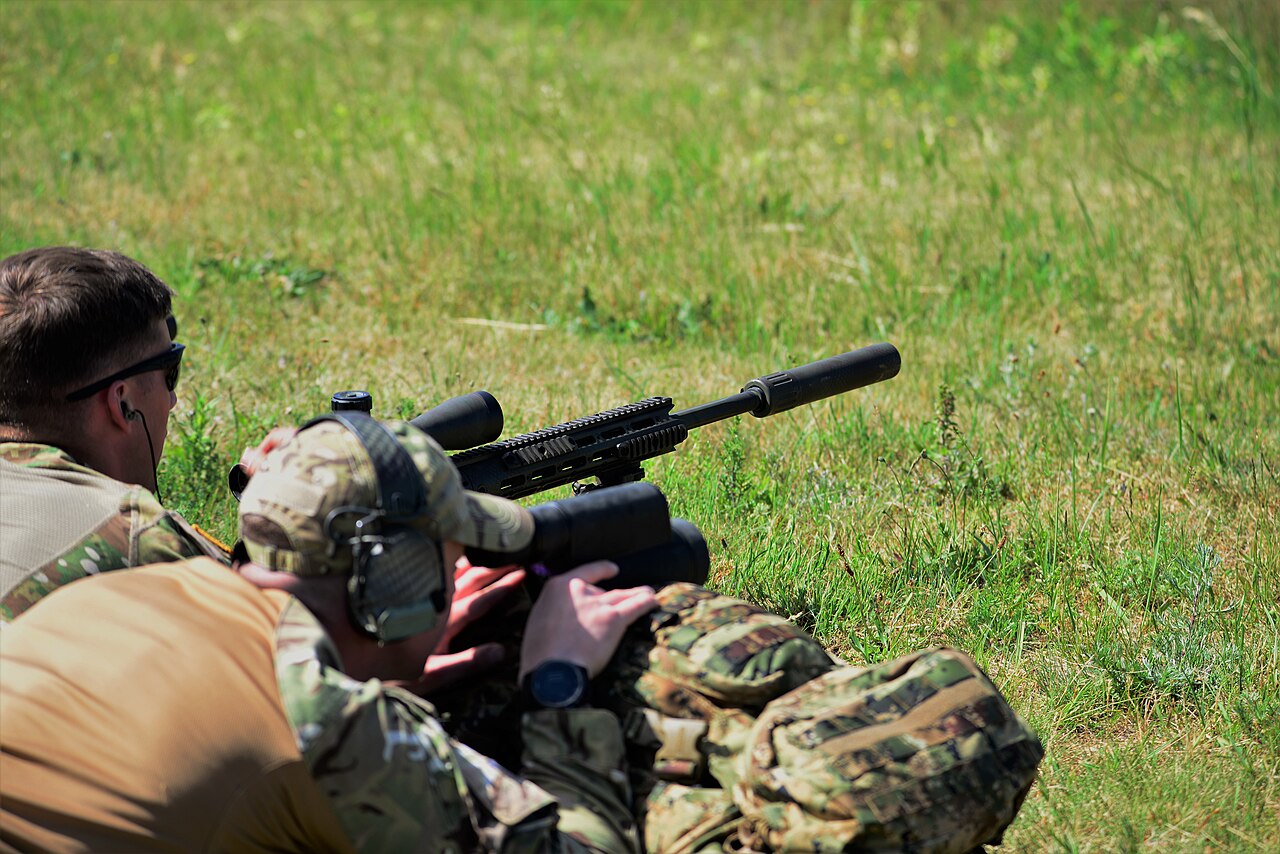
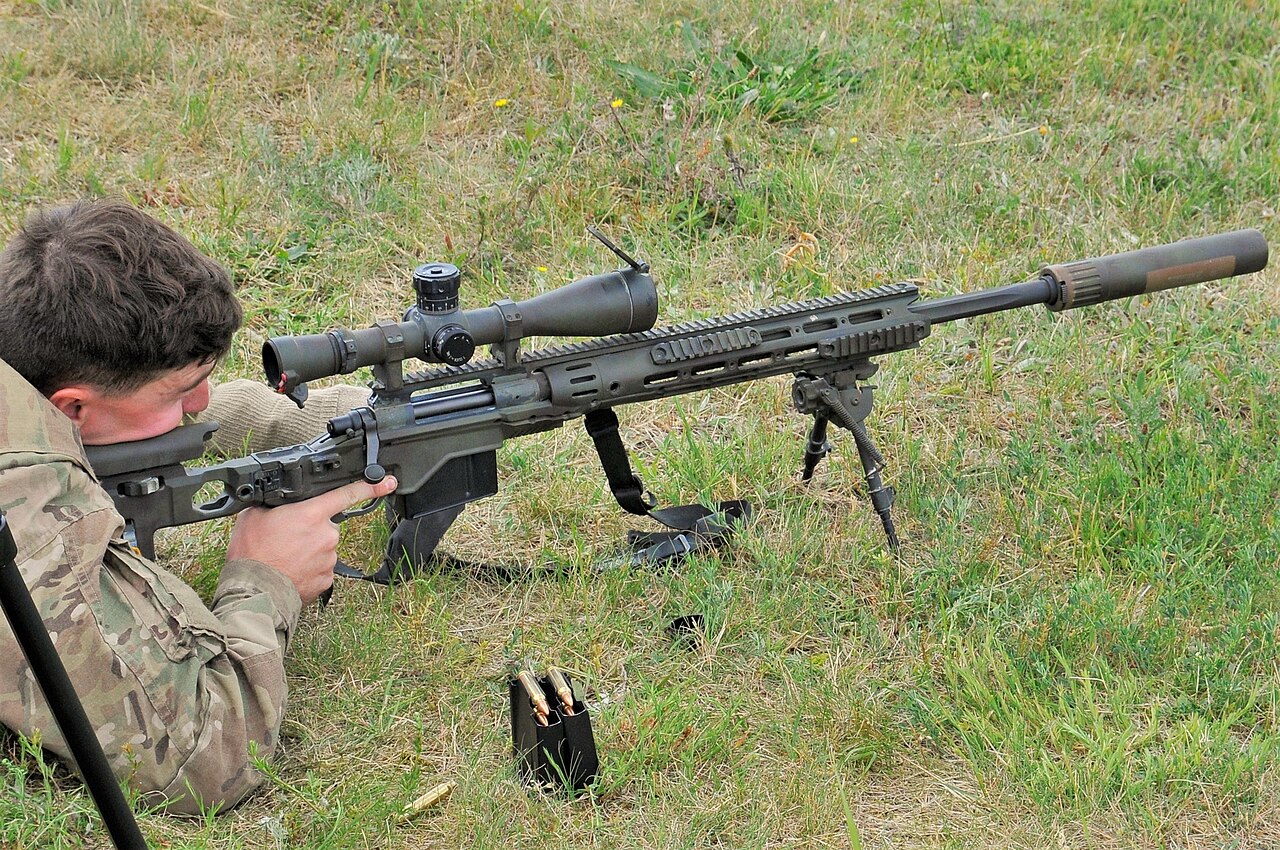
A sniper rifle is a high-precision, long-range rifle designed for extreme accuracy and reliability. It is typically a portable shoulder-fired weapon with either a bolt action or semi-automatic action, fitted with a telescopic sight and chambered for a high-ballistic performance centerfire cartridge. Modern sniper rifles are used by military and law enforcement for anti-personnel, anti-materiel, and surveillance purposes.
- Effective range
- about 800 meters (M24 Sniper Weapon System)
- Accuracy
- 0.5 MOA (M24 Sniper Weapon System)
- Caliber
- 7.62×51mm (M24 Sniper Weapon System)
- Service period
- 1988 to 2010 (United States Army standard-issue sniper rifle)
- Max range historical
- 2,000 yards (around 1,830 meters) for Whitworth rifle
- First optical sights
- Crimean War
- First sniper unit
- Lovat Scouts (British Army, formed 1899)
Lore & Background
The Whitworth rifle, designed in 1854 by Sir Joseph Whitworth, is arguably the first long-range sniper rifle. It used hexagonal polygonal rifling, outperforming the Pattern 1853 Enfield at trials in 1857 by about three to one, hitting targets at 2,000 yards versus the Enfield's 1,400 yards. During the American Civil War, Confederate sharpshooters used Whitworth rifles to kill Union artillery crews, including Major General John Sedgwick. During the Crimean War, the first optical sights were designed for rifles, pioneered by Colonel D. Davidson using sights from Chance Brothers of Birmingham. By the 1870s, breech-loading magazine rifles gave sniper rifles effective accurate ranges of up to a mile.
In the Second Boer War, breech-loading rifles with smokeless powder were used by both sides. The Lovat Scouts, formed in 1899, became the first official sniper unit in the British Army. During World War I, sniper rifles became more regularly used, with German snipers given rifles with telescopic sights that illuminated at night. German gunsmiths fitted the scope above the barrel for optimal accuracy. By World War II, snipers using rifles such as the Karabiner 98k and Mosin–Nagant Model 1891/30 had a drastic and demoralizing effect on the battlefield. Sniper training was rigorous and expensive, and many militaries were reluctant to adopt trained sniper regiments until after German successes in World War I.
Modern sniper rifles (circa 2010) are far more durable, accurate, and powerful than those of World War II, with effective ranges exceeding 1,000 meters. They are very reliable and can fire repeatedly without losing accuracy. Sniper rifles are classified into military and law enforcement types. Military rifles prioritize durability, range, and reliability under adverse conditions, while law enforcement rifles emphasize maximum accuracy for urban environments. The Heckler & Koch PSG1 and FN Special Police Rifle are examples of law enforcement-specific designs.
Reader's Guide
The sniper rifle has evolved from the Whitworth rifle of the 1850s to modern systems like the M24 Sniper Weapon System, which served as the United States Army standard-issue sniper rifle from 1988 to 2010. Its significance lies in its ability to deliver extreme accuracy at long range, fundamentally changing warfare by enabling precise engagement of high-value targets. The introduction of telescopic sights during the Crimean War and their refinement through World Wars I and II allowed marksmen to observe and target objects at greater distances than ever before. The demoralizing effect of snipers on the battlefield was so profound that soldiers sometimes disregarded orders to avoid exposure, breaking down the chain of command. Despite initial reluctance by militaries to adopt trained sniper regiments due to the high cost and difficulty of training, sniper rifles became integral to modern guerrilla warfare in Korea, Vietnam, and the Middle East. In the 21st century, sniper rifles continue to be adapted and improved, with effective ranges exceeding 1,000 meters, making them among the most accurate and efficient weapons in use. The distinction between military and law enforcement rifles reflects different operational needs: military rifles must be hardy and portable for combat, while law enforcement rifles prioritize maximum accuracy for urban settings, as seen in designs developed after the Munich massacre.
Did You Know?
- The Whitworth rifle could hit a target at 2,000 yards (around 1,830 meters), while the Pattern 1853 Enfield could only manage 1,400 yards.
- The Lovat Scouts, formed in 1899, were the first official sniper unit in the British Army.
From Prototype to Frontline Service
The SVCh's journey from concept to combat deployment spanned roughly a decade. Rooted in the SVK-2016 platform, the rifle first appeared publicly at the Army-2017 military-technical forum, where it was introduced under the GRAU designation 6V14. Russian military testing concluded in the autumn of 2021, after which the weapon received a recommendation for formal adoption. The first production deliveries reached the army in September 2022, and by November of that year the Ministry of Defence had signed a contract for the initial batch. Kalashnikov Concern reported the start of mass production in February 2023, and qualification trials wrapped up on October 6, 2023, with additional rifles arriving in December. The company committed to scaling output through 2024, completing the relevant production contract in November of that year. The rifle also saw limited combat use in the 7.62×54mmR configuration during the Russian incursion into Ukraine beginning in 2022. In March 2026, the Russian Interior Ministry formally adopted the weapon, marking its entry into a second branch of security forces.
The Curtain Scheme and Structural Innovation
The SVCh's most distinctive engineering choice is what its developers call the curtain scheme — a layout in which internal mechanisms are split between an upper and a lower assembly. The upper receiver, forged from durable metal into an inverted U-profile, serves as the primary chassis and absorbs the full mechanical stress of firing. The bolt group and hammer-forged free-floating barrel are mounted directly into this upper structure, while the short-stroke gas piston and three-position rotary gas regulator handle the operating cycle. Because the lower components bear no significant structural load, they can be fabricated from lightweight polymers, dramatically reducing overall weight. This philosophy traces back to Yevgeny Dragunov's late-1970s experimental compact assault rifle, the Dragunov MA prototype, which later evolved into the AM-17/AMB-17. It stands in sharp contrast to both the original SVD and the classic Kalashnikov arrangement, where critical structural elements sit in the lower receiver and constrain the use of lighter materials. The result is a rifle that is more compact and modular than its 1960s predecessor while retaining full-power cartridge performance.
Combat Role and Ergonomic Design
The SVCh was tasked with the same operational niche as the SVD it replaces: engaging high-value personnel and assets at short and medium ranges that exceed the effective envelope of intermediate-cartridge rifles in combined-arms fighting. A key ergonomic advantage is its relatively small footprint, which allows the marksman to forgo a separate sidearm for close-quarters defense, thereby improving overall mobility on the battlefield. The telescopic and folding butt stock provides adjustable length of pull with an integrated cheek riser for consistent eye alignment. A full-length MIL-STD/1913 Picatinny rail runs along the upper receiver chassis, accepting iron sights, day optics, low-light scopes, or thermal imagers. The handguard's underside carries an additional rail for bipods, while its sides feature negative-space hollow-slot attachment points for further accessories. The 7.62×54mmR variant accepts the familiar 10-round SVD box magazines, and proprietary magazines in 15- and 20-round capacities are available for other chamberings. The dedicated 1P97 3–15× variable-power telescopic sight, produced by the Novosibirsk Instrument-Making Plant with a Horus H59-style reticle and LR6/AA battery power, entered series production in February 2024.
Variant Family and Civilian Offerings
Beyond the standard 7.62×54mmR military model, the SVCh family extends into several specialized chamberings. The SVCh-308 is configured for the 7.62×51mm NATO round, broadening its logistical compatibility with allied and export ammunition. The SVCh-8.6 is the most powerful variant, chambered for the .338 Lapua Magnum (8.6×70mm); it features an enlarged upper receiver, a 560 mm barrel, a dedicated muzzle brake, and a modified bolt group to handle the significantly larger cartridge. At 6.3 kg and 1,015 mm overall, it delivers an estimated effective range of 1,500 metres. For the Russian civilian market, Kalashnikov offers the MR1 limited-edition rifle in either 7.62×54mmR or .308 Winchester. The MR1 uses aluminum lower parts and handguards with M-LOK mounting points. The 7.62×54mmR version feeds from SVD magazines with a 530 mm barrel and folding stock, while the .308 Winchester version offers barrel lengths of 530 mm or 410 mm, paired with fixed or folding adjustable skeletonized stocks.
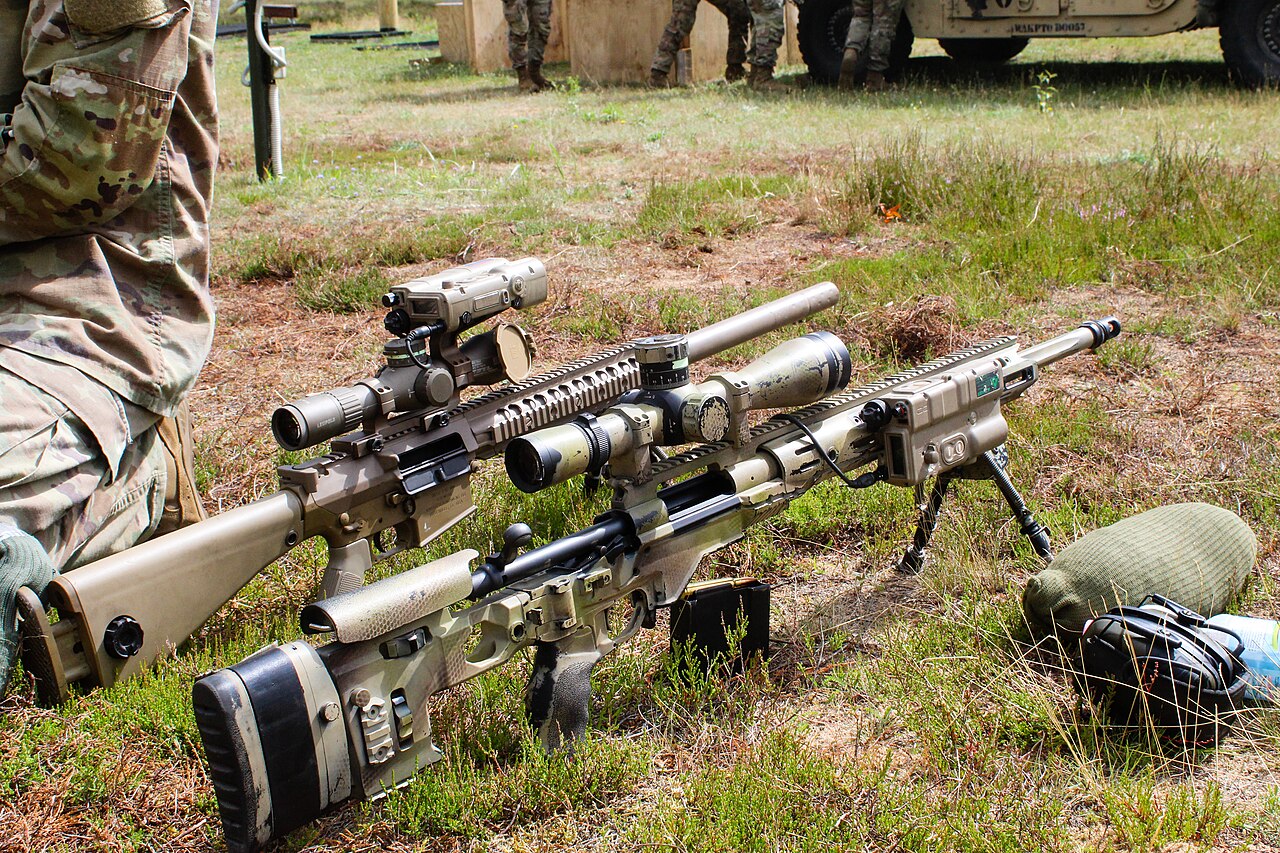
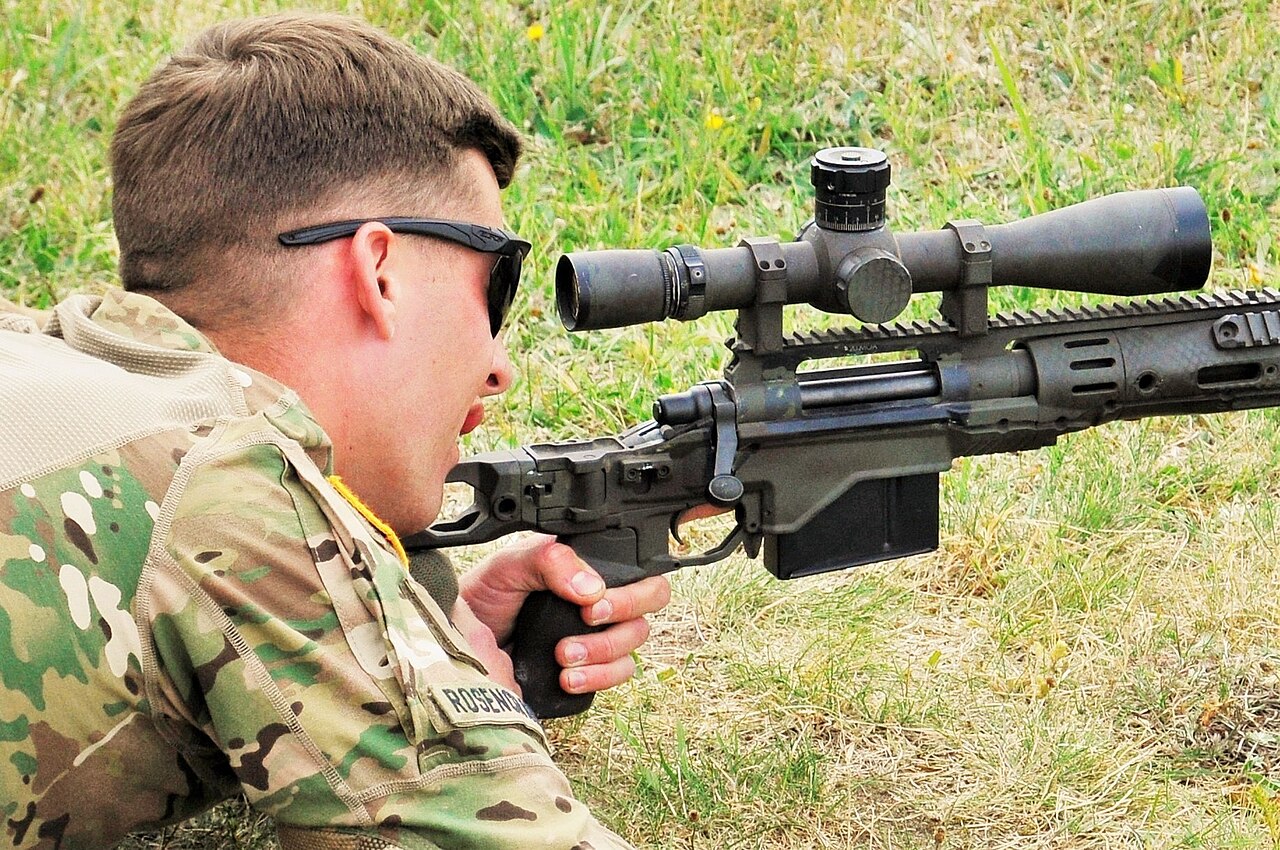
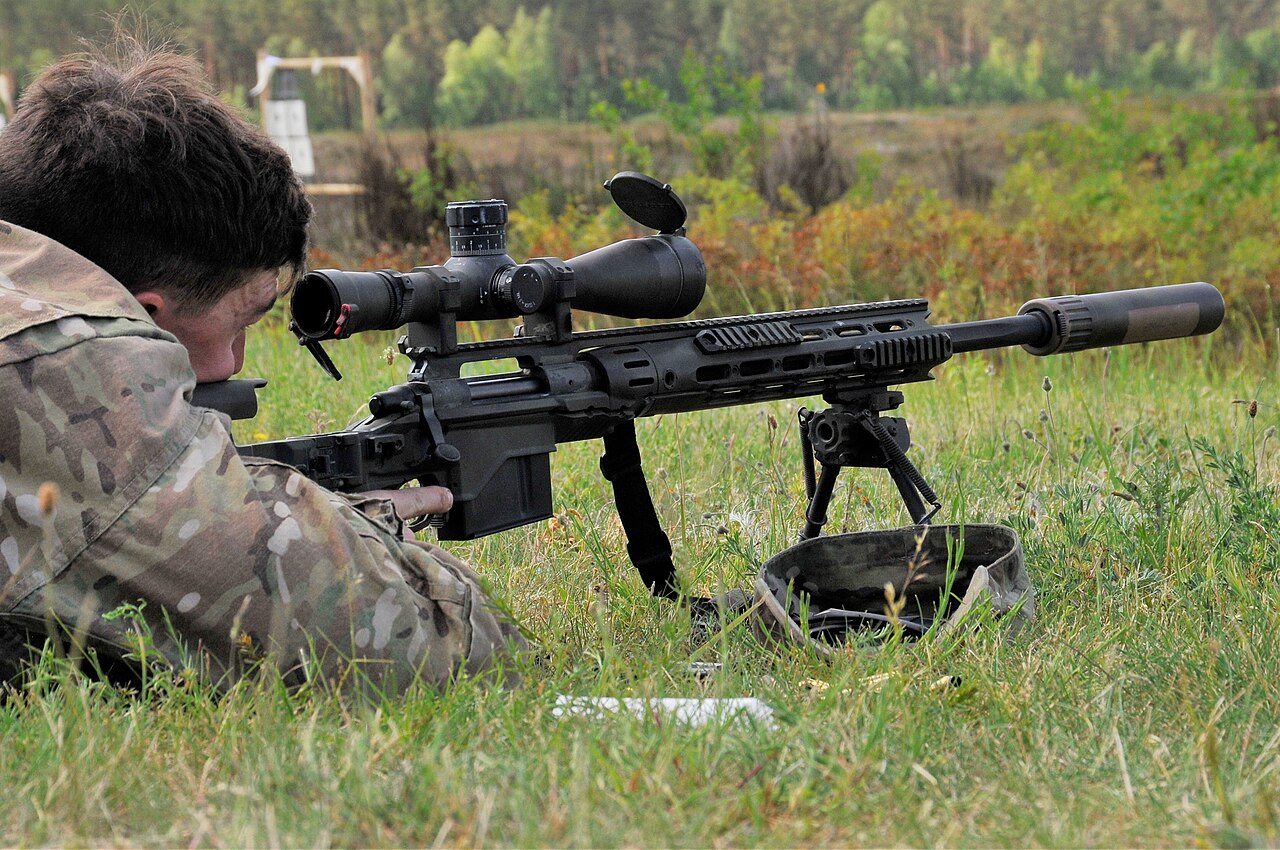
Gallery
Frequently Asked Questions
What is a sniper rifle?
A sniper rifle is a precision long-range firearm engineered for extreme accuracy, typically built around a bolt-action or semi-automatic mechanism, a telescopic sight, and a high-performance centerfire cartridge. It serves military and law enforcement in anti-personnel, anti-materiel, and surveillance roles.
How far can a sniper rifle effectively engage a target?
The M24 Sniper Weapon System, a widely recognized example, holds an effective range of roughly 800 meters. Historically, the Whitworth rifle stretched that boundary to about 2,000 yards (around 1,830 meters).
What caliber does a standard-issue sniper rifle use?
The M24 Sniper Weapon System is chambered for the 7.62×51mm NATO round, chosen for its flat trajectory and high-velocity performance at extended distances.
When were telescopic sights first used on rifles?
The earliest documented pairing of an optical sight with a rifle dates to the Crimean War, marking the birth of the modern scoped-sniper concept.
What level of accuracy does a modern sniper rifle deliver?
The M24 Sniper Weapon System is rated at approximately 0.5 MOA, meaning its shots can be grouped within a very tight radius even at long ranges, making it one of the most precise standard-issue rifles of its era.
More in Sniper Rifles 1-22
Spotted an error? Know more?
Reader corrections go straight into our review queue. Suggest an edit · How this site is sourced