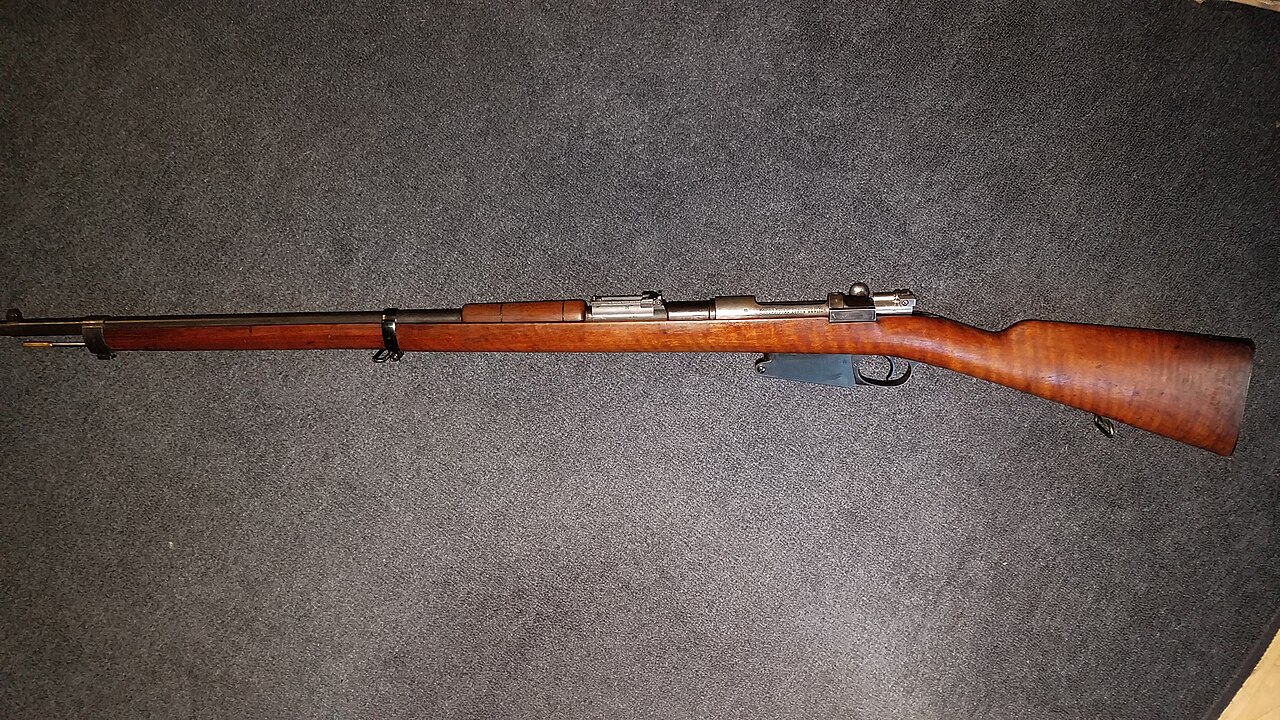
Mauser Model 1889
Belgian bolt-action rifle adopted in 1889, first Mauser with smokeless powder.

MrJeffLear · CC BY-SA 4.0
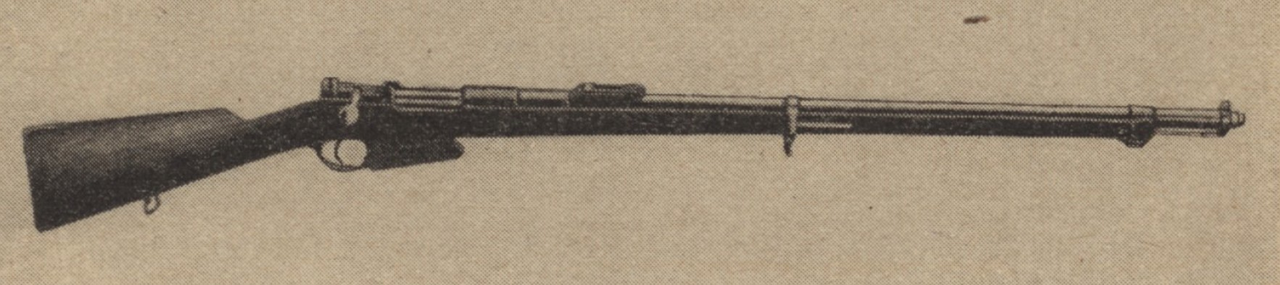
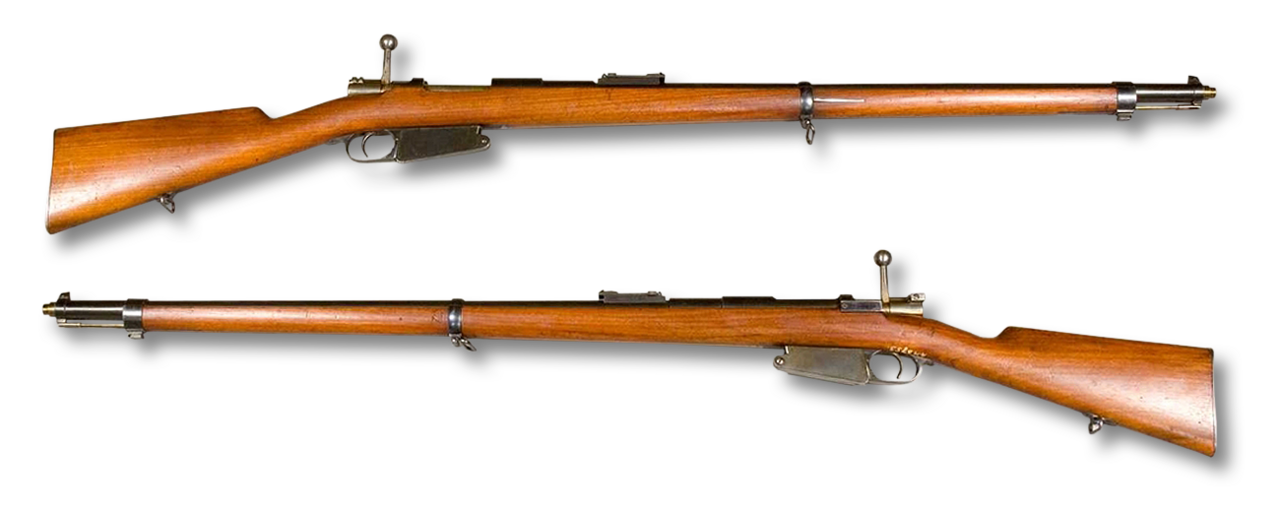
The Mauser Model 1889 is a bolt-action rifle of Belgian origin. It was adopted by Belgium on October 23, 1889, after a series of trials that began in the mid-1880s. The rifle is notable for being the first Mauser design to use a smokeless-powder cartridge and a stripper-clip loading system, and it served as the basis for the Turkish Model 1890 and Argentine Model 1891 variants.
Quick Facts
- Service
- 1889–1960s
- Designer
- Mauser
- Number
- ~275,000
- Length
- Mauser Model 1889: 1295 mm / Cavalry Carbine: 940 mm / Engineer Carbine: 940 mm
- Action
- Bolt-action
- Origin
- German Empire / Belgium
- Is Ranged
- YES
- Design Date
- 1889
- Manufacturer
- Fabrique Nationale / Loewe Berlin / Deutsche Waffen und Munitionsfabriken
- Weight
- Mauser Model 1889: 4 kg / Cavalry Carbine: 3.3 kg / Engineer Carbine: 3.3 kg
- Part Length
- Mauser Model 1889: 780 mm / Cavalry Carbine: 447 mm / Engineer Carbine: 447 mm
- Cartridge
- 7.65×53mm Mauser / 7.92×57mm Mauser
Facts from the source article.
Lore & Background
The Mauser Model 1889 was developed by Paul Mauser after he became aware of the German Rifle Test Commission's work on the Kommissionsgewehr. Mauser had not participated in earlier Belgian trials, but after patenting a rear-locked bolt design in February 1888 and a detachable magazine in April 1888, he submitted a rifle to the Belgian trials held from October to December 1888. Although it was among the three best performers, it suffered malfunctions: a modern source reports a cartridge ruptured, damaging the bolt face and extractor; an 1888 French source notes extraction difficulties due to soot from imperfectly obturating cartridges; and an 1889 Russian source states the rear-locking bolt deformed under high pressure, forcing Mauser to develop front-locking lugs. After these trials, Mauser moved the locking lugs to the front of the bolt, similar to the Kommissionsgewehr, to prevent receiver compression and stretching when using stripper clips. The final round of trials began in May 1889 with 24 participants, and Mauser won over a Mannlicher-derived design and a Nagant. The rifle was adopted on October 23, 1889, with changes to the safety, sights, and barrel length.
During World War I, FN's factory was overrun, so production was outsourced to a facility in Birmingham, England (originally set up by W. W. Greener) and to Hopkins & Allen in the United States. Many Belgian Model 1889 rifles were captured by the Imperial German Army, and some were modified to fire the 7.92×57mm Mauser cartridge. Paraguay purchased 7,000 Belgian Model 1889s in 1930. Rifles captured by Nazi Germany after 1940 were designated Gewehr 261 (b), Karabiner 451 (b), Karabiner 453 (b), and Gewehr 263 (b). Some Model 1889/36 rifles were still in service in Belgian Congo at the time of independence in 1960 and were used during the Congo Crisis.
Reader's Guide
The Mauser Model 1889 represents a pivotal step in the evolution of military bolt-action rifles, as it was the first Mauser design to successfully integrate smokeless powder and a rimless cartridge with a stripper-clip loading system. Its adoption by Belgium prompted the Ottoman Empire to alter its order for Model 1887 rifles, leading to the Turkish Model 1890, and Argentina ordered 180,000 rifles and 30,000 carbines as the Model 1891. The rifle's design influenced later Mauser patterns, and its variants saw extensive service: Turkish Model 1890 rifles were used in the First Balkan War, World War I, and the Turkish War of Independence, and were still in reserve in the 1950s; Argentine Model 1891 carbines remained in service with Argentine police into the 1960s. The Model 1889/36 short rifle, a modernized version, was used by German second-line troops and pro-German organizations during World War II, and later by forces in the Congo Crisis. The rifle's legacy is thus one of widespread adoption and long service across multiple continents and conflicts.
Did You Know?
- The Mauser Model 1889 was adopted by Belgium on October 23, 1889, after trials that included 24 participants.
- During World War I, FN Herstal outsourced production to W. W. Greener in Birmingham, England, and Hopkins & Allen in the United States.
- Some Model 1889/36 rifles were still in service in Belgian Congo at independence in 1960 and used during the Congo Crisis.
The Gauntlet of Belgian Trials
The path to adoption for the 1889 Belgian Mauser was anything but straightforward. Belgium, seeking to replace aging single-shot rifles such as the Albini-Braendlin and Comblain, launched competitive trials in the mid-1880s. The 1886 round crowned the Remington-Lee M1885, but its complexity made it unsuitable for service, and a second round selected the Mannlicher M1886. Then the landscape shifted: the public revelation of Poudre B smokeless powder and the 8×50mmR Lebel cartridge rendered all black-powder designs instantly obsolete. Belgium experimented with a rimmed 8mm smokeless round, and a third Beverloo trial in July 1888, involving Mannlicher, Nagant, Pieper, and Schulhoff, produced inconclusive results. Paul Mauser had not participated in any of these earlier rounds. He entered the competition only after learning of the German Kommissionsgewehr project, and his rifle made the shortlist in the 1888 trials alongside Mannlicher and Engh. However, a malfunction—described in various sources as a cartridge rupture, extraction difficulty, or bolt deformation—cost him that round. He returned in 1889 with a redesigned action and finally prevailed.
Engineering the Winning Action
Paul Mauser's path to the Belgian contract involved rapid design iteration. In early 1888, he patented a rear-locked bolt mechanism reminiscent of the Lee action, followed months later by a detachable magazine. He also filed a British patent in September 1888 for stripper clips—a concept not entirely new, as a US inventor had patented a similar idea back in 1878—but Mauser was the one who brought it to commercial reality. The cartridge he paired with these innovations was a 7.65mm rimless round derived from the Patrone 88 developed at the Spandau Arsenal. After the 1888 Beverloo trials exposed problems with his rear-locked bolt under the pressures of the new smokeless cartridge, Mauser made a costly engineering decision: he relocated the locking lugs to the front of the bolt, mirroring the Kommissionsgewehr approach. This change, though more expensive to manufacture, prevented the receiver from compressing or stretching when the top was opened for stripper-clip reloading. The final adopted rifle, approved on October 23, 1889, incorporated a revised safety mechanism, adjusted sights, and a lengthened barrel.
Production, War, and Captured Service
The Belgian government's decision to fund the Fabrique Nationale d'Armes de Guerre—today known as FN Herstal—gave the Model 1889 a dedicated production home. When World War I engulfed Belgium, FN's factory was overrun by invading German forces, forcing the company to outsource manufacturing to a Birmingham, England facility originally established by the gunmaking firm W. W. Greener, and to Hopkins & Allen in the United States. The Birmingham operation was later transferred to the Belgian government. The war also meant that large numbers of Model 1889 rifles fell into Imperial German hands, some of which were re-chambered to fire the 7.92×57mm Mauser cartridge. After 1940, Nazi Germany captured additional Belgian stocks and assigned them formal designations: Gewehr 261 (b) for rifles, Karabiner 451 (b) and Karabiner 453 (b) for carbines, and Gewehr 263 (b) for the modernized 1889/36 variant. These captured weapons served second-line German troops and pro-German organizations such as the Vlaamse Wacht. Remarkably, some 1889/36 rifles remained in Belgian Congo's arsenals at the time of independence in 1960 and saw action during the Congo Crisis.
A Rifle by Many Names and Many Hands
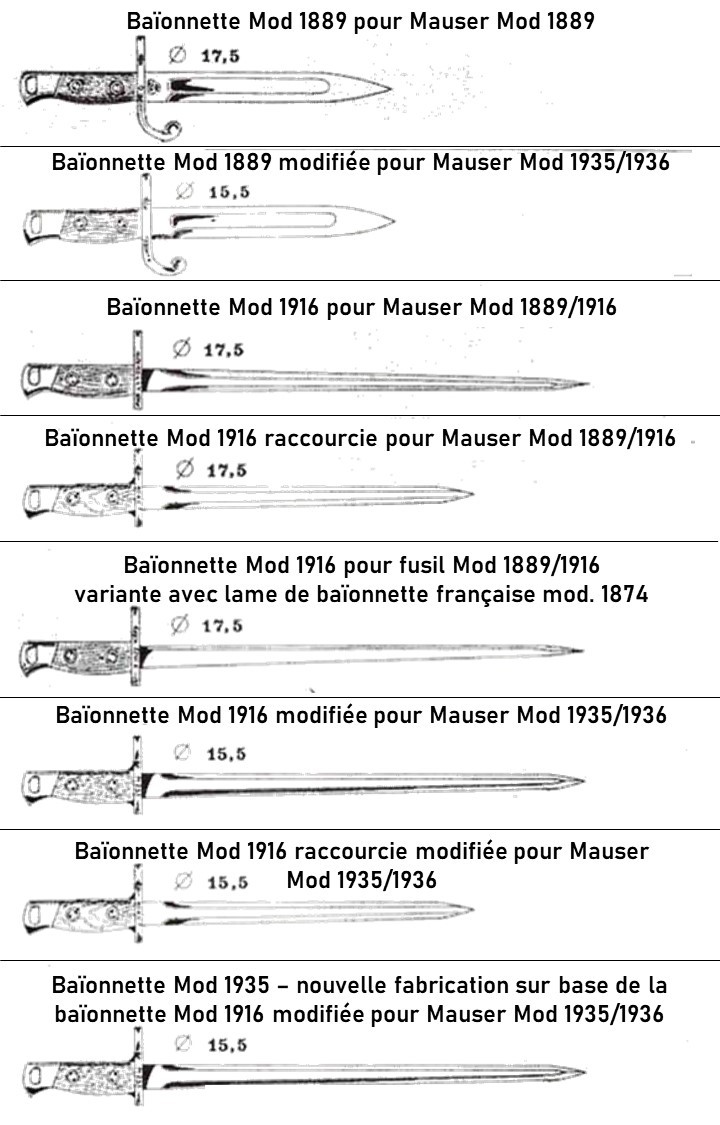
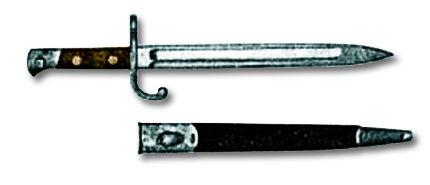
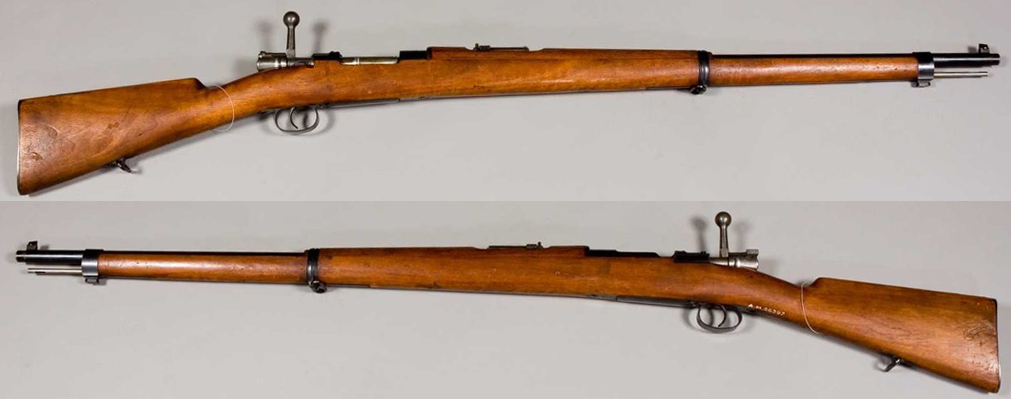
One of the most striking features of the Mauser Model 1889 is its remarkable international footprint. Depending on the country that adopted it, the same basic design carried different names: the 1889 Belgian Mauser, the 1890 Turkish Mauser, and the 1891 Argentine Mauser. Paraguay, too, became a customer, purchasing 7,000 Belgian Model 1889 rifles as late as 1930. Within Belgium itself, the rifle spawned a family of specialized variants tailored to different branches of the armed forces. The Foot Gendarmerie and fortress artillery received carbines fitted with a yatagan-style bayonet, while the Mounted Gendarmerie used a shorter variant with a long bayonet and a heavier stock. A reconditioned shorter carbine employing the Gras bayonet appeared during World War I, and the Model 1916 Carbine was introduced as a slightly modified replacement for all earlier carbine types. The Model 1889/36, also called the Model 1936, represented a modernized short-rifle version of the original design. Together, these variants and foreign adoptions illustrate how a single Belgian-adopted rifle became a widely distributed platform across multiple decades of service.
Gallery
Frequently Asked Questions
What is the Mauser Model 1889?
It is a Belgian bolt-action military rifle that entered service on October 23, 1889, after trials that had been running since the mid-1880s. Primary production was carried out by Fabrique Nationale d'Armes de Guerre (FN Herstal).
Why is the Mauser Model 1889 considered a milestone in rifle design?
It was the first Mauser design to chamber a smokeless-powder cartridge, signaling the company's shift away from black-powder rounds. It also debuted the stripper-clip loading system that would become a hallmark of subsequent Mauser actions.
What caliber and action type does the Mauser Model 1889 use?
The rifle fires the 7.65 mm rimless cartridge through a bolt-action mechanism employing front-locking lugs. This pairing gave it a compact, reliable cycling action that was well suited to the new smokeless-powder pressures of the era.
Who manufactured the Mauser Model 1889?
FN Herstal in Belgium handled the bulk of production, but wartime demand during World War I led to additional contracts with W. W. Greener in Birmingham, England, and Hopkins & Allen in the United States. This multi-country arrangement allowed Belgium to sustain its armaments output.
What other rifles were derived from the Mauser Model 1889?
Its basic action and feeding system were adapted into the Turkish Model 1890 and the Argentine Model 1891, making the 1889 the template for a small family of early smokeless-powder bolt-actions across three militaries.
More in Sniper Rifles 1-22
Spotted an error? Know more?
Reader corrections go straight into our review queue. Suggest an edit · How this site is sourced