Mespilia
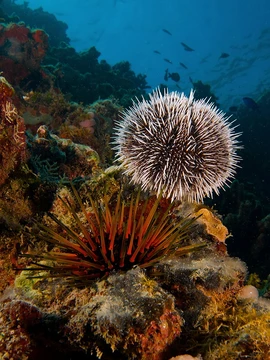
A tropical sea urchin with vibrant blue zones and small spines.

Mespilia is a genus of sea urchin containing only the species Mespilia globulus, known as the globular sea urchin, sphere sea urchin, or tuxedo urchin. It is notable for its vibrant blue or green vertical zones and relatively small spines, and is popular in recreational aquariums due to its low-maintenance care and interesting morphology.
Quick Facts
- Genus
- Mespilia
- Species
- globulus
Facts from the source article.
Lore & Background
Mespilia globulus is the only species in the genus Mespilia. Its specific name refers to a small ball or spherule, describing its overall shape. The species can have a diameter of up to 5 cm and is recognized by its radial symmetry and relatively small spines, usually brown, red, or dark in color. The body features ten vertical zones not covered in spines, which are distinct due to their vibrant shades of blue or green and have a velvety texture.
The species mainly inhabits shallow water reefs, coral rubble, and seagrass bed environments at depths of 0–200 meters. It occurs in shallow, tropical waters in the Indo-Pacific and Indian Ocean, as well as the south west coast of the western Pacific and Japan. During breeding season, Mespilia globulus can be found abundantly near the coast, but migrates slightly off the coast when not breeding.
Mespilia globulus feeds by grazing on organic material on structure or the sea floor, exhibiting nocturnal foraging behaviors and hiding in coral or rocks during the day. The presence of such grazers significantly increases the survival and growth of corals, though increased density of the urchin negatively affects its own growth due to limited food. The species has been observed agglutinating debris from its environment for camouflage or protection, and in the pet industry, individuals not carrying debris are said to be stressed or sick. It also lives in symbiosis with other marine invertebrates, such as crabs, and can be parasitized by some gastropods.
Reader's Guide
Mespilia globulus is significant as the sole species in its genus and as a common inhabitant of tropical shallow reef habitats. Its vibrant blue or green zones and small spines make it a popular organism for recreational aquariums, where it is valued for being low-maintenance and generally harmless to other organisms. The pet industry currently relies on wild-caught specimens, as successful captive breeding has only been reported a few times. Ecologically, the species plays a role in coral reef systems by grazing on organic material, and studies indicate that its grazing activity increases coral survival and growth. However, high densities of the urchin can limit its own growth due to food competition. The species reproduces via external fertilization, with breeding season from July to September, and future ocean acidification is expected to threaten its reproductive process. Its ability to agglutinate debris for camouflage and its symbiotic relationships with crabs add to its biological interest.
Did You Know?
- Its specific name means 'small ball' or 'spherule', referring to its shape.
- The species has ten vertical zones not covered in spines, which are vibrant blue or green with a velvety texture.
More in Sea Urchins 1-24
Spotted an error? Know more?
Reader corrections go straight into our review queue. Suggest an edit · How this site is sourced