Stichopus
A genus of sea cucumbers valued for food and traditional medicine.

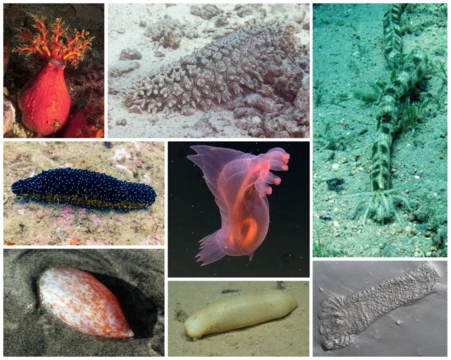
Stichopus is a genus of sea cucumbers belonging to the family Stichopodidae. These animals are relatively large; for instance, *S. vastus* can grow to 40–50 centimeters in length. Their bodies are soft and quadrangular, with thick tubercles covering all four sides. Coloration varies widely both between and within species. *S. rubermaculosus* ranges from light yellow to dark green with multicolored patches, while *S. chloronotus* is black with green or blue tints and orange-tipped tubercles. *S. vastus* has yellow and green zebra stripes, resembling a giant caterpillar.
The number of species in the genus is debated. Around 20 were described by 1922, but current estimates range from about 8 to 14. Some species have been moved to other genera, such as *Apostichopus* and *Isostichopus*.
*Stichopus* is frequently exploited for food and medicine. In Malaysia, species known as *gamat* are used to make tonics called “gamat water” and “gamat oil,” applied to wounds, gastric ulcers, and pain. *S. horrens* is fished as *gamat* and also harvested for food in Samoa. There, the edible parts are the viscera, especially the intestine. A fisher places the cucumber in a bucket for a few hours to clear sand from its gut, then cuts out the intestine and sometimes the respiratory system and gonads, releasing the still-living animal. The viscera are eaten raw or bottled and sold; most cucumbers survive this process, at least temporarily. *S. monotuberculatus* is used for both food and medicine. A small fishery for *S. herrmanni* collapsed due to overfishing.
Recognized species include: *Stichopus chloronotus*, *S. fusiformiossa*, *S. herrmanni*, *S. horrens*, *S. monotuberculatus*, *S. naso*, *S. noctivagus*, *S. ocellatus*, *S. pseudohorrens*, *S. quadrifasciatus*, *S. rubermaculosus*, and *S. vastus*.
Quick Facts
- Taxon
- Stichopus
Facts from the source article.
Lore & Background
Sources disagree about how many species should be classified in the genus. By 1922 there were about 20 described, but current species counts range from about 8 to 14, as a number of animals have been moved to other genera such as Apostichopus and Isostichopus. These sea cucumbers are relatively large; one of the largest is S. vastus, which can reach 40 to 50 centimeters in length. They have soft, quadrangular bodies covered on all four sides with thick tubercles. Some species are quite variable in coloration; for example, S. rubermaculosus can be light yellow to dark green with patches of various colors. One of the most distinctive is S. chloronotus, which is black, tinged with green or blue, with some body tubercles tipped with orange. S. vastus looks 'like a giant caterpillar' with yellow and green zebra stripes.
Reader's Guide
Stichopus species are important in traditional medicine practices in Malaysia, where they are known as gamat and used to make 'gamat water' and 'gamat oil', which are tonics for treating wounds, gastric ulcers, and pain. One species fished as gamat is S. horrens, which is also harvested for food in Samoa. The parts considered edible are the viscera, especially the intestine. A fisher will take the cucumber from the water and place it in a bucket for a few hours to let it pass any sand from its gut, then cut out its intestine and sometimes its respiratory system and gonads, releasing the still-living animal. The viscera are eaten raw and fresh, or bottled and sold in the community. Apparently, most cucumbers survive this treatment, at least in the short term. There was a small fishery for S. herrmanni, but it crashed due to overfishing. S. monotuberculatus is used for both food and medicine.
Did You Know?
- In Malaysia, Stichopus species are known as gamat and used to make tonics for treating wounds, gastric ulcers, and pain.
- The fishery for S. herrmanni crashed due to overfishing.
More in Sea Cucumbers and Brittle Stars, Part 3 1-24
Spotted an error? Know more?
Reader corrections go straight into our review queue. Suggest an edit · How this site is sourced