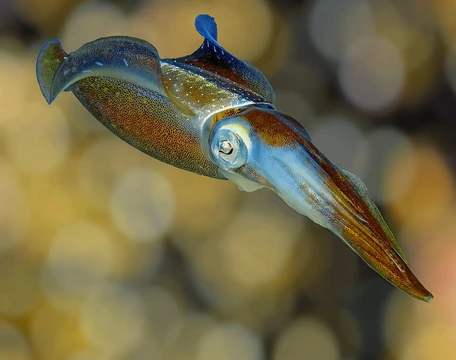
Sepia (Rhombosepion)
A subgenus of cuttlefish with ellipsoid cuttlebone and retractable tentacles.

Sepia (Rhombosepion) is a subgenus or taxonomic grouping within the genus Sepia, a genus of cuttlefish in the family Sepiidae that includes some of the best known and most common species. The name Sepia is the Latinised form of the Ancient Greek σηπία (sēpía) meaning 'cuttlefish'. The cuttlebone of Sepia species is ellipsoid in shape.
Quick Facts
- Taxon
- Sepia
- Type Species
- Sepia officinalis
- Type Species Authority
- Linnaeus, 1758
Facts from the source article.
Lore & Background
All members of Sepia possess eight arms and two tentacles. The tentacles are retractable limbs used to target and latch onto prey, whereas the arms are used for handling prey and producing patterns of light and dark to distract prey. Once a prey item has been caught, the tentacles detach from it and have no other function. The tentacles reside in sheaths that run below the eyes and behind the head, into the visceral mass, where they are reserved as coiled, spring-loaded appendages, waiting to be ejected towards a food target.
Reader's Guide
A 2023 paper extensively revised the composition of genus Sepia; as a consequence, many species have been split out of genus Sepia, assigned to revived genera or elevated subgenera. Currently, the genus has 58 species according to WoRMS, though a number of these species need further verification. The subgenus Sepia (Rhombosepion) is part of this revised classification, though the article does not specify which species belong to it. The extinct species listed from the Neogene of Europe—such as Sepia bertii, Sepia complanata, and others—may include synonyms, and their relation to Sepia (Rhombosepion) is not addressed in the source. The significance of this subgenus lies in its placement within the ongoing taxonomic refinement of Sepia, reflecting the dynamic nature of cephalopod classification.
Did You Know?
- All members of Sepia have eight arms and two retractable tentacles.
- Tentacles detach from prey after capture and have no other function.
- A 2023 paper extensively revised the composition of genus Sepia, splitting many species into revived genera or elevated subgenera.
More in Reef Cephalopods, Part 2 1-24
Spotted an error? Know more?
Reader corrections go straight into our review queue. Suggest an edit · How this site is sourced