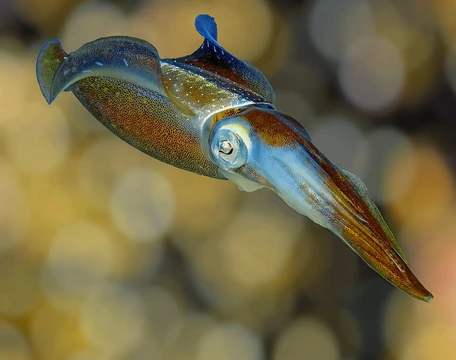
Ascarosepion
A genus of cuttlefish ranging from tiny to the giant cuttlefish.

Ascarosepion is a genus of cuttlefish found along the coasts of the Indian Ocean and East Pacific, within the broader Indo-Pacific region. Its members range dramatically in size: at one extreme are the two small, vividly colored species once placed in the genus Metasepia, and at the other is the giant cuttlefish, the largest living cuttlefish species.
The genus was first described in 1884 by French malacologist Alphonse Trémeau de Rochebrune, who characterized it by an ovoid body with narrow fins, short but robust arms ending abruptly in pointed tips, and suckers arranged in three to four rows of varied sizes. He noted a narrow, wrinkled buccal membrane and a thin, elliptical cuttlebone shaped like a sandal, with a rough, convex upper surface and a very flat underside, featuring two large calcareous "wings" that are pointed at the front and broad at the rear. The name combines the Greek words *askaros* (meaning slipper) and *sepion*; the type species, *A. verreauxi*, was collected off Sydney, and its holotype is held at the Natural History Museum in Paris. For over a century, subsequent authors treated Ascarosepion as a synonym of Sepia.
Metasepia was originally described from a type specimen collected in the Arafura Sea at a depth of 51 meters during the Challenger expedition in 1874, now deposited at the Natural History Museum in London. Its name likely combines *meta-* and *sepia*. In 2023, a study using molecular sequencing revived several cuttlefish genera and elevated some subgenera of Sepia to full genus status. This research recovered Ascarosepion as a distinct clade, with the two Metasepia species nested within its lineage. The genus was found to range from the coasts of Tasmania and South Africa to the Persian Gulf, Red Sea, and Yellow Sea. This classification has been adopted by databases including WoRMS, SeaLifeBase, GBIF, and iNaturalist.
The species accepted by WoRMS are: *Ascarosepion apama* (giant cuttlefish), *A. bandense* (dwarf cuttlefish), *A. cultratum*, *A. filibrachia*, *A. latimanus* (broadclub cuttlefish), *A. mestus* (reaper cuttlefish), *A. novaehollandiae*, *A. opiparum*, *A. papuense* (Papuan cuttlefish), *A. pfefferi* (flamboyant cuttlefish), *A. plangon*, *A. rozella*, and *A. tullbergi* (paintpot cuttlefish).
Quick Facts
- Taxon
- Ascarosepion
- Type Species
- Ascarosepion verreauxi
- Type Species Authority
- Rochebrune, 1884
Facts from the source article.
Lore & Background
Ascarosepion was described in 1884 by French malacologist Alphonse Trémeau de Rochebrune. He diagnosed it as possessing an 'ovoid body, with narrow fins. Arms very short but robust which end abruptly in pointed tips. Suckers of varied size set on 3-4 rows. Buccal membrane narrow and wrinkled. The thin, elliptical cuttlebone resembles to a sandal in shape, with a rugose and convex dorsal surface and very flat bottom; two enormous calcareous "wings", acuminated at the front and very wide at the rear.' The name is derived from a combination of the Greek words askaros (ἄσκαρος, translated by Rochebrune as slipper (babouche)) and sepion. The type species, A. verreauxi, was collected off Sydney, and the holotype stored in 'Mus. Paris', presumably the Natural History Museum. Subsequent authors treated Ascarosepion as a synonym of Sepia for over a century.
A 2023 paper revived several genera of cuttlefish and elevated some subgenera of Sepia to full genus level based on molecular sequencing; this study recovered Ascarosepion as a distinct clade of cuttlefish with the two species previously within Metasepia nested within its lineage. This classification scheme has been accepted by various databases, such as WoRMS, SeaLifeBase, GBIF, and iNaturalist.
Reader's Guide
The genus Ascarosepion is notable for its extreme size range, encompassing both the tiny, colorful species formerly placed in Metasepia and the giant cuttlefish, the largest extant cuttlefish. Its revival in 2023 based on molecular sequencing resolved a century-long treatment as a synonym of Sepia, and the classification has been accepted by major taxonomic databases. The genus inhabits a broad Indo-Pacific range from Tasmania and South Africa to the Persian Gulf and the Red and Yellow Seas. The 13 species accepted by WoRMS include the flamboyant cuttlefish (Ascarosepion pfefferi), the broadclub cuttlefish (Ascarosepion latimanus), and the reaper cuttlefish (Ascarosepion mestus). The original description by Rochebrune emphasized the distinctive sandal-shaped cuttlebone with two large calcareous wings, a feature that helped differentiate it from other cuttlefish genera. The inclusion of the former Metasepia species within Ascarosepion highlights the ongoing refinement of cuttlefish taxonomy through genetic analysis.
Did You Know?
- The genus includes the largest extant cuttlefish, the giant cuttlefish (Ascarosepion apama).
- The two species formerly classified in Metasepia are now nested within Ascarosepion.
- The type species, Ascarosepion verreauxi, was collected off Sydney and its holotype is stored in the Natural History Museum in Paris.
Discovery & Taxonomic Journey
The flamboyant cuttlefish first entered the scientific record during the legendary Challenger expedition. On October 9, 1874, a female specimen was hauled up from a depth of roughly 51 metres off Challenger Station 188 in the Arafura Sea. That single individual, now preserved at the Natural History Museum in London, served as the type specimen for the species. For nearly a century and a half, the animal was classified under the genus Metasepia. However, a 2023 taxonomic revision reshuffled the family tree: the species was transferred into the genus Ascarosepion, where it now sits alongside thirteen other cuttlefish species, including the broadclub, reaper, and giant cuttlefish. This reclassification effectively rendered the old genus Metasepia obsolete, folding its former members into the broader Ascarosepion grouping. The shift underscores how much our understanding of cephalopod relationships can evolve even for a species that has been known to science since the Victorian era.
Anatomy & the Unique Walking Adaptation
The flamboyant cuttlefish is a compact, heavily built animal, typically reaching only six to eight centimetres in mantle length. Its mantle is notably broad and oval, while the arms are wide and blade-like, each lined with four rows of suckers. The male's specialised hectocotylus, borne on the left ventral arm, features a swollen, fleshy oral surface marked by transverse grooves and a central furrow. Perhaps the most remarkable anatomical feature is the cuttlebone: small, occupying only two-thirds to three-quarters of the mantle's anterior length, and rhomboidal in outline with both ends tapering to sharp points. Unlike most cuttlefish, it lacks an outer cone entirely. This absence of a buoyancy-providing outer cone means the animal can float for only brief moments. Consequently, Ascarosepion pfefferi and its sister species A. tullbergi are the only known cuttlefish that genuinely walk along the sea floor rather than relying on sustained swimming. The dorsal surface of the mantle carries three pairs of large, flat, flap-like papillae, adding to the species' distinctive silhouette.
Camouflage, Aposematism & the Mystery of Toxicity
Active during daylight hours, the flamboyant cuttlefish patrols sandy and muddy substrates from just a few metres down to nearly 90 metres, stalking fish and crustaceans with elaborate camouflage. At rest, its base colouration is a plain dark brown, but when threatened the animal erupts into a startling mosaic of black, white, and yellow patches around the mantle, arms, and eyes. The arm tips blaze with vivid red, a warning signal directed at potential predators. While displaying this pattern, the cuttlefish propels itself along the seabed using its lower arms in a slow ambling gait, rhythmically undulating the broad protective membranes on its arms. This dramatic display is believed to advertise the toxicity of its flesh. A toxicology report confirmed the muscle tissue is highly poisonous, making this the third known poisonous cephalopod. Research by Mark Norman at Museum Victoria linked the toxin to that of the blue-ringed octopus, though a separate team at Georgia Southern and Utah State found only trace levels of tetrodotoxin—concentrations too low to harm vertebrates. The discrepancy leaves the full picture unresolved.
Reproduction & the Precocial Hatchling
Mating in the flamboyant cuttlefish is an intimate, face-to-face affair. The male deposits a packet of sperm into a pouch located on the underside of the female's mantle, after which she uses it to fertilise her own eggs. Each egg is laid individually and carefully tucked into crevices or ledges of coral, rock, or driftwood. In one remarkable observation, a female was found to have threaded approximately a dozen eggs through the central hole of an overturned coconut husk, effectively creating a sheltered nursery that shielded the clutch from predatory fish. Newly laid eggs are opaque white, but they gradually become translucent, revealing the developing embryo within. Once they hatch, the tiny cuttlefish are fully independent from the first moment. They are capable of producing the same complex camouflage patterns as adults and receive absolutely no parental care. This precocial strategy means each hatchling must immediately rely on its own colour-changing abilities to survive in the open Indo-Pacific waters.
Frequently Asked Questions
What is Ascarosepion?
Ascarosepion is a genus of cuttlefish native to the broader Indo-Pacific region, including the Indian Ocean and East Pacific coasts. It is notable for an extraordinary size range that spans from tiny, vividly colored species up to the giant cuttlefish, the largest living cuttlefish.
Who first described Ascarosepion and when?
French malacologist Alphonse Trémeau de Rochebrune established the genus in 1884, designating Ascarosepion verreauxi as the type species from a specimen collected off Sydney. The holotype is held at the Natural History Museum in Paris.
What do Ascarosepion cuttlefish look like?
Members of the genus share an ovoid body shape with narrow fins and short, robust arms that terminate abruptly in pointed tips. Their suckers are arranged in three to four rows along the arms.
Where in the world can Ascarosepion be found?
Their geographic range stretches from the coasts of Tasmania and South Africa northward through the Persian Gulf, the Red Sea, and the Yellow Sea, covering a wide swath of the Indo-Pacific.
How does Ascarosepion compare in size to other cuttlefish?
The genus spans a dramatic size spectrum: at the small end sit two vividly colored species that were once classified under the genus Metasepia, while at the other extreme is the giant cuttlefish, which holds the record as the largest living species of cuttlefish.
More in Reef Cephalopods, Part 2 1-24
Spotted an error? Know more?
Reader corrections go straight into our review queue. Suggest an edit · How this site is sourced