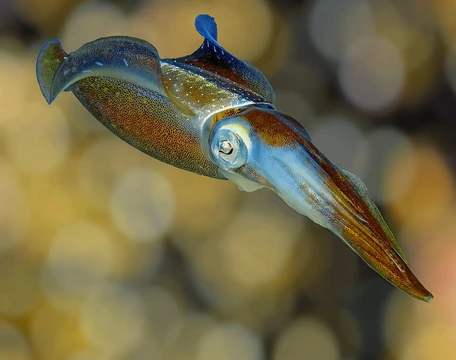
Ascarosepion mestus
Red cuttlefish endemic to Australia's east coast.

Ascarosepion mestus, commonly known as the reaper cuttlefish or red cuttlefish, is a species of cuttlefish native to the southwestern Pacific Ocean. It is notable as the type species of the genus Ascarosepion, which was revived in 2023 using a specimen of this species.
Quick Facts
- Genus
- Ascarosepion
- Species
- mestus
Facts from the source article.
Lore & Background
Ascarosepion mestus exhibits sexual dimorphism, with females growing to a mantle length of 124 mm while males do not exceed 77 mm. When undisturbed, it is typically recognized by its red colouration and two dark spots on the posterior of the animal. It can see contrast between stripes in what is called the polarizing drum. The species lives at depths up to 22 m in a tropical climate, typically on rocky reefs and under ledges. It is endemic to Australia, ranging along the east coast from northern Queensland to Jervis Bay in New South Wales. Reports from China and Vietnam are now known to be misidentifications.
Reader's Guide
Ascarosepion mestus is significant as the type species of the genus Ascarosepion, which was revived in 2023. The type specimen was collected off the Australian coast and is deposited at The Natural History Museum in London. The species is commonly referred to as the red cuttlefish and is endemic to Australia. It shares typical cuttlefish anatomy, including feeding tentacles and a cuttlebone, and uses jet propulsion for movement. Its anti-predator behaviours include camouflage via chromatophores and papillae, as well as burying itself under sand. Common predators include bluefish, summer flounder, and black seabass; its prey includes shrimp, crab, and young fish. Mating involves the male inserting a hectocotylus into the female's mantle cavity, and females attach eggs to hard surfaces. After spawning, adults usually die shortly after. Ocean acidification from increasing carbon dioxide is a potential threat, as it may impair buoyancy regulation, but the species is currently considered of least concern.
More in Reef Cephalopods, Part 2 1-24
Spotted an error? Know more?
Reader corrections go straight into our review queue. Suggest an edit · How this site is sourced