Apophlaea
Endemic New Zealand red algae with symbiotic fungi and desiccation resistance.

Apophlaea is a genus of thalloid algae endemic to New Zealand, found in the high intertidal zone on New Zealand's coasts. It is notable for its symbiotic relationship with certain fungi and its resistance to both UV radiation and desiccation, allowing it to thrive in intertidal settings. Despite its unusual morphology, molecular systematics, along with its zoned tetrasporangia borne in conceptacles with a single opening, place it within the Hildenbrandiales.
Quick Facts
- Taxon
- Apophlaea
Facts from the source article.
Lore & Background
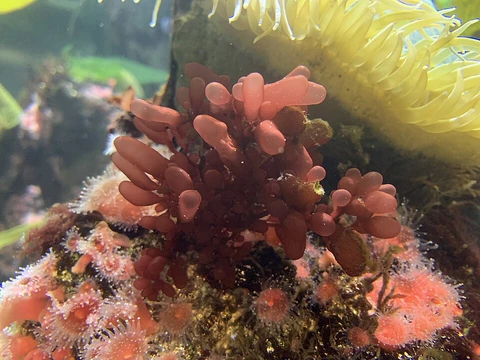
Apophlaea species take a crustose form but also contain upright, branching frond-like protrusions that reach 5–8 cm in height. Specimens can reach around 15 cm in size. The algae reproduce by means of conceptacles and produce tetraspores. Secondary pit connections are present in the organisms. The genus is notable for its symbiotic relationship with certain fungi, though the article does not specify the fungal partners. Apophlaea is resistant to both UV radiation and desiccation, enabling it to thrive in the high intertidal zone; it can resume almost full photosynthesis just minutes after losing 95% of its tissue water.
Reader's Guide
Apophlaea holds significance as a genus endemic to New Zealand, restricted to the high intertidal zone of its coasts. Its placement within the Hildenbrandiales is supported by molecular systematics and the presence of zoned tetrasporangia borne in conceptacles with a single opening, despite its unusual morphology. The genus is notable for its symbiotic relationship with certain fungi, a feature that distinguishes it among red algae. Its extreme resistance to UV radiation and desiccation, including the ability to resume nearly full photosynthesis within minutes after losing 95% of tissue water, highlights its adaptation to harsh intertidal environments. The three recognized species—Apophlaea darchinoae, Apophlaea lyallii, and Apophlaea sinclairii—were described by various authors, with the most recent species described in 2022. The genus contributes to understanding of intertidal ecology and algal-fungal symbioses.
Did You Know?
- Apophlaea is endemic to New Zealand and found only in the high intertidal zone.
- The genus has a symbiotic relationship with certain fungi.
- Apophlaea reproduces by means of conceptacles and produces tetraspores.
Frequently Asked Questions
Who is Apophlaea?
Apophlaea is a small genus of thalloid red algae found exclusively along New Zealand's coastlines. It comprises three recognized species: A. darchinoae, A. lyallii, and A. sinclairii.
What are Apophlaea's powers or special abilities?
This genus tolerates intense UV radiation and prolonged drying, letting it persist in the exposed high intertidal zone where most algae would perish. It also maintains a symbiotic partnership with certain fungi, a trait that distinguishes it from the majority of red algae.
Where does Apophlaea live?
Apophlaea is strictly endemic to New Zealand and is restricted to the high intertidal zone on the country's coasts. No populations are known from any other region in the world.
How big does Apophlaea grow?
The thallus reaches roughly 15 cm at its maximum, with an upright protrusion that stands about 5 to 8 cm above the rock surface.
Why is Apophlaea important to fans of red algae?
Despite its unusual thalloid morphology, molecular systematics together with its zoned tetrasporangia housed in single-opening conceptacles firmly place it within the order Hildenbrandiales. Its fungal symbiosis and extreme desiccation tolerance make it a standout example of ecological adaptation in intertidal red algae.
More in Red Macroalgae and Coralline Algae 1-24
Spotted an error? Know more?
Reader corrections go straight into our review queue. Suggest an edit · How this site is sourced