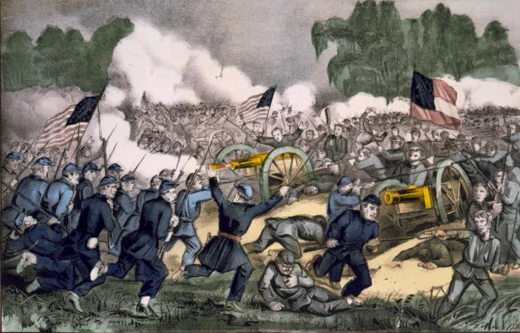
Whiskey Rebellion
Violent tax protest in the early United States, 1791–1794.

Wikipedia / Wikimedia Commons
The Whiskey Rebellion (also known as the Whiskey Insurrection) was a violent tax protest in the United States beginning in 1791 and ending in 1794 during the presidency of George Washington. The protest was against the so-called 'whiskey tax,' the first tax imposed on a domestic product by the newly formed federal government, which was intended to generate revenue to pay the war debt incurred during the American Revolutionary War. Farmers of the western frontier, who were accustomed to distilling their surplus grain into whiskey, resisted the tax, using violence and intimidation to prevent federal officials from collecting it.
Quick Facts
- Conflict
- Whiskey Rebellion
- Date
- 1791–1794
- Location
- Primarily Western Pennsylvania
- Result
- Government victory
Facts from the source article.
Lore & Background
The whiskey tax became law in 1791, and was intended to generate revenue to pay the war debt incurred during the American Revolutionary War. Farmers of the western frontier were accustomed to distilling their surplus rye, barley, wheat, corn, or fermented grain mixtures to make whiskey. These farmers resisted the tax. Throughout western Pennsylvania counties, protesters used violence and intimidation to prevent federal officials from collecting the tax. Resistance came to a climax in July 1794, when a US marshal arrived in western Pennsylvania to serve writs to distillers who had not paid the excise. The alarm was raised, and more than 500 armed men attacked the fortified home of tax inspector John Neville.
Reader's Guide
The Whiskey Rebellion demonstrated that the new national government had the will and ability to suppress violent resistance to its laws, though the whiskey excise remained difficult to collect. Washington responded by sending peace commissioners to western Pennsylvania to negotiate with the rebels, while at the same time calling on governors to send a militia force to enforce the tax. Washington himself rode at the head of an army to suppress the insurgency, with 13,000 militiamen provided by the governors of Virginia, Maryland, New Jersey, and Pennsylvania. The leaders of the rebels all fled before the arrival of the army, and there was no confrontation. About 150 men were arrested, but only 20 held for trial in Philadelphia, and only two were convicted (eventually pardoned). The events contributed to the formation of political parties in the United States, a process already under way. The whiskey tax was repealed in 1802 during the Jefferson administration.
Did You Know?
- Washington rode at the head of an army of 13,000 militiamen to suppress the insurgency.
- Only two men were convicted in the rebellion, and both were eventually pardoned.
More in Rebellions against the United States 1-23
Spotted an error? Know more?
Reader corrections go straight into our review queue. Suggest an edit · How this site is sourced