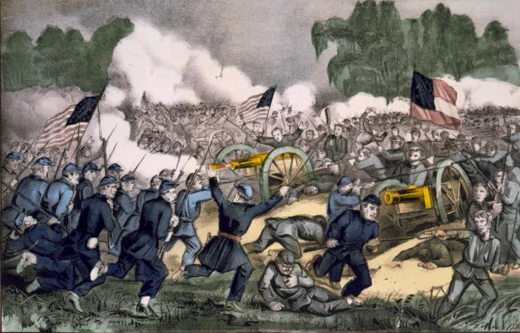
Crazy Snake Rebellion
1909 conflict over allotment and alleged theft of smoked meat.

Wikipedia / Wikimedia Commons
The Crazy Snake Rebellion—also called Crazy Snake's War—took place in 1901 and involved Muscogee traditionalists resisting U.S. allotment policies. It is not the same as the 1909 'Smoked Meat Rebellion,' which was a separate conflict between a group of African Americans and a posse over the alleged theft of a piece of smoked meat. The whole affair consisted of just two small skirmishes, and the first one was actually a fight between a group of marginalized African Americans and a posse that had formed to punish the alleged theft of a piece of smoked meat.
Chitto Harjo’s name was loosely translated into English as "Crazy Snake." He led the Four Mothers Society among the Muscogee and strongly opposed allotment. In 1893, Congress created the Dawes Commission to push for allotment of Muscogee, Choctaw, Chickasaw, and Cherokee lands. Congress authorized land surveys in 1895, and in 1896 passed a law to create tribal rolls and break up the land. The Muscogee (Creek) Nation’s government tried to negotiate the best terms possible, but in 1898 the Muscogee held an election where allotment was rejected. In response, Congress passed the Curtis Act, which dissolved the governments of the Muscogee and neighboring tribes.
In 1900, a meeting at Chitto Harjo’s ceremonial grounds near Henryetta declared him the principal chief of the Muscogee. Those gathered believed that Pleasant Porter’s methods of introducing allotment violated the 1867 Muscogee Constitution. The meeting also elected a second chief, a bicameral legislature, and established a court. Because the U.S. government did not recognize the Muscogee Nation as existing, Harjo’s election had no legal standing under American law. His followers formed a police force called the Lighthorse to enforce their own laws. Some claimed the Lighthorse whipped men who accepted allotment, though other writers dispute this.
The Lighthorse’s anti-allotment actions led to the 8th Cavalry being called out, and several of Harjo’s followers were arrested. In 1907, Oklahoma introduced Jim Crow laws similar to those in Arkansas and Texas, which restricted where African Americans could live. A group of African Americans—possibly Muscogee Freedmen, descendants of slaves once held by the Muscogee—gathered at Harjo’s ceremonial grounds.
Quick Facts
- Conflict
- Crazy Snake Rebellion
- Part Of
- the American Indian Wars
- Date
- March 1909
- Location
- Oklahoma
- Result
- United States victory
Facts from the source article.
Lore & Background
Crazy Snake was the very loose English translation of Chitto Harjo's name. Chitto Harjo was a leader of the Four Mothers Society among the Muscogee and an outspoken opponent of allotment. In 1893 Congress formed the Dawes Commission to seek to have the lands of the Muscogee, Choctaw, Chickasaw and Cherokee allotted. In 1895 Congress authorized surveying of the land, and in 1896 they passed a law creating tribal rolls and breaking up the land. The Muscogee (Creek) Nation's government decided to negotiate the terms the best they could, but in 1898 the Muscogee held an election at which allotment was voted down. In response to this, Congress passed the Curtis Act, which dissolved the governments of the Muscogee and neighboring tribes. Chitto Harjo died near Henryetta, Oklahoma, in Muscogee territory.
Reader's Guide
The Crazy Snake Rebellion is significant as a late armed resistance to the U.S. government's allotment policy, which dissolved tribal governments and broke up communal lands. The conflict highlights the intersection of Native American and African American struggles in Oklahoma, as African Americans, some of whom were Muscogee Freedmen, allied with Chitto Harjo's traditionalist movement. The rebellion's small scale—only two skirmishes—belies its symbolic importance: it represented a last stand against forced assimilation and the loss of sovereignty. The first skirmish, sparked by an alleged theft of smoked meat, involved a posse arresting 42 African Americans and killing one, reflecting racial tensions under newly introduced Jim Crow laws. The second skirmish resulted in the deaths of two posse members and the wounding of Harjo, leading to a militia occupation and vigilante violence. Harjo was never captured, likely dying in 1911. The rebellion underscores the complexity of post-allotment Oklahoma, where Native, African American, and white communities clashed over land, law, and identity.
Did You Know?
- The rebellion consisted of only two minor skirmishes, the first sparked by the alleged theft of a piece of smoked meat.
- Chitto Harjo's name was very loosely translated as 'Crazy Snake'.
- A group of African Americans who may have been 'Muscogee Freedmen' gathered at Harjo's ceremonial grounds.
- Harjo was never captured; he likely died in April 1911, either in Choctaw territory or in Mexico.
The Allotment Struggle and Harjo's Shadow Government
Chitto Harjo, whose name loosely translates to "Crazy Snake" in English, emerged as the most prominent voice against the federal allotment policy that sought to dismantle the communal lands of the Muscogee, Choctaw, Chickasaw, and Cherokee nations. After Congress established the Dawes Commission in 1893 and subsequently authorized land surveys and the creation of tribal rolls, the Muscogee (Creek) Nation attempted to negotiate the best possible terms. When a 1898 tribal election rejected allotment outright, Congress retaliated with the Curtis Act, which dissolved the governments of the Muscogee and neighboring tribes. In defiance, a 1900 gathering at Harjo's ceremonial grounds near Henryetta declared him principal chief, established a bicameral legislature and a court, and organized a group called the Lighthorse to enforce what they considered legitimate law. Though the U.S. government did not recognize this government's legality, the Lighthorse's activities eventually drew the 8th Cavalry and led to the arrest of several of Harjo's followers.
The Two Skirmishes of March 1909
The conflict known as the Crazy Snake Rebellion consisted of just two minor armed encounters, both in March 1909. The first erupted during the annual gathering of Muscogee traditionalists after an allegation surfaced that one of them or an African American ally had stolen a piece of smoked meat from a local white farmer. A sheriff's deputy arrived to make an arrest, but the African Americans present drove him away, reasoning that as auxiliaries of the Muscogee government they did not acknowledge the county's jurisdiction and that neither a Black nor a Muscogee person would receive a fair trial. The deputy assembled a posse, and in the resulting struggle one African-American man was killed and forty-two others were taken into custody. The second confrontation came on March 27, when a posse from McIntosh County moved to arrest Harjo. He was sheltering in a cabin near Hickory Ground with a few other men. As the posse closed in at sundown, one of his bodyguards fired from a window, killing two members of the group. Return fire struck Harjo in the leg above the knee. The Muscogee escaped into the night, and the deaths sparked a furor in Checotah and Henryetta.
Racial Tensions and the Freedmen Question
The racial dimensions of the Crazy Snake Rebellion cannot be separated from the broader Jim Crow landscape of early twentieth-century Oklahoma. In 1907, the newly admitted state enacted segregation laws modeled on those of neighboring Arkansas and Texas, imposing strict restrictions on where African Americans could live. Many of the Black residents who gathered at Old Hickory—the site where Harjo and his associates operated their parallel Muscogee government—were likely Muscogee Freedmen, descendants of enslaved people who had been held by the Muscogee. By July 1908, a substantial number of African Americans had congregated at the ceremonial grounds, forming a community that served as auxiliaries to the traditionalist government. When the first skirmish broke over the stolen smoked meat, the African Americans' resistance was rooted not only in their refusal to submit to county authority they did not recognize but also in a well-founded fear that any Black or Muscogee person brought before local courts would face not a fair trial but a high probability of lynching. The incident, at times characterized as a war between the Muscogee and American settlers, was in its first engagement essentially a struggle between marginalized African Americans and a white posse.
Aftermath, Militia Response, and Harjo's Disappearance
Following the second skirmish, the killing of two posse members created a wave of public anger in Checotah and Henryetta. Vigilante groups took to the roads around Hickory Ground, pillaging the farms of Harjo's followers in a desperate search for the principal chief himself. Governor Charles N. Haskell responded by calling out the state militia, and the First Regiment of the Oklahoma National Guard arrived at Hickory Ground with two hundred men, quickly restoring order to the area. A larger posse that returned to Harjo's cabin found only a woman inside; they fired into the structure and set it ablaze, and she fled into the surrounding woods. Despite the intensity of the pursuit, Harjo was never captured. He likely died in April 1911, either in Choctaw territory or in Mexico, ending the life of a man who had become the symbol of Muscogee resistance to federal land policy. The Crazy Snake Rebellion—sometimes called the Smoked Meat Rebellion or Crazy Snake's War—remains distinct from an earlier, bloodless conflict in 1901 that involved many of the same individuals but resulted in no violence.
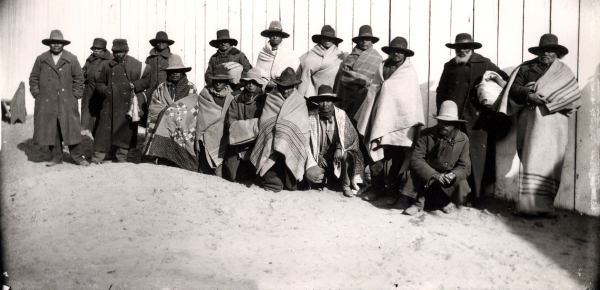
Gallery
Frequently Asked Questions
What is the Crazy Snake Rebellion?
The Crazy Snake Rebellion, also called Crazy Snake's War, was a 1901 standoff in which Muscogee traditionalists pushed back against U.S. allotment policies. The entire conflict consisted of just two brief skirmishes before federal forces moved in.
Who led the Crazy Snake Rebellion?
Chitto Harjo, widely known as Crazy Snake, headed the group of Muscogee traditionalists who resisted the allotment measures. He and his followers faced the U.S. 8th Cavalry and U.S. Marshals during the clashes.
Where and when did the Crazy Snake Rebellion take place?
The two skirmishes occurred in 1901 in the area around Henryetta and Hickory Ground, Oklahoma. No other battles or sustained campaigns were part of the conflict.
How does the Crazy Snake Rebellion end?
The rebellion concluded with the arrest of Chitto Harjo and his followers by federal authorities. There was no final decisive battle; the two short skirmishes were followed directly by the capture of the traditionalist group.
Is the Crazy Snake Rebellion the same event as the Smoked Meat Rebellion?
No, they are distinct conflicts. The Crazy Snake Rebellion was a 1901 Muscogee resistance to allotment, whereas the 1909 Smoked Meat Rebellion was a separate dispute involving a different group of people and an alleged theft of a piece of smoked meat.
More in Rebellions against the United States 1-23
Spotted an error? Know more?
Reader corrections go straight into our review queue. Suggest an edit · How this site is sourced