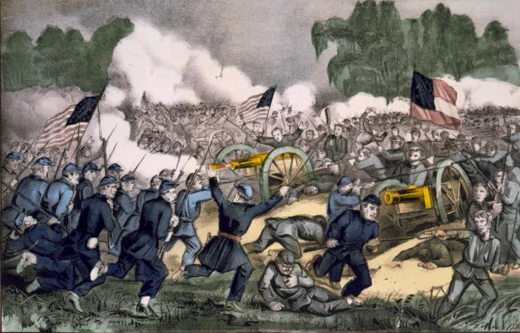
Fries's Rebellion
Pennsylvania Dutch farmers' tax revolt against the 1798 Window Tax.

Wikipedia / Wikimedia Commons
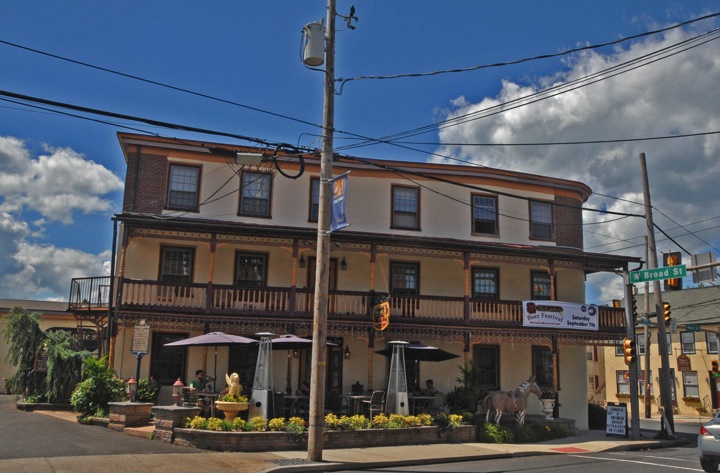
Fries's Rebellion—known also as the House Tax Rebellion, the Home Tax Rebellion, and, in Pennsylvania German, the Heesses-Wasser Uffschtand—was a tax revolt led by Pennsylvania Dutch farmers in March 1799, with trials and pardons extending into 1800. It was the third major tax-related uprising in 18th-century America, after Shays's Rebellion (1786–87 in Massachusetts) and the Whiskey Rebellion (1794 in western Pennsylvania). A historical marker was placed in Quakertown, Pennsylvania, in 2003 to commemorate the rebellion, which began there.
**Background** In 1798, as the Quasi-War with France threatened to intensify, Congress expanded the army and navy. To fund this, it passed $2 million in new taxes on real estate and slaves in July 1798, apportioned among the states as the Constitution required. This was the first—and only—federal tax of its kind. Around the same time, Congress enacted the Alien and Sedition Acts, which criminalized dissent and strengthened executive power under President John Adams.
**Beginning** The direct tax of 1798 targeted dwelling-houses, land, and slaves; Pennsylvania’s share was $237,000. Since the state had few slaves, the tax fell on houses and land, with home values determined by window count and size. Many locals called it the Window Tax, though it was officially a tax on dwelling-houses, land, and slaves. The intrusive process—assessors riding around counting windows—sparked fierce opposition, and many refused to pay, arguing the tax wasn’t levied proportionally to population. Pennsylvania German farmers were also angered that the assessors were mostly Quakers and Moravians, groups that hadn’t fought in the American Revolution, while most farmers had.
John Fries, a Pennsylvania auctioneer, began organizing meetings in February 1799 to plan a collective response. As an itinerant auctioneer, he knew the German-American communities well, especially in the three counties where opposition was strongest: Bucks, Northampton, and Montgomery. In Milford township, assessors couldn’t complete their work due to intimidation. At a government meeting meant to explain the tax and calm tensions, protesters waved liberty flags—some in Continental Army uniforms—shouted down officials, and turned the event into a protest rally.
Assessors initially tried to continue in Milford. Fries personally warned them to stop, but they ignored him.
Quick Facts
- Location
- Pennsylvania, United States
- Date
- 1799–1800
- Outcome
- Rebellion suppressed
Facts from the source article.
Lore & Background
The rebellion began after Congress, facing the Quasi-War with France, imposed a $2 million direct tax on real estate and slaves in July 1798. Pennsylvania's share was $237,000. Since few slaves existed in Pennsylvania, the tax fell on dwelling-houses and land, with house values determined by window count, leading to the common name Window Tax. Assessors, many of whom were Quakers and Moravians, angered German farmers who had served in the Revolution. John Fries, an itinerant auctioneer, organized meetings starting in February 1799 to coordinate resistance.
Reader's Guide
Fries's Rebellion represents the last of three major tax revolts in 18th-century America, highlighting ongoing tensions over federal taxation and the power of the national government. The rebellion's suppression by President John Adams, who called out federal troops and militia, and the subsequent treason trials of Fries and others, underscored the Federalist response to dissent. Adams's pardon of the rebels, prompted by the narrow constitutional definition of treason and his characterization of them as 'obscure, miserable Germans,' reflected both legal and political considerations. Historians agree the Federalists overreacted and mishandled a small episode. The long-term impact was the alienation of German-American communities from the Federalist Party, shaping political alignments in Pennsylvania. The rebellion also demonstrated the limits of federal authority in the early republic and the persistence of local resistance to centralized taxation.
Did You Know?
- The rebellion is also called the Heesses-Wasser Uffschtand in Pennsylvania German.
- It was the first and only federal direct tax on real estate and slaves in U.S. history.
- President John Adams issued a general amnesty for everyone involved on May 21, 1800.
- The tax assessors were largely Quakers and Moravians, who had not fought in the American Revolution.
The Tax That Sparked Outrage
The Quasi-War with France in 1798 pushed Congress to build up military forces, and to fund that expansion, lawmakers imposed what remains the only direct federal tax in American history. The two-million-dollar levy fell on real estate and enslaved persons, with Pennsylvania owing roughly $237,000. Because the state held very few enslaved people, the burden landed almost entirely on homes and land, with house values gauged by counting windows and their size. To many rural residents this became simply the Window Tax. The process felt invasive: assessors rode through communities tallying openings, and many farmers argued the apportionment violated constitutional proportionality. Adding to the resentment, the men carrying out the assessments were predominantly Quakers and Moravians—groups the German-American farmers felt had not fought in the Revolution while they had. The Alien and Sedition Acts, passed around the same period, further inflamed suspicions that the Adams administration was suppressing dissent and concentrating executive power.
From Meetings to Marches
John Fries, a traveling auctioneer who knew the German-American communities of southeastern Pennsylvania well, began convening meetings in February 1799 to coordinate a collective response. The opposition concentrated in Bucks, Northampton, and Montgomery counties, areas densely settled by German immigrants. In Milford township, assessors were intimidated into abandoning their work after Fries personally warned them and then led a small group that harassed them further. When government officials attempted to hold an explanatory meeting to defuse tensions, protesters waving liberty flags—some wearing Continental Army uniforms—shouted them down and turned the gathering into a protest rally. In early March, a local militia company joined a growing band of irregulars, marching with drum and fife to Quakertown. There, roughly a hundred men captured several assessors, released them with a stern warning not to return, and told them to report what had happened to the government.
Federal Crackdown and Treason Trials
The resistance spread beyond its original counties. In Penn, an appointed assessor resigned under public threats; in Hamilton and Northampton townships, assessors begged to step down but no replacements could be found. Federal warrants followed, and the U.S. Marshal began making arrests in Northampton. At Macungie, then called Millerstown, a crowd blocked an arrest, and the marshal returned to Bethlehem with the prisoners he had managed to collect. Two independent rebel groups then marched on Bethlehem and, without violence, freed the detained tax resisters. President Adams responded by deploying federal troops and local militia into the rebellious counties, where wholesale arrests followed; John Fries himself was captured. Thirty men faced federal court. Fries, Frederick Heaney, and John German were tried for treason amid a Federalist-stirred frenzy and sentenced to hang. Adams ultimately pardoned them, citing the narrow constitutional definition of treason, and on May 21, 1800, issued a general amnesty for all involved.
Legacy and Historical Memory
Historians broadly agree that the Federalist response was a severe overreaction to what was, in scale, a small episode of rural tax resistance. The political fallout, however, proved lasting: German-American communities in southeastern Pennsylvania turned decisively away from the Federalist Party in the years that followed. In his own words, Adams later dismissed the rebels as obscure, miserable Germans who were being manipulated by great men in the opposition, a characterization that underscored the cultural and linguistic divide at the heart of the conflict. Fries's Rebellion stands as the third of three major tax-related uprisings in the 18th-century United States, following Shays's Rebellion in Massachusetts in 1786–87 and the Whiskey Rebellion in western Pennsylvania in 1794. In 2003, the state erected a historical marker in Quakertown, the township where the conflict first erupted, ensuring that the episode—known in Pennsylvania German as the Heesses-Wasser Uffschtand—remains part of the region's public memory.
Gallery

Frequently Asked Questions
What was Fries's Rebellion?
Fries's Rebellion was an armed tax protest by Pennsylvania Dutch farmers that erupted in March 1799 across Bucks, Northampton, and Montgomery counties. It is also referred to as the House Tax Rebellion or, in Pennsylvania German, the Heesses-Wasser Uffschtand.
What caused Fries's Rebellion?
The uprising was triggered by a 1798 federal statute that imposed direct taxes on dwelling-houses, land, and enslaved people, a levy the farming communities found intolerable. This placed it in a line of three major tax revolts in the young republic, following Shays's Rebellion and the Whiskey Rebellion.
Who led Fries's Rebellion?
John Fries served as the principal organizer and public face of the revolt among the Pennsylvania Dutch farming communities. The movement was broadly a grassroots uprising by farmers in eastern Pennsylvania rather than a single-commander military campaign.
How did Fries's Rebellion end?
Federal authorities suppressed the armed resistance, and Fries along with other ringleaders were tried and convicted. President John Adams subsequently issued pardons to the convicted rebels, with the legal aftermath stretching into 1800.
Why is Fries's Rebellion historically significant?
It ranks as the third major tax-related uprising in 18th-century America and cemented a lasting German-American rejection of the Federalist Party. A commemorative historical marker was installed in Quakertown, Pennsylvania, in 2003 to mark the site where the revolt first broke out.
More in Rebellions against the United States 1-23
Spotted an error? Know more?
Reader corrections go straight into our review queue. Suggest an edit · How this site is sourced