Moro Rebellion
Armed conflict between Moro people and US military in southern Philippines.

Wikipedia / Wikimedia Commons
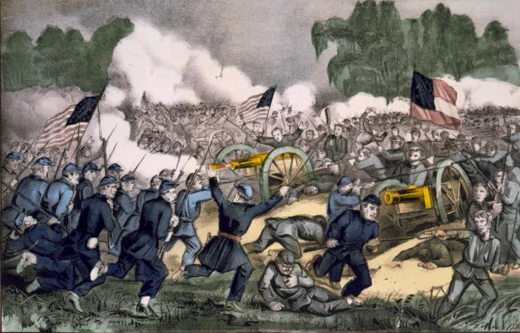
The Moro Rebellion (1899–1913) was a conflict between the United States military and the Moro people, occurring within the broader Philippine–American War. It began after the US had defeated the First Philippine Republic, and involved Washington’s effort to assert control over the Muslim-ruled territories of Mindanao, Jolo, and the Sulu Archipelago.
For 400 years, the Moros had fought off foreign powers—Spanish, American, Japanese, and Filipino—a struggle that modern Moro leaders describe as a continuous “national liberation movement” for the Bangsamoro (Moro Nation). This long history of resistance, especially against the Spanish, fostered a “culture of jihad” among the Moros. The Spanish had never fully conquered the region, holding only a few coastal forts and launching occasional raids inland. In 1876, they occupied the abandoned city of Jolo, the seat of the Sultan of Sulu. A treaty signed in 1878 between Spain and the Sultan contained a crucial translation error: the Spanish version claimed full sovereignty over the Sulu archipelago, while the Tausug version described only a protectorate. Despite this nominal claim, Spain ceded the Moro territories to the United States in the Treaty of Paris, ending the Spanish–American War.
After the US occupied the northern Philippines in 1899, Spanish forces in the south withdrew to garrisons at Zamboanga and Jolo. American troops took over these posts in May and December of that year. The US initially informed the Moros it would continue the old Spanish protectorate, but the Sultan of Sulu rejected this and demanded a new agreement. The resulting Kiram–Bates Treaty guaranteed the Sultanate autonomy in internal affairs if it stayed out of the Philippine–American War. This allowed Brigadier General John C. Bates to focus on suppressing Filipino resistance in Luzon. Once the Americans defeated the northern Filipinos, the US government abrogated the treaty in 1904, and the US invaded Moro territory.
In the southern Philippines, Philippine Army forces under General Nicolas Capistrano fought the Americans until Capistrano surrendered in March 1901, shortly after President Emilio Aguinaldo’s capture in Luzon. This freed up US resources for the south. Brigadier General George Whitefield Davis, appointed commander of the Department of Mindanao-Jolo in August 1901, pursued a conciliatory policy toward the Moros.
Quick Facts
- Conflict
- Moro Rebellion
- Part Of
- the post-war insurgency phase of the Philippine–American War
- Date
- May 3, 1902 – June 15, 1913
- Location
- Mindanao and Sulu Archipelago (today part of southern Philippines)
- Territory
- Total annexation of the Philippine Islands / Formation of the Department of Mindanao and Sulu
Facts from the source article.
Lore & Background
The rebellion followed the US occupation of the northern Philippines in 1899. Spanish forces in the south disbanded and retreated to garrisons at Zamboanga and Jolo, which American forces took over in 1899. The US initially signed the Kiram–Bates Treaty with the Moro Sulu Sultanate, guaranteeing autonomy in internal affairs if they stayed out of the Philippine–American War. Once the Americans defeated the northern Filipinos, the treaty was abrogated by the US government in 1904, and the Americans invaded Moroland. Relations deteriorated in March 1902 after American soldiers were killed by Moros near Parang and Malabang. Major General Adna Chaffee issued a declaration citing the Treaty of Paris, but the Moros rejected it, as they considered Spain could not cede their land.
Reader's Guide
The Moro Rebellion represents a significant chapter in US colonial expansion and the long history of Moro resistance. The conflict arose from the US imposition of authority over Muslim states in the southern Philippines after the Spanish–American War, despite Spain's nominal claim to territories it had never fully conquered. The Kiram–Bates Treaty's betrayal and the subsequent military campaigns highlight the tensions between diplomatic agreements and colonial ambitions. The rebellion also illustrates the cultural misunderstandings and violent clashes that occurred as American forces, some veterans of the Indian Wars, applied similar tactics in the Philippines. The Moros' 'culture of jihad' and their 400-year struggle against foreign rule continued beyond the rebellion, evolving into the current war for independence against the Philippine state. The conflict's legacy includes the enduring Moro national liberation movement and the complex relationship between the Bangsamoro and successive colonial and national governments.
Did You Know?
- The Kiram–Bates Treaty guaranteed the Moro Sulu Sultanate autonomy in internal affairs, but was later canceled by Brigadier General John C. Bates after the US defeated northern Filipinos.
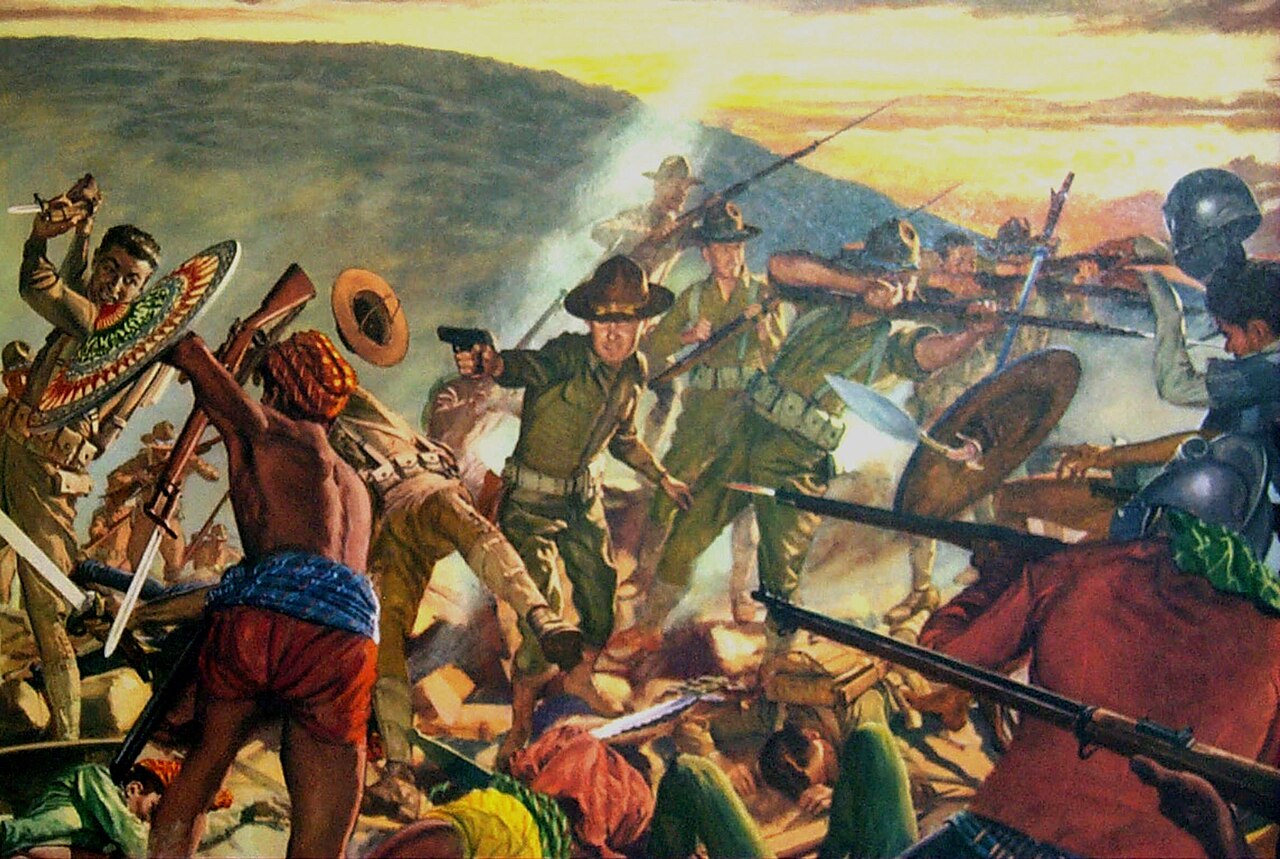
- The Battle of Pandapatan, also known as the Battle of Bayang, occurred on May 2, 1902, and resulted in 18 American casualties and a general slaughter of Moro defenders.
- Captain John J. Pershing established friendly relations with Amai-Manabilang, the retired Sultan of Madaya, which helped secure American standing around Lake Lanao.
- President Theodore Roosevelt's July 4, 1902 proclamation ending the Philippine Insurrection explicitly excluded the Moro tribes.
Four Centuries of Defiance
The Moro people of the southern Philippines carried a legacy of armed resistance stretching back roughly four hundred years before the American conflict even began. Their struggle against Spanish colonizers, who were confined to a scattering of coastal forts and occasional punitive raids into the interior, forged what later Moro leaders would describe as a continuous "national liberation movement" for the Bangsamoro. A distinct "culture of jihad" crystallized among the population over those centuries of confrontation with Spanish invaders. Even when Spain finally occupied the abandoned city of Jolo in 1876 and signed a peace treaty with the Sultan of Sulu in 1878, the arrangement was muddled by translation errors: the Spanish text claimed full sovereignty over the Sulu archipelago, while the Tausug version described only a protectorate. This ambiguity would haunt later diplomatic claims, as Spain ceded these territories to the United States through the Treaty of Paris without ever having truly conquered the land it purported to transfer.
The Kiram-Bates Treaty and Its Collapse
When the United States signaled its intention to inherit Spain's colonial protectorate relationship with the Moro Sultanate, the Sulu Sultan flatly refused to accept a mere continuation of old arrangements and demanded fresh negotiations. The resulting Kiram-Bates Treaty offered the Sultanate a genuine guarantee of autonomy over its internal affairs and governance, conditional only on the Moros staying out of the ongoing Philippine-American War. For Brigadier General John C. Bates, the agreement served a critical strategic purpose: it freed his forces to concentrate on suppressing the Filipino resistance in Luzon. However, once the northern conflict was resolved and President Aguinaldo was captured, Bates unilaterally canceled the treaty. The Sultan was effectively betrayed, and American forces moved to invade Moroland, discarding the very autonomy they had pledged to protect. The episode stands as a stark example of how diplomatic instruments were wielded as temporary tactical tools rather than binding commitments in the American colonial project.
Two Faces of the American Garrison
The American military presence in Mindanao and Jolo was far from monolithic in its approach to the Moro population. After Brigadier General George Whitefield Davis assumed command of the Department of Mindanao-Jolo in August 1901, he instituted a deliberately conciliatory framework: troops received standing orders to purchase Moro produce whenever feasible, "heralds of amity" were dispatched ahead of any scouting party, and peaceful Moros were explicitly forbidden from being disarmed. Captain John J. Pershing, posted at the Iligan garrison, embodied this spirit by cultivating a personal alliance with Amai-Manabilang, the retired Sultan of Madaya, whose influence over the northern shore of Lake Lanao made him the single most consequential figure in that region. Yet this diplomatic current ran alongside a far more brutal undercurrent. Many officers who had served in the American Indian Wars carried with them a philosophy that "civilize 'em with a Krag" was the appropriate response, treating the Moros through the same lens they had applied to Native American peoples.
The March 1902 Ambushes and Chaffee's Ultimatum
The fragile coexistence between American garrisons and Moro communities shattered in the spring of 1902. On March 9, an unidentified assailant killed an American soldier outside the port of Parang; three days later, an 18-man cavalry detachment in the same area was ambushed, costing one life; and by March 30, another American was hacked to death near the port of Malabang. Some of these attacks involved juramentados, sworn warriors. Crucially, all incidents occurred south of Lake Lanao, outside the protective sphere of Amai-Manabilang's influence. Major General Adna Chaffee, the military governor, responded on April 13 with a declaration invoking the Treaty of Paris to assert American sovereignty over Mindanao and demanding the surrender of the killers and stolen government property. The Moros, who had never heard of the Treaty of Paris and held that Spain could not cede land it had never conquered, regarded the demand as arrogant and rejected it outright. American negotiators, meanwhile, remained oblivious to the complex web of internal Moro feuds that could turn one group's hostility into an attack on troops friendly with another.
Gallery
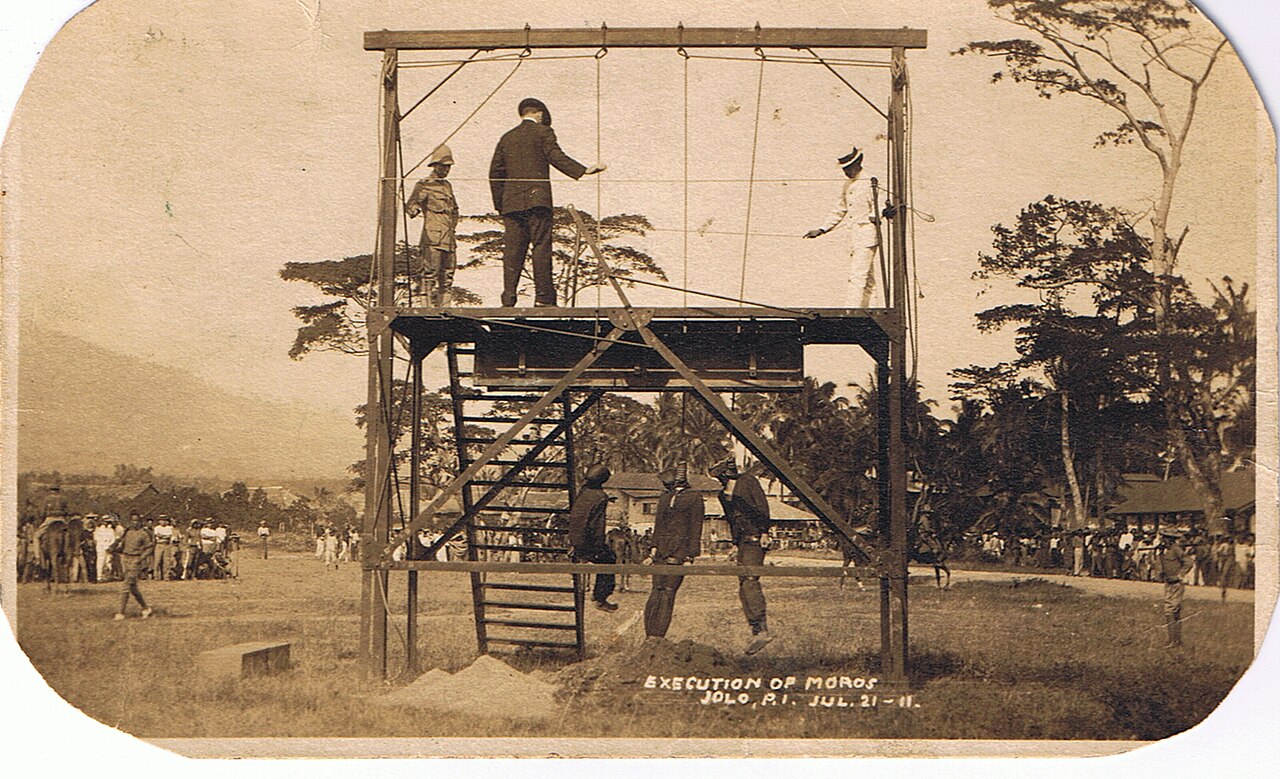
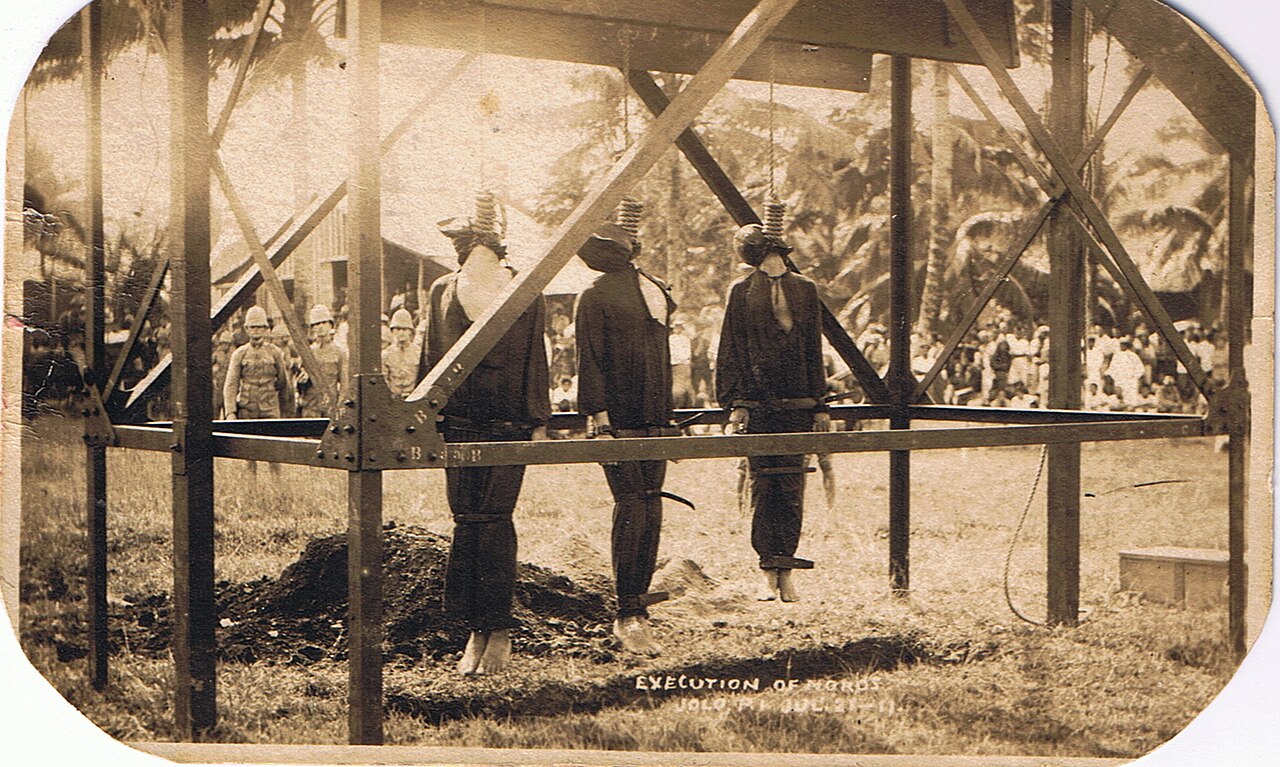
Frequently Asked Questions
What is the Moro Rebellion?
The Moro Rebellion was an armed conflict between the Moro people and the United States military, lasting from 1899 to 1913. It unfolded within the broader Philippine-American War as Washington sought to impose control over the Muslim-governed territories of the southern Philippines.
Where did the Moro Rebellion take place?
The fighting was centered in Mindanao, the island of Jolo, and the Sulu Archipelago. These areas had been under the rule of Muslim sultanates and were among the last major territories in the archipelago to resist American authority.
Who was the key American figure in the Moro Rebellion?
Captain John J. Pershing is the most prominent U.S. military figure associated with the campaign. He commanded American forces in the southern Philippines during the conflict and later rose to become a major general.
How did the Moro Rebellion end?
The armed phase of the conflict concluded around 1913 after the U.S. military secured administrative control over the region. Nevertheless, the Moro people's resistance to foreign rule persisted in various forms well into the twentieth century.
Why is the Moro Rebellion significant?
It stands as one of the longest sustained challenges to American military authority, spanning roughly fourteen years. Modern Moro leaders describe this struggle as part of a continuous national liberation movement for the Bangsamoro that stretches back through four centuries of resistance against Spanish, American, Japanese, and Filipino powers.
More in Rebellions against the United States 1-23
Spotted an error? Know more?
Reader corrections go straight into our review queue. Suggest an edit · How this site is sourced