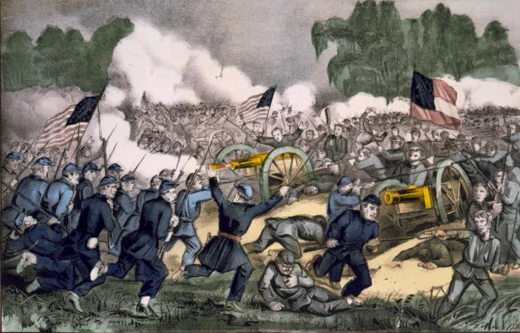
Green Corn Rebellion
Armed farmers protest the draft in 1917 Oklahoma

Wikipedia / Wikimedia Commons
In early August 1917, a group of armed farmers in rural Oklahoma launched a short-lived insurrection known as the Green Corn Rebellion. The name came from the rebels’ plan to live off the land by eating unripe corn as they marched. Their goal was to gather thousands of supporters along the way, reach Washington, D.C., protest the military draft, and pull the United States out of World War I—not to overthrow the federal government. Most of the participants were connected to the Working Class Union, a radical tenant farmers' organization, rather than the Socialist Party of America itself.
The uprising was betrayed by an informant. When the farmers met a well-armed posse of townsmen, gunfire broke out, leaving three people dead. In the aftermath, authorities arrested dozens of people. The Working Class Union faced severe repression, and while the Socialist Party suffered backlash due to its anti-war stance, it was not directly responsible for the rebellion. The event contributed to anti-radical sentiment, but nationwide crackdowns like the Palmer Raids were more directly tied to the Industrial Workers of the World's anti-war activities and the 1917 Espionage Act.
**Background**
On April 6, 1917, President Woodrow Wilson—who had just been reelected on the slogan “He Kept Us Out of War”—asked Congress for a declaration of war against Germany. Congress agreed by wide margins: 373–50 in the House and 82–6 in the Senate. To staff the military, the government passed a draft law on May 18, 1917, requiring all eligible young men to register on a single day, June 5. While there were isolated protests in cities, registration generally went smoothly, with most men accepting it with what one observer called “a calm resignation.”
On July 20, Secretary of War Newton D. Baker, blindfolded, drew numbers to select men for service. Anti-war activists continued to hold meetings and distribute pamphlets. The Socialist Party of America was a leading opponent; its April 1917 convention declared “unalterable opposition” to the war and urged workers worldwide to “refuse support to the governments in their wars.”
**Situation in Oklahoma**
Oklahoma had only become a state in November 1907, but it already had a strong radical tradition. Impoverished tenant farmers in the southeast had embraced the early Socialist Party’s millenarian promises.
Quick Facts
- Conflict
- Green Corn Rebellion
- Part Of
- the American Theater of World War I and the Revolutions of 1917–1923
- Date
- August 2–3, 1917
- Location
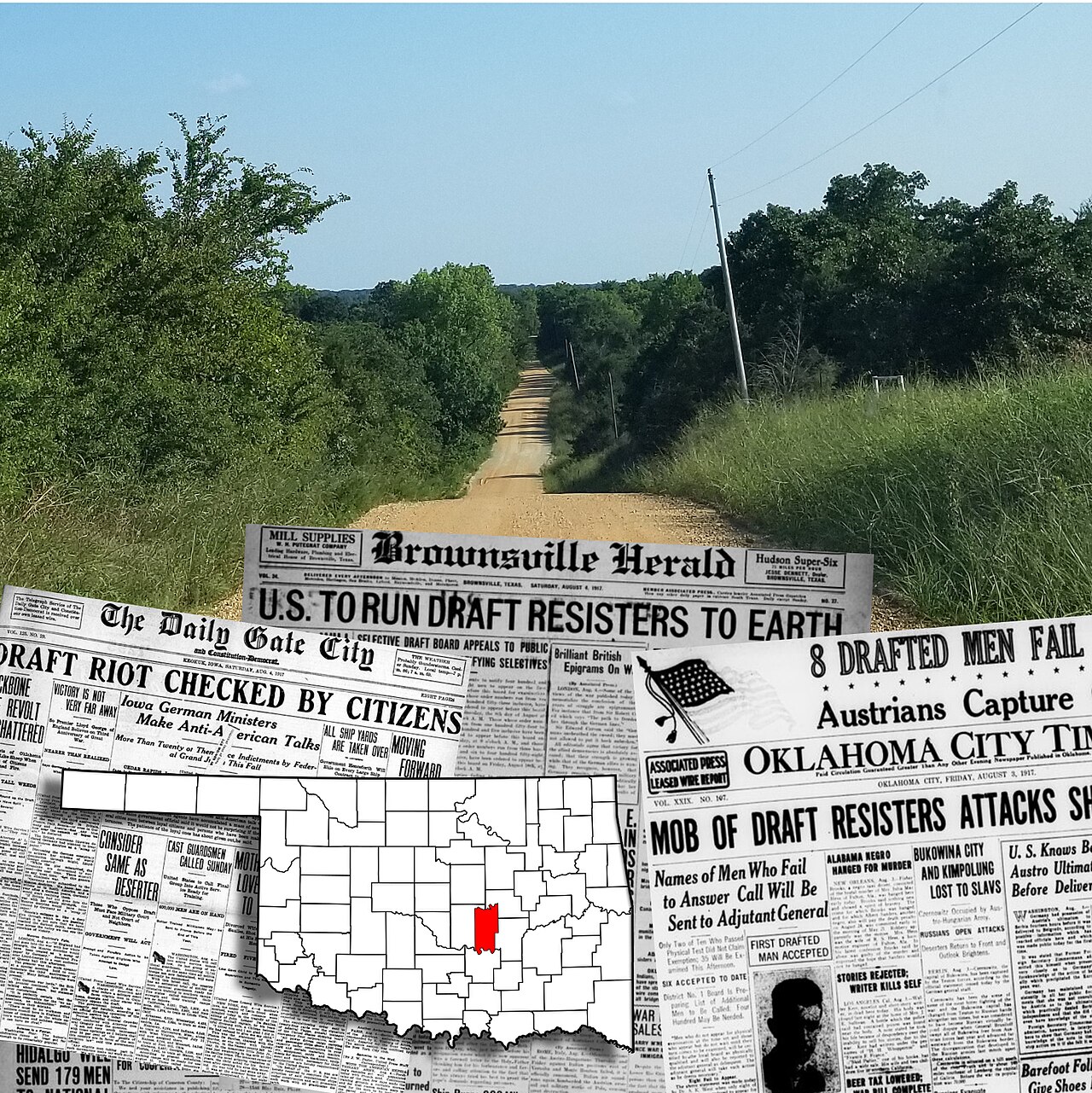
- Seminole County, Oklahoma
- Result
- United States government victory / Rebellion contributed to outbreak of First Red Scare
Facts from the source article.
Lore & Background
The rebellion grew out of deep discontent among tenant farmers in southeastern Oklahoma, many of whom were young, impoverished, and facing conscription after the U.S. entered World War I in April 1917. The Working Class Union, a radical tenant farmers' organization claiming up to 35,000 members statewide, agitated against the draft. On August 2, 1917, a sheriff and deputy were ambushed near the Little River, followed by raiding parties cutting telephone lines and burning railroad bridges. The next day, an armed gathering of 800 to 1,000 rebels assembled near the South Canadian River, planning to march east, live off the land, and ultimately protest the draft in Washington, D.C., not to overthrow the federal government.
Reader's Guide
The Green Corn Rebellion is significant as a dramatic instance of rural resistance to federal authority during World War I. Though quickly suppressed, it exposed the deep class and regional tensions in Oklahoma, where tenant farmers felt exploited by a credit system and threatened by the draft. The rebellion discredited the Socialist Party of America in the public eye and became a pretext for national reprisals against the Industrial Workers of the World and the Socialist Party. Historians note that no documents written by WCU members survive, so the rebels' mentality remains speculative, but the event underscores the intersection of economic hardship, anti-war sentiment, and radical politics in early 20th-century America.
Did You Know?
- The name 'Green Corn Rebellion' came from the rebels' plan to eat green corn for sustenance as they marched.
- The rebellion was betrayed by an informer, leading to a well-armed posse of townsmen meeting the rebels.
- Three people were killed in the exchange of shots between rebels and the posse.
- The Muscogee Creek Green Corn Ceremony ended on August 3, the same day as the main gathering of rebels.
Gallery

Frequently Asked Questions
What was the Green Corn Rebellion?
It was a two-day armed uprising by roughly 800 to 1,000 tenant farmers in rural Oklahoma in early August 1917. The group set out marching toward Washington, D.C., intending to rally thousands of supporters and force the U.S. to end its participation in World War I and stop the military draft.
Why is it called the Green Corn Rebellion?
The name comes from the rebels' practical plan to eat unripe corn picked straight from local fields to feed themselves during their march. It was a survival strategy, not a symbolic name.
When and where did the Green Corn Rebellion happen?
The insurrection kicked off on August 2, 1917, and was put down by August 3, unfolding across Pontotoc, Seminole, and Hughes Counties in central Oklahoma.
What happened to the rebels after the uprising?
Federal and state forces quickly suppressed the march, killing three people and arresting scores of participants. The Working Class Union network in the region was effectively dismantled in the aftermath.
Were the Green Corn Rebellion farmers trying to overthrow the U.S. government?
No—their stated aim was to march on the capital, protest conscription, and pressure Washington to pull out of World War I. Most were tied to the Working Class Union, a radical tenant-farmers' group, rather than to the Socialist Party itself.
More in Rebellions against the United States 1-23
Spotted an error? Know more?
Reader corrections go straight into our review queue. Suggest an edit · How this site is sourced