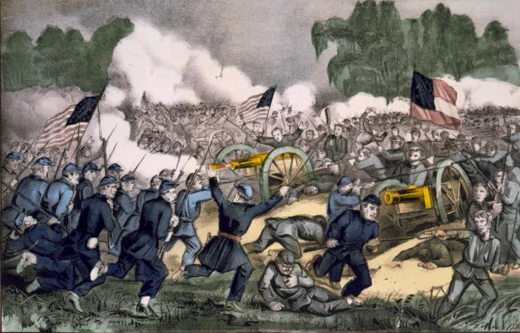
Battle of Liberty Place
Insurrection by White League against Reconstruction government in New Orleans.

Wikipedia / Wikimedia Commons
In September 1874, a paramilitary group called the Crescent City White League, mostly made up of former Confederate soldiers, tried to overthrow Louisiana’s Reconstruction-era Republican government in New Orleans. On September 14, about 5,000 White League members fought the city’s racially mixed Metropolitan Police and state militia, who were outnumbered. The insurgents took control of the statehouse, armory, and downtown area for three days. They left only when federal troops arrived and restored the elected government. At least 35 people died in the fighting, including at least 21 from the White League. No one was prosecuted for the attack.
This was the last major violent event tied to the disputed 1872 Louisiana governor’s race, in which Democrat John McEnery and Republican William Pitt Kellogg both claimed victory. The White League’s Democratic supporters later called it the “Battle of Liberty Place,” framing it as part of a struggle against what they saw as tyrannical Republican rule—even though that government had expanded rights and opportunities for Black people. In the 1872 election, Governor Henry C. Warmoth, a Republican who had broken with President Grant, backed McEnery. Warmoth’s handpicked State Returning Board declared McEnery the winner. A rival board, citing violence and intimidation at the polls aimed at suppressing Black votes, declared Kellogg the winner. The state legislature impeached and removed Warmoth for election fraud, and Lieutenant Governor P. B. S. Pinchback served the last 35 days of his term. Both McEnery and Kellogg held inaugurations and certified their own slates of local officials. The federal government ultimately recognized Kellogg as governor and Republican C. C. Antoine as lieutenant governor.
An earlier violent episode from the same disputed election was the Colfax massacre in April 1873, when a white militia attacked Black men defending Republican officeholders at a courthouse in Grant Parish. Three whites and about 150 Black people were killed, at least 50 of them after being taken prisoner.
In 1874, McEnery and his allies set up a rival legislature in New Orleans. The White League entered the city with 5,000 men to install McEnery, fighting 3,500 police and state militia. The White League defeated the militia, inflicting many casualties, and occupied the statehouse and armory for three days.
Quick Facts
- Conflict
- Battle of Liberty Place · Battle of Canal Street
- Part Of
- the Reconstruction Era
- Date
- September 14–17, 1874
- Location
- New Orleans, Louisiana
- Result
- Louisiana state government victory / Rebellion suppressed
Facts from the source article.
Lore & Background
The Battle of Liberty Place was the name given to the insurrection by its Democratic supporters, as part of their story of the struggle to overturn Republicans and the Reconstruction government. Although this government brought about greater equality and opportunity for blacks, white supremacists saw it as tyranny. In the election of 1872, Democrat John McEnery and Republican William Pitt Kellogg both claimed victory. The federal government eventually certified Kellogg as governor. In 1874, McEnery and his allies formed a 'rump' legislature in New Orleans, then the location of state government. The paramilitary White League entered the city with a force of 5,000 to seat McEnery; they fought against 3,500 police and state militia for control. The White League defeated the state militia, inflicting dozens of casualties. The insurgents occupied the state house and armory for three days, with Governor Kellogg finding sanctuary in the Custom House, which was federal property protected by a company of U.S. Army troops. When former Confederate general James Longstreet, aligned with Kellogg and other Radical Republicans and in command of the government forces, was shot, possibly by a spent bullet, he fell or was pulled from his horse; some accounts have him being held prisoner by the insurrectionists afterwards, but this is unlikely. Kellogg wired for federal troops and, within three days, President Ulysses S. Grant sent federal troops there. The White League insurgents retreated from New Orleans before the federal troops arrived, and no one was prosecuted.
Reader's Guide
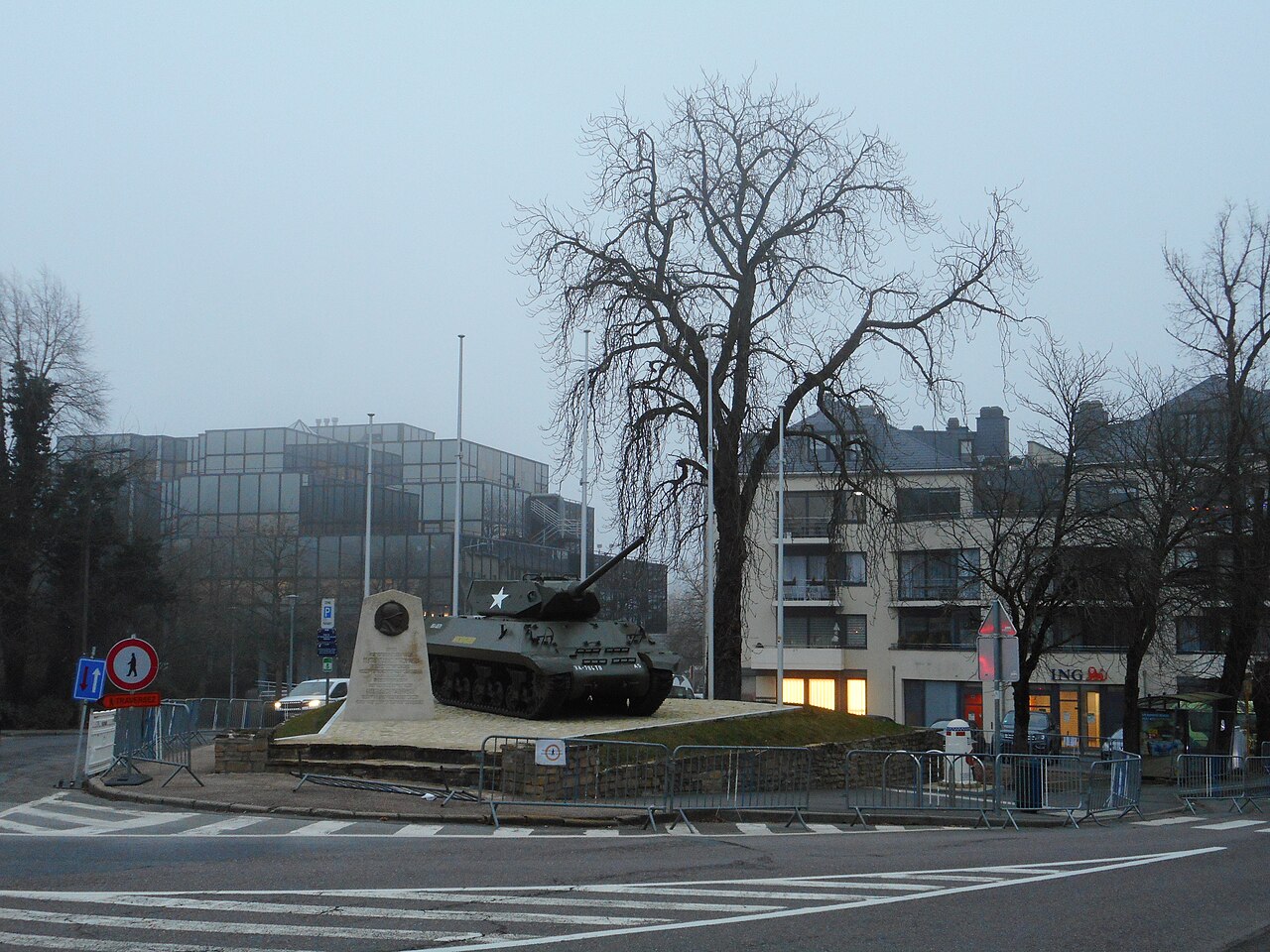
The Battle of Liberty Place was the last major event of violence stemming from the disputed 1872 gubernatorial election. It represented a violent attempt by white supremacist paramilitary forces to overthrow a legally elected Reconstruction government. The insurrection succeeded temporarily, with the White League holding the city for three days, but federal intervention restored the Kellogg administration. The event highlighted the ongoing resistance to Reconstruction and the federal government's role in protecting Republican state governments in the South. No insurgents were charged, reflecting the political and legal challenges of enforcing Reconstruction-era laws. The battle's name, given by Democratic supporters, framed the insurrection as a struggle for liberty, while critics saw it as an act of white supremacist violence. The monument erected in 1891 commemorated the insurrection from the Democratic point of view, which at the time was in firm political control of the city and state and was in the process of disenfranchising black voters. The battle thus stands as a key episode in the violent backlash against Reconstruction and the eventual establishment of Jim Crow.
Did You Know?
- At least 35 people were killed in the fighting, including at least 21 White League members.
- No insurgents were ever charged in the action.
- Former Confederate general James Longstreet commanded the government forces and was shot, possibly by a spent bullet.
- The White League held the statehouse, armory, and downtown for three days before retreating.
The Fractured Election of 1872
The 1872 Louisiana gubernatorial race shattered the state's political order. Democrat John McEnery ran against Republican William Pitt Kellogg, but the contest was muddied by internal Republican divisions. Governor Henry C. Warmoth, himself a Republican, threw his support behind McEnery, and his handpicked State Returning Board declared McEnery the victor. A rival board, however, certified Kellogg, who had accused Democrats of suppressing Black voters through violence and intimidation at the polls. The state legislature impeached Warmoth for what it called stealing the election, and Lieutenant Governor P. B. S. Pinchback assumed the governorship for the final thirty-five days of the term. Both McEnery and Kellogg held inaugural ceremonies and certified competing lists of local officeholders. The federal government ultimately recognized Kellogg as the legitimate governor. The underlying tensions did not dissolve. In April 1873, a white militia attacked freedmen defending Republican officeholders at the Grant Parish courthouse in the Colfax massacre, killing three whites and approximately one hundred and fifty Black residents, at least fifty of them after being taken prisoner.
The Day the Canal Street Lines Formed
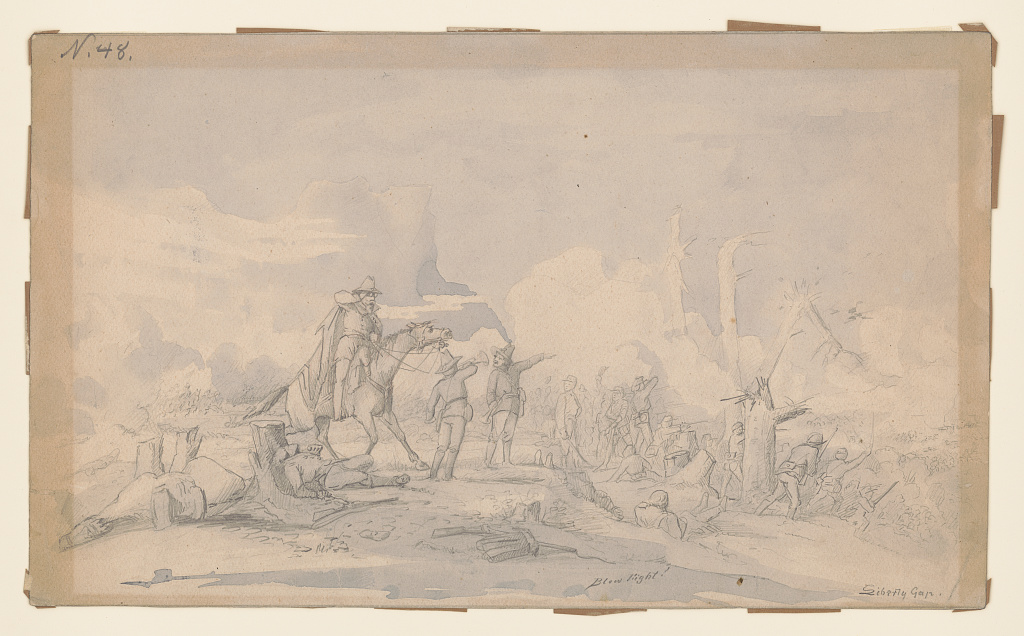
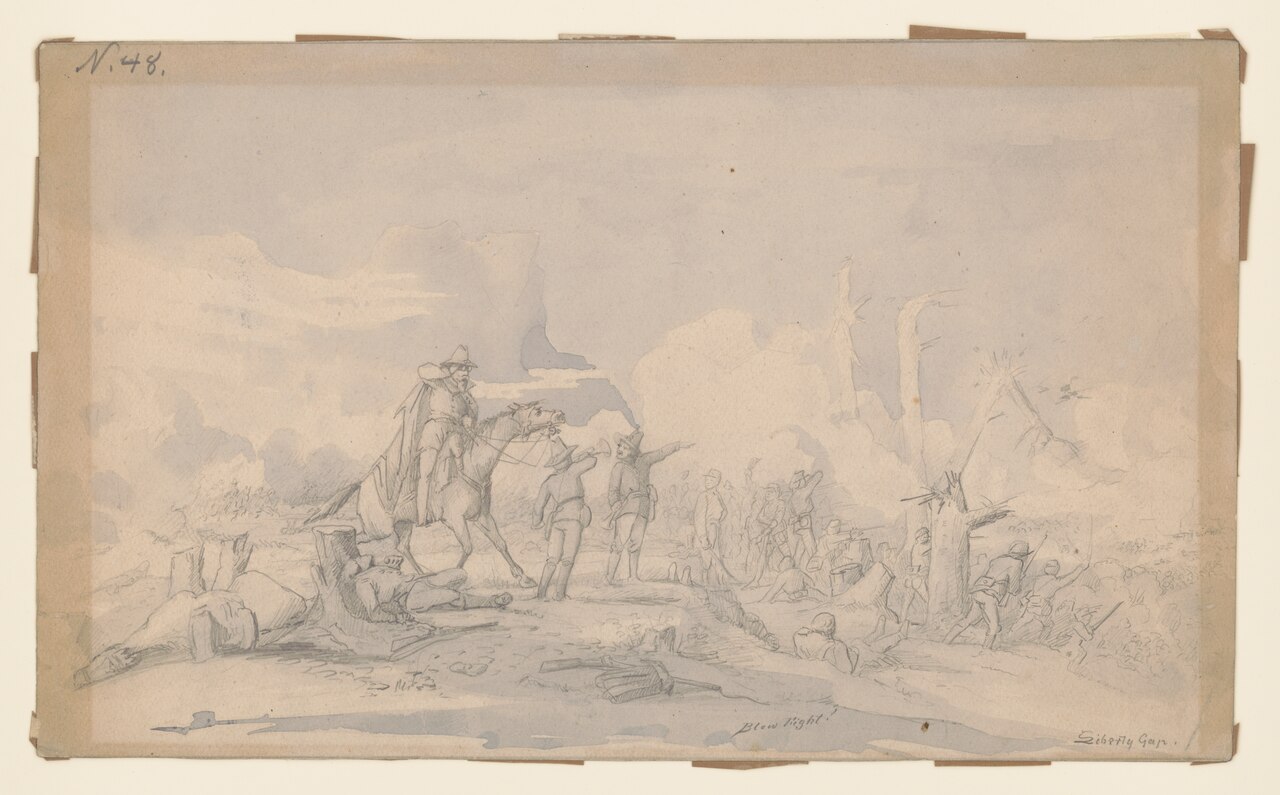
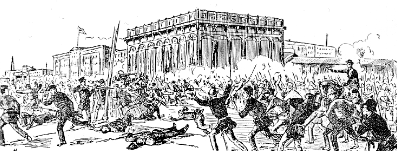
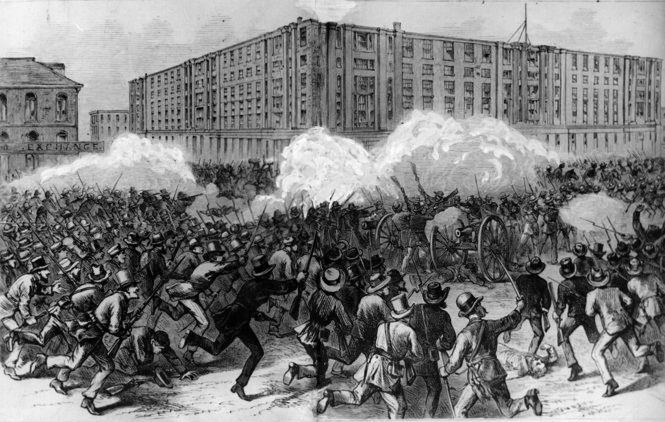
On the morning of September 14, 1874, a call for a mass meeting to protest the seizure of private arms drew men onto Canal Street. By noon, a committee led by Robert Hardin Marr presented demands to Governor Henry Dibble at the executive office, but Dibble refused to engage, viewing the assembled crowds as a threat. By three in the afternoon, armed men had already taken positions at every street intersection on the south side of Canal Street, stretching from the river to Clayborne Street. At four o'clock, self-proclaimed Lieutenant Governor D. B. Penn issued a proclamation ordering state militia to assemble to drive the usurpers from power, and Frederick Nash Ogden was named provisional general of the White League force. A statement was issued assuring Black Louisianans their rights and property would not be harmed. When General James Longstreet arrived with Metropolitan Police, cavalry, and artillery to order the armed citizens to disperse, the situation erupted into gunfire. The police line broke, and the White League seized a piece of artillery, City Hall, and the fire alarm telegraph. They then erected barricades along Poydras Street using street railroad cars and massed around Jackson Square and the St. Louis Hotel.
Three Days in the Custom House
For three days after the initial fighting, the White League held the statehouse, the armory, and downtown New Orleans, while Governor Kellogg took refuge in the Custom House, a federal building guarded by a company of U.S. Army troops who did not engage in the initial conflict. The government's military commander, former Confederate general James Longstreet, was shot during the fighting, possibly by a spent bullet, and fell or was pulled from his horse. Some accounts claim the insurrectionists held him prisoner afterward, though this is considered unlikely. Kellogg, isolated in the Custom House, sent a wire to Washington requesting federal intervention. President Ulysses S. Grant responded swiftly, dispatching federal troops to New Orleans within three days. The White League, numbering around five thousand and composed largely of Confederate veterans, withdrew from the city before those troops arrived. The elected Republican government was restored, but the retreat meant the insurrectionists escaped any military confrontation with federal forces. The entire episode, from the Canal Street skirmish to the final withdrawal, spanned just three days, yet it represented the culmination of two years of political violence rooted in the disputed 1872 election.
A Toll of Lives and a Verdict of Impunity
The fighting left at least thirty-five dead, including at least twenty-one members of the White League. Among the fallen Metropolitan Police were Sergeant James McManus, Sergeant J. K. Champaign, Corporal J. F. Clermont, and Officers J. Hill, E. Simmonds, J. Schields, and H. Ballard. On the insurgent side, those killed included E. A. Toledano, Frederick Moreman, Dick Lindsey, Captain J. M. West, Major J. K. Gourdain, and journalist J. M. Cleet. Police superintendent Algernon Sidney Badger, a Boston-born Union Army veteran who had served in New Orleans since the war's end, had his leg crushed when his horse was killed beneath him and required amputation. Despite the scale of the violence and the clear insurrection against a federally recognized government, not a single insurgent was ever charged with a crime. The White League's Democratic supporters framed the event as a righteous struggle against Reconstruction tyranny, while the state's Black citizens, who had gained greater equality and opportunity under the Republican government, saw it as a violent attempt to strip away those hard-won rights. The Battle of Liberty Place stands as the final major violent episode of the 1872 election dispute, ending not with justice but with silence.
Gallery
Frequently Asked Questions
What was the Battle of Liberty Place?
It was a three-day armed insurrection in which a paramilitary group attempted to seize control of New Orleans and dismantle the city's Reconstruction-era Republican government. The clash is regarded as the last major violent episode tied to the disputed 1872 Louisiana gubernatorial election.
When and where did the Battle of Liberty Place take place?
The fighting erupted on September 14, 1874, in New Orleans, Louisiana. The insurgents held key buildings in the downtown area for roughly three days before ultimately withdrawing.
Who were the combatants in the Battle of Liberty Place?
Approximately 5,000 members of the Crescent City White League, largely composed of ex-Confederate soldiers, clashed against around 3,500 officers of the Metropolitan Police and state militia. The defenders were a racially mixed force that was outnumbered by the attackers.
How did the Battle of Liberty Place end?
The White League insurgents abandoned their positions once federal troops moved into the city, restoring the elected Republican government. At least 35 people were killed during the three days of fighting, with at least 21 of those deaths on the insurgent side.
Why is the Battle of Liberty Place historically significant?
It stands as the final major armed challenge to Reconstruction authority in the post-Civil War South. The episode underscored that federal military intervention remained the ultimate mechanism for preserving elected state governments against paramilitary uprisings.
More in Rebellions against the United States 1-23
Spotted an error? Know more?
Reader corrections go straight into our review queue. Suggest an edit · How this site is sourced