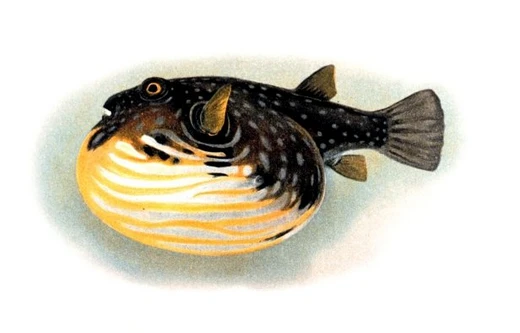
Tetrosomus
Turretfishes with a triangular carapace and sharp ridges.

Tetrosomus is a genus of marine ray-finned fish in the boxfish family Ostraciidae. Commonly called turretfishes, these fish inhabit the Indian and western Pacific Oceans.
The genus was first proposed in 1839 by William Swainson as a single-species group, with Ostracion turritus as its only member. That species had been described in 1775 by Peter Forsskål from the Red Sea near Mokha, Yemen. Ostracion turritus is now considered a junior synonym of Ostracion gibbosus, which Carl Linnaeus had described earlier in 1758. In the 5th edition of *Fishes of the World*, Tetrosomus is placed within the family Ostraciidae, suborder Ostracioidea, order Tetraodontiformes.
The name *Tetrosomus* combines *tetra* (meaning "four") and *somus* (meaning "body"), referring to the fish's quadrangular body shape.
Currently, four species are recognized in the genus: *Tetrosomus concatenatus* (triangular boxfish), *Tetrosomus gibbosus* (camel cowfish), *Tetrosomus reipublicae* (smallspine turretfish), and *Tetrosomus stellifer*. However, some authorities consider only *T. gibbosus* and *T. reipublicae* valid, treating *T. concatenatus* as a synonym of *T. reipublicae*. Others recognize *T. concatenatus* but not *T. stellifer*, and *T. concatenatus* has also been treated as a synonym of *Lactophrys triqueter*.
Turretfishes of this genus have a carapace with a triangular cross-section that is closed behind the dorsal and anal fins. The ridges along the back and lower flank are sharp. The dorsal fin is positioned before the anal fin, not above it. The largest published total length for any species in the genus is 30 cm (12 in).
These fish are found in the Indian and western Pacific Oceans, typically over soft substrates.
Quick Facts
- Taxon
- Tetrosomus
- Type Species
- Ostracion turritus
- Type Species Authority
- Forsskål, 1775
Facts from the source article.
Lore & Background
Tetrosomus was first proposed as a monospecific genus in 1839 by William Swainson, with Ostracion turritus as its type species by monotypy. O. turritus was first formally described in 1775 by Peter Forsskål, with its type locality given as the Red Sea off Mokha in Yemen. O. turritus is now considered a junior synonym of O. gibbosus, which had been described by Carl Linnaeus in the 10th edition of Systema Naturae published in 1758. The 5th edition of Fishes of the World classifies this genus within the family Ostraciidae in the suborder Ostracioidea within the order Tetraodontiformes.
The etymology of Tetrosomus combines tetra, meaning 'four', and somus, meaning 'body', a reference to the quadrangular shape of the body. The species in this genus are characterized by having a carapace with a triangular cross section that is closed behind the dorsal and anal fins. The ridges along the back and along the lower flank are sharp, and the dorsal fin is not above the anal fin but set before it.
Reader's Guide
The genus Tetrosomus holds significance as a distinct group of boxfishes known for their quadrangular body shape and triangular carapace. The taxonomic history involves multiple authorities and synonymies: while FishBase and Eschmeyer's Catalog of Fishes list four species—Tetrosomus concatenatus, Tetrosomus gibbosus, Tetrosomus reipublicae, and Tetrosomus stellifer—other authorities recognize only T. gibbosus and T. reipublicae as valid. T. concatenatus is sometimes treated as a synonym of T. reipublicae, and by some authorities as a synonym of Lactophrys triqueter. T. stellifer is not recognized by all. This uncertainty reflects ongoing debate in ichthyology. The genus was first proposed by William Swainson in 1839, with its type species originally described by Peter Forsskål in 1775 from the Red Sea. The species are found in the Indian and Western Pacific Oceans over soft substrates, and reach a maximum total length of 30 cm. Their sharp ridges and fin placement distinguish them from other boxfishes.
Did You Know?
- The name Tetrosomus means 'four body', referring to its quadrangular shape.
- The type species Ostracion turritus was described by Peter Forsskål in 1775 from the Red Sea off Mokha, Yemen.
- Some authorities consider Tetrosomus concatenatus a synonym of Tetrosomus reipublicae.
- Tetrosomus turretfishes have a carapace with a triangular cross section closed behind the dorsal and anal fins.
Frequently Asked Questions
What is Tetrosomus?
Tetrosomus is a small genus of marine boxfish in the family Ostraciidae, best known by their common name, turretfishes. These ray-finned fish are native to the Indian and western Pacific Oceans.
What do Tetrosomus look like?
Turretfishes have a striking quadrangular, four-sided body topped by a triangular carapace with sharp, prominent ridges. This angular, turret-like silhouette is what gives the group its common name and sets them apart from the smoother-bodied relatives in Ostraciidae.
Where can you find Turretfishes in the wild?
Their range spans the Indian Ocean and the western Pacific, stretching from the Red Sea region eastward into Pacific reef habitats. The type species was originally collected near Mokha, Yemen, anchoring the genus's historical record in that area.
Who described the Tetrosomus genus and what happened to its type species?
William Swainson erected the genus in 1839 around a single species, Ostracion turritus, which Peter Forsskål had described from a Red Sea specimen back in 1775. That name is now treated as a junior synonym of Ostracion gibbosus, the earlier 1758 description by Carl Linnaeus.
How big do Turretfishes get?
Adults in this genus top out at roughly 30 centimeters (about 12 inches) in total length. Despite their spiky, armored appearance, they remain modestly sized compared to some of the larger boxfish species.
More in Pufferfish and Boxfish 1-24
Spotted an error? Know more?
Reader corrections go straight into our review queue. Suggest an edit · How this site is sourced