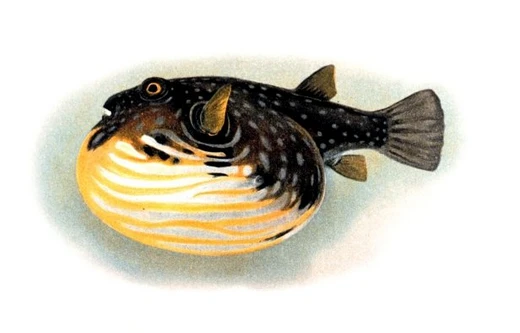
Paracanthostracion
A monospecific boxfish genus found only around New Zealand.

Paracanthostracion is a genus of marine ray-finned fish in the boxfish family Ostraciidae. It contains just one species: Paracanthostracion lindsayi, or Lindsay's boxfish, which lives in the southwestern Pacific Ocean.
The genus was established in 1933 by the British-born Australian ichthyologist Gilbert Percy Whitley, who designated *Ostracion lindsayi* as its type and only species. That species had been formally described the year before by New Zealand ichthyologist William J. Phillipps, based on a specimen from Otago, New Zealand. In the 5th edition of *Fishes of the World*, this taxon is placed within the suborder Ostracioidea of the order Tetraodontiformes.
The name *Paracanthostracion* combines the prefix *para-*, meaning "close to," with the genus name *Acanthostracion*, from which it differs in carapace shape and spine arrangement. The specific name honors Charles John Lindsay, a colleague of Phillipps at the Dominion Museum in Wellington, who worked as a curator of technology and taxidermist.
In terms of appearance, the head's anterior profile slopes obliquely, and the eye diameter is only slightly less than the snout length. The area between the eyes is clearly concave. The carapace is quadrangular, with a poorly developed ridge along the back's midline. A forward-pointing spine sits before each eye, a large spine rises from the middle of the back, and another large spine—directed rearward—lies along the carapace edge near the anal fin. The hexagonal, plate-like scales covering the carapace are very rough toward the rear and on the head. The body is irregularly streaked and spotted with grey, and the cheek spots tend to merge into short streaks.
This fish is known only from the waters around New Zealand in the southwestern Pacific Ocean.
Quick Facts
- Taxon
- Paracanthostracion lindsayi
Facts from the source article.
Lore & Background
Paracanthostracion was first proposed as a genus in 1933 by the British-born Australian ichthyologist Gilbert Percy Whitley, with Ostracion lindsayi designated as its type species and its only species. The species O. lindsayi was first formally described in 1932 by the New Zealand ichthyologist William J. Phillipps, with its type locality given as Otago, New Zealand. This taxon is classified within the family Ostraciidae in the 5th edition of Fishes of the World, which places it in the suborder Ostracioidea within the order Tetraodontiformes.
The etymology of the genus name Paracanthostracion prefixes para-, meaning 'close to', to the genus name Acanthostracion, from which it differs in the shape of its carapace and the distribution of its spines. The specific name lindsayi honours Phillipps's colleague at the Dominion Museum in Wellington, the curator of technology and taxidermist Charles John Lindsay.
Paracanthostracion is characterised by having the anterior profile of the head being oblique, with the diameter of its eye only slightly less than the length of the snout. The space between the eyes is clearly concave. The carapace is quadrangular in shape with a poorly developed ridge along the middle of the back. There is a forward-pointing spine before each eye and a large spine in the middle of the back, with another large spine directed rearwards along the edge of the carapace near the anal fin. The hexagonal plate-like scales that make up the carapace are very rough towards its rear, as well as on the head. The body is irregularly streaked and spotted with grey, and there are spots on the cheeks which show a tendency to merge to form short streaks.
Reader's Guide
Paracanthostracion is notable as a monospecific genus within the boxfish family Ostraciidae, representing a distinct lineage known only from the waters around New Zealand. Its taxonomic history involves two ichthyologists: William J. Phillipps, who first described the species in 1932, and Gilbert Percy Whitley, who erected the genus in 1933. The genus name reflects its close relationship to Acanthostracion, from which it differs in carapace shape and spine distribution. The species name honors Charles John Lindsay, a colleague at the Dominion Museum in Wellington. The physical description provided in the article—including the oblique head profile, concave interorbital space, quadrangular carapace with specific spine arrangements, and rough hexagonal scales—offers a detailed morphological account. The distribution is restricted to the Southwestern Pacific Ocean, specifically New Zealand waters, making it a geographically limited taxon. Its classification within the order Tetraodontiformes and suborder Ostracioidea places it among the pufferfish and boxfish relatives. The article does not discuss conservation status or broader ecological significance, but the genus's monospecific nature and restricted range underscore its uniqueness in the marine ichthyofauna of the region.
Did You Know?
- Paracanthostracion is a monospecific genus, meaning it contains only one species: Paracanthostracion lindsayi.
- The genus was first proposed in 1933 by British-born Australian ichthyologist Gilbert Percy Whitley.
- The species was first formally described in 1932 by New Zealand ichthyologist William J. Phillipps, with the type locality given as Otago, New Zealand.
- The specific name lindsayi honors Charles John Lindsay, a curator of technology and taxidermist at the Dominion Museum in Wellington.
Frequently Asked Questions
What is Paracanthostracion?
It is a monospecific genus of marine boxfish in the family Ostraciidae, order Tetraodontiformes. Its sole member is Lindsay's boxfish (Paracanthostracion lindsayi), a ray-finned fish native to the southwestern Pacific around New Zealand.
Who established the genus Paracanthostracion?
Gilbert Percy Whitley, a British-born Australian ichthyologist, erected the genus in 1933 and named Ostracion lindsayi as its type species. The species had been described a year earlier in 1932 by New Zealand ichthyologist William J. Phillipps from a specimen collected off Otago.
How many species does Paracanthostracion contain?
Exactly one — Paracanthostracion lindsayi, which makes it a monospecific genus. No other boxfish species has ever been assigned to this group.
Where does Paracanthostracion lindsayi live in the wild?
This boxfish is restricted to the southwestern Pacific Ocean, with its known range centered on the waters surrounding New Zealand. It has not been documented from any other ocean region.
Why is Paracanthostracion taxonomically significant?
As a single-species genus, it represents a distinct evolutionary lineage within the otherwise diverse boxfish family Ostraciidae. Its separation from other ostraciid genera reflects morphological traits unique to Lindsay's boxfish that set it apart from its closest relatives.
More in Pufferfish and Boxfish 1-24
Spotted an error? Know more?
Reader corrections go straight into our review queue. Suggest an edit · How this site is sourced