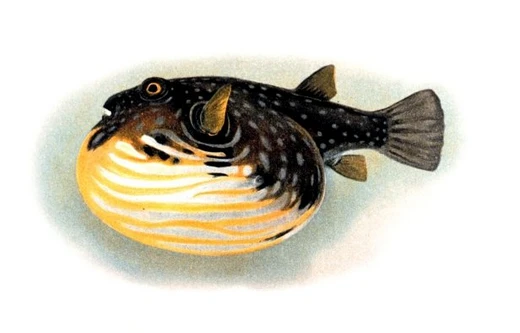
Lactophrys trigonus
A triangular-bodied boxfish from the Western Atlantic.

Lactophrys trigonus, called the buffalo trunkfish or simply trunkfish, is a marine ray-finned fish in the boxfish family Ostraciidae. It lives in the Western Atlantic Ocean.
The species was first formally described by Carl Linnaeus in 1758 as *Ostracion trigonus*, with the type location given as the Western Atlantic. In 1839, William Swainson proposed the subgenus *Lactophrys* for *Ostracion*, and in 1865 Pieter Bleeker designated *O. trigonus* as the type species of that subgenus. The 5th edition of *Fishes of the World* places the genus *Lactophrys* in the family Ostraciidae, suborder Ostracioidea, order Tetraodontiformes.
The genus name *Lactophrys* combines *lactaria* ("milkcow") and *ophrys* ("eyebrow"), referring to the spines above the eyes that resemble cow horns—some related fishes are called cowfishes. The species name *trigonus* means "three angles," describing the triangular body shape when viewed from the front.
The trunkfish has small, diffuse white spots. Two areas—one on the pectoral region and another halfway between the gills and the rear of the carapace—have dark-edged hexagonal plates that form chain-like markings. It can reach 30–50 cm in length and weigh up to 3.3 kg.
This species is native to the Western Atlantic from Canada to Brazil, including the Gulf of Mexico, Bermuda, and the Caribbean. Records from the Mediterranean remain unverified. It lives in areas with coral rubble, seagrass beds, and offshore reefs, usually at depths above 50 m.
Boxfish are benthic feeders, foraging on seagrasses, crustaceans, mollusks, worms, tunicates, and other small benthic invertebrates. They are a popular food fish throughout the Caribbean and are a minor species in the aquarium trade.
Quick Facts
- Taxon
- Lactophrys trigonus
Facts from the source article.
Lore & Background
Lactophrys trigonus was first formally described as Ostracion trigonus in 1758 by Carl Linnaeus in the 10th edition of Systema Naturae, with its type locality given as the Western Atlantic. In 1839 William Swainson proposed a new subgenus of Ostracion he called Lactophrys, and in 1865 Pieter Bleeker designated this species as the type species of Lactophrys. The 5th edition of Fishes of the World classifies the genus Lactophrys within the family Ostraciidae in the suborder Ostracioidea within the order Tetraodontiformes.
The genus name Lactophrys is a compound of lactaria, meaning 'milkcow', and ophrys, meaning 'eyebrow', a reference to the spines above the eyes resembling the horns of a cow. The specific name trigonus means 'three angles', referring to the fish's triangular body when viewed head-on. The trunkfish has small diffuse white spots, and two areas—on the pectoral region and halfway between gills and posterior end of carapace—contain dark-edged hexagonal plates that together form chain-like markings. It can reach a length of 30–50 cm and weigh up to 3.3 kg.
Reader's Guide
Lactophrys trigonus is native to the Western Atlantic from Canada to Brazil, including the Gulf of Mexico, Bermuda and the Caribbean. Records from the Mediterranean still lack verification. It inhabits areas with coral rubble, seagrass beds and offshore reefs, preferring depths above 50 m (160 ft). Boxfish are benthic feeders and will forage on seagrasses, crustaceans, mollusks, worms, tunicates and a variety of small benthic invertebrates. They are a popular food throughout the Caribbean, and a minor species in the aquarium trade. The species is notable for its distinctive triangular body shape and the cow-like spines above its eyes, which give the genus its name. Its taxonomic history includes designation by Linnaeus and later recognition as the type species of the genus Lactophrys by Bleeker. The fish's chain-like markings and small white spots are characteristic features, and its ecological role as a benthic feeder contributes to the health of seagrass and reef habitats.
Did You Know?
- The specific name trigonus means 'three angles', referring to its triangular body when viewed head-on.
- Records of this species from the Mediterranean still lack verification.
More in Pufferfish and Boxfish 1-24
Spotted an error? Know more?
Reader corrections go straight into our review queue. Suggest an edit · How this site is sourced