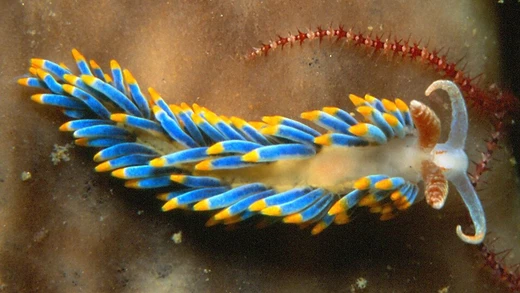
Phyllidiopsis shireenae
A sponge-feeding dorid nudibranch with salmon-pink rhinophores and a mid-dorsal crest.

Phyllidiopsis shireenae is a species of sea slug, a dorid nudibranch in the family Phyllidiidae. It is notable for its firm, flattened body with raised dorsal tubercles, lack of dorsal gills, and bright coloration used as aposematic signaling. Its common names include Shireen's Phyllidiopsis, Shireen's Phyllidiopsis Sea Slug, Shirin Sea Slug, and Crested Wart Slug.
Quick Facts
- Taxon
- Phyllidiopsis shireenae
Facts from the source article.
Lore & Background
Phyllidiopsis shireenae was formally described by Brunckhorst in 1990 as part of a revision of the genus Phyllidiopsis. It belongs to the family Phyllidiidae, characterized by a lack of radula and dorsal gills, and a specialized suctorial feeding apparatus. The species is distinguished from related taxa by its dorsal morphology and salmon-pink rhinophore coloration. Its body is covered in rounded, angular tubercles, with overall coloration ranging from pale pink, white, or grey, with dark black lines running longitudinally and a bluish undertone. The species has a high mid-dorsal crest and chemosensory organs including lamellate structures. Like all phyllidiids, P. shireenae feeds on sponges using external digestion and suction, lacking a radula. It is distributed across the Indo-Pacific in coral reef habitats, recorded on reef substrates including sponges and bryozoans. Its depth range varies with environmental conditions and prey availability.
Reader's Guide
Phyllidiopsis shireenae holds significance as a specialized sponge-feeder that contributes to nutrient cycling in coral reef ecosystems. Its bright coloration serves as aposematic signaling, warning predators of toxicity. The species employs chemical defenses, accumulating bioactive compounds from noxious sponges and producing odorous secretions that can be lethal to crustaceans and fish. Additionally, symbiotic bacteria in P. shireenae may produce bioactive compounds for defense against predators and infections. Its thick body, supported by spicules, also provides physical defense. Phylogenetic studies using DNA have confirmed its placement within Phyllidiopsis and clarified evolutionary relationships with other species. The species is considered an indicator of marine biodiversity and coral reef ecosystem health due to its sensitivity to pollution, temperature changes, and disturbances. Its presence in regions like Indonesia supports ecotourism and ecological stability. Niche differentiation among Phyllidiopsis species helps avoid competition with close relatives.
Did You Know?
- Phyllidiopsis shireenae lacks a radula and dorsal gills, using external digestion and suction to feed on sponges.
- Its rhinophores are salmon-pink, a key trait distinguishing it from related species.
- The species stores toxic compounds from sponges and can produce odorous secretions lethal to crustaceans and fish.
- Phyllidiopsis shireenae is considered an indicator of coral reef ecosystem health due to its sensitivity to environmental changes.
More in Nudibranchs and Sea Slugs, Part 2 1-24
Spotted an error? Know more?
Reader corrections go straight into our review queue. Suggest an edit · How this site is sourced